<?xml version="1.0" encoding="utf-8"?>
<feed xmlns="http://www.w3.org/2005/Atom">

  <title><![CDATA[Brian Chirls]]></title>
  <link href="http://chirls.com/atom.xml" rel="self"/>
  <link href="http://chirls.com/"/>
  <updated>2014-03-21T14:14:29-04:00</updated>
  <id>http://chirls.com/</id>
  <author>
    <name><![CDATA[Brian Chirls]]></name>
    <email><![CDATA[brian@chirls.com]]></email>
  </author>
  <generator uri="http://octopress.org/">Octopress</generator>

  
  <entry>
    <title type="html"><![CDATA[Relaunch]]></title>
    <link href="http://chirls.com/2014/03/20/relaunch/"/>
    <updated>2014-03-20T10:31:25-04:00</updated>
    <id>http://chirls.com/2014/03/20/relaunch</id>
    <content type="html"><![CDATA[<p>After way too many years running this old website on Wordpress, I have relaunched using a different platform. The site had become slow, fragile and broken because it relied on too many external resources, some of which eventually failed to load and broke the whole site. As the web has matured, it has become apparent that speed and simplicity are critical to whether a <a href="http://blog.kissmetrics.com/loading-time/">user will stick around on a site</a> and even how well a site is <a href="http://googlewebmastercentral.blogspot.com/2010/04/using-site-speed-in-web-search-ranking.html">ranked in Google searches</a>. So I&rsquo;ve removed a lot of unnecessary junk and replaced it with a cleaner and faster site.</p>

<p>The site is now run on <a href="http://octopress.org/">Octopress</a>, a static blog/site generator. I can write all pages and blog posts in <a href="http://daringfireball.net/projects/markdown/">Markdown</a> as a text file on my computer. The whole site is regenerated once for each change and uploaded to the web server. Wordpress dynamically generates for every single page view, which seems unnecessary, especially given how rarely I update the site. And perhaps because Octopress is simpler and newer, most of the available themes are written with minimal script and CSS resources, loaded as late as possible.</p>
]]></content>
  </entry>
  
  <entry>
    <title type="html"><![CDATA[What I'm Working On: Interactive Video for Citizen Journalism]]></title>
    <link href="http://chirls.com/2011/04/28/what-im-working-on-interactive-video-for-citizen-journalism/"/>
    <updated>2011-04-28T16:25:03-04:00</updated>
    <id>http://chirls.com/2011/04/28/what-im-working-on-interactive-video-for-citizen-journalism</id>
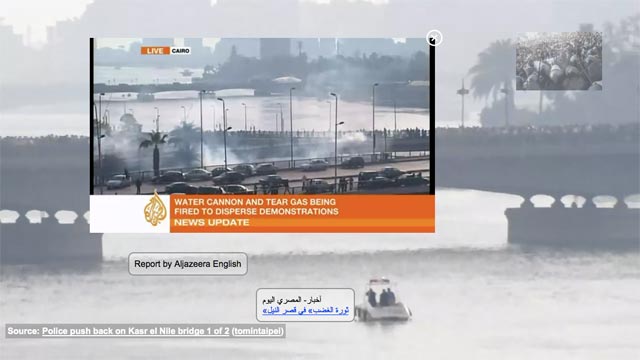
    <content type="html"><![CDATA[<p>Last month, I participated in an <a href="http://annasob.wordpress.com/2011/03/28/buttercamp-new-york/">all-day workshop</a> that Mozilla organized as part of <a href="http://webmademovies.org/">Web Made Movies</a> to introduce filmmakers to the possibilities of interactive video using <a href="http://popcornjs.org/">Popcorn.js</a>.  I lobbied to be paired with Yasmin Elayat to create a prototype for her project, <em><a href="http://www.18daysinegypt.com/">18 Days in Egypt</a></em>, an interactive documentary covering the recent revolution in Egypt, using citizen-produced video.  It&rsquo;s a credit to Yasmin&rsquo;s knowledge of the material and the work of the Popcorn.js team that we were able to build and demo the whole thing in a single day.</p>

<p><a href="http://code.chirls.com/buttercamp/">View the prototype here</a>. It should work in any modern web browser that handles html video (even Internet Explorer 9!).  Below, I&rsquo;ll discuss the challenges and solutions we discovered through the process of building a prototype that tells a story as well as it demonstrates the technology.</p>

<p><a href="http://code.chirls.com/buttercamp/"><img src="http://chirls.com/wp-content/uploads/2011/04/18days-screencap.jpg" alt="&quot;18 Days in Egypt&quot; Interactive Video Prototype" /></a></p>

<p>The goal of the prototype was to give an overall sense of the subject while giving a viewer the opportunity to &ldquo;drill down&rdquo; to additional media for more detail.  As powerful as HTML video and Popcorn are, it&rsquo;s easy to overwhelm the viewer with too much information.  So we had to choose the content and design the layout and interaction to tell the story while making it beautiful and avoiding distraction.</p>

<!-- more -->


<h3>Content</h3>

<p>Yasmin decided to highlight a conflict at the Qasr al-Nil Bridge, near Tahrir Square in Cairo.  To best tell this particular story, we chose to use types of additional media, each implemented as Popcorn plugin. Relevant additional photos and video would give a deeper emotional and expository experience.  Since most of our audience might not be familiar with the details of the place, we added pop-up facts, which can be expanded by hovering the mouse.  Finally, a simple link appears in the lower left corner crediting the original source of the main video clip.</p>

<p>We considered adding a Google Map, since Popcorn has a plugin that will move the map to specified locations at any point in the video.  But the Tahrir Square protests all took place around too small a space to make a moving map useful, and the source videos didn&rsquo;t contain accurate enough location metadata to pinpoint specific enough locations around the square.</p>

<p>For the main video, Yasmin chose three short video clips, around 30 seconds each.  All the clips are from a distance and give a visual overview of the event.  The detail video and photos are all either closer shots or much longer, appropriate to the higher level of engagement the viewer will demonstrate by clicking to activate them.</p>

<h3>Design</h3>

<p>We wanted to focus more on the story than the technology and to preserve the artistic aspects of film, so it was important to make the prototype as artful as possible.  Since neither of us are graphic artists, we decided to keep it as simple as possible.  Yasmin made things easier by choosing beautifully shot video and photos.  I designed the page to so that it&rsquo;s entirely filled by video and minimized any extra visual flashes that might clash without the help of an additional designer.  The videos of the event happened to appear a bit muted, which made them look nice when layered.  For a more general and unpredictable set of images, I might consider using CSS opacity to mute certain components when others have focus.</p>

<h3>Interaction</h3>

<p>Finally, getting the interaction right took a bit of experimentation and problem-solving.  There was a lot to explain, so we needed to have multiple pop-up tips.  The best way we could think to organize them was to place them within the video, and to balance the level of interruption, we made them semi-transparent and showed only the title unless the mouse hovers over them.  It would have been nice to have those move around the video frame as their subjects moved, but that&rsquo;s quite a lot more work than we had time for in an afternoon.</p>

<p>The additional videos presented a bigger challenge, since they are seven or eight minutes long, while each is applied to a 30-second section of the main video.  My initial thought was to pause the main video while a detail video was playing, but Yasmin thought it would be more cinematic to keep the main video playing in the background.  The first thing we need to do is drop the volume of the main video to 10%, so it&rsquo;s still in the background but not distracting.  But what would happen if you&rsquo;re playing through a seven-minute detail video and the main video gets to a new section?  Your video would disappear.  So now, when a detail video is playing, and the main video gets close to a new section, it skips back to the point when you activated the detail video and loops until you&rsquo;re done.  When you close that video, the main video returns to full volume and continues to play.  Hopefully, the result is a cinematic experience that lets you explore the deeper aspects of the story while maintaining context.</p>

<h3>Nuts and Bolts</h3>

<p>There are a few technical tricks to keep in mind when building an interactive film such as this.  At the time we built it, Popcorn only supported HTML video, using the <video> tag, so even though the source videos came from YouTube, we had to splice and re-encode the video for all the different browsers (<a href="http://en.wikipedia.org/wiki/Webm">webm</a> for Chrome and Firefox and <a href="http://en.wikipedia.org/wiki/H264">H264</a> for IE9 and Safari).  We used <a href="http://www.mirovideoconverter.com/">Miro Converter,</a> which is free and will easily convert into just about any format one needs, though there are other, <a href="http://www.ffmpeg.org/">more complicated</a> free tools out there if you need to fine-tune your encode.  And it&rsquo;s worth noting that most web servers require a tweak to a .htaccess file to <a href="http://support.symfonip.com/entries/181412-webm-htaccess-settings-support-for-webm-format">make sure mime types are properly configured</a> to serve up the video files.</p>

<p>Now, Popcorn supports YouTube and Vimeo, but the native HTML video approach allows for tighter feedback and control of the timing.  Splicing multiple YouTube videos in a browser could be tricky and unreliable.</p>

<p>Out of the box, Popcorn makes it easy to display timed content in different formats, with pretty basic Javascript skills.  I was able to use the existing <em>footnote</em> plugin for the source credits, but I had to build custom plugins to get the positioned pop-ups and the detail videos.  With Popcorn, the main video drives the timing of all the other events, so one must be careful when having the events change that main video time.  Otherwise, you can end up with a loop that will make a mess of the whole thing.</p>

<p>Most of the rest of it can be done with Cascading Style Sheets, which handles positioning and visibility, including fades.  Very soon, CSS will handle more advanced animations on all the major browsers.</p>

<h3>Going Forward</h3>

<p>I&rsquo;m not sure what Yasmine and Jigar Mehta (her partner on <em>18 Days in Egypt</em>) plan to do with the project, but we talked a bit about generating these interactive videos dynamically.  Fortunately, Popcorn makes it easy to build a scene based on JSON data, which can be generated by a database.  Mozilla is working on a <a href="http://butterapp.org/">tool</a> that should eventually make authoring easier.</p>

<p>But automating the composition process would be a massive challenge, requiring precise and carefully managed metadata, which is as much a social challenge as it is a technical one.  I suspect that a wiki-like community approach would work best.</p>

<p>Either way, this kind of interaction around video is going to take a lot of experimentation to make the technology disappear and reach the full potential of more powerful art and information.</p>
]]></content>
  </entry>
  
  <entry>
    <title type="html"><![CDATA[A Self-Organizing, Ad-hoc, Peer-to-peer, Human Network for Optimal Subterranean Transportation Routing]]></title>
    <link href="http://chirls.com/2011/04/28/a-self-organizing-ad-hoc-peer-to-peer-human-network-for-optimal-subterranean-transportation-routing/"/>
    <updated>2011-04-28T14:23:02-04:00</updated>
    <id>http://chirls.com/2011/04/28/a-self-organizing-ad-hoc-peer-to-peer-human-network-for-optimal-subterranean-transportation-routing</id>
    <content type="html"><![CDATA[<p>New Yorkers who want to be somewhere they are not are always in a rush, especially when taking the subway.  Observations of a New Yorker giving directions demonstrate that they frequently have more than one route to a given destination, and choosing the optimal one is a non-trivial task.</p>

<p>From the Essex/Delancey station, one can take either the M train or the F train uptown to almost any station in Manhattan along this particular line.  However, the trains arrive on different platforms, which are separated by a long stair case.  It is impossible to observe both platforms simultaneously, and there is no automated indication of which train will arrive first and therefore reach a given destination fastest.</p>

<p>Commuters have devised a novel solution.  Between train arrivals, passengers will cluster around the stairs separating the two platforms.  As soon as there is more than one passenger, they will evenly distribute themselves along the stairs, re-calculating in <em>O(1)</em> time whenever a new node is added.  When a train arrives on either platform, the nearest passenger, or edge node, signals the next node by glancing slightly in the direction of the rest of the passengers, and the message is similarly propagated throughout the network, allowing everyone to board the first train to arrive.</p>

<p>The result is an optimal, low-latency, low-overhead solution, built on existing hardware, following the primary rule of the subway: never make eye contact or speak to anyone.</p>

<p>And it&rsquo;s a magical little reminder that New Yorkers, whatever our reputation, are good neighbors.  Smart too.</p>
]]></content>
  </entry>
  
  <entry>
    <title type="html"><![CDATA[What I’m Working On: Tweet to the middle of a video]]></title>
    <link href="http://chirls.com/2011/02/08/what-im-working-on-tweet-to-the-middle-of-a-video/"/>
    <updated>2011-02-08T21:32:28-05:00</updated>
    <id>http://chirls.com/2011/02/08/what-im-working-on-tweet-to-the-middle-of-a-video</id>
    <content type="html"><![CDATA[<p>Recently, I&rsquo;ve been doing some work with Mozilla around their <a href="https://www.drumbeat.org/en-US/projects/webmademovies/">Web Made Movies</a> project.  They&rsquo;ve been experimenting with the integration of video and the Web enabled by the multimedia features available in modern browser and building tools like <a href="http://popcornjs.org/">Popcorn.js</a>.  As we&rsquo;re starting to take some of those projects out of the lab and into the real world, it&rsquo;s been interesting to see how those tools hold up and what features are inspired by these situations.</p>

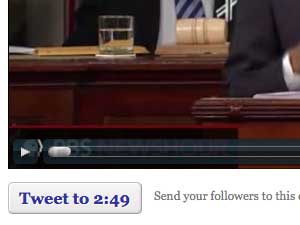
<p><a href="http://code.chirls.com/sotu-video/"><img src="http://chirls.com/wp-content/uploads/2011/02/tweet-time.jpg" alt="" /></a>With just a few hours advance notice, the <a href="http://brettgaylor.tumblr.com/post/3026870192/yes-we-did">Popcornjs crew put together</a> a <a href="http://www.pbs.org/newshour/sotu-video/">video/data mash-up of President Obama&rsquo;s State of the Union speech</a> for PBS, in which text analysis is displayed in time with the video.  Among such a long video, with so much data, WMM leader <a href="http://www.etherworks.ca/">Brett Gaylor</a> asked if I could build in a feature making it easy to Twitter a short URL right to a point in the middle of the video.  Sure I could.  Unfortunately, an external service we were using to access the Twitter API broke down, so we couldn&rsquo;t get the feature working in time to go live.  I&rsquo;ve worked around it, and here it is now.</p>

<p>Watch the video <a href="http://code.chirls.com/sotu-video/">from the beginning</a> or <a href="http://code.chirls.com/sotu-video/#1200">start 20 minutes in</a>.  Try the button just below the video.  Read on to learn how it works.</p>

<!-- more -->


<p>The process is pretty simple.  (I decided to use jQuery, since it was already loaded up for Popcorn.js, but it&rsquo;s not necessary.)  The three main steps are:</p>

<ol>
<li><p> Check the URL for a time code and advance the video to the appropriate starting point.</p></li>
<li><p> Update the time code on the button.</p></li>
<li><p> Set up a &ldquo;click&rdquo; handler on the button to generate the link and open a Twitter window.</p></li>
</ol>


<p>Here is the code to get the video started at the right place:</p>

<figure class='code'><figcaption><span></span></figcaption><div class="highlight"><table><tr><td class="gutter"><pre class="line-numbers"><span class='line-number'>1</span>
<span class='line-number'>2</span>
<span class='line-number'>3</span>
<span class='line-number'>4</span>
<span class='line-number'>5</span>
<span class='line-number'>6</span>
<span class='line-number'>7</span>
<span class='line-number'>8</span>
<span class='line-number'>9</span>
<span class='line-number'>10</span>
<span class='line-number'>11</span>
<span class='line-number'>12</span>
<span class='line-number'>13</span>
<span class='line-number'>14</span>
<span class='line-number'>15</span>
<span class='line-number'>16</span>
<span class='line-number'>17</span>
<span class='line-number'>18</span>
<span class='line-number'>19</span>
<span class='line-number'>20</span>
<span class='line-number'>21</span>
</pre></td><td class='code'><pre><code class='javascript'><span class='line'><span class="cm">/* get the &lt;video&gt; element. Don&#39;t use jQuery here because it doesn&#39;t expose video properties and methods */</span>
</span><span class='line'><span class="kd">var</span> <span class="nx">video</span> <span class="o">=</span> <span class="nb">document</span><span class="p">.</span><span class="nx">getElementById</span><span class="p">(</span><span class="s1">&#39;video&#39;</span><span class="p">);</span>
</span><span class='line'>
</span><span class='line'><span class="cm">/* advance video and auto-play */</span>
</span><span class='line'><span class="kd">var</span> <span class="nx">startVideo</span> <span class="o">=</span> <span class="kd">function</span><span class="p">()</span> <span class="p">{</span>
</span><span class='line'>    <span class="k">if</span> <span class="p">(</span><span class="nx">targetTime</span> <span class="o">&lt;</span> <span class="nx">video</span><span class="p">.</span><span class="nx">duration</span><span class="p">)</span> <span class="p">{</span>
</span><span class='line'>        <span class="nx">video</span><span class="p">.</span><span class="nx">currentTime</span> <span class="o">=</span> <span class="nx">targetTime</span><span class="p">;</span>
</span><span class='line'>        <span class="nx">video</span><span class="p">.</span><span class="nx">play</span><span class="p">();</span>
</span><span class='line'>    <span class="p">}</span>
</span><span class='line'><span class="p">};</span>
</span><span class='line'>
</span><span class='line'><span class="cm">/* parse URL hash after # for a number */</span>
</span><span class='line'><span class="kd">var</span> <span class="nx">targetTime</span> <span class="o">=</span> <span class="nb">window</span><span class="p">.</span><span class="nx">location</span><span class="p">.</span><span class="nx">hash</span><span class="p">.</span><span class="nx">substr</span><span class="p">(</span><span class="mi">1</span><span class="p">);</span>
</span><span class='line'><span class="nx">targetTime</span> <span class="o">=</span> <span class="nb">parseFloat</span><span class="p">(</span><span class="nx">targetTime</span><span class="p">);</span>
</span><span class='line'><span class="k">if</span> <span class="p">(</span><span class="o">!</span><span class="nb">isNaN</span><span class="p">(</span><span class="nx">targetTime</span><span class="p">)</span> <span class="o">&amp;&amp;</span> <span class="nx">targetTime</span> <span class="o">&gt;</span> <span class="mi">0</span><span class="p">)</span> <span class="p">{</span>
</span><span class='line'>    <span class="k">if</span> <span class="p">(</span><span class="nx">video</span><span class="p">.</span><span class="nx">readyState</span> <span class="o">&gt;=</span> <span class="mi">3</span><span class="p">)</span> <span class="p">{</span>
</span><span class='line'>        <span class="nx">startVideo</span><span class="p">();</span>
</span><span class='line'>    <span class="p">}</span> <span class="k">else</span> <span class="p">{</span>
</span><span class='line'>        <span class="nx">$</span><span class="p">(</span><span class="s1">&#39;#video&#39;</span><span class="p">).</span><span class="nx">bind</span><span class="p">(</span><span class="s1">&#39;loadedmetadata&#39;</span><span class="p">,</span> <span class="nx">startVideo</span><span class="p">);</span>
</span><span class='line'>    <span class="p">}</span>
</span><span class='line'><span class="p">}</span>
</span></code></pre></td></tr></table></div></figure>


<p>The information we need here is how far into the video we want to stop.  To keep it simple, we&rsquo;re just looking for a floating point number to represent seconds.  Since all this processing is happening in the browser and I don&rsquo;t have access to the server anyway, we put the number in the &ldquo;hash&rdquo;, which is the part after the # symbol.</p>

<p>After checking to make sure we have a positive number, we test if the video is loaded, since we don&rsquo;t always know the order in which our media and scripts will be loaded.  If the video is already loaded, start up the video right away.  Otherwise, bind our function to the &ldquo;<a href="https://developer.mozilla.org/En/Using_audio_and_video_in_Firefox#Media_events">loadedmetadata</a>&rdquo; event so the browser will get back to us when it&rsquo;s ready to start the video.  By using an event handler, we don&rsquo;t have to set a timeout to keep checking every few milliseconds.  (Though I&rsquo;ve been told &ldquo;loadmetadata&rdquo; can be slow to fire, so some people use a timeout, even though it&rsquo;s ugly.)  Once the metadata has loaded, we can find out how long the video is to make sure we&rsquo;re not fast-forwarding past the end, and then it&rsquo;s simple to set the time and start playing.</p>

<p>Next, update the time code on our button.  (It&rsquo;s not actually a button, just a div, but it works anyway.)</p>

<figure class='code'><figcaption><span></span></figcaption><div class="highlight"><table><tr><td class="gutter"><pre class="line-numbers"><span class='line-number'>1</span>
<span class='line-number'>2</span>
<span class='line-number'>3</span>
<span class='line-number'>4</span>
<span class='line-number'>5</span>
<span class='line-number'>6</span>
<span class='line-number'>7</span>
<span class='line-number'>8</span>
<span class='line-number'>9</span>
<span class='line-number'>10</span>
<span class='line-number'>11</span>
<span class='line-number'>12</span>
<span class='line-number'>13</span>
<span class='line-number'>14</span>
<span class='line-number'>15</span>
<span class='line-number'>16</span>
<span class='line-number'>17</span>
<span class='line-number'>18</span>
<span class='line-number'>19</span>
</pre></td><td class='code'><pre><code class='javascript'><span class='line'><span class="nx">$</span><span class="p">(</span><span class="s1">&#39;#video&#39;</span><span class="p">).</span><span class="nx">bind</span><span class="p">(</span><span class="s1">&#39;timeupdate&#39;</span><span class="p">,</span> <span class="kd">function</span><span class="p">(</span><span class="nx">event</span><span class="p">)</span> <span class="p">{</span>
</span><span class='line'>    <span class="kd">var</span> <span class="nx">time</span> <span class="o">=</span> <span class="k">this</span><span class="p">.</span><span class="nx">currentTime</span><span class="p">;</span>
</span><span class='line'>    <span class="k">if</span> <span class="p">(</span><span class="nx">time</span> <span class="o">&lt;</span> <span class="mi">0</span><span class="p">)</span> <span class="p">{</span>
</span><span class='line'>        <span class="nx">time</span> <span class="o">=</span> <span class="mi">0</span><span class="p">;</span>
</span><span class='line'>    <span class="p">}</span>
</span><span class='line'>
</span><span class='line'>    <span class="kd">var</span> <span class="nx">mins</span> <span class="o">=</span> <span class="nb">Math</span><span class="p">.</span><span class="nx">floor</span><span class="p">(</span><span class="nx">time</span><span class="o">/</span><span class="mi">60</span><span class="p">,</span><span class="mi">10</span><span class="p">);</span>
</span><span class='line'>    <span class="kd">var</span> <span class="nx">secs</span> <span class="o">=</span> <span class="nb">Math</span><span class="p">.</span><span class="nx">floor</span><span class="p">(</span><span class="nx">time</span> <span class="o">-</span> <span class="nx">mins</span><span class="o">*</span><span class="mi">60</span><span class="p">);</span>
</span><span class='line'>    <span class="kd">var</span> <span class="nx">hours</span> <span class="o">=</span> <span class="nb">Math</span><span class="p">.</span><span class="nx">floor</span><span class="p">(</span><span class="nx">mins</span><span class="o">/</span><span class="mi">60</span><span class="p">,</span><span class="mi">10</span><span class="p">);</span>
</span><span class='line'>    <span class="nx">secs</span> <span class="o">=</span> <span class="p">(</span><span class="nx">secs</span> <span class="o">&gt;</span> <span class="mi">9</span> <span class="o">?</span> <span class="nx">secs</span> <span class="o">:</span> <span class="s1">&#39;0&#39;</span> <span class="o">+</span> <span class="nx">secs</span><span class="p">);</span>
</span><span class='line'>
</span><span class='line'>    <span class="k">if</span> <span class="p">(</span><span class="nx">hours</span> <span class="o">&gt;</span> <span class="mi">0</span><span class="p">)</span> <span class="p">{</span>
</span><span class='line'>        <span class="nx">mins</span> <span class="o">=</span> <span class="nx">mins</span> <span class="o">%</span> <span class="mi">60</span><span class="p">;</span>
</span><span class='line'>        <span class="nx">mins</span> <span class="o">=</span> <span class="p">(</span><span class="nx">mins</span> <span class="o">&gt;</span> <span class="mi">9</span> <span class="o">?</span> <span class="nx">mins</span> <span class="o">:</span> <span class="s1">&#39;0&#39;</span> <span class="o">+</span> <span class="nx">mins</span><span class="p">);</span>
</span><span class='line'>        <span class="nx">$</span><span class="p">(</span><span class="s2">&quot;#tweet-time&quot;</span><span class="p">).</span><span class="nx">html</span><span class="p">(</span><span class="s1">&#39;Tweet to &#39;</span> <span class="o">+</span> <span class="nx">hours</span> <span class="o">+</span> <span class="s1">&#39;:&#39;</span> <span class="o">+</span> <span class="nx">mins</span> <span class="o">+</span> <span class="s1">&#39;:&#39;</span> <span class="o">+</span> <span class="nx">secs</span><span class="p">);</span>
</span><span class='line'>    <span class="p">}</span> <span class="k">else</span> <span class="p">{</span>
</span><span class='line'>        <span class="nx">$</span><span class="p">(</span><span class="s2">&quot;#tweet-time&quot;</span><span class="p">).</span><span class="nx">html</span><span class="p">(</span><span class="s1">&#39;Tweet to &#39;</span> <span class="o">+</span> <span class="nx">mins</span> <span class="o">+</span> <span class="s1">&#39;:&#39;</span> <span class="o">+</span> <span class="nx">secs</span><span class="p">);</span>
</span><span class='line'>    <span class="p">}</span>
</span><span class='line'><span class="p">});</span>
</span></code></pre></td></tr></table></div></figure>


<p>This feature is not absolutely necessary to make this work, but it&rsquo;s helpful to tell the user exactly how far into the video we&rsquo;re linking and indicate that the button action is time-sensitive.  The &ldquo;timeupdate&rdquo; event fires a few times a second, whether we&rsquo;re playing or scrubbing the video, forward or reverse.  Javascript doesn&rsquo;t provide an easy way to make a string showing elapsed time from seconds, so we do it ourselves.  jQuery makes it easy to change the text.</p>

<p>One problem with this code is that the button changes width as the time changes.  Ideally, you&rsquo;d probably check the duration of the video once at the beginning to determine whether you&rsquo;re ever going to need the hours, and pick a fixed-width font.</p>

<p>Finally, set up the &ldquo;click&rdquo; event to create the link and pass it to Twitter.</p>

<figure class='code'><figcaption><span></span></figcaption><div class="highlight"><table><tr><td class="gutter"><pre class="line-numbers"><span class='line-number'>1</span>
<span class='line-number'>2</span>
<span class='line-number'>3</span>
<span class='line-number'>4</span>
<span class='line-number'>5</span>
<span class='line-number'>6</span>
<span class='line-number'>7</span>
<span class='line-number'>8</span>
<span class='line-number'>9</span>
<span class='line-number'>10</span>
<span class='line-number'>11</span>
<span class='line-number'>12</span>
<span class='line-number'>13</span>
<span class='line-number'>14</span>
<span class='line-number'>15</span>
<span class='line-number'>16</span>
</pre></td><td class='code'><pre><code class='javascript'><span class='line'><span class="kd">var</span> <span class="nx">base</span> <span class="o">=</span> <span class="nb">window</span><span class="p">.</span><span class="nx">location</span><span class="p">.</span><span class="nx">protocol</span> <span class="o">+</span> <span class="s1">&#39;//&#39;</span> <span class="o">+</span> <span class="nb">window</span><span class="p">.</span><span class="nx">location</span><span class="p">.</span><span class="nx">host</span> <span class="o">+</span> <span class="nb">window</span><span class="p">.</span><span class="nx">location</span><span class="p">.</span><span class="nx">pathname</span><span class="p">;</span>
</span><span class='line'><span class="nx">$</span><span class="p">(</span><span class="s2">&quot;#tweet-time&quot;</span><span class="p">).</span><span class="nx">click</span><span class="p">(</span><span class="kd">function</span><span class="p">()</span> <span class="p">{</span>
</span><span class='line'>    <span class="kd">var</span> <span class="nx">time</span> <span class="o">=</span> <span class="nx">video</span><span class="p">.</span><span class="nx">currentTime</span><span class="p">;</span>
</span><span class='line'>    <span class="k">if</span> <span class="p">(</span><span class="nx">time</span> <span class="o">&lt;</span> <span class="mi">0</span><span class="p">)</span> <span class="p">{</span>
</span><span class='line'>        <span class="nx">time</span> <span class="o">=</span> <span class="mi">0</span><span class="p">;</span>
</span><span class='line'>    <span class="p">}</span>
</span><span class='line'>
</span><span class='line'>    <span class="kd">var</span> <span class="nx">height</span> <span class="o">=</span> <span class="nx">screen</span><span class="p">.</span><span class="nx">height</span><span class="p">;</span>
</span><span class='line'>    <span class="kd">var</span> <span class="nx">width</span> <span class="o">=</span> <span class="nx">screen</span><span class="p">.</span><span class="nx">width</span><span class="p">;</span>
</span><span class='line'>
</span><span class='line'>    <span class="nb">window</span><span class="p">.</span><span class="nx">open</span><span class="p">(</span><span class="s1">&#39;http://twitter.com/share?count=none&amp;counturl;=&#39;</span> <span class="o">+</span>
</span><span class='line'>        <span class="nb">encodeURIComponent</span><span class="p">(</span><span class="nx">base</span><span class="p">)</span> <span class="o">+</span> <span class="s1">&#39;&amp;text;=&amp;url;=&#39;</span> <span class="o">+</span> <span class="nb">encodeURIComponent</span><span class="p">(</span><span class="nx">base</span> <span class="o">+</span> <span class="s1">&#39;#&#39;</span> <span class="o">+</span> <span class="nx">time</span><span class="p">),</span>
</span><span class='line'>        <span class="s1">&#39;tweet-time-sotu&#39;</span><span class="p">,</span> <span class="s2">&quot;left=&quot;</span> <span class="o">+</span> <span class="nb">Math</span><span class="p">.</span><span class="nx">round</span><span class="p">((</span><span class="nx">width</span><span class="o">/</span><span class="mi">2</span><span class="p">)</span><span class="o">-</span><span class="p">(</span><span class="mi">550</span><span class="o">/</span><span class="mi">2</span><span class="p">))</span> <span class="o">+</span>
</span><span class='line'>        <span class="s2">&quot;,top=&quot;</span> <span class="o">+</span> <span class="nb">Math</span><span class="p">.</span><span class="nx">round</span><span class="p">((</span><span class="nx">height</span><span class="o">/</span><span class="mi">2</span><span class="p">)</span><span class="o">-</span><span class="p">(</span><span class="mi">450</span><span class="o">/</span><span class="mi">2</span><span class="p">))</span> <span class="o">+</span>
</span><span class='line'>        <span class="s2">&quot;,width=550,height=450,personalbar=0,toolbar=0,scrollbars=1,resizable=1&quot;</span><span class="p">);</span>
</span><span class='line'><span class="p">});</span>
</span></code></pre></td></tr></table></div></figure>


<p>The most important point here is creating the URL to pass along to Twitter (&ldquo;base + &lsquo;#&rsquo; + time&rdquo;).  One thing we need to be very careful about is that most Twitter clients parse everything after &ldquo;#&rdquo; as a hashtag, separate from the URL.  The solution is to use a [URL shortener, which is handy for hiding the &ldquo;#&rdquo; symbol as well as saving us characters out of the allowed 140.  Originally, I used the <a href="http://is.gd/apishorteningreference.php">is.gd API</a> for this (we need a different short URL for every timecode someone uses).  This worked well enough, but it required an extra call out to the network, which made things crawl on a slow connection.</p>

<p>Fortunately, Twitter provides a nice, clean <a href="http://dev.twitter.com/pages/tweet_button">sharing tool</a> that will create a short URL for us.  (<a href="http://dev.twitter.com/pages/tweet_button">This page</a> explains how to use it.)  We just have to make sure to wrap our target URL in <a href="https://developer.mozilla.org/en/JavaScript/Reference/Global_Objects/encodeURIComponent">encodeURIComponent</a> so the &ldquo;#&rdquo; gets escaped, otherwise everything after it won&rsquo;t make it to the server.  Normally, I hate using pop-up windows, but Twitter was pulling some kind of referrer-checking shenanigans, giving me a &ldquo;Forbidden&rdquo; server error when I tried to load this page inside an <iframe> so I didn&rsquo;t have a choice.</p>

<p>That&rsquo;s everything.  Hopefully, the next time PBS and Mozilla do another one of these, they&rsquo;ll integrate this feature.  Please comment below if you decide to use it or if you want to suggest any improvements.</p>
]]></content>
  </entry>
  
  <entry>
    <title type="html"><![CDATA[What I'm Working On: Synchronized Videos in HTML5 (featuring Ok Go)]]></title>
    <link href="http://chirls.com/2011/01/13/what-im-working-on-synchronized-videos-in-html5-featuring-ok-go/"/>
    <updated>2011-01-13T14:52:31-05:00</updated>
    <id>http://chirls.com/2011/01/13/what-im-working-on-synchronized-videos-in-html5-featuring-ok-go</id>
    <content type="html"><![CDATA[<p>Here&rsquo;s another demo.  This time I&rsquo;m showing off <a href="http://www.html5video.org/">HTML5 video</a> with a pair of videos by the band <a href="http://www.okgo.net">Ok Go</a>.</p>

<p>Ok Go made the <a href="http://www.youtube.com/watch?v=nHlJODYBLKs">video for &ldquo;White Knuckles&rdquo;</a> all in one shot and by all accounts it wasn&rsquo;t easy.  Thankfully, they also posted an extensive video showing <a href="http://www.youtube.com/watch?v=CXJflIGDE-o">how they did it</a>.  The video shows the complex choreography from different angles, edited together in time with the final result.  I thought the best way to appreciate the entire process would be to see them <a href="http://code.chirls.com/whiteknuckles/">side by side</a>.</p>

<p><strong><a href="http://code.chirls.com/whiteknuckles/">Try out the real thing</a></strong> or watch the video below.</p>

<p>The new-ish video features of HTML5 allow Javascript code enough control over embedded videos to get two of them playing in sync.  Otherwise, they work just like images, so it&rsquo;s easy enough to stretch and move them around.  No plugins (Flash, Silverlight, etc.) are required, and it should work in Firefox, Chrome, Safari(?) and <em>maybe</em> Internet Explorer 9.  But no iPhones, iPads or Androids.  Your mileage may vary, especially on slow connections where the videos don&rsquo;t load up quickly.</p>

<p>The approach is not perfect, as seeking around the videos will likely cause synchronization to go off a bit, even on the latest beta versions of both Firefox and Chrome.  I&rsquo;ve written some tricky and maybe even ugly code to try to minimize this problem, but it&rsquo;s not perfect.  The standard event model for the media controllers doesn&rsquo;t offer quite as much control as I&rsquo;d like, and the way the browsers load video asynchronously seems to make solving this problem impossible.  If anyone has any thoughts or suggestions, please comment.</p>

<p><strong>Download Video:</strong></p>

<p><a href="http://code.chirls.com/whiteknuckles/videos/knucklesdemo.mp4">MP4</a></p>

<p><a href="http://code.chirls.com/whiteknuckles/videos/knucklesdemo.ogv">Ogg</a></p>

<p><a href="http://www.youtube.com/watch?v=Ncvq-iEwp50">Watch it on YouTube</a></p>

<p><a href="http://videojs.com">HTML5 Video Player</a> by VideoJS</p>
]]></content>
  </entry>
  
  <entry>
    <title type="html"><![CDATA[What I'm Working On: Mapping Demand in 3D]]></title>
    <link href="http://chirls.com/2011/01/05/what-im-working-on-mapping-demand-in-3d/"/>
    <updated>2011-01-05T16:19:59-05:00</updated>
    <id>http://chirls.com/2011/01/05/what-im-working-on-mapping-demand-in-3d</id>
    <content type="html"><![CDATA[<p>It&rsquo;s been nice to see an increased awareness in the media community over the last few years of the opportunities to engage audiences on the Internet.  There is a new batch of technologies becoming available that should enhance the kind of experiences, allowing for a level of interactivity and visual expressiveness that could match or rival the films themselves.  I&rsquo;ve been experimenting with some of these, and I wanted to share the results.</p>

<p>Among my favorite of these is the cluster of technologies around HTML5, including CSS3, WebSockets, faster Javascript and especially WebGL.  WebGL is a powerful graphics library (analogous to OpenGL) that will give web developers access to hardware graphics acceleration in the browser, standard and without any plugins.  Here is a demo I put together using WebGL to map audience demand data on the web to a 3D representation of the Earth.</p>

<p>This is just a prototype, and there&rsquo;s a lot of room for improvement in performance, aesthetics and interactivity, but I think it shows the potential of what&rsquo;s possible.  The graphics are beyond what we&rsquo;ve generally seen on the web before, and it&rsquo;s combined with the kind of portable data that has been spreading around the web for the last few years.  I&rsquo;ll try to clean up the code and get a live demo online soon.</p>

<p>For now, WebGL is only available in Beta versions of <a href="http://www.mozilla.com/firefox/beta/">Firefox</a> and <a href="http://www.google.com/landing/chrome/beta/">Chrome</a> (and maybe Safari?).  They&rsquo;re worth downloading early if you&rsquo;ve got the guts for the occasional bug, and they&rsquo;ll hopefully be released in the next few months.  If you want to take a shot at developing with WebGL yourself, there are great lessons at <a href="http://learningwebgl.com/lessons/">Learning WebGL</a> and at <a href="https://developer.mozilla.org/en/WebGL">Mozilla</a>.</p>

<p>I&rsquo;ve got lots more demos coming, and they&rsquo;re cooler than this one, so check back for more in the next week or so.  I&rsquo;ll be posting them on <a href="http://www.youtube.com/my_playlists?p=E0A7E6123B19ACC9">YouTube</a> and on <a href="http://twitter.com/bchirls">Twitter</a>.</p>
]]></content>
  </entry>
  
  <entry>
    <title type="html"><![CDATA[Twitter, File Sharing and Pink Slime]]></title>
    <link href="http://chirls.com/2009/08/27/twitter-file-sharing-and-pink-slime/"/>
    <updated>2009-08-27T01:26:16-04:00</updated>
    <id>http://chirls.com/2009/08/27/twitter-file-sharing-and-pink-slime</id>
    <content type="html"><![CDATA[<p>Over at <a href="http://filmmakermagazine.com/webexclusives/2009/08/tweet-this-by-jake-abraham.php">Filmmaker Magazine</a>, Jake Abraham, writer/producer of <a href="http://www.lovelybysurprise.com/">&ldquo;Lovely by Surprise&rdquo;</a>, wrote yesterday about his troubles with Twitter and file sharing. I know he&rsquo;s not the only one, so it seemed a good opportunity to share a few points on how to turn these tricky points to your advantage.</p>

<p>Abraham writes:</p>

<blockquote><p>Twitter in particular has proven to be a great device for communication amongst our followers. It has also become a tool for evil, I’ve discovered. On Saturday, August 8th, one month after our official release date, there was a spike in tweets related to LBS. We wondered why and took a look. It appeared that people were tweeting and re-tweeting a URL that linked to a pirated version of the film.</p></blockquote>

<p>Remember the pink slime from &ldquo;Ghostbusters II&rdquo;? For most of the film, it was also a &ldquo;tool for evil.&rdquo; But Dr. Spengler et al. sprayed it all over the inside of the Statue of Liberty, and then it made everybody hug. (Ok, it represents a slightly different kind of &ldquo;free,&rdquo; but I think the analogy holds.)</p>

<p>I don&rsquo;t need to spend a lot of time on how to compete with free, since it&rsquo;s a well-covered topic. Kevin Kelly&rsquo;s essay <a href="http://www.kk.org/thetechnium/archives/2008/01/better_than_fre.php">&ldquo;Better Than Free&rdquo;</a> lists a number of factors that you can build into your film/story/product to give it value that make it worth paying for, even when it&rsquo;s available for free. <a href="http://springboardmedia.blogspot.com/2009/07/free-thoughts-on-free.html">Brian Newman</a> has a blog post and video on it, which is worth watching.</p>

<p>What this is really about is taking advantage of Twitter and other communication tools to play a major part in the global conversation about your work. (If there isn&rsquo;t one, you need to start it.) Piracy on Canal St. happened before the Internet, and illegal downloading happened before Twitter. As Abraham acknowledged, you can&rsquo;t stop it. Beyond pointers to free downloads, people are going to be saying lots of things about your film that you don&rsquo;t like, including bad reviews, off-brand descriptions of your work and possibly even lies or personal attacks. The power of the Internet is that you can be in on it. You can know it&rsquo;s happening, you can respond to it and you can preempt it.</p>

<p>As a filmmaker, you are at a tremendous advantage in owning your brand&rsquo;s online story. Presumably, you know all about your film before anyone else does, so you can start putting your message out there before anyone else gets to it. You own the domain name, twitter account, etc. for the name of your film. (You don&rsquo;t? Get on it!) And the people who love the film are probably the most vocal about it, and they&rsquo;ll link back to you. You have to work real hard to piss people off enough that the haters will shout more loudly than the fans. If you keep the conversation going, those tweets and blog posts about torrent links and other nastiness will drift off the front pages and into obscurity. There are a few tiny things about me personally from way back that I&rsquo;d rather not have out there (nothing too juicy, sorry), but you have to dig pretty deep to find it, because I&rsquo;ve put myself out there with Twitter, an open Facebook account, my blog, etc.. But if you keep quiet, the nasties will fill the void for you.</p>

<p>Of course, it&rsquo;s much harder to take advantage of this when you&rsquo;ve got $1 million or more at stake and you address the matter after your film is already out. I think it&rsquo;s wise to keep budgets low for now, as the details are still being worked out, but they will be worked out, since these are not entirely new business principles. Mercedes-Benz doesn&rsquo;t go out of business just because it&rsquo;s cheaper to get to work in a Hyundai. And Coach is still profitable, even though their belts are being knocked off everywhere. That&rsquo;s because Mercedes and Coach are premium brands, and it&rsquo;s not about a cheap ride to the office or keeping your pants from falling down. Their advertising messages reflect that, which is why Mercedes ads have Janis Joplin and vintage cars instead of some announcer shouting about seasonal discounts.</p>

<p>Most independent films are also premium brands. Your film is probably not about killing 90 minutes. It&rsquo;s not about catching a glimpse of Megan Fox bent over, and it&rsquo;s not about keeping the kids quiet in the back of the minivan. You can&rsquo;t compete with &ldquo;free&rdquo; on price any more than Mercedes can compete on price with Hyundai. So don&rsquo;t. Your film is about a deeper story, and the ability to create that is your sustainable competitive advantage. Twitter and other digital media are your opportunity to demonstrate that.</p>

<p>I&rsquo;m writing a film right now, and even before the script is finished, I&rsquo;m planning some cool stuff for screenings, merchandise and other payment points to add value along the lines of Kevin Kelly&rsquo;s article. When I release the film, I will probably put it online for free. By putting it out there myself, I can beat the pirates to it and make sure free copies are burned with a URL to my online store, and I can track how many people are watching it. But it also tells the story that my film is a full experience and more than just a few hundred megabytes of pixels. After all, as a filmmaker, I should know how to tell a story, right?</p>

<p>Sure the Internet is a double-edged sword. But if you know where to swing it, you don&rsquo;t have to cut your face off.</p>
]]></content>
  </entry>
  
  <entry>
    <title type="html"><![CDATA[An Open Metadata Solution]]></title>
    <link href="http://chirls.com/2009/06/18/an-open-metadata-solution/"/>
    <updated>2009-06-18T18:19:39-04:00</updated>
    <id>http://chirls.com/2009/06/18/an-open-metadata-solution</id>
    <content type="html"><![CDATA[<p>This Saturday, I will be speaking on a roundtable on metadata at the <a href="http://openvideoconference.org">Open Video Conference</a> and presenting an informal demonstration of new, metadata-related software I&rsquo;ve been working on at the &ldquo;<a href="http://openvideoconference.org/schedule/#hackday">Hack Day</a>&rdquo; on Sunday.</p>

<p>For the past year or so, I&rsquo;ve been hearing bits of the film industry slowly wake up to the fact that the state of media metadata is a mess.  The complete lack of open, common data formats leaves media producers struggling to conform their data to a variety of proprietary formats, only to result in outdated and inaccurate information left under the control of others.  Worse, existing processes discriminate against independent producers by limiting what counts as a &ldquo;real&rdquo; movie, album or other work.</p>

<p>I have been working on a project called <strong>Open Media Object Format</strong>, which is a free (both as in beer and as in speech) protocol and file format for publishing rich metadata on a range of media.  The protocol creates a distributed network of information on media and its participants, allowing the information to spread while every creator maintains authority over their own work.  And the format is designed to store semantic data in more detail than we&rsquo;ve seen before.  The Open Media Object Format is an effort to address the above problems while bringing metadata away from the mere administrative, opening up possibilities for pretty cool stuff we haven&rsquo;t seen before.</p>

<p>Details for the roundtable and the demo are below.<!-- more --></p>

<h3>Open Video Conference Roundtable</h3>

<p>Metadata Roundtable II: Best Practices
When: Saturday, June 20, 2009 at 2:35 pm
Where: <a href="http://openvideoconference.org/venue/">Vanderbilt Hall, NYU</a>
<a href="http://openvideoconference.org/registration/">Conference registration</a> required (it&rsquo;s pretty cheap)
The participants are:</p>

<ul>
<li><p><strong>Devon Copley</strong> (session leader) &ndash; Fellow, Berkman Center for Internet and Society at Harvard University</p></li>
<li><p><strong>Brian Chirls</strong> &ndash; You know it.</p></li>
<li><p><strong>Ben Dean-Kawamura</strong> &ndash; Developer, Participatory Culture Foundation</p></li>
<li><p><strong>Mario Pena</strong> &ndash; SafeCreative</p></li>
<li><p><strong>David Rice</strong> &ndash; AudioVisual Preservation Solutions</p></li>
</ul>


<h3>Hack Day Demo</h3>

<p>On Sunday June 21, 2009, I will talk through the details of Open Media Object Format and demo the first implementation of it, a major Wordpress plugin (still in early beta) that any creator can use to bring media in from almost any source (YouTube, Twitter, Flickr, etc.) and republish it as a blog post with OpenMOFo XML metadata output.</p>

<p>It will be a great opportunity to participate in shaping the metadata standard and to get a first look at a new blog publishing platform.  I&rsquo;d appreciate the feedback.  Hack Day is at <a href="http://openvideoconference.org/venue/">Vanderbilt Hall, NYU</a>, the same location as the conference, and it&rsquo;s open to the public for free.  I&rsquo;m still figuring out the rest of the details, so check back here or follow me on <a href="http://twitter.com/bchirls">twitter</a> for the exact time.  <a href="http://chirls.com/contact/">Contact</a> me if you want to suggest a time or let me know you&rsquo;re coming.</p>
]]></content>
  </entry>
  
  <entry>
    <title type="html"><![CDATA[On Film Festival Premiere Requirements: Who's It Good For?]]></title>
    <link href="http://chirls.com/2009/04/30/on-film-festival-premiere-requirements-whos-it-good-for/"/>
    <updated>2009-04-30T01:32:49-04:00</updated>
    <id>http://chirls.com/2009/04/30/on-film-festival-premiere-requirements-whos-it-good-for</id>
    <content type="html"><![CDATA[<p>Watching a <a href="http://www.scottisharts.org.uk/1/professional/audiences/scottishaudiencedevelopmentforum/forum08/briannewman.aspx">presentation</a> by Brian Newman, CEO of <a href="http://www.tribecafilminstitute.org/">Tribeca Film Institute</a>, I took note of a discussion on the value of having a film screen as a worldwide, nationwide or regional premiere at a given festival.  Newman says he believes the social experience of a festival screening renders the requirement unnecessary, even when a film is fully and freely available online, though his colleagues at the <a href="http://www.tribecafilm.com/festival/">Tribeca Film Festival</a> disagree.</p>

<p>It&rsquo;s been a few years since I submitted a film to a festival, but I remember it being a miserable process.  It&rsquo;s hard enough to deal with deadlines, trips to the post office (do people do that anymore?) and all those fees (a nasty debate in itself), but I found the premiere requirements practically crippling.  Since then, I&rsquo;ve attended many festivals and have even helped program one, so I have a different understanding of how these things work.</p>

<p>Below, I examine the issue from the perspective of different groups involved and see how each is affected by premiere requirements.  I encourage anyone with more experience or a different take to post a comment.</p>

<!-- more -->


<h3>Filmmakers</h3>

<p>At a minimum, premiere requirements limit the number of times and places you can have your film exhibited.  If you include restrictions on other media, it also eliminates opportunities to build an audience or earn money by having a film available online with advertising revenue or for sale as a download or DVD. But it can stop a filmmaker even before getting to festivals. Filmmakers often have to adjust their post-production and release schedules to the annual cycle of festivals and their deadlines. Premiere requirements can force a producer to pass on one festival in favor of a later, more prestigious festival.  If they don&rsquo;t get accepted to that first choice, they&rsquo;re forced to wait a whole year to try again at that second choice.  By that point, they&rsquo;ve lost time, audience, relevance and money, and they&rsquo;re submitting year-old film.</p>

<p>It could be good for filmmakers in that it keeps more screening slots open for more films, but I&rsquo;m afraid this is not always the spirit in which these rules are in place.  And it doesn&rsquo;t help at all in the case of platform exclusivity.</p>

<h3>Festivals</h3>

<p>In a short-term way that doesn&rsquo;t involve too much thinking, premiere requirements are great for festivals, which is presumably why they are still in effect.  It can help attract press and industry to a festival, assuming these people are already convinced that the films in question are worth the trip.  More simply, the requirements give festivals a lot of power over filmmakers. Lots of other companies use exclusivity as well to raise their negotiating power. (More on that <a href="http://chirls.com/2008/03/12/distribution-value-added/"> here</a>.)  When a filmmaker is forced to put all their eggs in your basket, you can make them beg, and it&rsquo;s harder for them to ask for concessions like a screening fee or help with a flight and hotel room.  The top festivals can use this as a tactic to affect a first-look right for themselves.</p>

<p>Having been a programmer, however, I&rsquo;ve observed first-hand that great films are precious, so it seems silly to turn away a good film because it&rsquo;s playing a thousand miles away the week before.</p>

<p>Also, if festivals are to stay relevant, and I believe they can, they need to improve upon and emphasize the value they add as social events. Relying on exclusivity is decreasingly effective and distracts from that.</p>

<h3>Audiences</h3>

<p>I&rsquo;m hard pressed to think how premiere requirements are anything but bad for audiences.  In my experience, most non-industry festival attendees are local.  Very few people can afford to take a week off and spend money on travel for a film festival if it&rsquo;s not for work.  Even locally, film fans don&rsquo;t have time to run out of films to see.  While it is nice to know you&rsquo;re seeing something before everybody else, you can retain most of that experience knowing that you&rsquo;re seeing a film in advance of a wide release (if it even happens at all) and with the director and actors in attendance.</p>

<p><a href="http://genart.org/film">Gen Art</a> is an example of a festival that consistently fills theaters with a local, non-industry audience without a strict premiere requirement.  They even host year-round screenings of films the week before wide release, adding the value of an after-party and a post-screening discussion with the director and actors.</p>

<p>Newman speaks about the importance of curation.  People have more entertainment options than ever.  Acceptance into a prestigious (or not) festival is no guarantee that you&rsquo;ll love a film, and even if it were, many festivals keep attendees too busy to see everything.  Prior festival screenings give films time to build a track record of reviews, buzz and community that can help audiences do their own curation and even heighten the experience.</p>

<h3>Press and Industry</h3>

<p>For the most part, I think premiere requirements are pretty good for press and industry.  I assume they were mostly put in place to attract these people.  Distributors, festival programmers, journalists and bloggers go to a lot of festivals, so they don&rsquo;t need to see the same films over and over again.  But many of these people have access to screener copies of all these films anyway.  While it does make a difference to see a film with an audience, that is not the way most people will see these films.</p>

<p>It appears that premiere requirements hurt more than they help, and they are helping the wrong people.  Distributors are not acquiring many films right now, at least not for enough money to cover a production budget.  Professional reviews are great, but they are not the best way to reach audiences. And industry professionals have other reasons to attend festivals &ndash; networking, panel discussions and free drinks.  Film festivals are great at creating social experiences, and they are best suited to serving audiences first, filmmakers second and everybody else after that.</p>

<p>Premiere requirements seem to be based on the idea that a film starts with a certain value and then shrinks from there on out.  This is the same idea that holds up the old model of windows, where a film starts with a big opening weekend, followed by decreasing box office and a chain of platforms, each offering lower cost and lower quality.  I believe this model is obsolete, and that producers, audiences and the industry can benefit from giving films a chance to grow.</p>

<p><em>To see the relevant part of Brian Newman&rsquo;s talk, go <a href="http://www.scottisharts.org.uk/1/professional/audiences/scottishaudiencedevelopmentforum/forum08/briannewman.aspx">here</a>, click on the &ldquo;menu&rdquo; button in the upper-right corner of the video player, and select the fourth section, titled &ldquo;Conversation.&rdquo;</em></p>
]]></content>
  </entry>
  
  <entry>
    <title type="html"><![CDATA[Audio: IFF Boston Audience Building Panel]]></title>
    <link href="http://chirls.com/2009/04/27/audio-iff-boston-audience-building-panel/"/>
    <updated>2009-04-27T12:07:59-04:00</updated>
    <id>http://chirls.com/2009/04/27/audio-iff-boston-audience-building-panel</id>
    <content type="html"><![CDATA[<p>Here is an audio recording of our full panel at Independent Film Festival Boston, <a href="http://chirls.com/2009/04/06/panel-independent-film-festival-boston/">Followers: How Filmmakers are Building Their Audiences Online in the 21st Century</a>.</p>

<p>You can listen with the embedded player below or <a href="http://soundcloud.com/brianchirls/iffboston-audience-building-panel/download">download the full mp3</a>.</p>

<p>The other panelists were:</p>

<ol>
<li><p> <strong>Scott Kirsner (moderator)</strong> is a journalist and all-around smart guy. He&rsquo;s the author of two books, <em><a href="http://www.scottkirsner.com/inventing/">Inventing the Movies</a></em>, which I frequently cite as a defining analysis of how the film industry falls behind on innovation, and <em><a href="http://www.scottkirsner.com/fff">Fans, Friends &amp; Followers</a></em>, an excellent collection of interviews with artists who build their own audiences and distribute their own work.  He also writes the blog <a href="http://cinematech.blogspot.com/">Cinematech</a>.</p></li>
<li><p> <strong>Chris Holland</strong> Director of Festival Operations at <a href="http://bside.com/">B-Side</a> and author of <em><a href="http://www.filmfestivalsecrets.com">Film Festival Secrets</a></em>.</p></li>
<li><p> <strong>Sean Flynn</strong> producer and cinematographer at <a href="http://principlepictures.com/">Principle Pictures</a>.</p></li>
</ol>


<p>We discussed a range of topics, including:</p>

<ol>
<li><p> Benefits and pitfalls of social networking (Facebook, MySpace, Twitter, etc.)</p></li>
<li><p> Strategies for reaching audiences before, during and after production</p></li>
<li><p> Crowdsourcing to build audiences as well as help production</p></li>
<li><p> How much of your content to post online for free</p></li>
<li><p> Ad revenue models</p></li>
<li><p> Distribution formats (DVD, download, streaming, theatrical, etc.)</p></li>
<li><p> Applying all the above to other media such as music and art</p></li>
</ol>


<p><a href="http://soundcloud.com/brianchirls/iffboston-audience-building-panel">Independent Film Festival Boston: Audience Building Panel</a>  by  <a href="http://soundcloud.com/brianchirls">brianchirls</a></p>
]]></content>
  </entry>
  
  <entry>
    <title type="html"><![CDATA[Panel: Independent Film Festival Boston]]></title>
    <link href="http://chirls.com/2009/04/06/panel-independent-film-festival-boston/"/>
    <updated>2009-04-06T15:52:35-04:00</updated>
    <id>http://chirls.com/2009/04/06/panel-independent-film-festival-boston</id>
    <content type="html"><![CDATA[<p>On Sunday, April 26, 2009, I will be speaking at a panel at <a href="http://www.iffboston.org/">Independent Film Festival Boston</a> on digital strategies for building and communicating with your audience.  I hope to reveal some of the tools I&rsquo;ve been working on over the past year.</p>

<p>I&rsquo;m looking forward to attending IFFB for the first time.  I&rsquo;ve heard great things about the festival, since <a href="http://foureyedmonsters.com">Four Eyed Monsters</a> played there in 2005, and the festival&rsquo;s Program Director <a href="http://en.wikipedia.org/wiki/Adam_Roffman">Adam Roffman</a> managed the very successful <a href="http://foureyedmonsters.com/boston-globe/">Boston release</a> of the film in 2006.</p>

<p>Here are the Details:
Sunday, April 26, 2009 @ 12:00 pm
<a href="http://www.somervilletheatreonline.com/somerville/index.php">Somerville Theatre</a>
55 Davis Sq
Somerville, MA 02144
(617) 625-5700
<a href="http://maps.google.com/maps?sourceid=Mozilla-search&amp;q=somerville+theater,+somerville,+ma&amp;ie=UTF8&amp;ll=42.397189,-71.122527&amp;spn=0.019649,0.036006&amp;t=h&amp;z=15&amp;iwloc=A">map</a></p>

<p>The other panelists are:</p>

<ol>
<li><p> <strong>Scott Kirsner (moderator)</strong> is a journalist and all-around smart guy. He&rsquo;s the author of two books, <em><a href="http://www.scottkirsner.com/inventing/">Inventing the Movies</a></em>, which I frequently cite as a defining analysis of how the film industry falls behind on innovation, and <em><a href="http://www.scottkirsner.com/fff">Fans, Friends &amp; Followers</a></em>, an excellent collection of interviews with artists who build their own audiences and distribute their own work.  He also writes the blog <a href="http://cinematech.blogspot.com/">Cinematech</a>.</p></li>
<li><p> <strong>Chris Holland</strong> Director of Festival Operations at <a href="http://bside.com/">B-Side</a> and author of <em><a href="http://www.filmfestivalsecrets.com">Film Festival Secrets</a></em>.</p></li>
<li><p> <strong>Sean Flynn</strong> producer and cinematographer at <a href="http://principlepictures.com/">Principle Pictures</a>.</p></li>
</ol>


<p><strong>Update:</strong> I recorded and posted the entire panel <a href="http://chirls.com/2009/04/27/audio-iff-boston-audience-building-panel/">here</a>.</p>
]]></content>
  </entry>
  
  <entry>
    <title type="html"><![CDATA[Link to start YouTube videos in the middle]]></title>
    <link href="http://chirls.com/2009/02/28/link-to-start-youtube-videos-in-the-middle/"/>
    <updated>2009-02-28T15:22:13-05:00</updated>
    <id>http://chirls.com/2009/02/28/link-to-start-youtube-videos-in-the-middle</id>
    <content type="html"><![CDATA[<p>Yesterday, a friend lamented that he didn&rsquo;t know of a way to send someone a link to a YouTube video so that it would skip to a certain point.  He knew some actors who wanted to show off videos they were in without making people wait through the whole beginning.</p>

<p>Unfortunately, I couldn&rsquo;t find any way to make this work on a YouTube watch page but YouTube has a pretty good API, both for the <a href="http://code.google.com/apis/youtube/js_api_reference.html">embedded player</a> and for retrieving <a href="http://code.google.com/apis/youtube/2.0/developers_guide_protocol.html">information on videos</a> themselves.  So I was able to <a href="http://chirls.com/v/QXj5pLUSeAw#367">hack together my own watch page</a>.</p>

<p>Here&rsquo;s how to use it:</p>

<ol>
<li><p> Go to <a href="http://chirls.com/v/">http://chirls.com/v/</a></p></li>
<li><p> Type or paste the URL of a YouTube video into the form</p></li>
<li><p> (Optional) Enter the desired starting time</p></li>
<li><p> Click <em>Load</em></p></li>
<li><p> Copy the link from your browser&rsquo;s URL bar or&hellip;</p></li>
<li><p> When the video loads, play or scrub to the exact desired starting time.</p></li>
<li><p> Pause the video</p></li>
<li><p> Copy the link or embed code from the form at the bottom to get the link to this video at your starting point.</p></li>
</ol>


<p>The format of the URL is pretty simple, if you want to put it together manually.
<code>http://chirls.com/v/**VIDEO_ID**/**TIME**</code></p>

<p>VIDEO_ID is that weird string of characters that comes after the &ldquo;=&rdquo; in a YouTube watch page link.
TIME is the starting point in seconds. This should not be less than 0 or more than the duration of your video. It must be in whole seconds.</p>

<p>If people find this useful, I&rsquo;ll keep updating it with new features and bug fixes. Please leave notes and suggestions in the <a href="http://chirls.com/2009/02/28/link-to-start-youtube-videos-in-the-middle/#comments">comments section on this post</a>.</p>

<p><strong>Update (March 1, 2009)</strong>: I&rsquo;ve changed the URL structure so that the time comes after a slash instead of a &ldquo;#&rdquo;, because the old format screwed things up when posting to <a href="http://twitter.com">Twitter</a> and a few other small problems.  The old format still works, so existing links should be fine.  If you leave off the time, the page will load with your video starting from the beginning.</p>
]]></content>
  </entry>
  
  <entry>
    <title type="html"><![CDATA[Audience Building Tools - DIY Days]]></title>
    <link href="http://chirls.com/2008/07/26/audience-building-tools-diy-days/"/>
    <updated>2008-07-26T18:18:30-04:00</updated>
    <id>http://chirls.com/2008/07/26/audience-building-tools-diy-days</id>
    <content type="html"><![CDATA[<p>DIY Days launched today in Los Angeles, and here is my video presentation that I made remotely, since I was unable to make it to LA this time.</p>

<p>The video is also available on <a href="http://www.youtube.com/watch?v=kQUYDggS28Y">YouTube</a>.</p>

<p>As promised in the video, here is a list of some of the tools I use and recommend.  If you have any to add, post them in a comment.  I&rsquo;ll update this post if I find any others that are useful.</p>

<h3>General Information Tools</h3>

<p><strong>Wordpress</strong>: This is the blogging software that runs this website, as well as <a href="http://foureyedmonsters.com">foureyedmonsters.com</a>, <a href="http://workbookproject.com/">Workbook Project</a> and tons of others.  It&rsquo;s free and open source.  You can have it hosted for free on <a href="http://wordpress.com/">wordpress.com</a>, or you can download it and install it on your own web server and customize it further.  In addition to blog posts, you can set up more permanent &ldquo;pages&rdquo; for information about your film that isn&rsquo;t time-based (<a href="http://chirls.com/about/">example</a>).
<a href="http://wordpress.org">Learn more and get Wordpress at http://wordpress.org</a></p>

<p><strong>Google Analytics</strong>: Most web hosting services provide basic reporting, but Google Analytics offers a clean, more reliable way to track your web traffic and drill down to find more information. I use this mostly to learn where incoming links are coming from and to see which pages and posts on my sites are getting the most attention.  This is also free.  If you have Wordpress, you can use <a href="http://www.semiologic.com/software/marketing/google-analytics/">this plugin</a> to easily get Analytics running on your site.
<a href="http://google.com/analytics">Learn more and sign up for Google Analytics at http://google.com/analytics</a></p>

<h3>Discovery Tools</h3>

<p><strong>Search Engine Optimization</strong>: This is not a specific software tool so much as a tactic for making your website easier to find through search engines.  There are a few <a href="http://wordpress.org/extend/plugins/tags/search-engine-optimization">Wordpress plugins</a> out there, but your best bet is to <a href="http://www.google.com/search?q=search+engine+optimization">search</a> around the web for <a href="http://www.jimwestergren.com/seo-for-wordpress-blogs/">articles</a>.  <a href="http://andrewapeterson.wordpress.com">Andrew Peterson</a>, who worked on the Four Eyed Monsters distribution team sometimes <a href="http://andrewapeterson.wordpress.com/category/seo-sem-smo-etc/">blogs about SEO</a>.  Some people try to game the system or cheat to get higher search rankings, but I try to use tactics that will also make a site easier and more informal for humans as well as for Google.
<a href="http://en.wikipedia.org/wiki/Search_engine_optimization">Learn about Search Engine Optimization on Wikipedia</a></p>

<p><strong>Social Networks</strong>: This includes the obvious sites, like Facebook and MySpace, but many other sites have social networking components.  YouTube, Flickr, Twitter or any other site that let&rsquo;s you link up to other friends on the same service is a social network.  Most social networks will show your friends what you&rsquo;re up to, and they will show <em>their friends</em> in turn that they&rsquo;re watching you.</p>

<h3>Spreading and Sharing Tools</h3>

<p><strong>Social Bookmarking</strong>: A variety of tools exist that allow you to bookmark resources on the web and share them publicly.  I use <a href="http://del.icio.us/brianchirls">del.icio.us</a> (a.k.a. Delicious), but there are a ton of others (<a href="http://digg.com/">Digg</a>, <a href="http://www.stumbleupon.com/">StumbleUpon</a>, <a href="http://www.facebook.com">Facebook</a>, etc.), each a bit different in exact purpose and features.  Encourage your audience to share your videos, posts, etc. on these sites.  I use <a href="http://www.valent-blog.eu/social-bookmarking-reloaded/">Social Bookmarking RELOADED</a>, which is a Wordpress plugin that automatically adds social bookmarking links to every post on my blog.  Also, check out <a href="http://sharethis.com/">ShareThis</a>, which is what you saw on the <a href="http://ironsky.net">Iron Sky</a> site in the above video.</p>

<h3>Subscription Tools</h3>

<p><strong>RSS and Atom Feeds</strong> are formats of machine-readable XML versions of websites.  They&rsquo;re great for reading blogs using news reader software, such as <a href="http://google.com/reader/">Google Reader</a>.  The idea is that posts on blogs you read are pushed to you through the reader software so you don&rsquo;t have to remember to go back to the blog website.  They&rsquo;re also great for syndicating information between sites.  The differences between RSS and Atom are subtle and technical, so for right now, they&rsquo;re almost the same exact thing.
<a href="http://www.google.com/support/feedburner/bin/answer.py?answer=79408">Learn more about feeds</a></p>

<p><strong>Feedburner</strong> is a tool for optimizing RSS and Atom feeds that come out of your blog.  It will also help you track how many people are reading your blog through the feed, and you can easily set up an <a href="http://www.feedburner.com/fb/a/publishers/fbemail">email digest version of your feed</a>.  I use <a href="http://www.feedburner.com/fb/a/help/wordpress_quickstart">this plugin</a> to easily integrate Feedburner into my Wordpress blog.
<a href="http://www.feedburner.com">Learn more and sign up at http://www.feedburner.com</a></p>

<p><strong>Twitter</strong> is a service that allows you to very easily post short updates, up to 140 characters from your cell phone, IM (Jabber/GTalk), a website or a variety of software.  People can subscribe to your Twitter feed using RSS/Atom or through Twitter itself via those same platforms (text messages, instant messaging, etc.).  You can also use the same RSS feed to syndicate these updates to your website, Facebook or other services.  This is a great way to keep the updates coming without much time investment.
<a href="http://twitter.com">Learn more and sign up at Twitter.com</a></p>

<h3>Interaction Tools</h3>

<p><strong>Disqus</strong>: Wordpress and other blogging software come with built-in comment functions. Encourage your audience to post comments to keep the discussion going.  Disqus is a service that plugs in to your blog and enhances the discussion features.  Use these to keep your fans invested, get feedback on what you&rsquo;re posting and see which fans are most involved.
<a href="http://disqus.com/">Learn more and sign up for Disqus</a></p>

<p><strong>cforms</strong>: This should be obvious, but not every film site has this.  I use this Wordpress plugin to create a great contact form on my site so people can <a href="http://chirls.com/contact/">email me directly</a> and privately without me having to post my email address online, which invites tons of spam.  It also tracks incoming emails in a database so I can keep an eye on who&rsquo;s in touch.
<a href="http://www.deliciousdays.com/cforms-plugin">Get cforms</a></p>

<h3>Examples</h3>

<p>Here are some film and media channel sites that show off some of the tools and strategies I talked about in this video.</p>

<ul>
<li><p><a href="http://foureyedmonsters.com">Four Eyed Monsters</a></p></li>
<li><p><a href="http://www.nerdcorerisingthemovie.com/">Nerdcore Rising</a></p></li>
<li><p><a href="http://ironsky.net">Iron Sky</a></p></li>
<li><p><a href="http://doctorhorrible.net">Dr. Horrible&rsquo;s Sing-Along Blog</a></p></li>
<li><p><a href="http://indoctrinate-u.com">Indoctrinate U</a></p></li>
<li><p><a href="http://www.wholphindvd.com/">Wholphin DVD</a></p></li>
</ul>


<p>For some tips on what <strong>not</strong> to do with your site, read this article I wrote a few months ago on <a href="http://chirls.com/2007/11/09/no-more-flash-movie-websites/">bad Flash movie websites</a>.</p>

<p>Thanks to <a href="http://alexjohnsononline.com/">Alex Johnson</a> for shooting this video.</p>
]]></content>
  </entry>
  
  <entry>
    <title type="html"><![CDATA[Distribution: Value Added]]></title>
    <link href="http://chirls.com/2008/03/12/distribution-value-added/"/>
    <updated>2008-03-12T17:31:18-04:00</updated>
    <id>http://chirls.com/2008/03/12/distribution-value-added</id>
    <content type="html"><![CDATA[<p>Here at <a href="http://sxsw.org">SXSW</a>, I&rsquo;ve met a number of cool, smart, ambitious filmmakers, some of whom even have great films.  Even as I attend premieres and parties that fit the fantasy, the sad reality of distribution prospects for the films is all too evident. That&rsquo;s why I&rsquo;m working with the <a href="http://fromheretoawesome.com">From Here to Awesome</a> team to build a strong case for DIY distribution. Maybe, rather than drag filmmakers kicking and screaming, we can see a DIY distribution as a positive opportunity.</p>

<p>Inspired by our roundtable discussion, I pulled out a couple of old distribution contracts I had and took them apart to look for the value that the distributors brought to the table in exchange for the rights granted.  A typical distribution deal will offer the following:</p>

<ul>
<li><p>Physical distribution</p></li>
<li><p>Cutting the deal</p></li>
<li><p>Promotion</p></li>
<li><p>Cash advance and/or minimum guarantee</p></li>
</ul>


<p>If we can understand what this value is, we can evaluate whether these distribution deals are the best option.  Here is a look at what each of those means and which rights and costs to the filmmaker are associated with each service.</p>

<h3>Physical distribution</h3>

<p>Getting your film (and soundtrack, posters, t-shirts, etc.) to an audience is a clearly necessary and valuable service. It includes replicating and shipping DVDs and placing them in stores (online and offline); theaters and film prints or digital cinema; and digital download or streaming services.  Most of the above services are commodities, in that there are many competitive companies from which a filmmaker or distributor can choose, so prices tend to be reasonably close to the actual cost of time and materials.  For physical distribution, the filmmaker often pays either a fixed fee or a small percentage of revenues.  Exclusivity is almost never required, and contract terms are for short periods of time.</p>

<p>DVD replication is a great example.  Depending on volume, you can pay about a dollar or two per DVD.  Shipping costs are fixed, as is the amount per unit that a retailer will usually pay.  Download services are not quite there yet as far as deal terms.  ITunes is pretty good, passing along 70% of gross revenues, though you have to go through an aggregator, who will take their own small cut. (See the next section.)  <a href="http://cinematech.blogspot.com/2007/09/digital-downloads-panel-at-ifp.html">Other download services</a> have yet to come on board with reasonable terms.  It is fair for a download contract to lock you in for a certain amount of time to cover encoding costs, but those costs are always falling and terms should become shorter.  (The term should be somewhere from zero to no more than three years, but about one year is fair.)</p>

<h3>Cutting the deal</h3>

<p>Unfortunately, many distribution platforms won&rsquo;t work directly with filmmakers, so you need someone to close the deal for you.  This could include a lawyer to double-check your contracts.  Again, iTunes is one such example; they require that you go through an aggregator, though it&rsquo;s very possible that they&rsquo;ll eventually drop that requirement as they learn how to scale the acquisition process.  Think of these people as agents, whose services might be worth about 10%.</p>

<h3>Promotion</h3>

<p>Promotion is perhaps the most elusive and tricky of all the value points distributors will claim to offer.  They will often incur costs for advertising, though incurring cost is not the same as providing value.  Unless you have the kind of movie that is well represented by newspaper ads, billboards and trailers on television, a distributor is not likely going to know better how to promote your movie than you do.  To look at it another way, you can spend $30,000 (guesstimate) on a quarter page ad in the New York Times.  For a truly independent film, that might bring ten or twenty people to a screening.  (For <em>Four Eyed Monsters</em>, it brought one.)  Now, imagine what you could do spending the same $30k on a web video series, where your audience can subscribe and interact repeatedly directly on your website.</p>

<p>Promotion is particularly nasty because it&rsquo;s the primary reason for someone to demand exclusivity.  The idea is that if a theatrical distributor pays for a newspaper ad, someone might see that ad and then buy a DVD instead of going to the theater.  So they need to not only get a cut of that DVD but also determine how and when you can sell that DVD.  You can get around exclusivity by working with companies that don&rsquo;t do much or any promotion, though there are many that will claim that they promote your work but don&rsquo;t really.  A buried listing on a website or in a catalogue is not sufficient promotion to justify exclusivity.  You may want to offer very limited exclusivity (e.g. on a given platform for 30 days) in exchange for a great promotion or placement opportunity.</p>

<h3>Cash advance</h3>

<p>At the point that a film is picture locked and ready to screen, filmmakers often find themselves desperate to make a deal that will cover their budget.  Such desperation gives any source of said cash undue negotiating power, and the whole situation should be preventable by preparing distribution funding in advance.  Consider that a distributor&rsquo;s advance/minimum guarantee is simply time-shifting of money and sharing of risk.  It happens that these are the exact services that financial institutions and equity investors provide.  So why would you go to a movie company for financial services instead of to a financial services provider?</p>

<p>Typically, before shooting a single frame, a filmmaker will raise money from one or more investors &ndash; perhaps private equity (like a dentist uncle), from a production company or by credit card.  At that point, the investor is taking on a great deal of risk and will expect an accordingly high share of the profits.  Maybe the film will stink; maybe the production will go catastrophically over budget; or maybe the director will get hit by a bus.  But once the film is completed, much of that risk has dissipated.  The movie has been delivered, and maybe it&rsquo;s even pretty good.  Any further investment from then on should take significantly less ownership, corresponding to the lower risk.</p>

<p>Given an investor-filmmaker relationship that has been successful enough to make it to picture lock, a filmmaker might be best served to return to the original investor(s) to fund delivery and distribution until revenues start coming in from box office, retail, etc.  Better yet, one might prepare a business plan to receive a first round of production funding with a high-risk return, followed by a second round of distribution funding at a pre-determined lower return rate once the picture lock milestone has been reached.  This is no different from how start-up companies prepare for venture funding.</p>

<h3>Build vs. Buy</h3>

<p>Whatever resources I need for a film project, I&rsquo;m always asking myself whether to build or to buy.  I look at the costs and benefits of hiring another company provide a service for me, compared with the costs and benefits of putting together the resources to do it myself.  Once you break down the real costs and added value of any distribution or other deal, you can determine at each step whether you really need someone else to do it for you.  Depending on what you find out, a distributor may be the best way to go, or maybe it&rsquo;s just better to DIY.</p>
]]></content>
  </entry>
  
  <entry>
    <title type="html"><![CDATA[SXSW Short Films Panel]]></title>
    <link href="http://chirls.com/2008/03/08/sxsw-short-films-panel/"/>
    <updated>2008-03-08T15:58:20-05:00</updated>
    <id>http://chirls.com/2008/03/08/sxsw-short-films-panel</id>
    <content type="html"><![CDATA[<p>I am currently in Austin for <a href="http://2008.sxsw.com">South By Southwest</a> Film and Interactive conference and festival.  I&rsquo;m here with the <a href="http://fromheretoawesome.com">From Here to Awesome</a> team, meeting (and recruiting) filmmakers, finding screening partners  and shooting video for the educational component.</p>

<p>I&rsquo;ve also been invited to speak on a <a href="http://2008.sxsw.com/film/conference/panels_schedule/?action=show&amp;id=FP060177">panel</a> about short films.  The panel is on Tuesday, March 11 at 11am, in room 15 of the Austin Convention Center.  Friends <a href="http://www.jigarmehta.com/">Jigar Mehta</a> and <a href="http://wholphindvd.com">Brent Hoff</a> are on the panel with me.</p>

<blockquote><p>Is it the Golden Age of Short Film? People keep saying it is, but I doubt many filmmakers have felt the gold yet. Some short films are bringing in more money than most award winning documentary&rsquo;s are being sold for. Find out what is the best way to capitalize on these new potential revenue streams as Filmmakers and industry experts discuss if this will really finally elevate/free shorts to become an art form and not just a stepping stone to features.</p></blockquote>

<p>If you&rsquo;re in Austin, come find me.</p>
]]></content>
  </entry>
  
  <entry>
    <title type="html"><![CDATA[Slamdance: Alternative Funding Methods]]></title>
    <link href="http://chirls.com/2008/03/01/slamdance-alternative-funding-methods/"/>
    <updated>2008-03-01T12:17:56-05:00</updated>
    <id>http://chirls.com/2008/03/01/slamdance-alternative-funding-methods</id>
    <content type="html"><![CDATA[<p>This January at Slamdance, I covered this discussion on alternative funding methods for Filmmaker Magazine.  After a month and a half of wrestling with video formats on YouTube, here is the entire panel.  Notes and short excerpts clips are on the <a href="http://www.filmmakermagazine.com/blog/2008/01/slamdance-fireside-chats-alternative.php">original post</a> on Filmmaker.</p>

<p>The panelists are:
Steve Montal (Moderator), <a href="http://slamdance.com/">Slamdance</a>
Skizz Cyzyk, <a href="http://www.microcinefest.org/">MicroCineFest</a>
Amy Dotson, <a href="http://http//ifp.org/">IFP</a>
Brian Felsen, <a href="http://www.discmakers.com/">Discmakers</a>
Don Holmsten, <a href="http://filmriot.com/">Film Riot</a>
Slava Rubin, <a href="http://www.indiegogo.com/">IndieGoGo</a>
Nat Dinga, Producer, <em><a href="http://www.fixthemovie.com/">Fix</a></em></p>
]]></content>
  </entry>
  
  <entry>
    <title type="html"><![CDATA[Building an Online Audience]]></title>
    <link href="http://chirls.com/2008/02/01/building-an-online-audience/"/>
    <updated>2008-02-01T20:24:36-05:00</updated>
    <id>http://chirls.com/2008/02/01/building-an-online-audience</id>
    <content type="html"><![CDATA[<p>Last week, at Sundance, I managed to squeeze in a quick meeting with Scott Kirsner, who writes one of my favorite blogs, <a href="http://cinematech.blogspot.com">Cinematech</a>.  Scott was in Park City to a panel called <a href="http://cinematech.blogspot.com/2008/01/sundance-panel-on-digital-opportunities.html">Digital Opportunities for Creatives</a>, which I missed because it was after I left town.  But we had a few minutes to talk about said opportunities, and Scott interviewed me on video for his blog.</p>

<blockquote><p>Brian&rsquo;s a smart guy&hellip; we mostly talked about the importance of collecting information about your fans (and who&rsquo;s a super-fan versus someone who&rsquo;s just mildly interested in your movie). We also touched on the deal that &lsquo;Four Eyed Monsters&rsquo; did with <a href="http://cinematech.blogspot.com/2007/06/first-feature-film-on-youtube-four-eyed.html">YouTube and Spout,</a> where YouTube offered the full movie for free, and Spout served as a sponsor, paying the filmmakers a buck for every new member who joined after watching the movie on YouTube.</p></blockquote>

<p>Check out Scott&rsquo;s <a href="http://cinematech.blogspot.com/2008/02/talking-with-brian-chirls-about-online.html">original post</a> and take a minute to look at some of the other posts on his site.</p>
]]></content>
  </entry>
  
  <entry>
    <title type="html"><![CDATA[Sundance 2008 Video Blog]]></title>
    <link href="http://chirls.com/2008/01/17/sundance-2008-video-blog/"/>
    <updated>2008-01-17T03:50:25-05:00</updated>
    <id>http://chirls.com/2008/01/17/sundance-2008-video-blog</id>
    <content type="html"><![CDATA[<p>I&rsquo;m heading out to Park City in a couple hours for the Sundance Film Festival.  I&rsquo;ll be video blogging, focusing mainly on the <a href="http://www.sundance.org/festival/film_events/panels.asp?tab=panelsActive">panels</a>.  But I&rsquo;ll also be keeping an eye out for intelligent discussions and talks in non-Sundance venues.  The plan is to post one video per day with a commentary and whatever additional resources are appropriate.  The videos will be posted here and on <a href="http://www.filmmakermagazine.com/blog/index.php">Filmmaker Magazine</a>&rsquo;s site.</p>

<p>If you&rsquo;re going to be at Sundance and would like to meet up, <a href="http://chirls.com/contact/">drop me a line</a> or find me by following me on <a href="http://twitter.com/bchirls">Twitter</a>.  Have fun and remember: carry your phone charger at all times, and be careful opening the toothpaste that first time.</p>
]]></content>
  </entry>
  
  <entry>
    <title type="html"><![CDATA[Goodbye, Daily Link Blog Posts]]></title>
    <link href="http://chirls.com/2007/12/19/goodbye-daily-link-blog-posts/"/>
    <updated>2007-12-19T11:36:01-05:00</updated>
    <id>http://chirls.com/2007/12/19/goodbye-daily-link-blog-posts</id>
    <content type="html"><![CDATA[<p>Until now, I&rsquo;ve been posting <a href="http://chirls.com/category/links/">links</a> automatically using <a href="http://del.icio.us">del.icio.us</a>.  del.icio.us is a very useful social bookmarking tool.  The site has an &ldquo;experimental&rdquo; feature that will automatically post to your blog a daily digest of any links you&rsquo;ve bookmarked.</p>

<p>It&rsquo;s a cool feature, but it&rsquo;s extremely limited.  You can&rsquo;t import del.icio.us keyword tags as wordpress tags, and you can&rsquo;t change that boring post title (e.g. <a href="http://chirls.com/2007/11/27/links-for-2007-11-27/">links for 2007-11-27</a>).  Most importantly, it doesn&rsquo;t let you filter which links get posted.  So I&rsquo;ve had to stop bookmarking things that wouldn&rsquo;t be appropriate for the blog (even though they&rsquo;d still be public).</p>

<p>So I&rsquo;ve stopped it, until they fix it or until I come up with something better.  From now on, if I have something to share, I&rsquo;ll just write a post about it.</p>
]]></content>
  </entry>
  
  <entry>
    <title type="html"><![CDATA[links for 2007-12-13]]></title>
    <link href="http://chirls.com/2007/12/13/links-for-2007-12-13/"/>
    <updated>2007-12-13T09:21:39-05:00</updated>
    <id>http://chirls.com/2007/12/13/links-for-2007-12-13</id>
    <content type="html"><![CDATA[<ul>
<li></li>
</ul>


<p><a href="http://www.ted.com/index.php/talks/view/id/51">TED Talks: Amory Lovins: We must win the oil endgame (video)</a></p>

<p>&ldquo;Energy guru Amory Lovins lays out his plan for weaning the US off oil and revitalizing the economy in the process. It&rsquo;s the subject of his book Winning the Oil Endgame, and he makes it sound fairly simple: On one hand, the deadly risks of continued depen</p>

<p>(tags: <a href="http://del.icio.us/brianchirls/video">video</a> <a href="http://del.icio.us/brianchirls/energy">energy</a> <a href="http://del.icio.us/brianchirls/oil">oil</a> <a href="http://del.icio.us/brianchirls/TED">TED</a> <a href="http://del.icio.us/brianchirls/cars">cars</a> <a href="http://del.icio.us/brianchirls/automotive">automotive</a> <a href="http://del.icio.us/brianchirls/environment">environment</a>)</p>
]]></content>
  </entry>
  
</feed>