IMDb-BEWERTUNG
7,3/10
19.098
IHRE BEWERTUNG


Füge eine Handlung in deiner Sprache hinzuFilmmaker Matthew Heineman examines the state of the ongoing drug problem along the U.S.-Mexican border.Filmmaker Matthew Heineman examines the state of the ongoing drug problem along the U.S.-Mexican border.Filmmaker Matthew Heineman examines the state of the ongoing drug problem along the U.S.-Mexican border.
- Für 1 Oscar nominiert
- 19 Gewinne & 38 Nominierungen insgesamt




Nicolás Sierra
- Self
- (as as Nicolás Sierra 'El Gordo')

Alfredo Castillo Cervantes
- Self - Mexican political
- (as Alfredo Castillo)
María Imilse Arrué
- Self
- (as María Imilse)
7,319K
1
2
3
4
5
6
7
8
9
10
Empfohlene Bewertungen
"Cartel Land" does things that few documentary filmmakers would even think of doing.
Deep in the desert, where no legitimate government rules, a terrorist organization operates freely. Established governments fear them. They're well-financed, violent and ruthless. They control large swaths of land, including some cities and towns, causing local residents to live in fear. The members of this organization think nothing of murdering their enemies or killing just to make a point. They murder men, women and children, and even celebrate those deaths. They often decapitate their victims and sometimes use the internet to publicize videos and photos of their brutality. They even evoke the name of their god to justify their actions.
I'm not talking about the Middle East or ISIS. I'm talking about Mexican drug cartels.
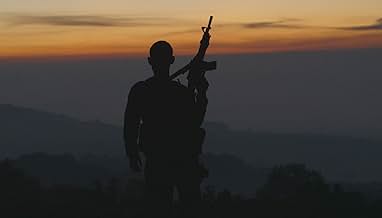
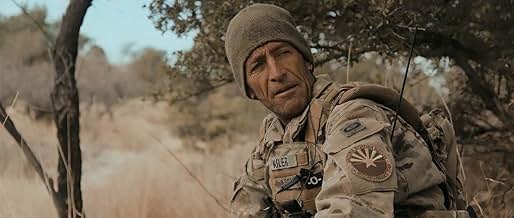
The documentary "Cartel Land" (R, 1:38) shows everything I just described and more, but focuses mainly on vigilante groups who fight the cartels – on both sides of the U.S.-Mexican border. The film's title refers to areas of Mexico – and areas of the United States as well. U.S. Marine veteran Tim "Nailer" Foley leads a small paramilitary group called Arizona Border Recon whose volunteer members carry semi-automatic rifles and patrol Arizona's Altar Valley ("Cocaine Alley") for any sign of drug traffickers operating on the U.S. side of the border. Meanwhile, Jose Mireles leads the Autodefensas, whose members carry similar weapons in their quest to root out members of the ruthless drug cartel which operates in the area around the western Mexican state of Michoacán. Both of these vigilante groups operate outside of their government's good graces but both governments refrain from direct action against the groups, even seeming to work with them on some level.
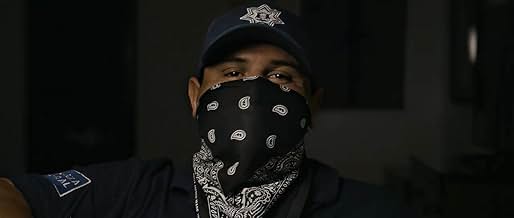
The film alternates between following both groups as they struggle to turn back the advancing tide of cartels operating in their areas and also deal with manpower and leadership issues and with the friction between them and their respective governments. The story of these two vigilante groups is bookended by scenes shot during methamphetamine production by cartel affiliates at a remote outdoor location in Mexico. With their faces covered, this small group of men goes about their business unfettered and they even talk to the camera. At one point, their leader admits that what they're doing is wrong, but doesn't seem to care. He says that they'll continue cooking meth "as long as God allows it". Similarly, the leaders of both Arizona Border Recon and the Autodefensas justify their actions, even as some of their methods resemble those of the cartels.
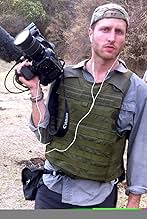
"Cartel Land" does things that I've never seen before in any documentary and does others better than I've ever seen them done. I've rarely praised either of these in other documentaries, but the cinematography and the score are both magnificent. Even more impressive than how it was shot is where it was shot. Besides gaining practically unprecedented access to that secret meth lab, director Matthew Heineman embeds with these vigilante groups, following them on their missions and getting up close and personal with some of the action in some obviously dangerous situations. (The film won the directing and cinematography awards in its category at the 2015 Sundance Film Festival.) The editing is also extremely impressive. The film contains more surprising reveals and vital story developments than in many traditional movie thrillers. Besides Heineman's obvious talents (and guts), it probably didn't hurt that one of the doc's executive producers is Kathryn Bigelow, Oscar-winning director of "The Hurt Locker" and "Zero Dark Thirty". Bigelow and Heineman's film is quite simply one of the best documentaries I have ever seen and only the second one that I have ever given this grade: "A".
I'm not talking about the Middle East or ISIS. I'm talking about Mexican drug cartels.
The documentary "Cartel Land" (R, 1:38) shows everything I just described and more, but focuses mainly on vigilante groups who fight the cartels – on both sides of the U.S.-Mexican border. The film's title refers to areas of Mexico – and areas of the United States as well. U.S. Marine veteran Tim "Nailer" Foley leads a small paramilitary group called Arizona Border Recon whose volunteer members carry semi-automatic rifles and patrol Arizona's Altar Valley ("Cocaine Alley") for any sign of drug traffickers operating on the U.S. side of the border. Meanwhile, Jose Mireles leads the Autodefensas, whose members carry similar weapons in their quest to root out members of the ruthless drug cartel which operates in the area around the western Mexican state of Michoacán. Both of these vigilante groups operate outside of their government's good graces but both governments refrain from direct action against the groups, even seeming to work with them on some level.
The film alternates between following both groups as they struggle to turn back the advancing tide of cartels operating in their areas and also deal with manpower and leadership issues and with the friction between them and their respective governments. The story of these two vigilante groups is bookended by scenes shot during methamphetamine production by cartel affiliates at a remote outdoor location in Mexico. With their faces covered, this small group of men goes about their business unfettered and they even talk to the camera. At one point, their leader admits that what they're doing is wrong, but doesn't seem to care. He says that they'll continue cooking meth "as long as God allows it". Similarly, the leaders of both Arizona Border Recon and the Autodefensas justify their actions, even as some of their methods resemble those of the cartels.
"Cartel Land" does things that I've never seen before in any documentary and does others better than I've ever seen them done. I've rarely praised either of these in other documentaries, but the cinematography and the score are both magnificent. Even more impressive than how it was shot is where it was shot. Besides gaining practically unprecedented access to that secret meth lab, director Matthew Heineman embeds with these vigilante groups, following them on their missions and getting up close and personal with some of the action in some obviously dangerous situations. (The film won the directing and cinematography awards in its category at the 2015 Sundance Film Festival.) The editing is also extremely impressive. The film contains more surprising reveals and vital story developments than in many traditional movie thrillers. Besides Heineman's obvious talents (and guts), it probably didn't hurt that one of the doc's executive producers is Kathryn Bigelow, Oscar-winning director of "The Hurt Locker" and "Zero Dark Thirty". Bigelow and Heineman's film is quite simply one of the best documentaries I have ever seen and only the second one that I have ever given this grade: "A".
more South, less North
Although he hasn't made the technical "best" documentary of the year), it's hard to see a documentary filmmaker who stuck his neck out more, literally, than Matthew Heienman to make Cartel Land (maybe Joshua Oppenheimer, in his way, put himself in danger to make his Indonesia docs, but he wasn't caught up in anything like this). He puts himself into some incredibly dangerous scenes, and from what I could tell it's not at all the case of him trying to get some extra dramatics or tension where there is none. On the contrary he follows the Mexican group the Autodefensas (at times when they are in the midst of shoot-outs and enemy fire) in their rise to become a major presence in Michoacan, Mexico, as well as how they became corrupted by the very forces they are/were up against.
So points automatically have to go to the director for that, and he clearly is passionate about this issue - and as the wisest choice he doesn't put himself into it in the slightest (very much the objective, here and there more like a war cine-journalist when with his camera on the streets and roads and interrogation rooms). But I do wish that he had stuck to the story of the Doctor Meirelles and his group, as he and the world that he's in is just more captivating and stronger as a story of a rise and fall than that of the American who is supposed to be the 'counter-point' or other side example.
His story, as a man who has split off from society (in part due to the 2008 economic collapse, among other issues), and formed a small would be (?) militia patrolling parts of the Mexican border for immigrants, could be compelling. But it's not even so much that the contrast or point-counter-point of him and the Doctor might not have some interest (I think the point ultimately is one guy really is fighting for his life and for others, and the other is more about rounding up illegal immigrants where, for some reason, border patrol doesn't seem to be around), it's more a flaw of filmmaking. I think that if Heineman had kept it all down as a story of the Autodefensas, he would have a full movie to tell, and indeed the two places - on the US/Mexico border and Michoacan, which is over a thousand miles away to the south - are so far apart that they don't have much relation to one another exactly. Of course the cartels are a problem in one spot as much as the other, yet on a simple film editing level, it throws off the balance.
This could have been two documentaries, perhaps, again to bring up Oppenheimer, as compliments to one another. It's a shame that it doesn't work much better, since there's a lot of potent, incendiary stuff here. When Cartel Land works best, it all but indicts a country for not doing far more than it should, or what the president or government claims to do (again, this is the documentary, I'd have to read up more to know if the filmmaker doesn't show more sides to what the police or other military forces may or may be doing for the Autodefensas to rise up in the first place), and that corruption and crime becomes just a fact of life. It displays another form of terrorism that seems not as apparent as, say, Islamic fundamentalism but is no less a threat to the people where it takes place, though oddly enough what the film shows is the danger of vigilantism as well.
So points automatically have to go to the director for that, and he clearly is passionate about this issue - and as the wisest choice he doesn't put himself into it in the slightest (very much the objective, here and there more like a war cine-journalist when with his camera on the streets and roads and interrogation rooms). But I do wish that he had stuck to the story of the Doctor Meirelles and his group, as he and the world that he's in is just more captivating and stronger as a story of a rise and fall than that of the American who is supposed to be the 'counter-point' or other side example.
His story, as a man who has split off from society (in part due to the 2008 economic collapse, among other issues), and formed a small would be (?) militia patrolling parts of the Mexican border for immigrants, could be compelling. But it's not even so much that the contrast or point-counter-point of him and the Doctor might not have some interest (I think the point ultimately is one guy really is fighting for his life and for others, and the other is more about rounding up illegal immigrants where, for some reason, border patrol doesn't seem to be around), it's more a flaw of filmmaking. I think that if Heineman had kept it all down as a story of the Autodefensas, he would have a full movie to tell, and indeed the two places - on the US/Mexico border and Michoacan, which is over a thousand miles away to the south - are so far apart that they don't have much relation to one another exactly. Of course the cartels are a problem in one spot as much as the other, yet on a simple film editing level, it throws off the balance.
This could have been two documentaries, perhaps, again to bring up Oppenheimer, as compliments to one another. It's a shame that it doesn't work much better, since there's a lot of potent, incendiary stuff here. When Cartel Land works best, it all but indicts a country for not doing far more than it should, or what the president or government claims to do (again, this is the documentary, I'd have to read up more to know if the filmmaker doesn't show more sides to what the police or other military forces may or may be doing for the Autodefensas to rise up in the first place), and that corruption and crime becomes just a fact of life. It displays another form of terrorism that seems not as apparent as, say, Islamic fundamentalism but is no less a threat to the people where it takes place, though oddly enough what the film shows is the danger of vigilantism as well.
Intriguing on one hand, but on the other hand ...
The Mexican side of this documentary is more than intriguing. What people go through is incredible. The patrol they created to fight against crime is something that most people probably stand behind and support too. The Arizona patrol on the other hand? A whole different beast (quite literally, especially considering the views they express and because it's not the same situation as across the border).
Having said that, and if you are able to judge on your own and not take some things that are being said as more than they are: there is a real tension that builds up and even concerns families, bullying and trying to bring order where order is not wanted by the government (at least the current government in Mexico that is). And that's the thing: While the documentary takes a stance against drug and criminality, it almost embraces racism on the other hand ... either stay neutral or really make a good point
Having said that, and if you are able to judge on your own and not take some things that are being said as more than they are: there is a real tension that builds up and even concerns families, bullying and trying to bring order where order is not wanted by the government (at least the current government in Mexico that is). And that's the thing: While the documentary takes a stance against drug and criminality, it almost embraces racism on the other hand ... either stay neutral or really make a good point
docu or film?
Editors note:
Almost always people comment on films on this website in quite a good way. So I never felt the urge to write/contribute something....
The film:
First of all I never wrote a review on this website before. And to be honest i don't think this will count as a review. Actually it was never my intention to write a review but more so to ask a critical question... Is this still a documentary? The quality of the images, the story and of the film in general are mind blowing! It gets you thinking and shows you the good, the bad and the ugly (pun intended).The story itself and the people involved are real, but in my opinion this is a reenactment! Staged, beautifully done but staged... The subject and the way they showed it is compelling, brutal at times, and it will get you thinking but I can't lose the feeling i watched a movie/film and not a documentary... Which is either brilliant or bad... Help me out, your thoughts pls.
Almost always people comment on films on this website in quite a good way. So I never felt the urge to write/contribute something....
The film:
First of all I never wrote a review on this website before. And to be honest i don't think this will count as a review. Actually it was never my intention to write a review but more so to ask a critical question... Is this still a documentary? The quality of the images, the story and of the film in general are mind blowing! It gets you thinking and shows you the good, the bad and the ugly (pun intended).The story itself and the people involved are real, but in my opinion this is a reenactment! Staged, beautifully done but staged... The subject and the way they showed it is compelling, brutal at times, and it will get you thinking but I can't lose the feeling i watched a movie/film and not a documentary... Which is either brilliant or bad... Help me out, your thoughts pls.
Riveting, and revolting, looks at the Mexican cartels
"Carte Land" (2015 release; 100 min.) is a documentary that examines what is happening in the Mexican state of Michoacán, in south-west Mexico (about 1,000 miles from the US border), and in a separate story, we also take a look at what some people are doing at the Arizona border with Mexico. As the documentary opens, we see Mexican guys cooling up meth somewhere in Michoacán. Comments one: "We know we do harm, but we come from poverty". Then we get to know a woman, who lost 13 (!) family members, all brutally murdered by the cartel when their employer (owner of a lime orchard) couldn't pay the cartel, so they shot his employees as revenge. Then we get to know Dr. Mireles, a Michoacán-based physician who is sick and tired of the violence, and realizing that the official authorities will not/cannot do anything, he decides to start the Autodefensas, a grass roots movement to claim back the streets and towns of Michoacán.
Couple of comments: first, this is another documentary from producer-director Matthew Heineman, and with this latest, he hits the bull's eye. The situation in the Mexican state of Michoacán is so bad that people are outright desperate for relief, ANY relief. There is an astonishing scene that plays out in the city of Apo, where the Autodefensas capture several cartel members. Then the Mexican Army comes sweeping in, and tries to disarm the Autodefensas (yes! not the cartel). The town's population quickly gathers and essentially howls the Army back out of town. Jaw-dropping. There are other such scenes in this riveting, and revolting, documentary. With revolting, I refer of course to the deplorable situation the Mexican people find themselves in, left to their own devices with the state or federal authorities pretty much absent. Beware, on several occasions there is shocking forage or pictures, and this documentary is most certainly not for the faint of heart. Second, the 'parallel' story of the Arizona Border Recon, with veterans taking it on themselves to patrol the border to keep migrants out, falls utterly short and frankly looks a bit silly as compared to the stuff we see happening in Michoacán. It would've made the documentary even better by simply focusing on what is happening on the ground in Mexico. But even with that unnecessary side story, "Cartel Land" is an unforgettable documentary.
"Cartel Land" made quite a splash at the Sundance Film Festival earlier this year, and when out of the blue this showed up at my local art-house theater here in Cincinnati this weekend, I couldn't believe my luck and went to see it right away. The matinée screening where I saw this at was a private affair, as in: I literally was the only person in the theater. That is a darn shame, as "Cartel Land" makes for compelling, if at times uncomfortable, viewing. If you get an opportunity to check this out and draw your own conclusions, be it at the theater, on Amazon Instant Video, or eventually on DVD/Blu-ray, do not miss it! "Cartel Land" is HIGHLY RECOMMENDED!
Couple of comments: first, this is another documentary from producer-director Matthew Heineman, and with this latest, he hits the bull's eye. The situation in the Mexican state of Michoacán is so bad that people are outright desperate for relief, ANY relief. There is an astonishing scene that plays out in the city of Apo, where the Autodefensas capture several cartel members. Then the Mexican Army comes sweeping in, and tries to disarm the Autodefensas (yes! not the cartel). The town's population quickly gathers and essentially howls the Army back out of town. Jaw-dropping. There are other such scenes in this riveting, and revolting, documentary. With revolting, I refer of course to the deplorable situation the Mexican people find themselves in, left to their own devices with the state or federal authorities pretty much absent. Beware, on several occasions there is shocking forage or pictures, and this documentary is most certainly not for the faint of heart. Second, the 'parallel' story of the Arizona Border Recon, with veterans taking it on themselves to patrol the border to keep migrants out, falls utterly short and frankly looks a bit silly as compared to the stuff we see happening in Michoacán. It would've made the documentary even better by simply focusing on what is happening on the ground in Mexico. But even with that unnecessary side story, "Cartel Land" is an unforgettable documentary.
"Cartel Land" made quite a splash at the Sundance Film Festival earlier this year, and when out of the blue this showed up at my local art-house theater here in Cincinnati this weekend, I couldn't believe my luck and went to see it right away. The matinée screening where I saw this at was a private affair, as in: I literally was the only person in the theater. That is a darn shame, as "Cartel Land" makes for compelling, if at times uncomfortable, viewing. If you get an opportunity to check this out and draw your own conclusions, be it at the theater, on Amazon Instant Video, or eventually on DVD/Blu-ray, do not miss it! "Cartel Land" is HIGHLY RECOMMENDED!


Wusstest du schon
- WissenswertesThe Autodefensas group shown in the film was created by civilians to stand up against the cartels because the government is overrun with corruption. Individuals speak about how little the Mexican president (Enrique Peña Nieto) is doing. In the film, the Autodefensas is shown celebrating its one year anniversary on February 24, 2014. On that exact same day, TIME Magazine ran an issue with the Mexican President Enrique Peña Nieto with the headline "Saving Mexico." Nieto reportedly paid TIME $44,000 for this cover article coincidentally released on the same day as the Autodefensas anniversary.
- Zitate
José Manuel 'El Doctor' Mireles: Get everything you can out of him, and then put him in the ground.
- SoundtracksEn Las Calles
Written by H. Scott Salinas and Jose Cancela
Top-Auswahl
Melde dich zum Bewerten an und greife auf die Watchlist für personalisierte Empfehlungen zu.
- How long is Cartel Land?Powered by Alexa
Details
- Erscheinungsdatum
- Herkunftsland
- Offizieller Standort
- Sprachen
- Auch bekannt als
- Земля картелів
- Drehorte
- Produktionsfirmen
- Weitere beteiligte Unternehmen bei IMDbPro anzeigen
Box Office
- Bruttoertrag in den USA und Kanada
- 704.352 $
- Eröffnungswochenende in den USA und in Kanada
- 15.581 $
- 5. Juli 2015
- Weltweiter Bruttoertrag
- 1.145.923 $
- Laufzeit
- 1 Std. 40 Min.(100 min)
- Farbe
- Seitenverhältnis
- 2.35 : 1
Zu dieser Seite beitragen
Bearbeitung vorschlagen oder fehlenden Inhalt hinzufügen