IMDb-BEWERTUNG
6,4/10
3449
IHRE BEWERTUNG


Die Ötztaler Alpen, vor mehr als 5300 Jahren. Ein neolithischer Klan hat sich in der Nähe eines Baches niedergelassen. Während Kelab jagt, wird die Siedlung angegriffen.Die Ötztaler Alpen, vor mehr als 5300 Jahren. Ein neolithischer Klan hat sich in der Nähe eines Baches niedergelassen. Während Kelab jagt, wird die Siedlung angegriffen.Die Ötztaler Alpen, vor mehr als 5300 Jahren. Ein neolithischer Klan hat sich in der Nähe eines Baches niedergelassen. Während Kelab jagt, wird die Siedlung angegriffen.
- Regisseur/-in
- Autor/-in
- Stars
- Auszeichnungen
- 5 Nominierungen insgesamt



6,43.4K
1
2
3
4
5
6
7
8
9
10
Empfohlene Bewertungen
A Harrowing Glimpse at Human Prehistory
A Neolithic revenge story seeks to explain the mysterious man found frozen in the Alps. Written and directed by Felix Randau, and originally release in Germany in 2017 as Der Mann aus dem Eis, Iceman purports to tell the story of a Copper Age man preserved in the frozen Alps for 5,000 years. Beautiful landscapes and harrowing authenticity help balance what might otherwise be a one-dimensional revenge plot.
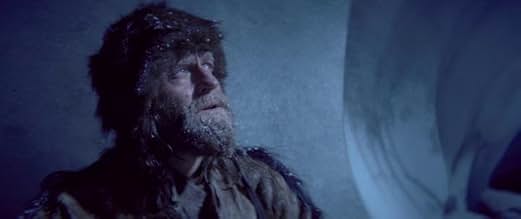
Kelab (Jürgen Vogel), Kisis (Susanne Wuest), and their clan are living in the Ötztal Alps around 3000 BC, where Kelab protects a fetish called Tineka. The clan is blessed with the birth of a child, but grieved by the loss of its mother. When Kelab is off hunting in the woods, a trio of raiders attack his village, slaughter its inhabitants, and steal their idol. Filled with a desire for revenge, Kelab rescues the newborn and pursues the raiders.
Along the way, Kelab interacts with other Neolithic people, including an old man, Ditob (Franco Nero), and his daughter Mitar (Violetta Schurawlow), in their sparsely populated valley. Can Kelab survive the harsh elements to exact revenge and take back his sacred Tineka?
Iceman was inspired by Ötzi the Iceman. In 1991, Alpine hikers discovered a mummified body partially frozen in ice. Shockingly, scientists dated its age to somewhere between 3400 and 3100 BC. The adult male was so well preserved that scientists were able to determine precisely what he ate in the days before he died. Most intriguingly, they discovered his cause of death was an arrow impaled in his back, compounded by other injuries.
It's impossible to say for certain who this man was and the larger circumstances leading to his death, but evidence gathered from his corpse informs Iceman in a credible and convincing way. Scientists identified blood from at least four other people on his weapons and clothing, so we know he was involved in a violent struggle. The film is so authentic its characters even speak an early version of Rhaetic, a language related to Etruscan and spoken by pre-Indo Europeans living in that region.
Like Alpha (2018), Iceman has great cinematography, was shot in beautiful and sweeping landscapes, and tries to authentically re-create prehistoric culture. Unlike Alpha, however, Iceman has a realistic story. When one man falls from a sheer cliff, he breaks his back instead of being conveniently saved by ridiculously improbable circumstances.
But for all its good qualities, Iceman left something to be desired. The 1981 French film Quest for Fire, in which the the dialog is also spoken in a prehistoric language, benefited from rich interactions between the characters. In contrast, Iceman was oddly solipsistic. Interactions between characters were kept at a bare minimum. I expected much more, particularly when it came to Kelab and his encounters with other humans. I'm not an anthropologist, but I'm pretty sure we were able to communicate and express emotions other than anger back then.
Iceman was generally praised by critics, but left audiences shrugging their shoulders. It currently has an audience favorability rating of 54% on RottenTomatoes. I probably would've had the same reaction if I didn't love historically authentic films. For me, seeing this primitive man's world come to life more than made up for Iceman's deficiencies.
Kelab (Jürgen Vogel), Kisis (Susanne Wuest), and their clan are living in the Ötztal Alps around 3000 BC, where Kelab protects a fetish called Tineka. The clan is blessed with the birth of a child, but grieved by the loss of its mother. When Kelab is off hunting in the woods, a trio of raiders attack his village, slaughter its inhabitants, and steal their idol. Filled with a desire for revenge, Kelab rescues the newborn and pursues the raiders.
Along the way, Kelab interacts with other Neolithic people, including an old man, Ditob (Franco Nero), and his daughter Mitar (Violetta Schurawlow), in their sparsely populated valley. Can Kelab survive the harsh elements to exact revenge and take back his sacred Tineka?
Iceman was inspired by Ötzi the Iceman. In 1991, Alpine hikers discovered a mummified body partially frozen in ice. Shockingly, scientists dated its age to somewhere between 3400 and 3100 BC. The adult male was so well preserved that scientists were able to determine precisely what he ate in the days before he died. Most intriguingly, they discovered his cause of death was an arrow impaled in his back, compounded by other injuries.
It's impossible to say for certain who this man was and the larger circumstances leading to his death, but evidence gathered from his corpse informs Iceman in a credible and convincing way. Scientists identified blood from at least four other people on his weapons and clothing, so we know he was involved in a violent struggle. The film is so authentic its characters even speak an early version of Rhaetic, a language related to Etruscan and spoken by pre-Indo Europeans living in that region.
Like Alpha (2018), Iceman has great cinematography, was shot in beautiful and sweeping landscapes, and tries to authentically re-create prehistoric culture. Unlike Alpha, however, Iceman has a realistic story. When one man falls from a sheer cliff, he breaks his back instead of being conveniently saved by ridiculously improbable circumstances.
But for all its good qualities, Iceman left something to be desired. The 1981 French film Quest for Fire, in which the the dialog is also spoken in a prehistoric language, benefited from rich interactions between the characters. In contrast, Iceman was oddly solipsistic. Interactions between characters were kept at a bare minimum. I expected much more, particularly when it came to Kelab and his encounters with other humans. I'm not an anthropologist, but I'm pretty sure we were able to communicate and express emotions other than anger back then.
Iceman was generally praised by critics, but left audiences shrugging their shoulders. It currently has an audience favorability rating of 54% on RottenTomatoes. I probably would've had the same reaction if I didn't love historically authentic films. For me, seeing this primitive man's world come to life more than made up for Iceman's deficiencies.
prehistoric western
In 1991, a frozen dead man is found in the Alps. He's been there for 5300 years. "This is his story." Kelab returns from hunting to find his settlement burnt down and his family massacred. A three man war party had come to steal a relic.
It's a little slow to start. It's trying to be authentic which includes limited dialogue and everybody looking like the same caveman. The sets and the costumes seem very authentic. Rather quickly, this gets brutally violent and it's a revenge plot. It becomes a harsh western and that's quite compelling. This can be slow at times especially with the quiet. Nevertheless, this is a simple and effective tale of a brutal age.
It's a little slow to start. It's trying to be authentic which includes limited dialogue and everybody looking like the same caveman. The sets and the costumes seem very authentic. Rather quickly, this gets brutally violent and it's a revenge plot. It becomes a harsh western and that's quite compelling. This can be slow at times especially with the quiet. Nevertheless, this is a simple and effective tale of a brutal age.
Last man standing - 3300 BC
When I found this movie I was very curious what kind of story they put forward. Knowing that there is not spoked in a modern language or translated made it even more appealing. However, it turned out to be disappointing.
For the good part, I have to say that I enjoyed how they tried to show how people used to live five millenniums ago. I don't know if it was really like that or not, but I appreciated the attempt. You don't see often that kind of undertaking.
However, the story that unfolded was nothing but modern day Hollywood blockbusters set in another era. Put Tom Cruise in the main role and you have everything. Was that all they could come up with? The hero leaves home and in his absence his entire family gets killed so he sets on a journey of revenge. Liam Neeson could not be more convincing. Of course, we all know what happened to Otzi, although you have to watch the movie to see what led to that.
It's an overall 6 stars from me.
For the good part, I have to say that I enjoyed how they tried to show how people used to live five millenniums ago. I don't know if it was really like that or not, but I appreciated the attempt. You don't see often that kind of undertaking.
However, the story that unfolded was nothing but modern day Hollywood blockbusters set in another era. Put Tom Cruise in the main role and you have everything. Was that all they could come up with? The hero leaves home and in his absence his entire family gets killed so he sets on a journey of revenge. Liam Neeson could not be more convincing. Of course, we all know what happened to Otzi, although you have to watch the movie to see what led to that.
It's an overall 6 stars from me.
A story of living and dying and revenge
There are several surprises in the story and they don't make sense. In the course of his travels through the Netherlands our hero he was seeking revenge against those who killed his wife/girlfriends/I don't know the relationship because nobody speaks English, this is a movie without dialogue, which has to carry itself just on the effect of the actors upon each other and what they receive from the surrounding cascade. One scene that doesn't understand my comprehension is the same before this. He's traveling along going up a creek bed and then all of a sudden he's gotta goat and I suppose that's to feed the baby that he rescued from the destruction of his village. Now the goat has short-lived necessity as he slaughters it and cooks it and then all of a sudden he has friends that want to eat the goat with him, at this time, the baby that he's been carrying around for about 2/3 of the movie, he palms off on the new friends and he goes looking for revenge against those who killed his family and his village and birth, etc. So he's on the trail of these bad people and for some reason they go over a vast mountain range where there's no shelter no food and no purpose to be there. But his journey goes on to find those bad people and that's all I can say without giving away the ending.
Recommended For Its Uniqueness.
It's not that "Iceman" is a great film - not in the caliber of, say, 'Amadeus' or 'The Godfather' - but it does have its own story to tell, and in a way you won't see that much. At the beginning of the film, there's this disclaimer: "The characters in the following film speak an early version of the Rhaetic language. Translation is not required to comprehend the story." And it's true. 'Iceman' is basically a revenge film akin to almost every Chinese martial arts (Wuxia) movie or even Lone Wolf & Cub. Apart from the scarcity of language, the cinematography of the eastern Alps is breathtaking. You can almost call 'Iceman' neolithic Nordic noir for the blues on display as well as the general moodiness and bleak surroundings. Interesting in this day and age to release a near-silent film, but I think this one works.


Wusstest du schon
- WissenswertesBlood from four different people was actually found on the real-life Ötzis' belongings, supporting the idea that he led a sometimes violent life.
- PatzerIn the film the Berkshire pig is discernible. This is a British breed (a rare breed) of pig originating in the early 19th century, thus, it could not have been there in the Alps more than 5000 years ago.
- VerbindungenEdited into heute Show: Folge 309 (2019)
Top-Auswahl
Melde dich zum Bewerten an und greife auf die Watchlist für personalisierte Empfehlungen zu.
Details
- Erscheinungsdatum
- Herkunftsländer
- Offizieller Standort
- Sprache
- Auch bekannt als
- Iceman
- Drehorte
- Alto Adige/Südtirol, Italien(location)
- Produktionsfirmen
- Weitere beteiligte Unternehmen bei IMDbPro anzeigen
Box Office
- Bruttoertrag in den USA und Kanada
- 2.138 $
- Eröffnungswochenende in den USA und in Kanada
- 1.372 $
- 17. März 2019
- Weltweiter Bruttoertrag
- 6.719 $
- Laufzeit
- 1 Std. 36 Min.(96 min)
- Farbe
- Seitenverhältnis
- 2.35 : 1
Zu dieser Seite beitragen
Bearbeitung vorschlagen oder fehlenden Inhalt hinzufügen