IMDb-BEWERTUNG
7,1/10
23.818
IHRE BEWERTUNG


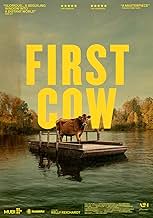
Ein gelernter Koch ist in den Westen gereist und hat sich einer Gruppe von Pelztierfängern in Oregon angeschlossen, obwohl er nur eine echte Verbindung zu einem chinesischen Einwanderer find... Alles lesenEin gelernter Koch ist in den Westen gereist und hat sich einer Gruppe von Pelztierfängern in Oregon angeschlossen, obwohl er nur eine echte Verbindung zu einem chinesischen Einwanderer findet, der ebenfalls sein Glück sucht.Ein gelernter Koch ist in den Westen gereist und hat sich einer Gruppe von Pelztierfängern in Oregon angeschlossen, obwohl er nur eine echte Verbindung zu einem chinesischen Einwanderer findet, der ebenfalls sein Glück sucht.
- Regisseur/-in
- Autoren
- Stars
- Auszeichnungen
- 21 Gewinne & 141 Nominierungen insgesamt


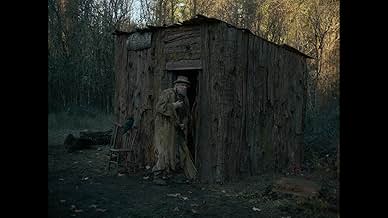


Rene Auberjonois
- Man with Raven
- (as René Auberjonois)


Kevin Michael Moore
- Fort Trapper
- (as Kevin-Michael Moore)
7,123.8K
1
2
3
4
5
6
7
8
9
10
Empfohlene Bewertungen
Don't watch if you are easily bored
Thanks to constant mental stimulation due to social media, cell phones, and online content always being available, the majority of people now have an extremely short attention span. If that sounds like you, then don't watch this.
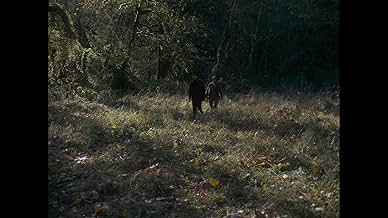
I personally consider myself to be a very patient person, and if you are willing to just be patient and actively appreciate the film you will find this film to be a rich cinematic treat. The cinematography is exquisite, meticulously framed in a 1.33:1 aspect ratio. The performances are extremely watchable - these characters could easily have been rather dull or boring but the brilliant actors elevate them to near-mythological status. The plot, while cliched, is supported so well by the aforementioned elements that it feels like a completely new experience to the other films that have similar plots.
If you only watch films for a quick dopamine hit, this is not the film for you. In order to get anything out of this film, you must put in some of your own thought. Under the surface, the film is rich with ideas about capitalism, the American Dream, and especially male friendship. It's left up to the viewer to interpret the work for themselves, which is what I appreciate most about Kelly Reichardt - she doesn't try to force a message down your throat, she just lets you interpret her films however you want to. But you need to be patient if you want to get a good experience, which many people, especially on this website, don't quite seem to understand.
I personally consider myself to be a very patient person, and if you are willing to just be patient and actively appreciate the film you will find this film to be a rich cinematic treat. The cinematography is exquisite, meticulously framed in a 1.33:1 aspect ratio. The performances are extremely watchable - these characters could easily have been rather dull or boring but the brilliant actors elevate them to near-mythological status. The plot, while cliched, is supported so well by the aforementioned elements that it feels like a completely new experience to the other films that have similar plots.
If you only watch films for a quick dopamine hit, this is not the film for you. In order to get anything out of this film, you must put in some of your own thought. Under the surface, the film is rich with ideas about capitalism, the American Dream, and especially male friendship. It's left up to the viewer to interpret the work for themselves, which is what I appreciate most about Kelly Reichardt - she doesn't try to force a message down your throat, she just lets you interpret her films however you want to. But you need to be patient if you want to get a good experience, which many people, especially on this website, don't quite seem to understand.
Kelly Reichardt's film is another in a line of carefully paced studies of humanity
It may be because of how I watched this - First Cow and Reichardt's films in general call for seeing it in a cinema if at all possible, she simply has that eye and ear for the minutest details and for the time she takes with every shot and many scenes to draw out the feeling of a place as well as for the actors to settle in, that you want to sink in to this film as a sensory experience, and instead I saw it at home where (I don't know about you but) I have too many distractions, not least of which the phone on a busy weekday - but it took me about fifteen to twenty minutes or so to get into the mood of this film. I wasn't sure if it might go anywhere really, as it follows the Cookie character as he is part of this fur trapping outfit (or almost on the outside, just barely with it, but enough to be in it without, say, getting into scraps/fights like the others), and it was frankly slow-going.
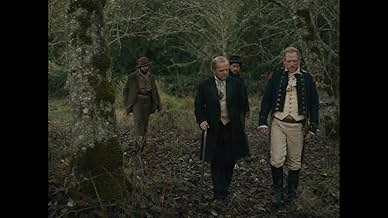
But then the story, as much as it is, kicks in and it becomes this very simple tale of a friendship and what may be a fairly minor crime in the grand scheme of things - taking milk from a cow that isn't there's so they can make oily cakes, basically the 1820's rural Oregon equivalent of what I assume is Krispy Kreme - and how it gets tested and firms as they become more successful and gain the employ of the wealthiest man in the area (Toby Jones), who... also happens to own the cow that they've been milking. It's so engrossing because of its simplicity, the delicacy and yet the immediacy of the world that Reichardt has recreated for us. Like all the best period filmmakers, she and her collaborators bring this part of America/the Pacific North-west to life in almost a humble sort of way: it isn't ostentatious, it's just... what it was, and that makes it special.
Aside from the performances themselves from these two, I have to wonder if the power of this film comes from something that maybe Reichardt was conscious of or maybe she wasn't, but this story makes me think about filmmaking itself, especially of the independent kind (or art creation in general). You have to assemble the right ingredients, and it most often takes some tenacity for it to all come together like it should (and how many times have you heard of someone on an indie movie shoot "going guerilla" or "stealing a shot" from some such and such a location they didn't have a permit for, etc). It feels like a story that Reichardt has lived at some point in her life, and she gets to deepen on the themes she worked in on Old Joy, also about a male friendship that gets tested by cirumstance.
And what's fascinating is how because of the slow-burn-ness of the pacing, by the time it gets to the last half hour or final quarter, it has some real suspense as we wonder how our two great lawbreakers will get out of this as they get hunted down. It's not quite to the same level of poetic grungy-frontier depiction heights as a McCabe & Mrs. Miller, but it has that same looseness and understanding about humanity, and if anything is less pessimistic about equality between people of different backgrounds and races. What happens after the end credits start to roll? I don't know, and I don't need to is the point - they've gotten through some s***, and they're together.
But then the story, as much as it is, kicks in and it becomes this very simple tale of a friendship and what may be a fairly minor crime in the grand scheme of things - taking milk from a cow that isn't there's so they can make oily cakes, basically the 1820's rural Oregon equivalent of what I assume is Krispy Kreme - and how it gets tested and firms as they become more successful and gain the employ of the wealthiest man in the area (Toby Jones), who... also happens to own the cow that they've been milking. It's so engrossing because of its simplicity, the delicacy and yet the immediacy of the world that Reichardt has recreated for us. Like all the best period filmmakers, she and her collaborators bring this part of America/the Pacific North-west to life in almost a humble sort of way: it isn't ostentatious, it's just... what it was, and that makes it special.
Aside from the performances themselves from these two, I have to wonder if the power of this film comes from something that maybe Reichardt was conscious of or maybe she wasn't, but this story makes me think about filmmaking itself, especially of the independent kind (or art creation in general). You have to assemble the right ingredients, and it most often takes some tenacity for it to all come together like it should (and how many times have you heard of someone on an indie movie shoot "going guerilla" or "stealing a shot" from some such and such a location they didn't have a permit for, etc). It feels like a story that Reichardt has lived at some point in her life, and she gets to deepen on the themes she worked in on Old Joy, also about a male friendship that gets tested by cirumstance.
And what's fascinating is how because of the slow-burn-ness of the pacing, by the time it gets to the last half hour or final quarter, it has some real suspense as we wonder how our two great lawbreakers will get out of this as they get hunted down. It's not quite to the same level of poetic grungy-frontier depiction heights as a McCabe & Mrs. Miller, but it has that same looseness and understanding about humanity, and if anything is less pessimistic about equality between people of different backgrounds and races. What happens after the end credits start to roll? I don't know, and I don't need to is the point - they've gotten through some s***, and they're together.
Buttermilk Biscuits
For those viewers who believe the pace of the film is "slow", yes, there are no car chases. Instead, this film has a depth of character and original development that creates a mood so beautifully of the time and place. It is refreshing to have a plot that keeps the viewer's interest throughout. When the majority of movie offerings out there are pure trash, this film is a real treat.
A Poignant Tale About Friendship and Capitalism
Is it okay to "steal" from a wealthy landlord to survive in this capitalist ladder?
First Cow is a brilliant tale about friendship and the necessary things we do to make hay. The central performances are brilliant and slow narration with pleasant country music really gives you the The Straight Story and Lone Star vibes. Haven't seen Kelly Reichardt's previous works but after watching this I am more than interested to complete her filmography. This film probably wouldn't receive a lot of noise during awards season but is definitely going to end up in many top 10 lists regardless.
First Cow is a brilliant tale about friendship and the necessary things we do to make hay. The central performances are brilliant and slow narration with pleasant country music really gives you the The Straight Story and Lone Star vibes. Haven't seen Kelly Reichardt's previous works but after watching this I am more than interested to complete her filmography. This film probably wouldn't receive a lot of noise during awards season but is definitely going to end up in many top 10 lists regardless.
Outcasts in the American Frontier
A story about two outcasts who find friendship and a business partnership with each other in the American frontier.
John Magaro plays a gentle baker who begins the movie as cook for a prospecting expedition. He's too thoughtful and sensitive to really fit in with the macho wild men he's with, who bully and threaten him. Orion Lee is a Chinese immigrant who befriends him and suggests that they go into business selling the baker's biscuits at a local trading post. The biscuits are a sensation, but the enterprise is a dangerous one -- the only place to get milk is to steal it from the cow (yes, THE cow, not A cow) that belongs to the local aristocrat, played by the always welcome Toby Jones. The film begins in the present day with a hiker in the woods discovering something that hints at how the movie will end, and how the movie then circles back to that find is a small miracle of narrative storytelling.
Kelly Reichardt, who's made a career of quiet, understated films, remains true to form here. "First Cow" shows much more than it tells, which should please fans of art house fare but will probably frustrate more casual moviegoers who have less patience for the way stories are told. The two main characters don't talk much, but we learn much about them, not from what they say, but from how they act. The first time we see Magaro's character, for example, he's hunting for mushrooms in the woods, and he takes the time to set a salamander he finds back on its feet when it's struggling to flip itself over. And when Lee's character shows him to his cabin in the woods, the first thing Magaro does is find some wildflowers with which to decorate the small space. Little flourishes like these reward the patient viewer, and we come to like the two men so much that the end, though we've been warned of it in advance, feels that much more tragic when it comes.
Covid has seen to it that 2020 hasn't exactly been the most robust year for movies, but of movies that have been released so far this year, "First Cow" is one of the best I've seen.
Grade: A
John Magaro plays a gentle baker who begins the movie as cook for a prospecting expedition. He's too thoughtful and sensitive to really fit in with the macho wild men he's with, who bully and threaten him. Orion Lee is a Chinese immigrant who befriends him and suggests that they go into business selling the baker's biscuits at a local trading post. The biscuits are a sensation, but the enterprise is a dangerous one -- the only place to get milk is to steal it from the cow (yes, THE cow, not A cow) that belongs to the local aristocrat, played by the always welcome Toby Jones. The film begins in the present day with a hiker in the woods discovering something that hints at how the movie will end, and how the movie then circles back to that find is a small miracle of narrative storytelling.
Kelly Reichardt, who's made a career of quiet, understated films, remains true to form here. "First Cow" shows much more than it tells, which should please fans of art house fare but will probably frustrate more casual moviegoers who have less patience for the way stories are told. The two main characters don't talk much, but we learn much about them, not from what they say, but from how they act. The first time we see Magaro's character, for example, he's hunting for mushrooms in the woods, and he takes the time to set a salamander he finds back on its feet when it's struggling to flip itself over. And when Lee's character shows him to his cabin in the woods, the first thing Magaro does is find some wildflowers with which to decorate the small space. Little flourishes like these reward the patient viewer, and we come to like the two men so much that the end, though we've been warned of it in advance, feels that much more tragic when it comes.
Covid has seen to it that 2020 hasn't exactly been the most robust year for movies, but of movies that have been released so far this year, "First Cow" is one of the best I've seen.
Grade: A


Wusstest du schon
- Wissenswertes"Slow Elk" was suggested as an alternate title, as that's how cattle were known to Oregon's First People. Also, "slow elk" is still a slang term for cattle used by big game hunters in some Western states; for example, "That out-of-stater shot a slow elk by mistake."
- PatzerCookie mentions he would like to have a business in San Francisco. The film is ostensibly set in the 1820s, when the city had not officially been named San Francisco. However, the name had been in use since the 1590s and could have been used at the time the film is set.
- Crazy CreditsThe Cow - Evie
- VerbindungenFeatured in WatchMojo: Top 10 Movies of 2020 (So Far) (2020)
Top-Auswahl
Melde dich zum Bewerten an und greife auf die Watchlist für personalisierte Empfehlungen zu.
Details
- Erscheinungsdatum
- Herkunftsland
- Offizieller Standort
- Sprachen
- Auch bekannt als
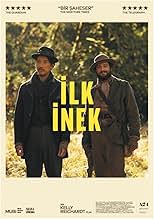
- İlk İnek
- Drehorte
- Produktionsfirmen
- Weitere beteiligte Unternehmen bei IMDbPro anzeigen
Box Office
- Bruttoertrag in den USA und Kanada
- 101.068 $
- Eröffnungswochenende in den USA und in Kanada
- 81.323 $
- 8. März 2020
- Weltweiter Bruttoertrag
- 1.380.888 $
- Laufzeit
- 2 Std. 2 Min.(122 min)
- Farbe
- Seitenverhältnis
- 1.37 : 1
Zu dieser Seite beitragen
Bearbeitung vorschlagen oder fehlenden Inhalt hinzufügen