IMDb-BEWERTUNG
7,2/10
22.467
IHRE BEWERTUNG

Füge eine Handlung in deiner Sprache hinzuA group of bandits stage a brazen train hold-up, only to find a determined posse hot on their heels.A group of bandits stage a brazen train hold-up, only to find a determined posse hot on their heels.A group of bandits stage a brazen train hold-up, only to find a determined posse hot on their heels.
- Regisseur/-in
- Autoren
- Stars
- Auszeichnungen
- 2 wins total





Gilbert M. 'Broncho Billy' Anderson
- Bandit
- (Nicht genannt)
- …
A.C. Abadie
- Sheriff
- (Nicht genannt)


Justus D. Barnes
- Bandit Who Fires at Camera
- (Nicht genannt)
Walter Cameron
- Sheriff
- (Nicht genannt)
John Manus Dougherty Sr.
- Fourth Bandit
- (Nicht genannt)

Donald Gallaher
- Little Boy
- (Nicht genannt)
Shadrack E. Graham
- Child
- (Nicht genannt)
Frank Hanaway
- Bandit
- (Nicht genannt)
Adam Charles Hayman
- Bandit
- (Nicht genannt)

Robert Milasch
- Trainman
- (Nicht genannt)
- …
Marie Murray
- Dance-Hall Dancer
- (Nicht genannt)
Frederick T. Scott
- Man
- (Nicht genannt)
Mary Snow
- Little Girl
- (Nicht genannt)
7,222.4K
1
2
3
4
5
6
7
8
9
10
Empfohlene Bewertungen
A timeless, priceless work
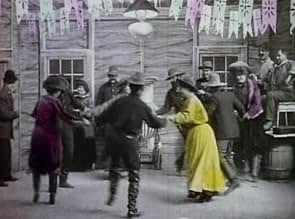
What can one say about an 11 minute film, which is reputed to be the first narrative motion picture to be shot in the United States? What does one compare it to when nothing had come before it? What is even more amazing is that parts of this movie are in color! The women's dresses at the dance are in color - each frame had been hand colored. The flashes from the barrels of the six shooters are red and an explosion sends up a riot of color. There is even a little girl in a red coat. Take that, Steven Spielberg!! Except for the last five seconds, all of the shots are in medium to long. The camera never moves. For each sequence, it is set in place and actors move in front of it.
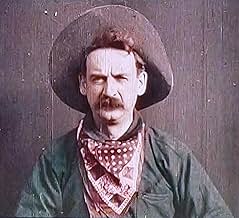
It is a western, of course (shot in the wilds of New Jersey). A gang of bad guys knock out a train station clerk then board a departing train. They move to the car where there is a safe, blow the safe, stop the train and rob the passengers. Back in town, the clerk revives and tries to get help but passes out again. A little girl comes in wakes him up. The townspeople are having a dance when the clerk runs in to form a posse. The posse rides out and surrounds the gang, who is counting the loot in the woods. There is a gunfight and the robbers are killed. That is the whole story, but there is one short scene left - one of the most remarkable in film history. The all color episode lasts about 5 seconds. In medium close-up, a cowboy raises his pistol, points it directly at the camera, and fires three times. It is difficult for us to understand why this is here or what purpose it served. But when people who had never seen a movie before and didn't have any understanding of the technology first saw this man shooting at them, they screamed, fell to the floor, and ran for the door. It is also said that some in the audience pulled firearms and shot back. It is an early testament to the power that motion pictures had, even in its earliest incarnation. Thankfully, TCM ran TGTR without any modern musical accompaniment, as thousands must have seen it in the nineteen-aughts. I watched in total amazement. I was transported. Later, I reflected on how far movies had come and how little they had changed in the last 100 years. This movie is a priceless historical artifact that shows us just how much the past is still with us.
It is a western, of course (shot in the wilds of New Jersey). A gang of bad guys knock out a train station clerk then board a departing train. They move to the car where there is a safe, blow the safe, stop the train and rob the passengers. Back in town, the clerk revives and tries to get help but passes out again. A little girl comes in wakes him up. The townspeople are having a dance when the clerk runs in to form a posse. The posse rides out and surrounds the gang, who is counting the loot in the woods. There is a gunfight and the robbers are killed. That is the whole story, but there is one short scene left - one of the most remarkable in film history. The all color episode lasts about 5 seconds. In medium close-up, a cowboy raises his pistol, points it directly at the camera, and fires three times. It is difficult for us to understand why this is here or what purpose it served. But when people who had never seen a movie before and didn't have any understanding of the technology first saw this man shooting at them, they screamed, fell to the floor, and ran for the door. It is also said that some in the audience pulled firearms and shot back. It is an early testament to the power that motion pictures had, even in its earliest incarnation. Thankfully, TCM ran TGTR without any modern musical accompaniment, as thousands must have seen it in the nineteen-aughts. I watched in total amazement. I was transported. Later, I reflected on how far movies had come and how little they had changed in the last 100 years. This movie is a priceless historical artifact that shows us just how much the past is still with us.
A start that filmmakers should be proud of...
As an early film, this film is quite spectacular. Ok, so it's only twelve minutes, but that is twelve minutes of pure action and entertainment. When this film was made, things like special effects were hardly thought of, but notice how well the transgression from person to doll on the "throw the dead guy off the train" goes, and how nicely they have "moved the train" without moving the camera when they leave the locomotive behind.
This movie is probably the best preview to how modern westerns became, at least if you take the best twelve minutes of many westerns, the twelve where people get shot, beat up and alerted. The movie follows it's storyline perfectly, and is easy to grasp the continuance throughout the film, in all, quite a masterpiece that comes highly recommended.
Christian Lockert
This movie is probably the best preview to how modern westerns became, at least if you take the best twelve minutes of many westerns, the twelve where people get shot, beat up and alerted. The movie follows it's storyline perfectly, and is easy to grasp the continuance throughout the film, in all, quite a masterpiece that comes highly recommended.
Christian Lockert
Formation of Cinematic Narrative
I enjoy this film even though it is very old and compared to today's cinema, very limited in its attempt at realism. But today's cinema would not be what it is without the original innovation of cinematic devices by Edwin S. Porter, one of films first masters. His progress in narrative construction and his work in special effects techniques astonished audiences like never before. His work was limited specifically because he used the static camera affecting the impact of each of his shots. His unique and influential editing style allowed the audience to take part in the action of the film, not sitting idly watching it. The movie is 12 minutes long and is considered the first narrative film in history. The most exciting scene is when the gangsters raid the train station and rob the train. The train is a really well done mat-shot of a train pulling into the station, frightening the audience in their seats. I personally am most excited by the final closing scene of the gangster shooting his gun, aiming it directly at the audience. This audience point of view shot makes me feel like the narrative of the train robbery enticed me to cheer for the Sheriff, and the angry gangster shoots at me because I was cheering for his enemy. This film and this sequence of the gangster shooting the audience was solidified in cinematic history when Martin Scorsese pays homage in 'Goodfellas', with Joe Pesci gun barrage and sinister look.
Narrative Development: Structure
"The Great Train Robbery" was the most successful film to date, and its distribution preceded and eventually coincided with the spread of Nickelodeons across America. It didn't instantly create the Western genre; instead, it was part of and led to a spew of crime pictures--a genre begun in England. (G.M. "Billy Bronco" Anderson, who was somewhat of an assistant director on the film, would largely invent the movie Western a few years later after leaving the Edison Company, however.) Although the plot isn't very exciting today, the film remains a landmark in film history--mostly for its narrative structure. It's also notable how matter-of-fact, "realistic" and violent the film is for its time--being detailed and rather objective in its following of the details of the crime (what Neil Harris calls "an operational aesthetic"). The story film was already established by 1903 but was still in its infancy. Filmmakers were still experimenting with how to tell a narrative, and Porter was one of early film's greatest innovators, as well as an astute student of film.
Throughout his film-making career, Porter was strongly influenced by contemporary British and French films, which he would have ready access to since the Edison Company regularly duped them. His "Uncle Josh at the Moving Picture Show" is a rip-off of Robert Paul's "The Countryman and the Cinematograph." "The Gay Shoe Clerk" is a revision of George Smith's "As Seen Through a Telescope." Porter also introduced intertitles to American cinema in "Uncle Tom's Cabin," having seen them in some of Smith's films. "Life of an American Fireman" reflects James Williamson's "Fire!" The temporal replay in that film was influenced by Georges Méliès's temporal replay of the Moon landing in "Le Voyage dans la lune." "Dream of a Rarebit Fiend" also owes plenty to Méliès.
"The Great Train Robbery" followed a recently created genre of crime and chase films begun in England. "The Daring Daylight Robbery" was especially of influence, as was, it is said by historians, a 1903 film called "The Robbery of the Mail Coach." "The Great Train Robbery" is also based on a play of the same title by Scott Marble. News of real train robberies also served as inspiration according to the Edison catalogue. Anyhow, with the exception of wholesale rip-offs, it's not discourageable that Porter learned from other films and adopted techniques and style from them for his own. He is worthy of history's praise for being such an avid student of film and one of the more active filmmakers of his time to develop film grammar.
Some film historians and critics say that Porter's work was uneven, that "The Grain Train Robbery" and perhaps one or two other films were a happenstance success, or fluke. Someone was bound to figure out the techniques of narrative as story films became more complex--confronting such problems as spatially separate actions and the continuity of action. I've seen a good share of Porter's work, however, and it's apparent that he was usually experimenting. He wasn't consistent like Méliès, which is good because his work becomes stale. Porter's previous experiments in editing resulted in this, his most accomplished story film and greatest success.
There are a few special effects in "The Great Train Robbery," as others have mentioned. It's nothing new: double-exposure matte work for the shot of the train outside the window and for the outside of the moving train's door, hand coloring, in addition to stopping the camera and splicing to replace an actor with what is obviously a mannequin. Most amazing about this picture (for its time) are its structure and the editing and camera techniques employed for its continuity. Panning and tilting wasn't new, but this movement of the camera in one scene to follow the action is exceptional for 1903. Likewise, Porter and others had already used the close-up. Porter employed an insert of a fire alarm in "Life of an American Fireman" and a privileged camera position for "The Gay Shoe Clerk." The shock value of the close-up in this film even serves form as its entirety is supposed to thrill.
Furthermore, the view from on top of the train is quite good. The transitioning between interior and exterior shots is fluent, and generally so is the continuation of action from scene to scene, with action exiting and entering scenes from appropriate directions. This is elementary film-making now, but in 1903, they were inventing it.
What I think is the most interesting part of "The Great Train Robbery," though, is its editing between the plot of the telegrapher and that of the robbers after their initial confrontation. After following the robbers for a while, the film cuts back to the "meanwhile" plot of the telegrapher. Initially, the barn dance scene doesn't appear to serve any narrative function--until the telegrapher enters to gather a posse. It's an interesting ordering of and transitioning between parallel actions. The plot isn't in temporal order, and it's a nice testament to Porter's innovation that a few modern viewers have been perplexed by how the posse catches up with the robbers so quickly.
It would take D.W. Griffith and others to build upon past work and their own in moving towards more entertaining and cinematic films, but the developments in narrative experimented with by pioneers like Porter paved the way.
(Note: This is one of four films that I've commented on because they're landmarks of early narrative development in film history. The others are "As Seen Through a Telescope," "Le Voyage dans la lune" and "Rescued by Rover.")
Throughout his film-making career, Porter was strongly influenced by contemporary British and French films, which he would have ready access to since the Edison Company regularly duped them. His "Uncle Josh at the Moving Picture Show" is a rip-off of Robert Paul's "The Countryman and the Cinematograph." "The Gay Shoe Clerk" is a revision of George Smith's "As Seen Through a Telescope." Porter also introduced intertitles to American cinema in "Uncle Tom's Cabin," having seen them in some of Smith's films. "Life of an American Fireman" reflects James Williamson's "Fire!" The temporal replay in that film was influenced by Georges Méliès's temporal replay of the Moon landing in "Le Voyage dans la lune." "Dream of a Rarebit Fiend" also owes plenty to Méliès.
"The Great Train Robbery" followed a recently created genre of crime and chase films begun in England. "The Daring Daylight Robbery" was especially of influence, as was, it is said by historians, a 1903 film called "The Robbery of the Mail Coach." "The Great Train Robbery" is also based on a play of the same title by Scott Marble. News of real train robberies also served as inspiration according to the Edison catalogue. Anyhow, with the exception of wholesale rip-offs, it's not discourageable that Porter learned from other films and adopted techniques and style from them for his own. He is worthy of history's praise for being such an avid student of film and one of the more active filmmakers of his time to develop film grammar.
Some film historians and critics say that Porter's work was uneven, that "The Grain Train Robbery" and perhaps one or two other films were a happenstance success, or fluke. Someone was bound to figure out the techniques of narrative as story films became more complex--confronting such problems as spatially separate actions and the continuity of action. I've seen a good share of Porter's work, however, and it's apparent that he was usually experimenting. He wasn't consistent like Méliès, which is good because his work becomes stale. Porter's previous experiments in editing resulted in this, his most accomplished story film and greatest success.
There are a few special effects in "The Great Train Robbery," as others have mentioned. It's nothing new: double-exposure matte work for the shot of the train outside the window and for the outside of the moving train's door, hand coloring, in addition to stopping the camera and splicing to replace an actor with what is obviously a mannequin. Most amazing about this picture (for its time) are its structure and the editing and camera techniques employed for its continuity. Panning and tilting wasn't new, but this movement of the camera in one scene to follow the action is exceptional for 1903. Likewise, Porter and others had already used the close-up. Porter employed an insert of a fire alarm in "Life of an American Fireman" and a privileged camera position for "The Gay Shoe Clerk." The shock value of the close-up in this film even serves form as its entirety is supposed to thrill.
Furthermore, the view from on top of the train is quite good. The transitioning between interior and exterior shots is fluent, and generally so is the continuation of action from scene to scene, with action exiting and entering scenes from appropriate directions. This is elementary film-making now, but in 1903, they were inventing it.
What I think is the most interesting part of "The Great Train Robbery," though, is its editing between the plot of the telegrapher and that of the robbers after their initial confrontation. After following the robbers for a while, the film cuts back to the "meanwhile" plot of the telegrapher. Initially, the barn dance scene doesn't appear to serve any narrative function--until the telegrapher enters to gather a posse. It's an interesting ordering of and transitioning between parallel actions. The plot isn't in temporal order, and it's a nice testament to Porter's innovation that a few modern viewers have been perplexed by how the posse catches up with the robbers so quickly.
It would take D.W. Griffith and others to build upon past work and their own in moving towards more entertaining and cinematic films, but the developments in narrative experimented with by pioneers like Porter paved the way.
(Note: This is one of four films that I've commented on because they're landmarks of early narrative development in film history. The others are "As Seen Through a Telescope," "Le Voyage dans la lune" and "Rescued by Rover.")
It's Easy To See How It Got Its Reputation
It's easy to see why this was such a sensation in 1903, and why today it is still considered to be an icon in movie history. You can enjoy this either as a historical landmark for its use of such a variety of then-new skills, or you can simply watch it for the story. To be sure, the plot is of a now-familiar type, but this is what so many other movies have imitated over the years.
The story-telling is very good, and it is almost not even necessary to add 'for its time', because much of it still holds up quite well. It tells an action-packed story with plenty of detail, and it uses a good variety of effective techniques to increase the excitement, suspense, and realism. From the motion effects in the scenes inside the train, to the occasional use of color tinting, to the use of outdoor scenes, almost everything works nicely. There are only a few occasions when can you tell that it is almost a century old. There are even things like some basic cross-cutting and a pretty good panning shot. There is plenty to see, and it's worth watching more than once to see what else you can notice.
The story-telling is very good, and it is almost not even necessary to add 'for its time', because much of it still holds up quite well. It tells an action-packed story with plenty of detail, and it uses a good variety of effective techniques to increase the excitement, suspense, and realism. From the motion effects in the scenes inside the train, to the occasional use of color tinting, to the use of outdoor scenes, almost everything works nicely. There are only a few occasions when can you tell that it is almost a century old. There are even things like some basic cross-cutting and a pretty good panning shot. There is plenty to see, and it's worth watching more than once to see what else you can notice.


Wusstest du schon
- WissenswertesThe original camera negative still exists in excellent condition. The Library of Congress, who holds it, can still make new prints.
- PatzerWhen the telegraph operator revives with his hands tied behind his back, he uses one of his hands to help him stand up and then quickly puts the hand behind his back again.
- Alternative VersionenThere is an Italian edition of this film on DVD, distributed by DNA srl, "CENTRO! (Straight Shooting, 1917) + IL CAVALLO D'ACCIAIO (The Iron Horse, 1924) + LA GRANDE RAPINA AL TRENO (The Great Train Robbery, 1903)" (3 Films on a single DVD), re-edited with the contribution of film historian Riccardo Cusin. This version is also available for streaming on some platforms.
- VerbindungenEdited into Hollywood: The Dream Factory (1972)
Top-Auswahl
Melde dich zum Bewerten an und greife auf die Watchlist für personalisierte Empfehlungen zu.
Details
Box Office
- Budget
- 150 $ (geschätzt)
- Laufzeit
- 11 Min.
- Sound-Mix
- Seitenverhältnis
- 1.33 : 1
Zu dieser Seite beitragen
Bearbeitung vorschlagen oder fehlenden Inhalt hinzufügen