IMDb-BEWERTUNG
7,4/10
2613
IHRE BEWERTUNG

Der schüchterne Lancelot soll Puppe heiraten. Ossi zerbricht sie und stellt sich an ihre Stelle.Der schüchterne Lancelot soll Puppe heiraten. Ossi zerbricht sie und stellt sich an ihre Stelle.Der schüchterne Lancelot soll Puppe heiraten. Ossi zerbricht sie und stellt sich an ihre Stelle.






Ernst Lubitsch
- Director in Prologue
- (Nicht genannt)
7,42.6K
1
2
3
4
5
6
7
8
9
10
Empfohlene Bewertungen
delightful, imaginative comedy
This comedy from the hands of Ernst Lubitsch in 1919 is a joyride through a number of imaginative sets and situations. Even though its artificiality if ever apparent, the movie makes it work by playing with the costumes and sets, to create a whimsical world where everything can happen.
Like other Lubitsch films the plot of this is build upon similar themes such as facade and identity. Although not my favourite of Lubitsch's films it hold a place in the top five. This movie is assured to put a smile on your face the whole way through, driven by Lubitsch's at times expressive directing.
Like other Lubitsch films the plot of this is build upon similar themes such as facade and identity. Although not my favourite of Lubitsch's films it hold a place in the top five. This movie is assured to put a smile on your face the whole way through, driven by Lubitsch's at times expressive directing.
Delightful post WWI silent comedy fairy tale
I caught this on TCM, it is a completely captivating and delightful experience for all ages, so many layers in this story. Cannot recommend it enough for its period charm and generally kookiness.
However, the cast list here on IMDB is a mess due to faulty translations. "Dessen Frau" means "His Wife", and refers to Baron Chanterelle (chanterelles are a group of mushrooms, much eaten in Germany in late summer/autumn.) Similarly, "His Daughter" (Ossi, or The Doll) again refers to the Baron as her father. "The Briar" (!) should, I think, be The Friar; only in the film he is in fact the Abbot of the monastery, not merely a Brother. Wikipedia gets it all correct on its page about this film.
However, the cast list here on IMDB is a mess due to faulty translations. "Dessen Frau" means "His Wife", and refers to Baron Chanterelle (chanterelles are a group of mushrooms, much eaten in Germany in late summer/autumn.) Similarly, "His Daughter" (Ossi, or The Doll) again refers to the Baron as her father. "The Briar" (!) should, I think, be The Friar; only in the film he is in fact the Abbot of the monastery, not merely a Brother. Wikipedia gets it all correct on its page about this film.
Artificial Doubling
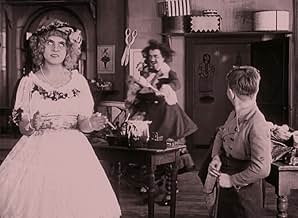
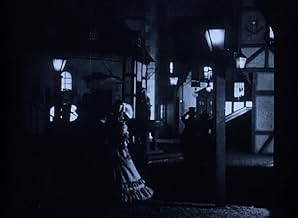
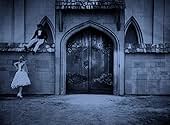
"The Doll" is a delightful feature--the best I've seen of director Ernst Lubitsch's German films. The deliberately artificial and often theatrical settings--flat backdrops, fake trees and people in horse costumes included--by Kurt Richter saliently add to the picture's enchantment and fairytale-like narrative. "The Doll" is similar in this approach to Maurice Tourneur's 1918 films "The Blue Bird" and "Prunella." Like "The Blue Bird," "The Doll" has a few moments that seem reminiscent of the feéries of early-cinema pioneer Georges Méliès, such as the Moon's facial expressions and the stop-motion animation to change the doll maker's hair. Highly-artificial theatricality was also adopted for "The Cabinet of Dr. Caligari" (1920), although in a very different way. Lubitsch begins the film well by appearing in front of the camera to introduce and arrange the mise-en-scène in miniature--a scene that then fades to the actual set and beginning of the story proper.
In it, the baron's nephew doesn't want to marry a woman, so he purchases what he believes is a life-size doll to be his wife. Meanwhile, a real woman, the doll maker's daughter, is pretending to be that doll to hide that the doll maker's apprentice broke the doll that was based on her appearance. So, the nephew thinks he's fooling everyone, when he's the one being fooled. It's a simple narrative, briskly plotted, and very well enacted. The inherent sexism isn't lost on Lubitsch either, as a humorous advertisement offers the doll maker's product to widowers and misogynists alike. Additionally, there are a few light sex jokes throughout. Ossi Oswalda is wonderful, cute and funny, with her various expressions and movements, including the dancing, as she plays the character masquerading as a lifeless doll. Her performance significantly helps make this photoplay entertaining. The slapstick and subplot antics between the wacky-looking doll maker and his young apprentice are even amusing and appreciated.
Dancing and a comedy chase make their way into this and other Lubitsch films. The themes of mistaken identity or masquerading as acting and doubles also underlie the humor of several Lubitsch comedies, in Germany and America. His three earliest comedies that I've seen ("The Merry Jail," "I Don't Want to Be a Man" and "The Oyster Princess") all play with these ideas in different and self-reflexive ways, with characters pretending to be someone else. The girl isn't only doubled as a doll; her image is literally doubled photographically during a dream scene. Moreover, the theme of fakery extends further in "The Doll": the dolls are fake, a real woman fakes being one of them, which is supported by the fake appearance of much of the film's production design. The entire production coalesces to firmly establish the film's world as fantasy. The sets and designs of Lubitsch's German films seem to have always been impressive, but in some of them, it feels that they overwhelm their plays, or that the narratives and characters were never equal to the grand décors, but in "The Doll," it all fits together.
In it, the baron's nephew doesn't want to marry a woman, so he purchases what he believes is a life-size doll to be his wife. Meanwhile, a real woman, the doll maker's daughter, is pretending to be that doll to hide that the doll maker's apprentice broke the doll that was based on her appearance. So, the nephew thinks he's fooling everyone, when he's the one being fooled. It's a simple narrative, briskly plotted, and very well enacted. The inherent sexism isn't lost on Lubitsch either, as a humorous advertisement offers the doll maker's product to widowers and misogynists alike. Additionally, there are a few light sex jokes throughout. Ossi Oswalda is wonderful, cute and funny, with her various expressions and movements, including the dancing, as she plays the character masquerading as a lifeless doll. Her performance significantly helps make this photoplay entertaining. The slapstick and subplot antics between the wacky-looking doll maker and his young apprentice are even amusing and appreciated.
Dancing and a comedy chase make their way into this and other Lubitsch films. The themes of mistaken identity or masquerading as acting and doubles also underlie the humor of several Lubitsch comedies, in Germany and America. His three earliest comedies that I've seen ("The Merry Jail," "I Don't Want to Be a Man" and "The Oyster Princess") all play with these ideas in different and self-reflexive ways, with characters pretending to be someone else. The girl isn't only doubled as a doll; her image is literally doubled photographically during a dream scene. Moreover, the theme of fakery extends further in "The Doll": the dolls are fake, a real woman fakes being one of them, which is supported by the fake appearance of much of the film's production design. The entire production coalesces to firmly establish the film's world as fantasy. The sets and designs of Lubitsch's German films seem to have always been impressive, but in some of them, it feels that they overwhelm their plays, or that the narratives and characters were never equal to the grand décors, but in "The Doll," it all fits together.
Oh, You Beautiful Doll
People speak of the Lubitsch Touch first showing up in THE OYSTER PRINCESS, but that movie always struck me me as a a good romantic comedy, dimmed by changes in fashion, creaking a bit in age.
But this movie is the real thing: a silly story told with much flair and constant surprises. It begins with Lubitsch showing you a model of the set, like Penn and Teller showing you how they do the cup-and-ball trick, followed by a show that dazzles you: pantomime horses, venal monks and a little bit of E.T.A. Hoffman all fall under the thrall of Lubitsch and all of them, and the audience too, end up with smiles on their faces.
This movie is too good to more than hint at its wonders. If you have never seen a silent feature, see this one.
But this movie is the real thing: a silly story told with much flair and constant surprises. It begins with Lubitsch showing you a model of the set, like Penn and Teller showing you how they do the cup-and-ball trick, followed by a show that dazzles you: pantomime horses, venal monks and a little bit of E.T.A. Hoffman all fall under the thrall of Lubitsch and all of them, and the audience too, end up with smiles on their faces.
This movie is too good to more than hint at its wonders. If you have never seen a silent feature, see this one.
Highly Entertaining
Because the Baron of Chanterelle wants to preserve his family line, he forces his timid nephew Lancelot to choose one of the village maidens to wed. Lancelot flees to a monastery to escape the forty eager maidens. When the gluttonous monks discover that the Baron is offering a large sum for the marriage, they suggest Lancelot marry a mechanical doll instead.
I absolutely love how this was put on as a mixture between a play and a film. Some of the sets (such as inside the castle) seem quite elaborate, while other things (the trees and horses) smack of a high school production. But not in a bad way -- there is a certain charm to how this story unfolded. Add to that the wild hair and outfit of the puppet master (a precursor to Willy Wonda) and you have a great looking film.
Something could be said about the interaction between people and robots, and at what point are robots so lifelike that the line between human and non-human is all too fuzzy. But this is a light-hearted film and I will not get too serious here.
I absolutely love how this was put on as a mixture between a play and a film. Some of the sets (such as inside the castle) seem quite elaborate, while other things (the trees and horses) smack of a high school production. But not in a bad way -- there is a certain charm to how this story unfolded. Add to that the wild hair and outfit of the puppet master (a precursor to Willy Wonda) and you have a great looking film.
Something could be said about the interaction between people and robots, and at what point are robots so lifelike that the line between human and non-human is all too fuzzy. But this is a light-hearted film and I will not get too serious here.


Wusstest du schon
- WissenswertesAt one point Lancelot takes a heart out of the leg of his pants. This is an allusion to the German expression 'Das Herz ist mir in die Hose gerutscht' (my heart slid into my pants) which is equivalent to 'to have one's heart in one's boots'.
- PatzerLancelot shouts his alarm to a monk that he is being pursued by "40 women". However, about 20 women are seen on screen.
He says this because the butler earlier had announced "Forty women at the door!" It's an estimate as it's doubtful the butler made an individual count. Also, there is no "requirement" that all referenced individuals must appear on screen.
- Zitate
Baron von Chanterelle: [on Lancelot's wedding night] Do you need any more pieces of advice?
Lancelot: No thanks, I have an instruction manual.
- VerbindungenFeatured in Kino Europa - Die Kunst der bewegten Bilder (1995)
Top-Auswahl
Melde dich zum Bewerten an und greife auf die Watchlist für personalisierte Empfehlungen zu.
- How long is The Doll?Powered by Alexa
Details
- Laufzeit
- 1 Std. 6 Min.(66 min)
- Sound-Mix
- Seitenverhältnis
- 1.33 : 1
Zu dieser Seite beitragen
Bearbeitung vorschlagen oder fehlenden Inhalt hinzufügen