IMDb-BEWERTUNG
7,6/10
7383
IHRE BEWERTUNG

Füge eine Handlung in deiner Sprache hinzuA series of mishaps leads to a young man being chased by a big city's entire police force.A series of mishaps leads to a young man being chased by a big city's entire police force.A series of mishaps leads to a young man being chased by a big city's entire police force.
- Regisseure
- Autoren
- Stars
- Auszeichnungen
- 1 win total



Buster Keaton
- The Young Man
- (as 'Buster' Keaton)

Edward F. Cline
- Hobo
- (Nicht genannt)

Virginia Fox
- Mayor's Daughter
- (Nicht genannt)
Steve Murphy
- Conman Selling Furniture
- (Nicht genannt)

Joe Roberts
- Police Chief
- (Nicht genannt)
7,67.3K
1
2
3
4
5
6
7
8
9
10
Empfohlene Bewertungen
a sketch
Each film of Buster Keaton, for me, is support of reflection. "Cops" is not a reflection. But a sketch about motifs, choices, situations and fine art of birth of comedy. A film about manner to survive to adversary situations. And to build a form of happiness in the most inspired manner. The furniture, the horse, the cops and the innocent victim of unhappy situations are good pieces of a realistic and profound useful portrait of near reality. The same after almost a century.
10lugonian
Buster's Police Encounter
COPS (First National, 1922), written and directed by Buster Keaton and Eddie Cline, presents deadpan comedian Buster Keaton in one of his most entertaining and true classic comedy shorts ever produced for the silent screen. Not quite a tribute to the police force in general, COPS is somewhat reminiscent to the Mack Sennett day of "Keystone Kops" that starts off pure and simple, building up to a great big police chase after poor innocent Buster.
Although famed magician Harry Houdini is not in this photo-play, he gets to have his quote, "Love laughs at locksmiths" as its opening title. Next scene introduces Buster in traditional pork-pie hat as a hapless failure who attempts to make good as a successful businessman for the sake of the girl (Virginia Fox) he hopes to marry. Through no fault of his own, trouble always seems to follow him wherever he goes. After finding a wallet on the street, he attempts to return it to its rightful owner (Joe Roberts) having taken off in a taxi. By the time the owner realizes his wallet is gone, he has the driver turn back. He retrieves the wallet but finds the money gone, and Buster as well, who has taken off in the man's taxi. Later spotted by a con-man, Buster is duped to buying his furniture by giving him a sob story about being evicted when in fact the furniture rightfully belongs to a family man about to move to a new location. Mistaken as the mover, Buster has the man's possessions placed on a horse cart and given the address (4 Flushing Place) where his things are to be sent. After having some horse trouble, Buster unwittingly makes the wrong turn on the street where the annual Policeman's Day Parade is taking place. Trouble lurks, leading to a confusion and a chase around the city between Buster and the thousands of men in blue ("Get some cops to protect our policemen"), particularly one who happens to be the owner of the misplaced furniture.
Next to Keaton's earlier effort, ONE WEEK (1920), COPS is a masterpiece that continues to generate laughter. The plot is slight, and like his contemporary Charlie Chaplin, the gags are generous, carefully planned, timed and staged, making this two-reeler (20 minute) comedy move at a very fast pace. Robert Youngson, producer of great compilation films of THE GOLDEN AGE OF COMEDY (1957) and DAYS OF THRILLS AND LAUGHTER (1961), used highlights of COPS into his excellent presentation of WHEN COMEDY WAS KING (1960). During the 1970s, COPS turned up occasionally on public television, notably in "The Silent Comedy Film Festival" that aired on WNET, Channel 13 in New York City around 1973, accompanied by piano score. COPS was later used for its concluding 20 minutes to another PBS series, "Sprockets" in the 1980s, following its presentation of Buster Keaton's feature length comedy, STEAMBOAT BILL Jr. (1928). The print of COPS used in "Sprockets," included a different piano accompaniment than the one heard in the 1970s, but missing few minutes of footage midway as Buster takes his slow moving horse to Dr. Smith Goat Glan Specialist to later come out in full speed. Also in the 1980s, known as the dawn of home video, a complete VHS copy of COPS became available through Blackhawk Films (The Killian Collection) with organ score by Gaylord Carter, double featured with another Keaton's short, THE BLACKSMITH (1922).
COPS is one of those comedies that would make a great introduction of Keaton's work to film students. Could a film like COPS ever lose its appeal? The answer is yes, though through no fault of Keaton nor the movie itself. What could make COPS unbearable to sit through would be to have it accompanied by poor music score. While Turner Classic Movies holds a great record for its dedication of motion picture history, ranging from restoring prints and resurrecting long forgotten silent movies with new scores, some great, others satisfactory, COPS, along with other Keaton silents on TCM, have sadly become the victim of very poor scoring, taking away Keaton's achievement to great comedy. Had Keaton's films been fortunate as the Harold Lloyd comedies to have the great scoring by Robert Israel, then, no doubt about it, COPS would be tops. (****)
Although famed magician Harry Houdini is not in this photo-play, he gets to have his quote, "Love laughs at locksmiths" as its opening title. Next scene introduces Buster in traditional pork-pie hat as a hapless failure who attempts to make good as a successful businessman for the sake of the girl (Virginia Fox) he hopes to marry. Through no fault of his own, trouble always seems to follow him wherever he goes. After finding a wallet on the street, he attempts to return it to its rightful owner (Joe Roberts) having taken off in a taxi. By the time the owner realizes his wallet is gone, he has the driver turn back. He retrieves the wallet but finds the money gone, and Buster as well, who has taken off in the man's taxi. Later spotted by a con-man, Buster is duped to buying his furniture by giving him a sob story about being evicted when in fact the furniture rightfully belongs to a family man about to move to a new location. Mistaken as the mover, Buster has the man's possessions placed on a horse cart and given the address (4 Flushing Place) where his things are to be sent. After having some horse trouble, Buster unwittingly makes the wrong turn on the street where the annual Policeman's Day Parade is taking place. Trouble lurks, leading to a confusion and a chase around the city between Buster and the thousands of men in blue ("Get some cops to protect our policemen"), particularly one who happens to be the owner of the misplaced furniture.
Next to Keaton's earlier effort, ONE WEEK (1920), COPS is a masterpiece that continues to generate laughter. The plot is slight, and like his contemporary Charlie Chaplin, the gags are generous, carefully planned, timed and staged, making this two-reeler (20 minute) comedy move at a very fast pace. Robert Youngson, producer of great compilation films of THE GOLDEN AGE OF COMEDY (1957) and DAYS OF THRILLS AND LAUGHTER (1961), used highlights of COPS into his excellent presentation of WHEN COMEDY WAS KING (1960). During the 1970s, COPS turned up occasionally on public television, notably in "The Silent Comedy Film Festival" that aired on WNET, Channel 13 in New York City around 1973, accompanied by piano score. COPS was later used for its concluding 20 minutes to another PBS series, "Sprockets" in the 1980s, following its presentation of Buster Keaton's feature length comedy, STEAMBOAT BILL Jr. (1928). The print of COPS used in "Sprockets," included a different piano accompaniment than the one heard in the 1970s, but missing few minutes of footage midway as Buster takes his slow moving horse to Dr. Smith Goat Glan Specialist to later come out in full speed. Also in the 1980s, known as the dawn of home video, a complete VHS copy of COPS became available through Blackhawk Films (The Killian Collection) with organ score by Gaylord Carter, double featured with another Keaton's short, THE BLACKSMITH (1922).
COPS is one of those comedies that would make a great introduction of Keaton's work to film students. Could a film like COPS ever lose its appeal? The answer is yes, though through no fault of Keaton nor the movie itself. What could make COPS unbearable to sit through would be to have it accompanied by poor music score. While Turner Classic Movies holds a great record for its dedication of motion picture history, ranging from restoring prints and resurrecting long forgotten silent movies with new scores, some great, others satisfactory, COPS, along with other Keaton silents on TCM, have sadly become the victim of very poor scoring, taking away Keaton's achievement to great comedy. Had Keaton's films been fortunate as the Harold Lloyd comedies to have the great scoring by Robert Israel, then, no doubt about it, COPS would be tops. (****)
Keaton and the Chase
This seems to be Buster Keaton's most popular short film. I prefer his films with more cinematically based comedy, such as in "The Playhouse", "The Frozen North" and "Sherlock, Jr.", but "Cops" is a very entertaining little film. It features a large comedic chase--chases, especially involving policemen, being one of the most regularly reoccurring devices in Keaton's oeuvre, especially in his two-reelers. Cops chased Keaton in "Convict 13", "Neighbors", "Hard Luck", "The Goat" and--in an escalated chase very similar to that in "Cops"--"Daydreams". My favorite Keaton chase, by the way, is the chase of the brides in "Seven Chances".
The comedic chase has a long cinema tradition, perhaps dating back to James Williamson's "Stop Thief!" (1901) or "Chinese Laundry Scene" (1895), the latter of which was based on a vaudeville act. Then, there were the Pathé comedies and those of Mack Sennett's Keystone, which were greatly derived from them. Keaton came from vaudeville and worked under one of the premiere early comedians, Roscoe "Fatty" Arbuckle, to begin his on screen career, so he was fully immersed in this tradition.
In "Cops", there are some good visual jokes that rely on film technique, such as following a close shot of Keaton behind bars with a reverse long shot that clarifies the opening scene. Keaton's mechanical inventiveness is demonstrated during the horse carriage sequence. And, there's plenty of physical comedy during the great chase finale. Keaton's sense of matured, restrained comedy is also important here, which is perhaps best characterized by his retained stoic expression throughout any chaotic misadventure. "Cops" is rather representative of Keaton's refined sense of what's funny and of his advanced understanding of film-making.
The comedic chase has a long cinema tradition, perhaps dating back to James Williamson's "Stop Thief!" (1901) or "Chinese Laundry Scene" (1895), the latter of which was based on a vaudeville act. Then, there were the Pathé comedies and those of Mack Sennett's Keystone, which were greatly derived from them. Keaton came from vaudeville and worked under one of the premiere early comedians, Roscoe "Fatty" Arbuckle, to begin his on screen career, so he was fully immersed in this tradition.
In "Cops", there are some good visual jokes that rely on film technique, such as following a close shot of Keaton behind bars with a reverse long shot that clarifies the opening scene. Keaton's mechanical inventiveness is demonstrated during the horse carriage sequence. And, there's plenty of physical comedy during the great chase finale. Keaton's sense of matured, restrained comedy is also important here, which is perhaps best characterized by his retained stoic expression throughout any chaotic misadventure. "Cops" is rather representative of Keaton's refined sense of what's funny and of his advanced understanding of film-making.
Very Funny & Very Well-Crafted
Buster Keaton's "Cops" is a very funny and very well-crafted short comedy with a wide range of comic material, ranging from subtle timing gags to hilarious slapstick, and featuring some impressive choreography as well. It takes a short while to set everything up, and then it is very humorous the rest of the way. Keaton's character is involved in a series of misunderstandings at the beginning of the film that eventually lead to him driving across town in a rickety carriage filled with things that don't belong to him. Soon he is being pursued by (literally) every policeman in the city. There are plenty of laughs from Keaton's own comic skills, and a lot of large-scale chase scenes that are carefully filmed and very entertaining.
This is a movie not to be missed for anyone who enjoys silent comedies.
This is a movie not to be missed for anyone who enjoys silent comedies.
Chase
This is a relatively early Keaton short, one of the first where he clearly designed the sight gags.
Its a conventional chase setup, with him being chased by hundreds of cops. It starts slowly, and the first half is way below par.
But then we move into Keaton territory with some stunts so physically extreme and dangerous its amazing that he survived. We don't yet have any that involve huge machines or buildings, but this is snappy and the pace is perfect once it gets going.
I'm not sure whether its perfect because he found the right pace, or because he established it and it seems right.
Ted's Evaluation -- 3 of 3: Worth watching.
Its a conventional chase setup, with him being chased by hundreds of cops. It starts slowly, and the first half is way below par.
But then we move into Keaton territory with some stunts so physically extreme and dangerous its amazing that he survived. We don't yet have any that involve huge machines or buildings, but this is snappy and the pace is perfect once it gets going.
I'm not sure whether its perfect because he found the right pace, or because he established it and it seems right.
Ted's Evaluation -- 3 of 3: Worth watching.


Wusstest du schon
- WissenswertesA "goat gland specialist" was a quack who purported to treat erectile dysfunction with goat glands. In the 1920s, John R. Brinkley, a Kansas pharmacist and self-proclaimed "doctor," used the new medium of radio to make a name for himself, claiming he could cure male impotence with a goat gland transplant. His quack treatments attracted many patients, including several prominent Hollywood movie stars.
- Zitate
Police Chief: Get some cops to protect our policemen!
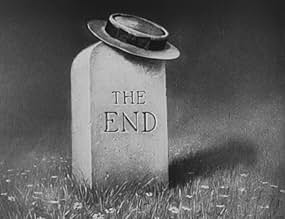
- Crazy CreditsThe "THE END" text appears on a tombstone, which has Keaton's signature pork pie hat on top.
- Alternative VersionenSome prints, notably those made by Blackhawk Films, are missing the "goat gland" sequence.
- VerbindungenEdited into Als Lachen Trumpf war (1960)
Top-Auswahl
Melde dich zum Bewerten an und greife auf die Watchlist für personalisierte Empfehlungen zu.
Details
- Erscheinungsdatum
- Herkunftsland
- Sprachen
- Auch bekannt als
- Cops
- Drehorte
- Hollywood Boulevard, Hollywood, Los Angeles, Kalifornien, USA(Buster chased by the cops)
- Produktionsfirma
- Weitere beteiligte Unternehmen bei IMDbPro anzeigen
- Laufzeit
- 18 Min.
- Farbe
- Sound-Mix
- Seitenverhältnis
- 1.33 : 1
Zu dieser Seite beitragen
Bearbeitung vorschlagen oder fehlenden Inhalt hinzufügen