
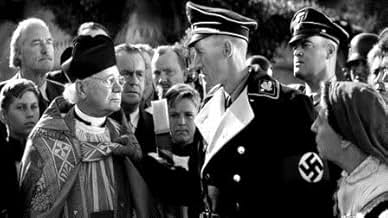
Füge eine Handlung in deiner Sprache hinzuStory of the assassination of Reinhard Heydrich, Nazi SS commander, by Czech partisans and the reprisals inflicted by the Nazis on the Czechs.Story of the assassination of Reinhard Heydrich, Nazi SS commander, by Czech partisans and the reprisals inflicted by the Nazis on the Czechs.Story of the assassination of Reinhard Heydrich, Nazi SS commander, by Czech partisans and the reprisals inflicted by the Nazis on the Czechs.


Ludwig Stössel
- Herman Bauer
- (as Ludwig Stossel)


Enrique Acosta
- Prisoner
- (Nicht genannt)

Fred Aldrich
- German Machine Gunner
- (Nicht genannt)
Nellie Anderson
- Old Lady Masaryk
- (Nicht genannt)
Louis V. Arco
- German Sergeant
- (Nicht genannt)

Richard Bailey
- Anton Bartonek
- (Nicht genannt)
Wilmer Barnes
- Officer
- (Nicht genannt)
Walter Bonn
- Military Doctor
- (Nicht genannt)

Chet Brandenburg
- Linesman
- (Nicht genannt)
6,5961
1
2
3
4
5
6
7
8
9
10
Empfohlene Bewertungen
could have been more boring
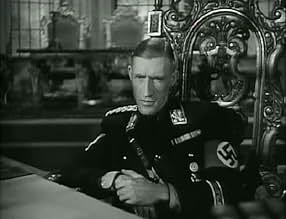
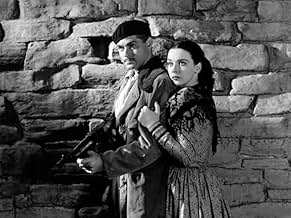
An interesting movie that does not do much to inspire the viewer through its portrayal of the Czech resistance, though they face a grim ending, but definitely catches the interest in the portrayal of Nazi brutality through the part played by John Carradine as Reich Protector Heydrich, who routinely had people shot in order to maintain a level of fear and control. The characterizations of the townspeople are too quaint for this subject, but they (the townspeople) do catch on as Carradine's brutality increases, with the most memorable scene being when he and his men take over a philosophy class, in a scene that manages to get fairly intense. If it were just up to Alan Curtis to carry the film as Karel Vavra, the film would fall into a dark pit of boredom, since within any resistance movement there is always collaborators within families that need to be killed. Those characters are all left out, and so the drama quotient is not very intense. Nonetheless, Carradine's Heydrich is definitely worth watching.
Not historically correct, but fascinating
Douglas Sirk's career is recalled for his wonderful colorful attacks on the "American Dream" in those films he made (usually with Rock Hudson, Jane Wyman, and Agnes Moorehead) in the 1950s. Never was the lusciousness of American prosperity used to show the underside of our wealth oriented culture. But Sirk had a long career in Europe and Hollywood before he made "Magnificent Obsession" and "Imitation of Life". His films in the middle forties included some superb costume films with George Sanders (like "Summer Storm")and this early one which really stars John Carridine as one of the most monstrous figures of World War II, Reinhard Heydrich the so-called "Protector" of Bohemia, who chaired the Wannsee Conference of 1941 that created the "Final Solution". Whatever degree of venom Carridine brings to the role is nothing like the effortless evil the original Heydrich dripped. Still it is a very effective performance.
The film is based, by the way, on the poem "Lidice" by Edna St. Vincent Millay. Written shortly after that village was decimated in the reprisals following Heydrich's death, it is recited (in a woman's voice) in most of the film, but it's closing lines are recited by the male actors at it's conclusion - quite effectively as most of these actors (Edgar Kennedy, Jimmy Conlon, Ralph Morgan) have been slaughtered by the Nazis in front of us. As some of these actors (Kennedy and Conlon) usually were seen in comedies, their use as straight dramatic actors in this film is a revelation of what they might have done if they had not been used in comedy so much.
To me the best moment of this film (aside the use of the poem) is when Carridine lies dying in a hospital, visited by Howard Freeman as his comrade and fellow S.S. bigwig, Heinrich Himmler. Freeman was an affective actor in comic and dramatic parts, and here shows the hideous Himmler as a banal Babbitt bureaucrat. Perhaps not quite correct historically (Himmler was stranger than George Babbitt) but in it's way quite effective. Carridine had (in his characterization) shown something of the intellectual pretensions of Heydrich, but as he is dying he suddenly realizes he is frightened of dying. He tries to explain this to Himmler who doesn't care (so much for being a fellow Nazi comrade) and only sees the mission of the dying Heydrich to become a martyr to stiffen German will to victory. As Carridine finally dies, Freeman only sees his duty to make a large enough retaliation on the local population so that people will realize that he is harder than the dead martyr ever was.
Historically this is not accurate either. Heydrich had been in high level Nazi planning for several years, and frightened not only Himmler as a rival, but Bormann, Goebbels, and Hitler himself. Heydrich had a nasty "rumor" in his past: his father, a musician, may have been descended from Jews. This was never settled. However, due to this particular rumor, Heydrich's opponents felt they could control him. In actuality, it was easier to control an out of control Mercendes Benz. As soon as he could, Heydrich began collecting information on every one of his rivals about their family backgrounds (including Hitler's). It was his eventual determination that he would one day be the successor of "Der Fuhrer". Himmler, Hitler, and the others may have officially honored Heydrich as a national martyr, but in their own private moments they all were fully glad to see that he was dead and out of the way.
Their real reason for the massive retaliation was the fear of copycat plans. The Czechs who killed Heydrich were trained in London, and had Churchill's assent on their plot. No doubt, had they gotten away with it, plots against other Nazi big-wigs would have been set in motion. The retaliation was to remind the local populations that the Germans would not hesitate to depopulate them if anymore assassinations occurred. It was also a reminder to the Allies that if they wanted to save lives they better not plan any further killings. As such it worked. Although several plans for an attack on Hitler were finally set up, none were ever put into operation (the 1944 bomb plot was by the German General staff, not by Churchill). Whether this was wise or not is a matter we cannot ever tell the answer to.
Heydrich's actual death is nothing like the hideous death camps he set up for Jews, Gypsies, Slavs. etc. But it still is somewhat pleasant to think of the agony of his last days, his spine broken by the steel springs of his exploded car seat. The affection that his title "Protector" supposedly suggested is truly shown by a story of how a German soldier desperately tried to get passers by to assist to help move the "Protector" to a nearby hospital quickly. An unknown Czech citizen looked at the dying man in the ruins of his Mercedes, shrugged his shoulders, and said, "The hospital is around the corner. He could walk there." Then he left the flustered soldier.
The film is based, by the way, on the poem "Lidice" by Edna St. Vincent Millay. Written shortly after that village was decimated in the reprisals following Heydrich's death, it is recited (in a woman's voice) in most of the film, but it's closing lines are recited by the male actors at it's conclusion - quite effectively as most of these actors (Edgar Kennedy, Jimmy Conlon, Ralph Morgan) have been slaughtered by the Nazis in front of us. As some of these actors (Kennedy and Conlon) usually were seen in comedies, their use as straight dramatic actors in this film is a revelation of what they might have done if they had not been used in comedy so much.
To me the best moment of this film (aside the use of the poem) is when Carridine lies dying in a hospital, visited by Howard Freeman as his comrade and fellow S.S. bigwig, Heinrich Himmler. Freeman was an affective actor in comic and dramatic parts, and here shows the hideous Himmler as a banal Babbitt bureaucrat. Perhaps not quite correct historically (Himmler was stranger than George Babbitt) but in it's way quite effective. Carridine had (in his characterization) shown something of the intellectual pretensions of Heydrich, but as he is dying he suddenly realizes he is frightened of dying. He tries to explain this to Himmler who doesn't care (so much for being a fellow Nazi comrade) and only sees the mission of the dying Heydrich to become a martyr to stiffen German will to victory. As Carridine finally dies, Freeman only sees his duty to make a large enough retaliation on the local population so that people will realize that he is harder than the dead martyr ever was.
Historically this is not accurate either. Heydrich had been in high level Nazi planning for several years, and frightened not only Himmler as a rival, but Bormann, Goebbels, and Hitler himself. Heydrich had a nasty "rumor" in his past: his father, a musician, may have been descended from Jews. This was never settled. However, due to this particular rumor, Heydrich's opponents felt they could control him. In actuality, it was easier to control an out of control Mercendes Benz. As soon as he could, Heydrich began collecting information on every one of his rivals about their family backgrounds (including Hitler's). It was his eventual determination that he would one day be the successor of "Der Fuhrer". Himmler, Hitler, and the others may have officially honored Heydrich as a national martyr, but in their own private moments they all were fully glad to see that he was dead and out of the way.
Their real reason for the massive retaliation was the fear of copycat plans. The Czechs who killed Heydrich were trained in London, and had Churchill's assent on their plot. No doubt, had they gotten away with it, plots against other Nazi big-wigs would have been set in motion. The retaliation was to remind the local populations that the Germans would not hesitate to depopulate them if anymore assassinations occurred. It was also a reminder to the Allies that if they wanted to save lives they better not plan any further killings. As such it worked. Although several plans for an attack on Hitler were finally set up, none were ever put into operation (the 1944 bomb plot was by the German General staff, not by Churchill). Whether this was wise or not is a matter we cannot ever tell the answer to.
Heydrich's actual death is nothing like the hideous death camps he set up for Jews, Gypsies, Slavs. etc. But it still is somewhat pleasant to think of the agony of his last days, his spine broken by the steel springs of his exploded car seat. The affection that his title "Protector" supposedly suggested is truly shown by a story of how a German soldier desperately tried to get passers by to assist to help move the "Protector" to a nearby hospital quickly. An unknown Czech citizen looked at the dying man in the ruins of his Mercedes, shrugged his shoulders, and said, "The hospital is around the corner. He could walk there." Then he left the flustered soldier.
Weak Drama
Hitler's Madman (1943)
* 1/2 (out of 4)
Douglas Sirk's first American film was also filmed by Fritz Lang as Hangmen Also Die the very same year. War propaganda at its highest as the Czech people stick together to assassinate Nazi Richard Heydrich (John Carradine). This thing here gets mixed reviews but I found it incredibly slow, boring and just not all that interesting. Carradine delivers a good performance but outside of that everyone else is pretty boring and while the direction shines in a few spots it never really comes full circle. The ending with "we should all rise up" might have packed a punch in 1943 but today it comes off very, very stupid.
* 1/2 (out of 4)
Douglas Sirk's first American film was also filmed by Fritz Lang as Hangmen Also Die the very same year. War propaganda at its highest as the Czech people stick together to assassinate Nazi Richard Heydrich (John Carradine). This thing here gets mixed reviews but I found it incredibly slow, boring and just not all that interesting. Carradine delivers a good performance but outside of that everyone else is pretty boring and while the direction shines in a few spots it never really comes full circle. The ending with "we should all rise up" might have packed a punch in 1943 but today it comes off very, very stupid.
Sadly nothing has changed
This tragic, sad and depressing film made in 1943 depicted the atrocities of the Nazi regime and their supporters in Prague during World War II. Unfortunately, and very sadly, this brutal, sadistic and horrible behavior continues in the world we live in today. Face it, man has made little progress in the area of peace and love since the beginning of time. Sure, we have advanced by leaps and bounds when it comes to technology, medication, etc., but we are still murdering each other day in and day out and in most instances for things as meaningless as cutting someone off in traffic. Is their hope for us as a people. Can mankind live in Peace; sadly, I doubt it.
Redeemed by a brilliant turn from John Carradine
Let's not kid ourselves, "Hitler's Madman" is not only no masterpiece but pretty terrible in places yet director Douglas Sirk's movie about the assassination of Heydrich, made almost as the events themselves were unfolding, has great moments. There are scenes here as good as any in war movies, just as there are B-Movie moments as bad as any in B-Movies. Certainly the events portrayed are harrowing enough for this to feel like the ultimate feel-bad movie; perhaps what is most astonishing is that it was made at all while the war was still going on.
It's let down, (badly), by some awful acting but redeemed by Sirk's brilliant handling of individual scenes and by a terrific performance from John Carradine as Heydrich, (his death scene is Oscar-worthy). It may not stick very closely to the events but it's still preferable to the more recent movie dealing with the same subject.
It's let down, (badly), by some awful acting but redeemed by Sirk's brilliant handling of individual scenes and by a terrific performance from John Carradine as Heydrich, (his death scene is Oscar-worthy). It may not stick very closely to the events but it's still preferable to the more recent movie dealing with the same subject.


Wusstest du schon
- WissenswertesWhile in Germany before the war, director Douglas Sirk met Reinhard Heydrich at a party, and later recalled that "he made my blood run cold."
- PatzerHeydrich was ambushed in the city of Prague, not on a country road. His travel plans were also no secret: despite Hitler's admonitions Heydrich always took the same route when traveling in the city, believing the the people were too cowed to dare attack him.
- Zitate
[last lines]
Anton Bartonek: Telling you not to eat or drink. one morsel of food, one swallow of drink, before you think, Before you think! What is best for your country. Keep your country free from the foe you hate. Catch him! Catch him! Do not wait!
- VerbindungenFeatured in Hollywood und der Holocaust (2004)
Top-Auswahl
Melde dich zum Bewerten an und greife auf die Watchlist für personalisierte Empfehlungen zu.
- How long is Hitler's Madman?Powered by Alexa
Details
- Erscheinungsdatum
- Herkunftsland
- Sprachen
- Auch bekannt als
- Hitler's Hangman
- Drehorte
- Angeles Crest Highway, Angeles National Forest, Kalifornien, USA(exterior snow scenes)
- Produktionsfirmen
- Weitere beteiligte Unternehmen bei IMDbPro anzeigen
Box Office
- Budget
- 300.000 $ (geschätzt)
- Laufzeit
- 1 Std. 24 Min.(84 min)
- Farbe
- Seitenverhältnis
- 1.37 : 1
Zu dieser Seite beitragen
Bearbeitung vorschlagen oder fehlenden Inhalt hinzufügen