IMDb-BEWERTUNG
6,5/10
18.583
IHRE BEWERTUNG


Ein gewöhnlicher Bewohner eines Ghettos fälscht während Des zweiten Weltkriegs Nachrichten Über Alliierte offensiven, um andere Opfer des NS-Regimes zu wecken.Ein gewöhnlicher Bewohner eines Ghettos fälscht während Des zweiten Weltkriegs Nachrichten Über Alliierte offensiven, um andere Opfer des NS-Regimes zu wecken.Ein gewöhnlicher Bewohner eines Ghettos fälscht während Des zweiten Weltkriegs Nachrichten Über Alliierte offensiven, um andere Opfer des NS-Regimes zu wecken.
- Regisseur/-in
- Autoren
- Stars
- Auszeichnungen
- 2 Gewinne & 3 Nominierungen insgesamt



Éva Igó
- Lina's Mother
- (as Eva Igo)
István Bálint
- Lina's Father
- (as Istvan Balint)


János Gosztonyi
- Samuel
- (as Janos Gosztonyi)


Ádám Rajhona
- The Whistler
- (as Adam Rajhona)


Péter Rudolf
- Roman
- (as Peter Rudolf)
6,518.5K
1
2
3
4
5
6
7
8
9
10
Empfohlene Bewertungen
Dark comedy, with an appropriately surreal ending
What I like about Jakob's tale is that Jakob is no natural hero who sets out to keep hope alive. Far from it. He is an ordinary man, and as terrified of the Nazis as any of his neighbors in the ghetto. He blunders his way into his unlikely role as a keeper of hope, and once there, cannot see from moment to moment how he can maintain it, wishes at times he could be rid of the burden, and yet somehow, manages to continue to inspire others who are so desperate for hope, they don't even try to disbelieve. In short, don't be fooled by the title: Jakob is just this guy; plotwise, he is only a hub around which a large wheel turns.
There were parts that didn't work for me, especially pieces where narration would have worked better than a character monologue (Jakob is a narrator as well as a character, so why does he talk to himself instead of us so much?) But on the whole, it was a good story, well performed by those involved.
The ending, which I shall refrain from describing for the benefit of any who have not seen it, is absolutely fitting. It is surreal, which may bother some, but leaves the door open to so many interpretations that you will wonder whether to take it as the true end, or whether it was Jakob's final lie. And fittingly, the decision is left in the mind of the viewer.
There were parts that didn't work for me, especially pieces where narration would have worked better than a character monologue (Jakob is a narrator as well as a character, so why does he talk to himself instead of us so much?) But on the whole, it was a good story, well performed by those involved.
The ending, which I shall refrain from describing for the benefit of any who have not seen it, is absolutely fitting. It is surreal, which may bother some, but leaves the door open to so many interpretations that you will wonder whether to take it as the true end, or whether it was Jakob's final lie. And fittingly, the decision is left in the mind of the viewer.
Testifying To The Power Of Hope
Over the years, I have found Robin Williams to be one of the most frustrating actors around. Clearly loaded with talent, in my opinion at least most of his movies have been disappointments. He either gives unnecessarily over-the-top performances that really don't fit the context, or he controls his natural comedic instincts to the point at which he comes across as uninspired. So I wasn't sure what to expect in "Jakob the Liar." What I found was a surprisingly good performance in a wonderful movie.
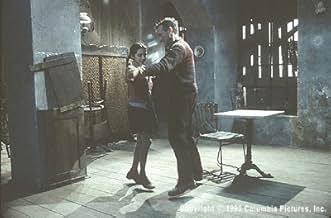
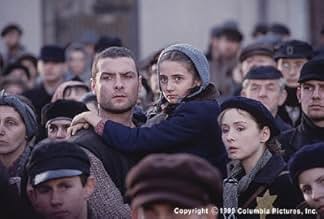
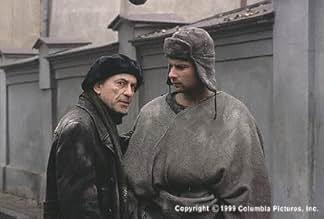
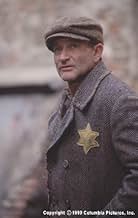
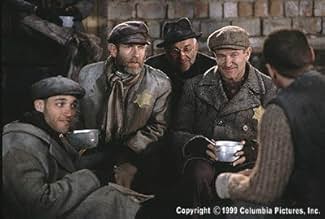
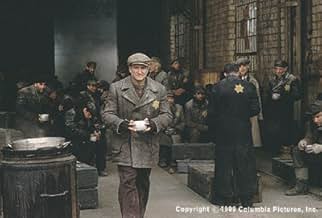
Williams plays Jakob Heym, confined to the Jewish Ghetto of Warsaw by the Nazis during the Second World War. With hope fading, Heym accidentally discovers that Russian troops aren't far away, and begins to spread the news. Others become convinced that he has a radio hidden, and Heym's fictional "news reports" from the BBC provide enough hope to keep the residents of the Ghetto going through this dark time.
Williams (also executive producer) did a fine job as Heym. As one would expect, his character comes across as something of a comedian ("I believe we're God's Chosen People; I just wish He had chosen someone else!") but his humour is appropriate; the sort of dark humour one would expect from people in this situation. The other performances faded into the background, not because they were bad but because Williams so dominated the movie. Special mention should go to Justus von Dohnanyi, though, who played the Nazi Commandant "Preuss." Dohnanyi manages to capture exactly the sort of slimy, inhuman character one would expect to be put in charge of such a business. The rest of the cast (primarily Hannah Taylor-Gordon as Lina and Liev Schreiber as Mischa) are good, but overshadowed by Williams.
The character of Kirschbaum (played by Armin Mueller-Stahl) filled me with sadness and represents a clear statement of the evils of Nazism. A world-famous cardiologist, Kirschbaum, because he is Jewish, is forbidden to practice medicine, and ends up cleaning toilets. Mueller-Stahl plays the character with a quiet dignity, and next to Williams is the clear highlight of the movie.
This movie represents a wonderful testimony to the importance of hope in helping people see themselves through what must seem to be impossible situations. Although fictional, it is an important movie for those with an interest in the events of this era.
7/10
Williams plays Jakob Heym, confined to the Jewish Ghetto of Warsaw by the Nazis during the Second World War. With hope fading, Heym accidentally discovers that Russian troops aren't far away, and begins to spread the news. Others become convinced that he has a radio hidden, and Heym's fictional "news reports" from the BBC provide enough hope to keep the residents of the Ghetto going through this dark time.
Williams (also executive producer) did a fine job as Heym. As one would expect, his character comes across as something of a comedian ("I believe we're God's Chosen People; I just wish He had chosen someone else!") but his humour is appropriate; the sort of dark humour one would expect from people in this situation. The other performances faded into the background, not because they were bad but because Williams so dominated the movie. Special mention should go to Justus von Dohnanyi, though, who played the Nazi Commandant "Preuss." Dohnanyi manages to capture exactly the sort of slimy, inhuman character one would expect to be put in charge of such a business. The rest of the cast (primarily Hannah Taylor-Gordon as Lina and Liev Schreiber as Mischa) are good, but overshadowed by Williams.
The character of Kirschbaum (played by Armin Mueller-Stahl) filled me with sadness and represents a clear statement of the evils of Nazism. A world-famous cardiologist, Kirschbaum, because he is Jewish, is forbidden to practice medicine, and ends up cleaning toilets. Mueller-Stahl plays the character with a quiet dignity, and next to Williams is the clear highlight of the movie.
This movie represents a wonderful testimony to the importance of hope in helping people see themselves through what must seem to be impossible situations. Although fictional, it is an important movie for those with an interest in the events of this era.
7/10
Engrossing tale of hope kept alive in a wartime Jewish ghetto
Personally, I found very touching & heart wrenching this story of one man's efforts to lift spirits in a World War II Jewish ghetto in Poland. Many have compared it to Life is Beautiful, and there are some similarities. I can understand why some viewers take offense at any film which might seem to trivialize the Holocaust, but I found Life is Beautiful not disrespectful but deeply moving, and consider this particular tale to be a captivating depiction of one individual's unique attempt to keep hope alive in a desperate situation.
The story revolves around a lonely Polish shopkeeper & widower, Jakob, who is confined to a Jewish ghetto in 1944. When summoned to ghetto headquarters for being out after curfew, he hears a radio report about Russian troop movements. To prevent a friend's suicide, he claims to have heard on his radio that the Russians are very close (within a few hundred kilometers) and will liberate the ghetto soon, causing rumours that Jakob has a secret radio. Instead of telling the truth, he tries to lift spirits and impart hope to the war weary & depressed ghetto inhabitants by maintaining the fiction of possessing this radio, and regularly disseminating uplifting fictional news bulletins about the Allies' progress. Meanwhile, Jakob is also hiding a young Jewish girl who escaped from a camp transport. The Germans hear reports of this forbidden radio and are seeking out the resistance operator of it.
Robin Williams dominates this movie and is brilliant as usual in the endearing, sympathetic role of the kind Jakob who must try to balance getting out lots of hopeful (if fictitious) war reports to keep spirits up while at the same time avoid Nazi suspicion and detection.
The movie portrays the despair of the ghetto's inhabitants and the grave injustice of their captive state. For example, Jewish people are prohibited from practicing medicine and a cardiologist is reduced to cleaning toilets, though does so with good humour, grace, and dignity. On the whole it is a very poignant tale, with any humour having a sad note to it. Jakob the Liar shows another tragic aspect of the Holocaust. Rather than the horrors of the concentration camps that are often the setting of such stories, here we see the injustice and despair of prolonged ghetto captivity.
The story revolves around a lonely Polish shopkeeper & widower, Jakob, who is confined to a Jewish ghetto in 1944. When summoned to ghetto headquarters for being out after curfew, he hears a radio report about Russian troop movements. To prevent a friend's suicide, he claims to have heard on his radio that the Russians are very close (within a few hundred kilometers) and will liberate the ghetto soon, causing rumours that Jakob has a secret radio. Instead of telling the truth, he tries to lift spirits and impart hope to the war weary & depressed ghetto inhabitants by maintaining the fiction of possessing this radio, and regularly disseminating uplifting fictional news bulletins about the Allies' progress. Meanwhile, Jakob is also hiding a young Jewish girl who escaped from a camp transport. The Germans hear reports of this forbidden radio and are seeking out the resistance operator of it.
Robin Williams dominates this movie and is brilliant as usual in the endearing, sympathetic role of the kind Jakob who must try to balance getting out lots of hopeful (if fictitious) war reports to keep spirits up while at the same time avoid Nazi suspicion and detection.
The movie portrays the despair of the ghetto's inhabitants and the grave injustice of their captive state. For example, Jewish people are prohibited from practicing medicine and a cardiologist is reduced to cleaning toilets, though does so with good humour, grace, and dignity. On the whole it is a very poignant tale, with any humour having a sad note to it. Jakob the Liar shows another tragic aspect of the Holocaust. Rather than the horrors of the concentration camps that are often the setting of such stories, here we see the injustice and despair of prolonged ghetto captivity.
532nd Review: Comedy & The Holocaust: In the long tradition of Jewish humor
Jakob the Liar features a good straight-up performance by Robin Williams and a terrific supporting cast, but more than that it is a surprisingly complex film that reflects many of the classic traits of Yiddish humor. In Yiddish humor, the shtetl, or classic village, as immortalized in the wonderful stories of Sholomon Aleichem (think Fiddler on the Roof and Tevya, which is a direct adaptation from Aleichem's tales) are full of set characters - and they are here - the Professor is like the Rebbe, Jakob is a schnorre (someone who loves to get things for free) who becomes the mensch (the upstanding man), and so on.
Of all the films in the Holocaust corpus this is one of the few that reflects with fantasy and imagination and humor what suffering means in Jewish culture. One can argue that films about the Holocaust necessarily are depressing (or must have that Hollywood lift of hope - why?! - there was no hope) - but here there is a genuine attempt to speak into the culture of Ghetto Judaism and refer back to Aleichem's wonderful mix of family, suffering, and laughter.
The film is not wholly successful - the humour is wry, but it never quite gets to the sorrow in it, and replaces that with genuine sorrow. However it defies our norms of this style of film and as such, very correctly, challenges our notions and images of daily life outside the camps.
All in all this rewards viewing at a deeper level than simply a man who invents a radio to give others hope - it is a real reflection of pre-war Judaic humor and as such is a very worthwhile attempt to preserve the deeper meaning of a Jewish understanding that humor is one of the better ways, and sometimes the only way, to cope when darkness falls.
Of all the films in the Holocaust corpus this is one of the few that reflects with fantasy and imagination and humor what suffering means in Jewish culture. One can argue that films about the Holocaust necessarily are depressing (or must have that Hollywood lift of hope - why?! - there was no hope) - but here there is a genuine attempt to speak into the culture of Ghetto Judaism and refer back to Aleichem's wonderful mix of family, suffering, and laughter.
The film is not wholly successful - the humour is wry, but it never quite gets to the sorrow in it, and replaces that with genuine sorrow. However it defies our norms of this style of film and as such, very correctly, challenges our notions and images of daily life outside the camps.
All in all this rewards viewing at a deeper level than simply a man who invents a radio to give others hope - it is a real reflection of pre-war Judaic humor and as such is a very worthwhile attempt to preserve the deeper meaning of a Jewish understanding that humor is one of the better ways, and sometimes the only way, to cope when darkness falls.
something different
I liked this movie, especially the performance of Robin Williams. He appeared very authentic in the role of a person who is pushed into a series of very tricky situations which he tries to manage the best of his knowledge.
What I didn't like though that was the Hungarian cast. I found Peter Rudolf's acting simply annoying. His whole acting and the way he spoke was exaggerated and irritating. Janos Kulka wasn't that bad, but to be honest I don't understand why they had to be a part of this movie in the first place.
Well, anyway they don't appear too often in the film to ruin it entirely and the other characters were well enough to make them forgettable.
It's a film worth seeing and its music is pretty good too.


Wusstest du schon
- WissenswertesThis movie and Jakob, der Lügner (1974) were both based on the novel "Jakob der Lügner," written in 1969 by the East German author Jurek Becker. As Jews, Becker and his parents were placed in a Polish Ghetto in 1939. In order to save him from deportation, his parents gave the Germans a false birth date; Becker forgot his real birth date and was never able to discover it later in life. Although he was eventually sent to the concentration camps Ravensbrück and Sachsenhausen, both he and his father survived the war; his mother died of malnutrition after being freed from the camp. His novel "Jakob der Lügner" won the Heinrich-Mann Prize for literature in 1971; Becker died in 1997 of cancer.
- PatzerThe train locomotive in the lower left-hand corner of the DVD cover artwork is correct for southern California when the movie was released in 1999, but it's totally wrong for the movie's setting in 1944 Poland. Its cab profile was used on various diesel-electric models built by General Motors for the North American market from the early 1960s onwards, it has 1990s-style dual low-mounted safety lights, and its red-and-gray paint scheme bears an uncanny resemblance to that used by the Southern Pacific Railroad in the western United States in the late 20th century.
- Zitate
[first lines]
Jakob Heym: Hitler goes to a fortune-teller and asks, "When will I die?" And the fortune-teller replies, "On a Jewish holiday." Hitler then asks, "How do you know that?" And she replies, "Any day you die will be a Jewish holiday."
- Crazy CreditsSpecial thanks to the city and peoples of Piotrków, Poland, the city and peoples of Lódz, Poland and the city and peoples of Budapest, Hungary.
- SoundtracksBeer Barrel Polka (Roll Out The Barrel)
Written by Lew Brown, Wladimir A. Timm (as Wladimir Timm), Jaromir Vejvoda & Vasek Zeman
Performed by The Andrews Sisters
Courtesy of MCA Records
By Arrangement with Universal Music Special Markets
Top-Auswahl
Melde dich zum Bewerten an und greife auf die Watchlist für personalisierte Empfehlungen zu.
- How long is Jakob the Liar?Powered by Alexa
Details
Box Office
- Budget
- 45.000.000 $ (geschätzt)
- Bruttoertrag in den USA und Kanada
- 4.956.401 $
- Eröffnungswochenende in den USA und in Kanada
- 2.056.647 $
- 26. Sept. 1999
- Weltweiter Bruttoertrag
- 4.956.401 $
Zu dieser Seite beitragen
Bearbeitung vorschlagen oder fehlenden Inhalt hinzufügen