IMDb-BEWERTUNG
7,2/10
4926
IHRE BEWERTUNG


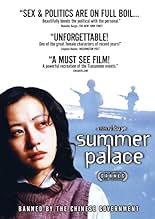
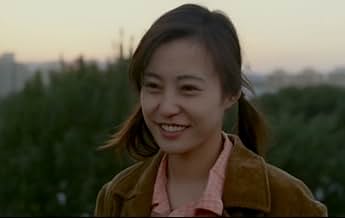
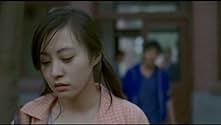
Füge eine Handlung in deiner Sprache hinzuYu Hong leaves her home village and starts university in Beijing, where she develops a consuming and compulsive relationship with another student. The student riots from 1989 then ensue and ... Alles lesenYu Hong leaves her home village and starts university in Beijing, where she develops a consuming and compulsive relationship with another student. The student riots from 1989 then ensue and take a toll on their lives.Yu Hong leaves her home village and starts university in Beijing, where she develops a consuming and compulsive relationship with another student. The student riots from 1989 then ensue and take a toll on their lives.
- Regisseur/-in
- Autoren
- Stars
- Auszeichnungen
- 1 Nominierung insgesamt


7,24.9K
1
2
3
4
5
6
7
8
9
10
Empfohlene Bewertungen
an intelligent film about obsessive love
In the late 1980's, an inexperienced young woman named Yu Hong leaves her hometown and boyfriend in the provinces to attend Beijing University. Almost immediately, she falls into a passionate love/hate relationship with a fellow student at the school. This torrid affair plays out partly against the backdrop of the student protests and subsequent massacre that occurred in Tiananmen Square in the spring of 1989. (The movie also takes place briefly in Germany, the other part of the world where significant social change was occurring in 1989).
"Summer Palace" plays almost like the autopsy of a romantic obsession, attempting to get at the root of why we love in the way that we do. A novice at true love, Yu Hong understands neither her undying passion for Zhou Wei nor her seemingly incessant need to keep sabotaging their relationship. The closest she can come to grasping this paradox is when she says to Zhou Wei: "I want to break up because I can't leave you." Love is seen almost as a form of mental illness in this film - as a debilitating, all-consuming condition that one is powerless to control or "cure" but which, if left unchecked, can become the single dominant force in a person's life (we rarely see Yu Hong studying, let alone going to class). One can attempt to fill the void with other loves, but the heart always comes back to the same place.
"Summer Palace" is long and occasionally repetitious and the political aspects aren't as effectively integrated into the story as they perhaps might have been, but the movie is beautifully acted by Lei Hao and Xiaodong Guo, among others, and features incisive and sensitive direction by Ye Lou (who, along with Feng Mei and Ma Yingli, co-authored the screenplay). This is a largely impressionistic film, concentrating more on mood, imagery and emotions than on narrative. The last hour of the film - so filled with longing and regret as the characters age and attempt to come to terms with the special thing they have lost - is particularly lyrical and heartbreaking and will haunt you long after the movie is over.
All told, "Summer Palace" is an intelligent and moving rumination on that mysterious force we call love.
"Summer Palace" plays almost like the autopsy of a romantic obsession, attempting to get at the root of why we love in the way that we do. A novice at true love, Yu Hong understands neither her undying passion for Zhou Wei nor her seemingly incessant need to keep sabotaging their relationship. The closest she can come to grasping this paradox is when she says to Zhou Wei: "I want to break up because I can't leave you." Love is seen almost as a form of mental illness in this film - as a debilitating, all-consuming condition that one is powerless to control or "cure" but which, if left unchecked, can become the single dominant force in a person's life (we rarely see Yu Hong studying, let alone going to class). One can attempt to fill the void with other loves, but the heart always comes back to the same place.
"Summer Palace" is long and occasionally repetitious and the political aspects aren't as effectively integrated into the story as they perhaps might have been, but the movie is beautifully acted by Lei Hao and Xiaodong Guo, among others, and features incisive and sensitive direction by Ye Lou (who, along with Feng Mei and Ma Yingli, co-authored the screenplay). This is a largely impressionistic film, concentrating more on mood, imagery and emotions than on narrative. The last hour of the film - so filled with longing and regret as the characters age and attempt to come to terms with the special thing they have lost - is particularly lyrical and heartbreaking and will haunt you long after the movie is over.
All told, "Summer Palace" is an intelligent and moving rumination on that mysterious force we call love.
LouYe niubi
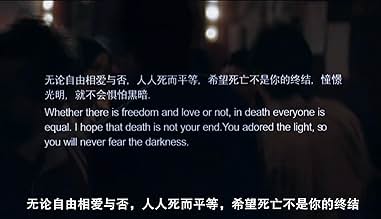
Whether there is freedom and love or not, in death everyone is equal. I hope that death is not your end. You adored the light, so you will never fear the darkness.
Recently, I had a sudden urge to watch the banned film "The Flowers of War" by director Lou Ye. After watching it, I still couldn't figure out why it was called that, as it has nothing to do with the Summer Palace. During the search for resources, I found both a 134-minute and a 140-minute version, and ultimately chose the latter. My mental journey during the viewing was as follows: What the heck is this? It's all about love and sex. So Lou Ye is into this? He likes to use sex to express the confusion and aimlessness of young people? I always consider myself a down-to-earth person, and I admit that I really couldn't understand what the director was trying to convey. So I will look for other materials to help me understand. I feel that Lou Ye wanted to capture the fate of individuals in the historical tide. I can sense the director's ambition, but it's really hard to understand. Without professional explanations, I admit that I really couldn't get it! Why can't the director just tell a clear story? Not everyone can understand metaphors, of course, that's the charm of art films. It's endlessly intriguing and captivating, making one want to explore further. This is the allure of the unknown, and curiosity drives us to meet. Alright, Lou Ye, you win!
Recently, I had a sudden urge to watch the banned film "The Flowers of War" by director Lou Ye. After watching it, I still couldn't figure out why it was called that, as it has nothing to do with the Summer Palace. During the search for resources, I found both a 134-minute and a 140-minute version, and ultimately chose the latter. My mental journey during the viewing was as follows: What the heck is this? It's all about love and sex. So Lou Ye is into this? He likes to use sex to express the confusion and aimlessness of young people? I always consider myself a down-to-earth person, and I admit that I really couldn't understand what the director was trying to convey. So I will look for other materials to help me understand. I feel that Lou Ye wanted to capture the fate of individuals in the historical tide. I can sense the director's ambition, but it's really hard to understand. Without professional explanations, I admit that I really couldn't get it! Why can't the director just tell a clear story? Not everyone can understand metaphors, of course, that's the charm of art films. It's endlessly intriguing and captivating, making one want to explore further. This is the allure of the unknown, and curiosity drives us to meet. Alright, Lou Ye, you win!
A movie about love (and time?)
This film is about several Chinese people, about how they grow up and how time changes them. It is focused on one couple, the very intense passion that they feel for each other and the paths that life shows them in relation of what they feel in each step of their lives...
This movie is centered in love. More exactly, it is centered in the romantic view of life, which is destined to collide with the fact of growing up, because the characters in the film just can't manage to keep their passionate feelings while they start living other things after leaving university. It is as if life and circumstances pushes them to leave behind their memories, the anchor that seems to keep the characters living and knowing that they are someone. I think it is interesting how this is managed as the film goes by, because I recognized this feeling in myself and among my friends: about how, by leaving school, you have the feeling to be adrift in the universe of life.
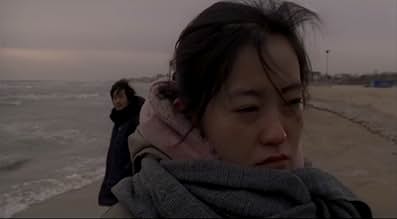
Also, the passion that the characters feel becomes sedated by the tedium of their lives after school. I think the director tries to communicate that feeling: after university, the characters start to get bored with their lives, compared with what they lived in school. It is sad to look how the woman character struggles to keep that feeling alive, but always feeling depressed because she can't grasp that passion that just goes away. They travel, they meet other people, they get jobs, but simply it's not the same. This is also related to the student's protests in China, all the feelings and expectations they generate, and the disillusion they found when they have to confront the real world.
Finally, I think what the film communicates, is that every emotion, love, feeling or whatsoever, is seized by time. This is something that the characters just don't get and the reason of why they suffer: they can't accept that they are different from the ones that were young and passionate. Even in long marriages, couples have to reinvent themselves to keep together each other, or simply they fall in the arms of custom. This last thing is what the characters refuse to do, always trying to keep their feelings alive. But that's also the reason of why they suffer, especially the woman character: they live attached to their memories and they leave part of their identity in the past. I think that a phrase that is showed in the french movie "Irreversible" could fit perfectly on this one: TIME DESTROYS EVERYTHING. But in this film, this phrase applies in a more subtle way, in something that involves people's identities.
I liked the movie. It was one of those which you can't get out of your head for the rest of the day. The acting is good and the music is great. If there is something to criticize, is that the film is a little bit too long for what it express, specially at the second part of the film. I found other criticism unfounded: sex is an important part of the film, since it express passion, and it's definitely NOT a soap opera, because it doesn't have a happy ending and it has a message that you have to discover by thinking and feeling the film.
I recommend this one.
This movie is centered in love. More exactly, it is centered in the romantic view of life, which is destined to collide with the fact of growing up, because the characters in the film just can't manage to keep their passionate feelings while they start living other things after leaving university. It is as if life and circumstances pushes them to leave behind their memories, the anchor that seems to keep the characters living and knowing that they are someone. I think it is interesting how this is managed as the film goes by, because I recognized this feeling in myself and among my friends: about how, by leaving school, you have the feeling to be adrift in the universe of life.
Also, the passion that the characters feel becomes sedated by the tedium of their lives after school. I think the director tries to communicate that feeling: after university, the characters start to get bored with their lives, compared with what they lived in school. It is sad to look how the woman character struggles to keep that feeling alive, but always feeling depressed because she can't grasp that passion that just goes away. They travel, they meet other people, they get jobs, but simply it's not the same. This is also related to the student's protests in China, all the feelings and expectations they generate, and the disillusion they found when they have to confront the real world.
Finally, I think what the film communicates, is that every emotion, love, feeling or whatsoever, is seized by time. This is something that the characters just don't get and the reason of why they suffer: they can't accept that they are different from the ones that were young and passionate. Even in long marriages, couples have to reinvent themselves to keep together each other, or simply they fall in the arms of custom. This last thing is what the characters refuse to do, always trying to keep their feelings alive. But that's also the reason of why they suffer, especially the woman character: they live attached to their memories and they leave part of their identity in the past. I think that a phrase that is showed in the french movie "Irreversible" could fit perfectly on this one: TIME DESTROYS EVERYTHING. But in this film, this phrase applies in a more subtle way, in something that involves people's identities.
I liked the movie. It was one of those which you can't get out of your head for the rest of the day. The acting is good and the music is great. If there is something to criticize, is that the film is a little bit too long for what it express, specially at the second part of the film. I found other criticism unfounded: sex is an important part of the film, since it express passion, and it's definitely NOT a soap opera, because it doesn't have a happy ending and it has a message that you have to discover by thinking and feeling the film.
I recommend this one.
Banned in China: What Now, Lou Ye?
Lou Ye's "Summer Palace" ("Yihe yuan") has plenty of frontal nudity and a fair number of (not very attractive) sex scenes, but that's not why the movie was banned by Beijing, and Ye forbidden to work in the film industry for five years.
More likely, official displeasure was incurred by the film's powerful recreation of the Tiananmen events of 1989, from the students' point of view - and, coincidentally, equaling Tolstoy's representation of the chaos of war in the Borodino scenes of "War and Peace." And yet, all that is besides the point.
Rather, after tonight's screening of "Summer Palace" in the Castro, at the 25th annual San Francisco International Asian American Film Festival, your bewildered and overwhelmed reporter is positing this central question: whither Lou Ye? After those five years (or making movies elsewhere) will Ye become the new Zhang Yimou and China's best or just an imitator of the loathsome Tsai Ming-liang, teasing and torturing the audience... just because he can?
My money - and hope - is on the better scenario. However strange and convoluted and bizarre and frustrating "Summer Palace" may be, it appears "sincere" and not reaching for effect. It's a magnificent failure or a miserable masterpiece, a stupid soap opera or a splendid insight into the human condition - the choice is up to you; for me, it was all that, and more. Seen so far only at film festivals (Cannes, Toronto, Mill Valley, Pusan and Oslo), the film is due for release in France next month and not, so far, in the U.S.
Lack of commercial exposure may not be a bad thing. This is a "festival film," if there was ever one, and watching it on DVD may be the next best thing. If it came to theaters in this country, few people would go to see it, and of those, many would leave long before its conclusion 2 hours and 20 minutes later. And yet, and yet...
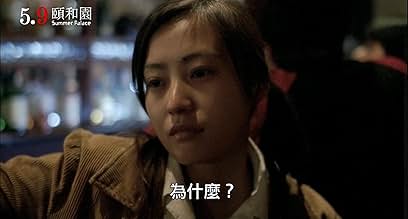
The script - also by Ye, apparently heavily autobiographical - follows a group of young people from their Beijing University days in the 1980s through the present. The central character is Yu Hong, a teenager from the countryside. As played by Lei Hao - with little of Zhang Ziyi's physical charms and a hundred times her acting ability - here is a cinematic heroine for the ages: a complex, puzzling, neurotic young woman with touching aspirations and scary unpredictability. Lei Hao becomes the character in a naked, unselfconscious, totally believable way - she alone make "Summer Palace" a must-see film (except that you can't).
Ye's way of telling the story is personal, iconoclastic, dragging here, speeding up there, taking us to Berlin (?!), unintentionally nonlinear, showing Yu Hong is similar situations time and again - and yet slowly spinning an intelligent, poetic subtext in the background.
Hard as it may be to imagine, "Summer Palace" has something in common with Alain Resnais' "Last Year in Marienbad," in its wistfulness, lack of specific believability and yet presenting a feeling that makes perfect "sense." There are a hundred things "wrong" with Ye's work and yet it's one of the more memorable films in years.
More likely, official displeasure was incurred by the film's powerful recreation of the Tiananmen events of 1989, from the students' point of view - and, coincidentally, equaling Tolstoy's representation of the chaos of war in the Borodino scenes of "War and Peace." And yet, all that is besides the point.
Rather, after tonight's screening of "Summer Palace" in the Castro, at the 25th annual San Francisco International Asian American Film Festival, your bewildered and overwhelmed reporter is positing this central question: whither Lou Ye? After those five years (or making movies elsewhere) will Ye become the new Zhang Yimou and China's best or just an imitator of the loathsome Tsai Ming-liang, teasing and torturing the audience... just because he can?
My money - and hope - is on the better scenario. However strange and convoluted and bizarre and frustrating "Summer Palace" may be, it appears "sincere" and not reaching for effect. It's a magnificent failure or a miserable masterpiece, a stupid soap opera or a splendid insight into the human condition - the choice is up to you; for me, it was all that, and more. Seen so far only at film festivals (Cannes, Toronto, Mill Valley, Pusan and Oslo), the film is due for release in France next month and not, so far, in the U.S.
Lack of commercial exposure may not be a bad thing. This is a "festival film," if there was ever one, and watching it on DVD may be the next best thing. If it came to theaters in this country, few people would go to see it, and of those, many would leave long before its conclusion 2 hours and 20 minutes later. And yet, and yet...
The script - also by Ye, apparently heavily autobiographical - follows a group of young people from their Beijing University days in the 1980s through the present. The central character is Yu Hong, a teenager from the countryside. As played by Lei Hao - with little of Zhang Ziyi's physical charms and a hundred times her acting ability - here is a cinematic heroine for the ages: a complex, puzzling, neurotic young woman with touching aspirations and scary unpredictability. Lei Hao becomes the character in a naked, unselfconscious, totally believable way - she alone make "Summer Palace" a must-see film (except that you can't).
Ye's way of telling the story is personal, iconoclastic, dragging here, speeding up there, taking us to Berlin (?!), unintentionally nonlinear, showing Yu Hong is similar situations time and again - and yet slowly spinning an intelligent, poetic subtext in the background.
Hard as it may be to imagine, "Summer Palace" has something in common with Alain Resnais' "Last Year in Marienbad," in its wistfulness, lack of specific believability and yet presenting a feeling that makes perfect "sense." There are a hundred things "wrong" with Ye's work and yet it's one of the more memorable films in years.
A fascinating portrait of modern Chinese youth
I thought this film was a fascinating portrait of Chinese youth and culture, as they struggle through some astoundingly turbulent times. Coming into maturity while defining love, commitment, and one's self is a challenging part of any youth's life, but all the more so as part of a society that is struggling through the same challenges itself. I found interesting analogies of the Chinese village in the character of Yu Huong, and the big city in Zhou Wei. Somewhere around college age, we all attempt to define what is important to us and explore what we can do, can be, and want. Some of that experience is sorting through our history - family, village, cultural - and deciding what we want to carry forward and embrace, and what to rebel against and discard, and I believe that this film paints a lovely, if gritty, portrayal of modern China doing just that. In their dorm rooms, in the bars and restaurants, in their homes, in their hearts. On the one hand, I would have, aesthetically, enjoyed a more sumptuous, smooth production; but that is not modern China. China (what admittedly little of it I've seen) is gritty, sweaty, crowded, noisy, straining, and that's what I see in this film.


Wusstest du schon
- WissenswertesIn September of 2006, director Lou Ye was barred from making movies for five years because the film incorporated footage of the Tiananmen Square demonstrations and wasn't approved by Chinese officials. The Chinese government also demanded that all copies of the film be confiscated.
- PatzerThere were no nightclubs or bars in 1980's Beijing such as the ones portrayed in Summer Palace. Despite the presence of a few underground bars in Beijing at that time, it is highly improbably that any university students would patron such establishments. Moreover, those bars did not play American pop music, did not allow dancing, did not stock western liquor, and certainly did not admit foreigners. Any clubs or bars like the ones shown in Summer Palace did not begin appearing in Beijing until the late 1990s and did not gain popularity amongst middle-class college students until after the new millennium.
- VerbindungenFeatures Sie küßten und sie schlugen ihn (1959)
- SoundtracksIn Yeon
Performed by Ha Dong-jin
Top-Auswahl
Melde dich zum Bewerten an und greife auf die Watchlist für personalisierte Empfehlungen zu.
- How long is Summer Palace?Powered by Alexa
Details
- Erscheinungsdatum
- Herkunftsländer
- Offizielle Standorte
- Sprachen
- Auch bekannt als
- 頤和園
- Drehorte
- Produktionsfirmen
- Weitere beteiligte Unternehmen bei IMDbPro anzeigen
Box Office
- Budget
- 2.500.000 $ (geschätzt)
- Bruttoertrag in den USA und Kanada
- 63.045 $
- Eröffnungswochenende in den USA und in Kanada
- 8.717 $
- 20. Jan. 2008
- Weltweiter Bruttoertrag
- 143.027 $
- Laufzeit
- 2 Std. 38 Min.(158 min)
- Farbe
- Seitenverhältnis
- 1.85 : 1
Zu dieser Seite beitragen
Bearbeitung vorschlagen oder fehlenden Inhalt hinzufügen