The Abyss of Life
- El episodio se emitió el 9 abr 2024
- TV-MA
- 58min
PUNTUACIÓN EN IMDb
8,8/10
11 mil
TU PUNTUACIÓN


El clan de Toranaga huye a Edo tras la derrota. Blackthorne elige entre la lealtad a su señor o perseguir las ambiciones que lo llevaron a Japón.El clan de Toranaga huye a Edo tras la derrota. Blackthorne elige entre la lealtad a su señor o perseguir las ambiciones que lo llevaron a Japón.El clan de Toranaga huye a Edo tras la derrota. Blackthorne elige entre la lealtad a su señor o perseguir las ambiciones que lo llevaron a Japón.
- Director/a
- Guionistas
- Estrellas




Tatsuya Aoki
- Regal Buddhist Priest #1
- (as Reverend Tatsuya Aoki)
8,810.5K
1
2
3
4
5
6
7
8
9
10
Reseñas destacadas
10skw01
Japanese art of leadership
This movie is mind blowing, every episode can bring you deeper in to the line of this movie. It amaze me even more... so much wisdom , leadership, friendship, pain, tears , angry, motivated, past, future, determination, politic mindset,power,loyalty,pain,sacrifice,purpose,higher goal,strong mindset,strong character . All those relatable in real life. This movie succeeded extract exactly what feeling it's all about when we watch it. The art of war ancient Japan , the honor, you can see deeper the meaning of it . Whoever scripted this movie is a philosopher and once a great thinker. Not just like other movie! Thumbs up.
10ngkos
What. An. Episode. Wow. Just wow.
This episode's level of intrigue and subtlety about what's going on and what's going to happen is just off the charts.
Each and every one of the actors and actresses needed to give a 10 out of 10 performance to make the storyline believable to the audience and boy, they delivered all right.
This is the first time in a loooong time that I mumble phrases like "What have you done?", "Oh my god", "Ah Jesus...." when I am watching a television series or movie.
It is unbelievable television and I am actually sad that it has only 2 more episodes left.
Rachel Kondo and Justin Marks, can we get a second season, please?
Pretty please?
Oh, and to reviewer "osloj", after 8 episodes, you still do not understand why each character did what he/she did and also, Japanese culture in general?
Really... ?
I urge you to read "episode recap" articles for this Shogun episode and maybe, re-read your own review after that.
Hopefully, you would then realize how embarrassing your review really is.
Each and every one of the actors and actresses needed to give a 10 out of 10 performance to make the storyline believable to the audience and boy, they delivered all right.
This is the first time in a loooong time that I mumble phrases like "What have you done?", "Oh my god", "Ah Jesus...." when I am watching a television series or movie.
It is unbelievable television and I am actually sad that it has only 2 more episodes left.
Rachel Kondo and Justin Marks, can we get a second season, please?
Pretty please?
Oh, and to reviewer "osloj", after 8 episodes, you still do not understand why each character did what he/she did and also, Japanese culture in general?
Really... ?
I urge you to read "episode recap" articles for this Shogun episode and maybe, re-read your own review after that.
Hopefully, you would then realize how embarrassing your review really is.
Its episode 8 and people still dont understand what they are seeing
I mean when do you guys will understand that this is not an action samurai bloodbath which only can provide amazing effects and all-out fighting..Its basically like Game Of Thrones made in Feudal Japan. The timeline is after the Azuchi Momoyama period and all the leaders battling of who will become the next Shogun,the military AND political leader of Japan..And thats what this show trying to do..Instead of going in a more fascinating way which can bring more people to watch it they want to stay true on the political things of the amazing and beautiful Feudal Japan..And thats another episode that stays faithful to this..Everyone in this cast is amazing,some more than others but the performances are on point while sometimes they reach to the point that they grip you down with how amazing they are .. Yea i want a big Samurai fight and i believe we will see it in the last 2 episodes..And with the stakes that have been builted for 8 episodes i am sure it will deliver
Shogun is the pleasant surprise of this year and one of the most well-written and produced series of the last years.
Shogun is the pleasant surprise of this year and one of the most well-written and produced series of the last years.
Series takes a deeply introspective turn, as characters grapple with personal loss, the burdens of duty, and the fragility of life
In Episode 8 of Shogun, titled "The Abyss of Life," the series takes a deeply introspective turn, as characters grapple with personal loss, the burdens of duty, and the fragility of life. The episode centers on John Blackthorne (Richard Chamberlain) as he continues to navigate the treacherous political landscape of feudal Japan, while also coming to terms with his growing emotional ties to the people around him, particularly Lady Mariko (Yoko Shimada). The weight of the decisions he must make-both as a man and as a foreigner in a strange land-culminates in a series of powerful, emotionally charged moments that push him further into the heart of Japanese culture and philosophy.
The opening sequences of the episode immediately establish a somber tone, as Blackthorne witnesses the execution of a fellow European who failed to adapt to Japanese ways. This brutal act serves as a stark reminder of the harsh realities Blackthorne faces if he fails to conform to the social and political expectations imposed upon him. Chamberlain's performance is especially poignant here, conveying Blackthorne's inner conflict and fear as he questions his place in this foreign world. His subtle expressions and the way he absorbs the gravity of the situation provide a deeply human touch to the episode, emphasizing the psychological toll of his journey.
The episode's title, "The Abyss of Life," reflects the themes of existential crisis and moral dilemma that permeate the narrative. Characters are forced to confront the uncertainty of their fates, particularly as political alliances shift and the threat of war looms ever closer. Lord Toranaga (Toshiro Mifune) once again plays a key role, skillfully maneuvering the various factions around him while also testing Blackthorne's loyalty. Mifune's portrayal of Toranaga continues to impress, as he masterfully balances the character's pragmatic ruthlessness with moments of surprising vulnerability. One standout scene is a private conversation between Toranaga and Blackthorne, where the two discuss the impermanence of life-a philosophical exchange that highlights the cultural and personal divide between them.
Visually, the episode excels in capturing the beauty and austerity of the Japanese landscape, using nature as a backdrop to reflect the characters' inner turmoil. The cinematography makes excellent use of wide, sweeping shots of the Japanese countryside, juxtaposed against more intimate close-ups of the characters' faces. This visual contrast underscores the themes of isolation and connection, as characters seek meaning in a world that often feels indifferent to their personal struggles. The use of natural lighting-particularly during scenes set at dawn or dusk-adds a layer of emotional depth, casting long shadows over the characters and hinting at the darkness that looms in their futures.
However, while the episode is visually stunning and thematically rich, its pacing can be uneven at times. The slower, more contemplative moments-while essential for character development-occasionally drag, particularly in the middle of the episode. Some scenes could have benefitted from tighter editing, as the prolonged dialogues sometimes detract from the overall momentum. That said, these slower moments do provide crucial insight into the characters' motivations and fears, making them essential to the larger narrative, even if they momentarily disrupt the episode's rhythm.
One of the most memorable aspects of "The Abyss of Life" is its focus on the relationship between Blackthorne and Mariko. Yoko Shimada shines in her portrayal of Mariko, capturing the character's quiet strength and the deep emotional conflict she feels as a woman torn between duty and desire. The chemistry between Shimada and Chamberlain is palpable, particularly in the scenes where their characters share moments of vulnerability. The depth of their connection adds a layer of emotional complexity to the episode, as both characters are forced to confront the limits of their own power and agency within a rigid social hierarchy.
In conclusion, "The Abyss of Life" is a thought-provoking episode that delves into the moral and existential questions that have been bubbling beneath the surface throughout the series. The strong performances, particularly from Chamberlain and Shimada, anchor the episode's emotional core, while the philosophical exchanges between Blackthorne and Toranaga add intellectual depth. Despite some pacing issues, the episode succeeds in exploring the themes of life, death, and the human condition, all set against the backdrop of a world on the brink of chaos. As Shogun continues, it becomes clear that the show is not just a historical epic but a meditation on the complexities of human nature and the cultural collisions that define our shared history.
The opening sequences of the episode immediately establish a somber tone, as Blackthorne witnesses the execution of a fellow European who failed to adapt to Japanese ways. This brutal act serves as a stark reminder of the harsh realities Blackthorne faces if he fails to conform to the social and political expectations imposed upon him. Chamberlain's performance is especially poignant here, conveying Blackthorne's inner conflict and fear as he questions his place in this foreign world. His subtle expressions and the way he absorbs the gravity of the situation provide a deeply human touch to the episode, emphasizing the psychological toll of his journey.
The episode's title, "The Abyss of Life," reflects the themes of existential crisis and moral dilemma that permeate the narrative. Characters are forced to confront the uncertainty of their fates, particularly as political alliances shift and the threat of war looms ever closer. Lord Toranaga (Toshiro Mifune) once again plays a key role, skillfully maneuvering the various factions around him while also testing Blackthorne's loyalty. Mifune's portrayal of Toranaga continues to impress, as he masterfully balances the character's pragmatic ruthlessness with moments of surprising vulnerability. One standout scene is a private conversation between Toranaga and Blackthorne, where the two discuss the impermanence of life-a philosophical exchange that highlights the cultural and personal divide between them.
Visually, the episode excels in capturing the beauty and austerity of the Japanese landscape, using nature as a backdrop to reflect the characters' inner turmoil. The cinematography makes excellent use of wide, sweeping shots of the Japanese countryside, juxtaposed against more intimate close-ups of the characters' faces. This visual contrast underscores the themes of isolation and connection, as characters seek meaning in a world that often feels indifferent to their personal struggles. The use of natural lighting-particularly during scenes set at dawn or dusk-adds a layer of emotional depth, casting long shadows over the characters and hinting at the darkness that looms in their futures.
However, while the episode is visually stunning and thematically rich, its pacing can be uneven at times. The slower, more contemplative moments-while essential for character development-occasionally drag, particularly in the middle of the episode. Some scenes could have benefitted from tighter editing, as the prolonged dialogues sometimes detract from the overall momentum. That said, these slower moments do provide crucial insight into the characters' motivations and fears, making them essential to the larger narrative, even if they momentarily disrupt the episode's rhythm.
One of the most memorable aspects of "The Abyss of Life" is its focus on the relationship between Blackthorne and Mariko. Yoko Shimada shines in her portrayal of Mariko, capturing the character's quiet strength and the deep emotional conflict she feels as a woman torn between duty and desire. The chemistry between Shimada and Chamberlain is palpable, particularly in the scenes where their characters share moments of vulnerability. The depth of their connection adds a layer of emotional complexity to the episode, as both characters are forced to confront the limits of their own power and agency within a rigid social hierarchy.
In conclusion, "The Abyss of Life" is a thought-provoking episode that delves into the moral and existential questions that have been bubbling beneath the surface throughout the series. The strong performances, particularly from Chamberlain and Shimada, anchor the episode's emotional core, while the philosophical exchanges between Blackthorne and Toranaga add intellectual depth. Despite some pacing issues, the episode succeeds in exploring the themes of life, death, and the human condition, all set against the backdrop of a world on the brink of chaos. As Shogun continues, it becomes clear that the show is not just a historical epic but a meditation on the complexities of human nature and the cultural collisions that define our shared history.
Gutted
I've never read the 2000-page novel nor did we even have cable TV back when the Richard Chamberlain mini-series aired on ABC in the 1970s.
So all I'm going on is what the producers of this version of Shogun are putting on the screen in front of me.
And by and large I am entertained. I enjoy the palace intrigue a lot more than the action sequences. I enjoy the examination of duty, honour, loyalty and whatnot. Gotta pay attention, though. It's not for casual viewing.
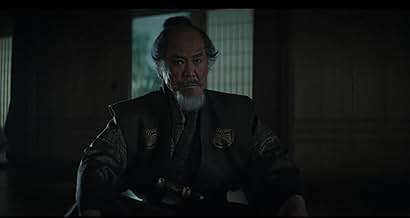
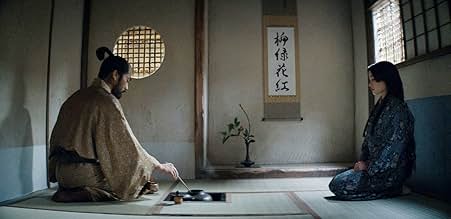
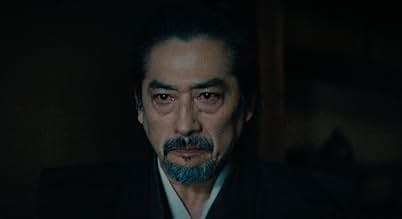
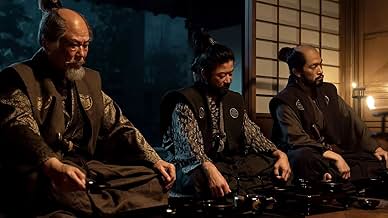
In this particular episode we get an exquisite tea ceremony with Buntaro and Mariko, which was just the warm-up set piece. In the third act we have Hiroyuki Sanada as Lord Toranaga asking his vassals to sign a loyalty oath, which then leads to a gripping scene with Tokuma Nishioka as trusted advisor Toda Hiromatsu. If this show doesn't win an Emmy for that scene, the vote is more rigged than the 2020 presidential election.
As the after-dinner mint we get Toranaga in a contemplative scene with Anna Sawai as Mariko. At that point, just give Sanada the Emmy for Best Male Actor in a Drama. Don't count all the photocopied ballots that they're gonna "find" in some random Billlings mailbox that say "Costner - Yellowstone" on them.
If this show were in English all the way, people would be falling all over themselves to recommend it to friends and family. The challenge is that the subtitles and characters can be a challenge to follow. Worth it to me, but I acknowledge the difficulty.
One beef: I don't find Cosmo Jarvis as John Blackthorne all that commpelling. Neither as a performer nor as a character. The character at this point has been reduced to nearly Gump levels. And the portrayal is a bad parody of "Quiet" Richard Burton.
Luckily for me, this episode was mostly about the Japanese characters so I just bide my time until Blackthorne is off the screen.
So all I'm going on is what the producers of this version of Shogun are putting on the screen in front of me.
And by and large I am entertained. I enjoy the palace intrigue a lot more than the action sequences. I enjoy the examination of duty, honour, loyalty and whatnot. Gotta pay attention, though. It's not for casual viewing.
In this particular episode we get an exquisite tea ceremony with Buntaro and Mariko, which was just the warm-up set piece. In the third act we have Hiroyuki Sanada as Lord Toranaga asking his vassals to sign a loyalty oath, which then leads to a gripping scene with Tokuma Nishioka as trusted advisor Toda Hiromatsu. If this show doesn't win an Emmy for that scene, the vote is more rigged than the 2020 presidential election.
As the after-dinner mint we get Toranaga in a contemplative scene with Anna Sawai as Mariko. At that point, just give Sanada the Emmy for Best Male Actor in a Drama. Don't count all the photocopied ballots that they're gonna "find" in some random Billlings mailbox that say "Costner - Yellowstone" on them.
If this show were in English all the way, people would be falling all over themselves to recommend it to friends and family. The challenge is that the subtitles and characters can be a challenge to follow. Worth it to me, but I acknowledge the difficulty.
One beef: I don't find Cosmo Jarvis as John Blackthorne all that commpelling. Neither as a performer nor as a character. The character at this point has been reduced to nearly Gump levels. And the portrayal is a bad parody of "Quiet" Richard Burton.
Luckily for me, this episode was mostly about the Japanese characters so I just bide my time until Blackthorne is off the screen.


¿Sabías que...?
- CuriosidadesHiroyuki Sanada won an Emmy for his work in this episode.
- ConexionesFeatured in The 76th Primetime Emmy Awards (2024)
- Banda sonoraShinobi
Written and performed by Atticus Ross, Leopold Ross and Nick Chuba
Selecciones populares
Inicia sesión para calificar y añadir a tu lista para recibir recomendaciones personalizadas
Detalles
- Duración
- 58min
- Color
- Mezcla de sonido
- Relación de aspecto
- 2.00 : 1
Contribuir a esta página
Sugerir un cambio o añadir el contenido que falta