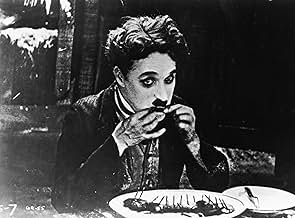
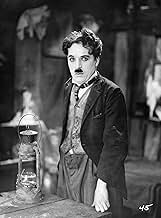
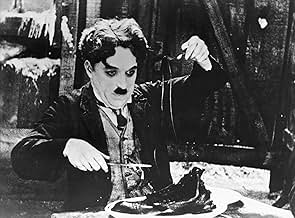
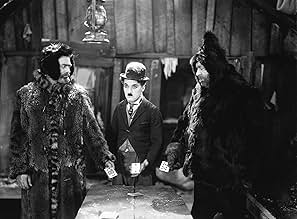
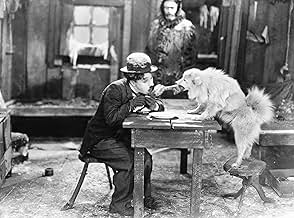
Un buscador de oro viaja al Klondike durante la fiebre del oro de 1890 con la esperanza de hacer fortuna y queda prendado de una chica que ve en un salón de baile.Un buscador de oro viaja al Klondike durante la fiebre del oro de 1890 con la esperanza de hacer fortuna y queda prendado de una chica que ve en un salón de baile.Un buscador de oro viaja al Klondike durante la fiebre del oro de 1890 con la esperanza de hacer fortuna y queda prendado de una chica que ve en un salón de baile.
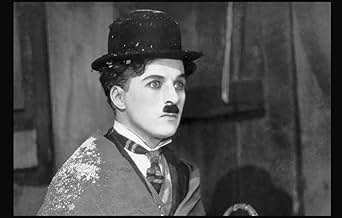
- Director/a
- Guionista
- Estrellas
- Nominado para 2 premios Óscar
- 7 premios y 3 nominaciones en total
Jack Adams
- Man in Dance Hall
- (sin acreditar)
Frank Aderias
- Eskimo Child
- (sin acreditar)
Leona Aderias
- Eskimo Child
- (sin acreditar)
Lillian Adrian
- Woman in Dance Hall
- (sin acreditar)
Sam Allen
- Man in Dance Hall
- (sin acreditar)
Claude Anderson
- Man in Dance Hall
- (sin acreditar)
Harry Arras
- Georgia's Friend
- (sin acreditar)
Billy Atkins
- Extra on Boat
- (sin acreditar)
Albert Austin
- Prospector
- (sin acreditar)
F.J. Beauregard
- Man in Dance Hall
- (sin acreditar)
Marta Belfort
- Woman in Dance Hall
- (sin acreditar)
William Bell
- Man in Dance Hall
- (sin acreditar)
- Director/a
- Guionista
- Todo el reparto y equipo
- Producción, taquilla y más en IMDbPro
8,1126.6K
1
2
3
4
5
6
7
8
9
10
Resumen
Reviewers say 'The Gold Rush' is acclaimed for its comedy, visual storytelling, and iconic scenes. Charlie Chaplin's Little Tramp is lauded for humor and emotional depth. The film blends slapstick with themes of loneliness and resilience, resonating deeply. Its historical significance in silent cinema and influence on filmmakers are noted. The 1942 re-release with narration and music is appreciated, though some favor the original. It remains a timeless masterpiece.
Reseñas destacadas
Surprised
I'm just an 18 year old dude in high school that was assigned this movie in a class at my school. When I first saw the genres of this movie I was not looking forward to it at all. It was the first silent movie I was seeing and also the oldest. It had originally seemed like everything I didn't look for in a "good" movie. At the conclusion of this movie I knew that my original thought process was entirely wrong. This movie has certainly changed my view on both silent and older films, especially on a comedic standpoint. There was so much about it that was appealing to the viewer. I recommend this movie to all looking to expand their film genres of interest.
Chaplin classic
One of the great Chaplin movies is 'The Gold Rush' and although it is not his best it contains one of the best known Chaplin-sequences. The sequence with the dancing rolls is one of the best I have seen in any Chaplin, whether it is a feature film or a two-reeler. For me this alone makes 'The Gold Rush' worth watching.
There are other great moments in this story where Chaplin is the Lone Prospector who falls in love with a girl named Georgia (Georgia Hale). When Chaplin has to find some gold (the movie isn't name 'The Gold Rush' for nothing) together with Hank (Henry Bergman) they stay in a cottage in the mountains. The sequence with this cottage after a blizzard is another that belongs to the greatest sequences in a Chaplin movie.
Of course we know from the start how things will end with the girl and the gold but the way that leads to that point is a nice one. Personally I think it is not great all the time, some sequences make it great, and sometimes even a little too simple. Because of the sequences described above (and some others) and because of the artist that Chaplin is this still belongs to the better silent movies I have seen.
There are other great moments in this story where Chaplin is the Lone Prospector who falls in love with a girl named Georgia (Georgia Hale). When Chaplin has to find some gold (the movie isn't name 'The Gold Rush' for nothing) together with Hank (Henry Bergman) they stay in a cottage in the mountains. The sequence with this cottage after a blizzard is another that belongs to the greatest sequences in a Chaplin movie.
Of course we know from the start how things will end with the girl and the gold but the way that leads to that point is a nice one. Personally I think it is not great all the time, some sequences make it great, and sometimes even a little too simple. Because of the sequences described above (and some others) and because of the artist that Chaplin is this still belongs to the better silent movies I have seen.
Striking Gold Again and Again.
Charles Chaplin's "The Gold Rush" is arguably his finest film. He stars as a wimpy prospector who decides to go to the Klondike in the hopes of striking it rich. What he does not realize is that he may find love (in the form of Georgia Hale) instead of money. In the end that may be all right with him. "The Gold Rush" shows everything that made Charles Chaplin the great performer, writer and director he was. Quite possibly the finest cinematic icon of the 20th Century, Chaplin showed humanity, love and an undying want to entertain all audiences throughout his stellar cinematic career. The movie is exceptional in every way. Although I am not as well-versed with movies from the 1920s as I am with the decades following it, I would still probably call "The Gold Rush" the finest film of that 10-year period. Oh how the cinema misses Charles Chaplin today. 5 stars out of 5.
Little Tramp makes good
Charlie Chaplin's silent film (also re-released with a narration in the early 1940s) focuses, as usual, on the Little Tramp, and in this case, his attraction to a chorus girl (Georgia Hale). This is the one where he eats a boot, along with its laces, and manages to make it appear a sumptuous meal; as well as creating a dance with bread rolls.
The role of the girl was originally intended for the second Mrs Chaplin, Lita Grey, but her pregnancy ruled her out. Georgia Hale is excellent in her disdain of the unwanted Tramp attentions. Mack Swain appears as Big Jim, who shares a cabin with the Tramp, at one point getting so hungry he imagines his pal as a chicken ready to eat! This film has the spirit of the pioneers and gold-runners, as well as the inimitable spirit of the little hero. As a silent it is one of the best comedies of the time, as a sound film, it is fairly good.
I definitely prefer the 1925 release over the 1942 one...
... in which Chaplin tried to modernize The Gold Rush by taking out the title cards, adding narration which he himself did, changing the music, and deleting some scenes. It isn't bad since Chaplin himself redid it, but I just prefer the original.
It isn't as funny as The Kid, not as heartbreaking as City Lights, and it doesn't have the social commentary of Modern Times. Instead it has a little bit of everything plus lots of atmosphere AND it takes Chaplin's Little Tramp out of some anonymous urban environment and lands him in a very specific place and time - the Klondike gold rush of the late 1890s. I could feel the biting cold, the hunger, the loneliness. And in spite of this being set in the 1890s and seeming quite authentic to its setting, this film has a very modern feel to it, almost timeless.
Chaplin's "little fellow" is introduced as a lone prospector. We never see him doing any prospecting, but it is later mentioned that he is not very successful at it and gives it up. The first part of the film has the little fellow waiting out a blizzard in a cabin with a wanted criminal in addition to a fellow prospector. The second part has Chaplin's character traveling to a Klondike boom town, watching a cabin for a more successful prospector, and falling in love with a dance hall girl who thinks his crush is just a big joke, at least at first.
I don't think it was Chaplin's best silent film, but it does manage to do all aspects of the production very well and I can see why some people would judge it as his best. And if that was Chaplin in that chicken suit, all I can say is that he had the motions of a chicken down pat. To know what I'm talking about, watch and find out.
It isn't as funny as The Kid, not as heartbreaking as City Lights, and it doesn't have the social commentary of Modern Times. Instead it has a little bit of everything plus lots of atmosphere AND it takes Chaplin's Little Tramp out of some anonymous urban environment and lands him in a very specific place and time - the Klondike gold rush of the late 1890s. I could feel the biting cold, the hunger, the loneliness. And in spite of this being set in the 1890s and seeming quite authentic to its setting, this film has a very modern feel to it, almost timeless.
Chaplin's "little fellow" is introduced as a lone prospector. We never see him doing any prospecting, but it is later mentioned that he is not very successful at it and gives it up. The first part of the film has the little fellow waiting out a blizzard in a cabin with a wanted criminal in addition to a fellow prospector. The second part has Chaplin's character traveling to a Klondike boom town, watching a cabin for a more successful prospector, and falling in love with a dance hall girl who thinks his crush is just a big joke, at least at first.
I don't think it was Chaplin's best silent film, but it does manage to do all aspects of the production very well and I can see why some people would judge it as his best. And if that was Chaplin in that chicken suit, all I can say is that he had the motions of a chicken down pat. To know what I'm talking about, watch and find out.
¿Sabías que...?
- CuriosidadesSir Charles Chaplin stated that this was the film by which he most wanted to be remembered.
- PifiasWhen Big Jim is delirious and thinks The Lone Prospector is a chicken, The Lone Prospector removes a knife from the table and hides it in the bed. In one of the next shots, the knife is back on the table. Then in the next shot, it is gone again.
- Versiones alternativasThere is a 1942 re-issue version, prepared by Charles Chaplin himself, which uses his own narration, music score, and editing (running time: 72 minutes). This version is the only one which has its copyright owned by the Chaplin Film company. Many scenes of the 1942 version derived from an alternate camera that was shooting simultaneously. This explains some of the very slight differences in camera angle, although Chaplin also deleted some footage in order to tighten the pacing (such as Big Jim and the Tramp's near-encounter in the Gold Rush town and the shot of a woman comforting another woman during the singing of "Auld Lang Syne".
- ConexionesEdited into Werner Herzog Eats His Shoe (1980)
Selecciones populares
Inicia sesión para calificar y añadir a tu lista para recibir recomendaciones personalizadas
- How long is The Gold Rush?Con tecnología de Alexa
Detalles
- Fecha de lanzamiento
- País de origen
- Sitios oficiales
- Idiomas
- Títulos en diferentes países
- La quimera de l'or
- Localizaciones del rodaje
- Empresa productora
- Ver más compañías en los créditos en IMDbPro
Taquilla
- Presupuesto
- 923.000 US$ (estimación)
- Recaudación en todo el mundo
- 82.065 US$
- Duración
- 1h 35min(95 min)
- Color
- Mezcla de sonido
- Silent(original release)
- Relación de aspecto
- 1.33 : 1
Contribuir a esta página
Sugerir un cambio o añadir el contenido que falta