Calendario de lanzamientosLas 250 mejores películasPelículas más popularesExplorar películas por géneroTaquilla superiorHorarios y ticketsNoticias sobre películasNoticias destacadas sobre películas de la India
    Qué hay en la TV y en streamingLas 250 mejores seriesProgramas de televisión más popularesExplorar series por géneroNoticias de TV
    ¿Qué verÚltimos tráileresOriginales de IMDbSelecciones de IMDbDestacado de IMDbGuía de entretenimiento familiarPodcasts de IMDb
    OscarsEmmysSan Diego Comic-ConSummer Watch GuideToronto Int'l Film FestivalIMDb Stars to WatchPremios STARmeterCentral de premiosCentral de festivalesTodos los eventos
    Personas nacidas hoyCelebridades más popularesNoticias de famosos
    Centro de ayudaZona de colaboradoresEncuestas
Para profesionales de la industria
  • Idioma
  • Totalmente compatible
  • English (United States)
    Parcialmente compatible
  • Français (Canada)
  • Français (France)
  • Deutsch (Deutschland)
  • हिंदी (भारत)
  • Italiano (Italia)
  • Português (Brasil)
  • Español (España)
  • Español (México)
Lista de seguimiento
Iniciar sesión
  • Totalmente compatible
  • English (United States)
    Parcialmente compatible
  • Français (Canada)
  • Français (France)
  • Deutsch (Deutschland)
  • हिंदी (भारत)
  • Italiano (Italia)
  • Português (Brasil)
  • Español (España)
  • Español (México)
Usar la aplicación
  • Reparto y equipo
  • Reseñas de usuarios
  • Curiosidades
IMDbPro

La nueva Babilonia

Título original: Novyy Vavilon
  • 1929
  • 2h
PUNTUACIÓN EN IMDb
7,2/10
972
TU PUNTUACIÓN
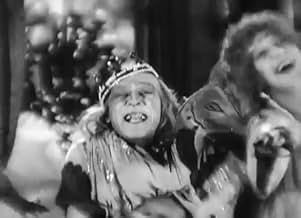
Yelena Kuzmina and Iosif Gerasimovich in La nueva Babilonia (1929)
DramaHistoria

Añade un argumento en tu idiomaIn the beginning of the industrial revolution, the Paris Commune was established in 1871 against the rich and the powerful, and violently repressed by the army that remained faithful to a ta... Leer todoIn the beginning of the industrial revolution, the Paris Commune was established in 1871 against the rich and the powerful, and violently repressed by the army that remained faithful to a tamer form of Republicanism. How could the love story between a young sales girl and a soldi... Leer todoIn the beginning of the industrial revolution, the Paris Commune was established in 1871 against the rich and the powerful, and violently repressed by the army that remained faithful to a tamer form of Republicanism. How could the love story between a young sales girl and a soldier unable to decide if he was pro or against the radical fashion? Two short months were ne... Leer todo

  • Dirección
    • Grigoriy Kozintsev
    • Leonid Trauberg
  • Guión
    • Grigoriy Kozintsev
    • Leonid Trauberg
  • Reparto principal
    • David Gutman
    • Yelena Kuzmina
    • Andrei Kostrichkin
  • Ver la información de la producción en IMDbPro
  • PUNTUACIÓN EN IMDb
    7,2/10
    972
    TU PUNTUACIÓN
    • Dirección
      • Grigoriy Kozintsev
      • Leonid Trauberg
    • Guión
      • Grigoriy Kozintsev
      • Leonid Trauberg
    • Reparto principal
      • David Gutman
      • Yelena Kuzmina
      • Andrei Kostrichkin
    • 9Reseñas de usuarios
    • 13Reseñas de críticos
  • Ver la información de la producción en IMDbPro
  • Ver la información de la producción en IMDbPro
  • Imágenes169

    Ver cartel
    Ver cartel
    Ver cartel
    Ver cartel
    Ver cartel
    Ver cartel
    + 164
    Ver cartel

    Reparto principal24

    Editar
    David Gutman
    • Owner of the 'New Babylon' shop
    Yelena Kuzmina
    Yelena Kuzmina
    • Louise Poirier, the shop-assistant
    Andrei Kostrichkin
    • The main shop-assistant
    Sofiya Magarill
    Sofiya Magarill
    • An actress
    Arnold Arnold
    • Commune's Central Committee member
    • (as A. Arnold)
    Sergey Gerasimov
    Sergey Gerasimov
    • Lutro, the journalist
    Yevgeni Chervyakov
    • National Guard's officer
    Pyotr Sobolevsky
    Pyotr Sobolevsky
    • Jean, the soldier
    Yanina Zheymo
    Yanina Zheymo
    • Therese, a seamstress
    Oleg Zhakov
    Oleg Zhakov
    • National Guard's soldier
    Vsevolod Pudovkin
    Vsevolod Pudovkin
    • Police intendent
    Lyudmila Semyonova
    Lyudmila Semyonova
    • Can-can dancer
    A. Glushkova
    • Washerwoman
    Boris Feodosyev
    • Officer
    Emil Gal
    • Bourgeois
    S. Gusev
    • Poirier, an old man
    Leonid Klochkov
    • Commander
    Tamara Makarova
    Tamara Makarova
    • Can-can dancer
    • Dirección
      • Grigoriy Kozintsev
      • Leonid Trauberg
    • Guión
      • Grigoriy Kozintsev
      • Leonid Trauberg
    • Todo el reparto y equipo
    • Producción, taquilla y más en IMDbPro

    Reseñas de usuarios9

    7,2972
    1
    2
    3
    4
    5
    6
    7
    8
    9
    10

    Reseñas destacadas

    tiedel

    Russia's final climax to the silent cinema

    The New Babylon was recognized as a masterpiece as early as 1929. It was rediscovered at the 1958 Bruxelles Expo but properly presented with the original Shostakovich score only in the eighties. The original Shostakovich score (opus 18) had been synchronized with the film under the personal supervision of its director Leonid Trauberg (1901-1990) and - according to Trauberg - he had never 'seen' his film in that final state before 1981. A valuable estimation of the picture can be found in Jay Leyda's KINO. One should realize that there is only one definite version of the picture: the GOSFILOMOFOND print, running for about 90 minutes at variable speed. There is however an apocryphal print about, a clipping together of the original print and approximately another 33% of out-takes. German film historians are responsible for this horrible mutilation of the original. When this version was shown in Hamburg in 1983 a press bulletin explained that scenes had been added that were once removed by censorship. However, what had been added were only discarded scenes that had been cut because they were too dull; for instance actrice Kuzmina in front of a cupboard of hat boxes or actor Sobolevsky with his wounded arm in a sling as an unlikely cabaret artist in 1871 'Gay Paris'. Director Leonid Trauberg saw this `German' version with the extra footage "that I cut out myself" and has furiously tried to prohibit its screening. A lengthy statement about the original and apocryphal print of The New Babylon was sent to various cinema museums by Trauberg in October 1983. His statement is to be found in `Eisenstein was Great Eater' - In Memory of Leonid Trauberg / Graduate Press, Buren, Netherlands, pp. 107-109 (ISBN 90-72058-07-0). The New Babylon is one of the greatest masterpieces of the Russian cinema. However the German version with its complimentary footage is a disgrace for the profession of film restoration. In fact the best guideline to follow is the original score composed for the picture by Shostakovich in 1929. Its greatest advocate is maestro Mark Fitz-Gerald from Croydon, associated with the Strasbourg Philharmonic Orchestra. If you have any doubts about music or print contact Theodore van Houten, POB 1, Haamstede, 4328 ZG-Netherlands.
    8dottormalocchio

    Dada Soviet Avantgarde

    The plot is just a vehicle for this surreal, innovative and radical film. For sure one of the best Soviet silent movies.
    9Cineanalyst

    Operatic Impressions and Montage

    I caught this one before it expired on "the silent stream" section of Le Giornate del Cinema Muto website, where they temporarily revive past screenings from the Pordenone Silent Film Festival. Mark it down as one of the classics of Soviet montage and the late silent era. This version, by the way, is the 92-minutes restoration with the original score; reportedly, there's a longer cut that was discovered in Germany in the 1980s, but which co-director Leonid Trauberg disavowed as extra footage that they'd intentionally discarded and not censored material. Regardless, as it is, "The New Babylon" is a spectacular synthesis of Impressionistic images, rapid and rhythmic editing and a score by renowned composer Dmitri Shostakovich, his first for a film, to match the operetta within the film and the operatic presentation of the Paris Commune.

    The opening sequence in itself is masterful. With the aid of special portrait lenses, the focus of images is extremely narrow--mostly, only a character in the foreground per shot is seen clearly--while the background is blurred as if each frame were an Impressionist painting--none of which remain on the screen for long. Counts of the film's average shot length (ASL) range from five seconds, according to Barry Salt, to as quick as 3.7 seconds, as claimed by David Bordwell and Kristin Thompson. Seeing several shots pass by in a fraction of a second at its fastest pace, I wasn't about to bring out my own clicker. Suffice to say that the shot succession here is closer to that of a modern action flick than to the contemporary early talkies in Hollywood, which seem to be guaranteed an ASL of more than 10 seconds and upwards of more than 20 seconds. Eventually, the camera will sometimes spin as if in a drunken stupor until hardly anything can be made out. Other imagery, such as when the rich attack the poor in the street, is also obfuscated visually and by quick cutting. Also undercutting what one might otherwise consider an appreciation of French Impressionist paintings is that the footage is of bourgeois debauchery, a grotesque depiction of the sort of leisurely activities one might find in a Manet, Monet, Renoir, or Surat.

    Nor is the entirety of the picture photographed in quite the same way; indeed, there are a few striking deep-focus compositions. One features the French flag in the foreground, as a soldier on horseback occupies the distant horizon. The montage, too, slows down at least long enough to establish a relationship between a woman who joins the Commune and a French soldier who winds up being involved in its demise, including sometimes their relatively-long forlorn looks, the plot of which does rather well to ground the grander narrative and hold the spectator's attention with the traditional, character-based identification that's more important to other movies, but rather at odds with this film's socialist and non-individualistic politics. Set during the Franco-Prussian War, the Prussian soldiers, too, only occupy silhouettes in the background of the frame; the center of this picture is occupied by France's own class conflict. It should also be noted that the lighting, including some chiaroscuro effects throughout, is finely done.

    While later we see those of the middle or upper classes lounging outside, watching the Commune being defeated by the soldiers as if it were street theatre, in the opening sequence it's an apparent operetta being performed on stage while they eat and drink and generally revel, or, for the more sober, conduct business. If these arts and entertainments are defined as bourgeois, then one might very well wonder what is supposed to be made of film, such as this one. That's where the guns that the proletariat fight for come in. Cinema as mechanical, rapid-fire, revolutionary polemic for mass production and mass appeal. The crosscutting between a new operetta being practiced and the working-class women feeding the soldiers before a struggle over weaponry ensues is an especially stark contrast. Furthermore, there's the piano player on the Commune's side of the barricade and, perhaps anachronistically, "La Marseillaise" being sung as the workers' battle cry, to go along with the rest of Shostakovich's score that's always fighting in unison with the class struggle of the imagery. Sure, it's Soviet propaganda, but it's also great art.
    7st-shot

    Heavy handed propaganda with stunning visuals.

    There are some incredibly powerful visuals to be found throughout this Soviet paen to the doomed Communard uprising of 1871 in Paris. From its wildly expressionistic opening to the hardened and doomed faces right off of Soviet worker poster art it powerfully conveys its admiration for the heroic underclass while eviscerating the craven bourgeois. With a music score supplied by Shostakovich its an excellent example of the decade old Soviet Union trying to spread its influence by comrading up with the French of yesteryear.

    Devine decadence rules in Paris with its attention to materialism and coarse joie de vivre. The haves are enjoying a grand time while the have nots struggle to survive. When the Prussians march on the city the uppercrusts bolt for Versailles, leaving the beleaguered city's defense to the workers to defend. With the threat dissipated the workers demand more rights, the bourgeois see it otherwise by turning the military on them. A stand-off ensues and a civil war erupts.

    Babylon's revolutionary fervor was certainly right for the period with it being released a month after the Stock Market Crash in 1929. Emboldened with Eisenstein montage it shouts out its message with a ham fisted juxtaposition and simplicity that may have stirred the proles in 1917 but comes across dated here with the upper class caricatures no different than Griffith's Union troops in black face in his Civil War whitewash. Both remain triumphs of form over content (racism, totalitarianism) that should be be relegated to the dustbin of history,
    8Greekguy

    Another stunning classic Russian silent

    It is, I suppose, fair to say that this is a propaganda film because it does deliver a political message. On the other hand, it's not too outlandish of a message. Perhaps there were reasons to oppose the Paris Commune, although none occur to me. However, a discussion of propaganda in films is in itself somewhat redundant: most films might face the same charges. After all, film is an art form that chooses to present a series of images and sounds, usually dialogue but also music (and in this case there is in the best version a stunning score by Shostakovich) in order to manipulate the feelings and the thoughts of the viewer. "Apocalypse Now", for instance, is an examination of war and its component parts that does not shy away from politics or advocacy. It is clear to the viewer that the filmmaker is asking questions about why that war was fought. "Armaggedon" also supports a particular political world view, as does "First Blood", "The Seventh Seal", "Sex in the City" and even "Toy Story".

    Despite my sympathies, however, it is not the politics that I love about this film - it is not the message but the artful use of the medium that sells me on this work of art. This is a moving and beautiful film, with fully realised character development and wonderfully magical imagery. After the parasols, the train and the cancan dancers, you should keep an eye out in particular for the shots in the last segments of the film. Kozintsev and Trauberg work little miracles with everyday objects such as lace, shovels and pianos. (Amazingly enough, these artists continued their magic for a long time -Trauberg worked until the early 1960s and Kozintsev directed his last film, which many consider the best "King Lear" for the cinema, in 1971.) "New Babylon" is, in a number of ways, a good companion piece for "The Man with a Movie Camera", the best of the Russian silents that I have seen. While it does indulge the "message" shot - there are a number of those but most are extremely well-done and worth seeing; the milk-for-soldiers is one, the juxtaposed lives are another - it is the realism of this film that elevates it, not its occasional slip into histrionics. The female lead, Yelena Kuzmina, is excellent, an actress who commands your attention and earns your sympathy, but it is in all the secondary roles put together that the city of Paris of 1870 and 1871 truly comes alive. In these earlier films, before sound drew us in, it was the faces that needed to speak, and these do, eloquently. The department store owner, the old soldiers, the contemptuous general, the washerwomen and the journalist with hope for humanity, they are all clamoring to tell you something. Exactly what they say to you may depend on your own world view, but their comments should be interesting to everyone.

    Más del estilo

    El fin de San Petersburgo
    7,3
    El fin de San Petersburgo
    La línea general
    7,2
    La línea general
    El mundo perdido
    6,9
    El mundo perdido
    El caballo de hierro
    7,2
    El caballo de hierro
    Tikhiy Don
    7,7
    Tikhiy Don
    Alexander Nevsky
    7,5
    Alexander Nevsky
    Arsenal
    7,2
    Arsenal
    La calle
    6,8
    La calle
    El proceso de Juana de Arco
    7,4
    El proceso de Juana de Arco
    La ley del hampa
    7,5
    La ley del hampa
    El ángel rojo
    7,8
    El ángel rojo
    Tres hombres malos
    7,5
    Tres hombres malos

    Argumento

    Editar

    ¿Sabías que...?

    Editar
    • Curiosidades
      Composer Dmitri Shostakovich wrote his first film score for this silent movie. He hurriedly wrote about 90 minutes of music.
    • Conexiones
      Edited into Histoire(s) du cinéma: Une histoire seule (1989)

    Selecciones populares

    Inicia sesión para calificar y añadir a tu lista para recibir recomendaciones personalizadas
    Iniciar sesión

    Detalles

    Editar
    • Fecha de lanzamiento
      • 18 de marzo de 1929 (Unión Soviética)
    • País de origen
      • Unión Soviética
    • Idiomas
      • Ninguno
      • Ruso
    • Títulos en diferentes países
      • La nova Babilònia
    • Empresa productora
      • Sovkino
    • Ver más compañías en los créditos en IMDbPro

    Especificaciones técnicas

    Editar
    • Duración
      • 2h(120 min)
    • Color
      • Black and White
    • Mezcla de sonido
      • Silent
    • Relación de aspecto
      • 1.33 : 1

    Contribuir a esta página

    Sugerir un cambio o añadir el contenido que falta
    • Más información acerca de cómo contribuir
    Editar página

    Más por descubrir

    Visto recientemente

    Habilita las cookies del navegador para usar esta función. Más información.
    Obtener la aplicación IMDb
    Inicia sesión para tener más accesoInicia sesión para tener más acceso
    Sigue a IMDb en las redes sociales
    Obtener la aplicación IMDb
    Para Android e iOS
    Obtener la aplicación IMDb
    • Ayuda
    • Índice del sitio
    • IMDbPro
    • Box Office Mojo
    • Licencia de datos de IMDb
    • Sala de prensa
    • Anuncios
    • Empleos
    • Condiciones de uso
    • Política de privacidad
    • Your Ads Privacy Choices
    IMDb, una empresa de Amazon

    © 1990-2025 by IMDb.com, Inc.