
Un preso fugado tiene que demostrar su inocencia a un estirado profesor de derecho con la ayuda de una enérgica maestra de escuela.Un preso fugado tiene que demostrar su inocencia a un estirado profesor de derecho con la ayuda de una enérgica maestra de escuela.Un preso fugado tiene que demostrar su inocencia a un estirado profesor de derecho con la ayuda de una enérgica maestra de escuela.
- Director/a
- Guionistas
- Estrellas
- Nominado para 7 premios Óscar
- 5 premios y 7 nominaciones en total


- Supreme Court Spectator
- (sin acreditar)

- Schoolgirl Noticing Beard
- (sin acreditar)

- Townswoman
- (sin acreditar)
- Townsman
- (sin acreditar)

- Western Union Boy
- (sin acreditar)

- Mrs. Pulaski
- (sin acreditar)

- Desk Sergeant
- (sin acreditar)
Reseñas destacadas
Living Justice
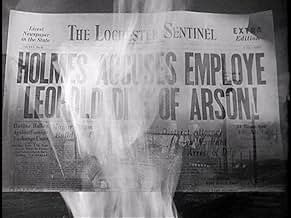
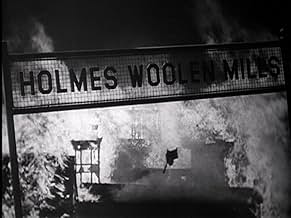
The factory owned by Charles Dingle has burned down, arson is suspected and Cary Grant in an unusual working class role is the suspected arsonist. He's a man of radical opinions in the town so he's a convenient suspect. As the factory was the main employer in the town you can imagine that folks are crying for blood.
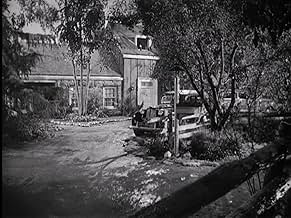
Which brings an escaped Cary to that same house that Jean Arthur has rented to Colman.
Though there are some amusing moments to be sure from all three of the stars, I find The Talk of the Town to be more serious than dramatic. Grant challenges Colman to come down out of the ivory tower he's been living in and apply his high minded principles to real life, if not necessarily his case.
When he does Colman does it with a vengeance and it brings down a whole lot of Lorchester's leading citizens.
Though Grant and Arthur are first billed, this film really belongs to Ronald Colman. His character is modeled I believe on a recent Harvard law professor who was also appointed to the Supreme Court, one Felix Frankfurter.
Of course what the impeccable English Ronald Colman playing WASP Michael Lightcap and a Viennese Jew have in common is not obvious at first. But before becoming mentor to a host of New Deal civil servants, Felix Frankfurter was not only a professor of law at Harvard, but concerned himself with a host of social issues. He was for instance, very prominent in the defense of Sacco and Vanzetti whose plight in the twenties is very similar to Cary Grant's. Like Colman's character Lightcap, Frankfurter was also known as a man of impeccable integrity, who even his worst enemies conceded. He could also be a bit too high minded at times and had to be brought to realize in his philosophy of judicial restraint, that the courts are and should be an instrument for progress and social change. His story would make an excellent film itself.
Although I can't see Felix Frankfurter putting the moves on beauty parlor owner Glenda Farrell to learn the truth about the arson. Farrell who graced many a Warner Brothers crime feature in the Thirties has the best of the supporting roles in The Talk of the Town. Also the ever unctuous Charles Dingle is wonderful as the very corrupting influence on the town itself.
Colman's final speech to the mob who are ready to lynch Cary Grant is a masterpiece, one of his best moments on screen. The words ought to be required reading and viewing for those who would dismantle our judicial system out of heated passion of the moment.
As a film that challenges folks to live up to the creed they espouse The Talk of the Town should not be missed.
One of the most enjoyable films of its year.
Borscht With An Egg In It
The story concerns Cary Grant escaping from jail and hiding out in the summer cottage of middle-aged bachelor law professor, Ronald Colman. Grant's character (named Leopold Dilg, who has a fondness for borscht with an egg in it), was falsely accused of burning down a textile mill. Jean Arthur's local gal vacillates bewteen these two very different men, who, as things turn out, get on quite well with one another. Grant teaches Colman a thing or two about real life, while Colman instructs Grant in the law. The problem is that the gentle professor doesn't know that Grant is in trouble with the law. Things gets awfully complicated near the end, as the story turns melodramatic, not altogether happily, as it had been for the most part up till this time a warm, funny study in character and mistaken identity.
Overall, the movie is hard to fault. The actors are so engaging and the dialogue so good, one can forgive almost anything. There's a nicely suggested small-town New England feel to the film, which does not caricature Yankee types, as was so often the case at the time, and is most refreshing here. Grant is, as usual, so excellent that one forgets that he is acting, as he manages to suggest working-class origins, genuine intellectual curiosity, and a hint of anger, especially in the eyes, as his performance perfectly sums up what the film is about, without drawing too much attention to itself. A remarkable achievement, for Grant, director Stevens, and everyone involved in this happy production.
Funny, thoughtful, what more do you want?
Maybe because it can't be categorized definitely as a screwball comedy or a "serious" movie, it has been overlooked. I found it much funnier than "Bringing Up Baby" for example, even though "Talk" is a great deal more serious and introspective.
A lot of the suspense that might have been put into the story was bled out by the philosophical approach that the movie takes. Every potentially suspenseful situation that could have been played out for at least half of the movie is extinguished within fifteen minutes at the most. But that's part of the fun! It gets rolling, and you can't quite tell where it's going all of the time. Watching Cary Grant mug suavely and Jean Arthur speak like she's ad-libbing, you just have to sit back and enjoy it. It's not interested in manipulating its audience, it's actually trying to present real characters in a compelling story. I loved it!
Intelligent mix of comedy, romance, and drama
Grant and Colman are given equal chance to charm us and shine, and they do. Arthur more than keeps up them, delivering her lines so naturally, and she's delightful. The film keeps us guessing as to who she may end up with, as both men are attractive in their own way. I loved seeing a little bit of darkness and danger in Grant here, as well as moments of charm, such as when he widens his eye and assures Arthur that they won't recognize him from the photograph on a Wanted poster, because they hadn't captured his spirit.
The film gets a little heavy-handed in some of its messaging as the film plays out, but I was swayed by just how relevant it is in the times of today's populism. The danger of the mob being manipulated by someone who is corrupt (how can one not think of 'lock her up' while watching that today?), the danger of rushing to judgment instead of listening to the facts and the evidence, and the need to fight for principles were certainly appropriate in 1942, but they're also timeless. Rex Ingram is strong as Colman's servant, including a moment where he gets choked up watching Colman shave off his beard. It seemed a rather odd to me at the time, but since it means Colman is going to fight for justice in this particular case, going against the mob, it may be that Ingram relates this to countless mobs lynching African-Americans, with no one standing up for them.
The film has a few moments where you have to suspend disbelief, but I enjoyed it for its intelligence, and added dimension to what otherwise would have been a standard comedy or romantic comedy. It's a film that will charm you one moment, and make you think the next, and that's not bad.
Here's a quote from Colman's speech to the mob: "This is your law and your finest possession - it makes you free men in a free country. Why have you come here to destroy it? If you know what's good for you, take those weapons home and burn them! And then think... think of this country and of the law that makes it what it is. Think of a world crying for this very law! And maybe you'll understand why you ought to guard it. Why the law has got to be the personal concern of every citizen. To uphold it for your neighbor as well as yourself. Violence against it is one mistake. Another mistake is for any man to look upon the law as just a set of principles. And just so much language printed on fine, heavy paper. Something he recites and then leans back and takes it for granted that justice is automatically being done. Both kinds of men are equally wrong! The law must be engraved in our hearts and practiced every minute to the letter and spirit. It can't even exist unless we're willing to go down into the dust and blood and fight a battle every day of our lives to preserve it. For our neighbor as well as ourself!"
Hallelujah.


¿Sabías que...?
- CuriosidadesLloyd Bridges' tiny role was one of 20 film appearances he made in 1942 alone.
- PifiasFollowing a torrential nighttime rainstorm, the dirt driveway and surrounding earth around the house are perfectly dry early the next morning.
- Citas
Michael Lightcap: This is your law and your finest possession - it makes you free men in a free country. Why have you come here to destroy it? If you know what's good for you, take those weapons home and burn them! And then think... think of this country and of the law that makes it what it is. Think of a world crying for this very law! And maybe you'll understand why you ought to guard it. Why the law has got to be the personal concern of every citizen. To uphold it for your neighbor as well as yourself. Violence against it is one mistake. Another mistake is for any man to look upon the law as just a set of principles. And just so much language printed on fine, heavy paper. Something he recites and then leans back and takes it for granted that justice is automatically being done. Both kinds of men are equally wrong! The law must be engraved in our hearts and practiced every minute to the letter and spirit. It can't even exist unless we're willing to go down into the dust and blood and fight a battle every day of our lives to preserve it. For our neighbor as well as ourself!
- Versiones alternativasThe AMC television showing of this film omits the actual moment, shown in the complete version, in which 'Ronald Colman' is actually informed of his Supreme Court appointment.
- ConexionesFeatured in La dama de la antorcha (1999)
Selecciones populares
- How long is The Talk of the Town?Con tecnología de Alexa
Detalles
Taquilla
- Presupuesto
- 1.000.000 US$ (estimación)
- Duración
- 1h 58min(118 min)
- Color
- Relación de aspecto
- 1.37 : 1