PUNTUACIÓN EN IMDb
7,1/10
12 mil
TU PUNTUACIÓN


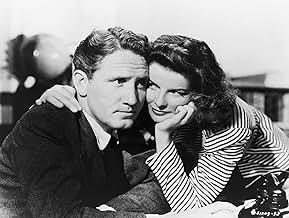
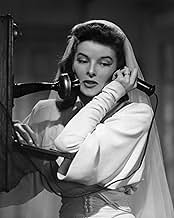
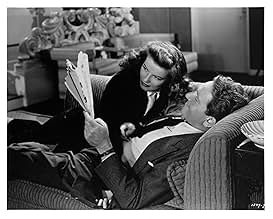
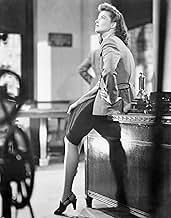
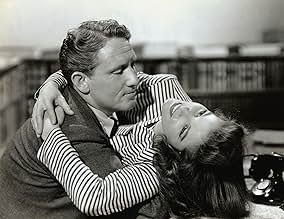
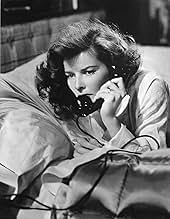
Los periodistas rivales Sam y Tess se enamoran y se casan, pero su relación se resiente cuando a Sam le molesta el agitado estilo de vida de Tess.Los periodistas rivales Sam y Tess se enamoran y se casan, pero su relación se resiente cuando a Sam le molesta el agitado estilo de vida de Tess.Los periodistas rivales Sam y Tess se enamoran y se casan, pero su relación se resiente cuando a Sam le molesta el agitado estilo de vida de Tess.
- Director/a
- Guionistas
- Estrellas
- Ganó 1 premio Óscar
- 5 premios y 2 nominaciones en total



Ludwig Stössel
- Dr. Lubbeck
- (as Ludwig Stossel)


Jimmy Ames
- Cab Driver
- (sin acreditar)

Herbert Ashley
- Stage Doorman
- (sin acreditar)
Dorothy Ates
- Phone Girl
- (sin acreditar)

William Bailey
- Baseball Fan
- (sin acreditar)
- Director/a
- Guionistas
- Todo el reparto y equipo
- Producción, taquilla y más en IMDbPro
7,111.6K
1
2
3
4
5
6
7
8
9
10
Reseñas destacadas
"Don't Worry, I'll Cut You Down to Size."
Legend has it that Spencer Tracy said he would cut Katharine Hepburn down to size when upon meeting her in heels for the first time on the set of Woman of the Year.
I think that's what the authors of the screenplay Michael Kanin and Ring Lardner, Jr., had in mind in the script as well. As mismatched a pair if there ever were, he a down to earth sports columnist and she a world famous news reporter and commentator, fall in love.
As her celebrity is much wider known than his, Hepburn expects to have it all her own way. The rest of the film is concerned with their efforts to adjust to each other.
Katharine Hepburn's character is based on liberal radio commentator and reporter Dorothy Thompson. Not surprising that no one has mentioned that yet in all the reviews so far. The giveaway is Tracy first hearing her voice on the radio while in his favorite sports bar on Information Please where Thompson was a guest. Her career petered out after World War II, so she's not known to today's audience.
Writers Kanin and Lardner had as a model for the Tracy character Lardner's own father. Ring Lardner was one the celebrated sports writers of the first half of the 20th century, a great reporter and humorist. While Tracy is not as witty as Ring Lardner, he is definitely as down to earth.
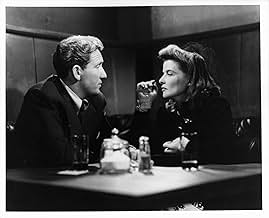
My favorite scene is Spencer Tracy trying to feel comfortable at an international gathering at her place, looking even for people who speak English. Of course she's equally as uncomfortable at William Bendix's bar where Tracy likes to hang out.
Hepburn, comfortable in her celebrity, just sails through life, getting awards here and there. When she thinks of a Greek orphan kid she gets pressured into taking in as another award, that's when Tracy puts his foot down.
Based on some real celebrities, Tracy and Hepburn become those celebrities in the flesh. It's an awesome debut for what turned out to be a great screen team.
Look for fine performances by William Bendix, Fay Bainter, Minor Watson and Dan Tobin. Kanin and Lardner copped the film's only Oscar for an original screenplay. Hepburn was nominated for Best Actress, but lost to Greer Garson in Mrs. Miniver.
If Woman of the Year were remade today, the producers might consider making the woman the sports reporter. Seeing Jeannie Zelasko covering the World Series this year, I'm sure it would work very well.
I think that's what the authors of the screenplay Michael Kanin and Ring Lardner, Jr., had in mind in the script as well. As mismatched a pair if there ever were, he a down to earth sports columnist and she a world famous news reporter and commentator, fall in love.
As her celebrity is much wider known than his, Hepburn expects to have it all her own way. The rest of the film is concerned with their efforts to adjust to each other.
Katharine Hepburn's character is based on liberal radio commentator and reporter Dorothy Thompson. Not surprising that no one has mentioned that yet in all the reviews so far. The giveaway is Tracy first hearing her voice on the radio while in his favorite sports bar on Information Please where Thompson was a guest. Her career petered out after World War II, so she's not known to today's audience.
Writers Kanin and Lardner had as a model for the Tracy character Lardner's own father. Ring Lardner was one the celebrated sports writers of the first half of the 20th century, a great reporter and humorist. While Tracy is not as witty as Ring Lardner, he is definitely as down to earth.
My favorite scene is Spencer Tracy trying to feel comfortable at an international gathering at her place, looking even for people who speak English. Of course she's equally as uncomfortable at William Bendix's bar where Tracy likes to hang out.
Hepburn, comfortable in her celebrity, just sails through life, getting awards here and there. When she thinks of a Greek orphan kid she gets pressured into taking in as another award, that's when Tracy puts his foot down.
Based on some real celebrities, Tracy and Hepburn become those celebrities in the flesh. It's an awesome debut for what turned out to be a great screen team.
Look for fine performances by William Bendix, Fay Bainter, Minor Watson and Dan Tobin. Kanin and Lardner copped the film's only Oscar for an original screenplay. Hepburn was nominated for Best Actress, but lost to Greer Garson in Mrs. Miniver.
If Woman of the Year were remade today, the producers might consider making the woman the sports reporter. Seeing Jeannie Zelasko covering the World Series this year, I'm sure it would work very well.
classy, classic comedy
this film sparkles like champagne. Okay the plot is flimsy, not to mention corny, but the magnetism and chemistry that goes on between Tracy and Hepburn is enough to keep you enthralled for hours. The dialogue is witty and snappy, and there are many hilarious moments not to be missed. It's lovely to see such an old fashioned fun movie that makes you laugh and cry at the same time. The most wonderful moment in the film has got to be when they kiss for the first time, it's wonderful, and you can feel the warmth between them.
Woman Outshines Man
Hepburn shines as a beautiful, world-famous political columnist. It is hard to believe that she would fall for an Average Joe sports columnist like Tracy and the latter's performance is too dull to make her attraction to him believable. The first teaming of the pair has its moments but can't quite decide if it is a comedy or a drama. The basic message of this movie seems to be that a woman's place is in the kitchen although there is an amusing sequence in the kitchen where Hepburn tries to disprove this notion. Something seems to be missing from the timing/delivery of the humor. In 1942, the same year as this movie, Director Stevens had much better success with "The More the Merrier."
Wow
Right off I have to say that this is at once the funniest, most romantic, most intelligent & most realistic depiction of a romantic relationship I have ever seen.(For perspective, I'm a 60 year-old multi-lingual film buff).
Whatever kind of film George Stevens tried, he did it to perfection. Witness Gunga Din, Swingtime & A Place in the Sun to mention just a few. It was like watching something by Hawks, Lubitch & Sturges all rolled into one.
Hepburn never appeared softer, more vulnerable, less mannered than in Woman of the Year. I fall in love with her all over again every time I watch it, which is surprisingly often, especially in the scene where she carries on about Oswald Spengler while plastered under the table.
Then there's Tracy, the most honest actor who ever lived. But not just that: there was his ability to delve seemingly without effort into an infinite bag of gestures & expressions & tones & just plain old-fashioned but highly manifest wisdom & come up with the most richly nuanced guy ever depicted on-screen. Tracy was a giant, a genius, the Rembrandt of film.
A delightful, dazzlingly perfect grown-up movie.
Whatever kind of film George Stevens tried, he did it to perfection. Witness Gunga Din, Swingtime & A Place in the Sun to mention just a few. It was like watching something by Hawks, Lubitch & Sturges all rolled into one.
Hepburn never appeared softer, more vulnerable, less mannered than in Woman of the Year. I fall in love with her all over again every time I watch it, which is surprisingly often, especially in the scene where she carries on about Oswald Spengler while plastered under the table.
Then there's Tracy, the most honest actor who ever lived. But not just that: there was his ability to delve seemingly without effort into an infinite bag of gestures & expressions & tones & just plain old-fashioned but highly manifest wisdom & come up with the most richly nuanced guy ever depicted on-screen. Tracy was a giant, a genius, the Rembrandt of film.
A delightful, dazzlingly perfect grown-up movie.
Great beginning, awful ending
First 70 minutes: 9 stars. I marveled over the chemistry between Hepburn and Tracy, and even more over her character, who is a highly sophisticated, intelligent, strong, funny, and romantic woman. She calls the shots, interviews heads of state, flies all over the world, speaks what seems like every language, and can hold her own drinking Scotch. At the same time, she falls for this salty sports reporter and her body language and affection for him are so tender, including when she re-assures him that he won't feel like a weekend guest while staying in her apartment on their honeymoon night with a wonderful little hint of seductiveness, and when she says "hello daddy" in a baby voice when he comes home one night. My favorite bit of dialogue was this though, where he shows such interest and acceptance of her; the way that they look at each other is wonderful:
Hebpurn: Well, we're alone. Talk. You do have something to talk about? Tracy: Yeah, yeah. You. You. I'd like to know what you like and don't like, and how you feel about being you. Hepburn: I feel very good about it. Always have. I like knowing more about what goes on than most people. Tracy: And telling them. Hepburn: Yeah, and telling them.
Last 45 minutes: 5 stars. The film starts unraveling with Hepburn's rash decision to adopt a refugee, not because that's a bad thing (it's a great thing), but because she does so without telling her husband, or without the slightest thought to actually caring for the child. It spirals from there until that horrific prolonged ending scene, where this intelligent, brilliant woman fumbles around in the kitchen, apparently not knowing how to use a toaster. It's, quite frankly, god-awful on every possible level.
The message is loud and clear: if a woman chooses to focus on a career, she will neglect her husband, not have a clue about raising kids, and be incompetent at performing wifely tasks like making breakfast. It's terribly insulting, and undoes a lot of the great things it did in the first 70 minutes. Hepburn's character wins the "Woman of the Year" award, but it's ironically Tracy who is showcased as award-worthy, for having put up with the "difficult case" of his wife, remained level-headed, and taught her a good lesson in what it takes to have a good marriage.
The only small saving grace is that his character suggests she can have both, a career and a family, as long as she doesn't go to extremes in either. It's only too bad the film didn't simply show us how women can do this balancing just as well as men, but it was 1942, and a lot of people - including those in powerful positions - were simply not ready for this message.
Hebpurn: Well, we're alone. Talk. You do have something to talk about? Tracy: Yeah, yeah. You. You. I'd like to know what you like and don't like, and how you feel about being you. Hepburn: I feel very good about it. Always have. I like knowing more about what goes on than most people. Tracy: And telling them. Hepburn: Yeah, and telling them.
Last 45 minutes: 5 stars. The film starts unraveling with Hepburn's rash decision to adopt a refugee, not because that's a bad thing (it's a great thing), but because she does so without telling her husband, or without the slightest thought to actually caring for the child. It spirals from there until that horrific prolonged ending scene, where this intelligent, brilliant woman fumbles around in the kitchen, apparently not knowing how to use a toaster. It's, quite frankly, god-awful on every possible level.
The message is loud and clear: if a woman chooses to focus on a career, she will neglect her husband, not have a clue about raising kids, and be incompetent at performing wifely tasks like making breakfast. It's terribly insulting, and undoes a lot of the great things it did in the first 70 minutes. Hepburn's character wins the "Woman of the Year" award, but it's ironically Tracy who is showcased as award-worthy, for having put up with the "difficult case" of his wife, remained level-headed, and taught her a good lesson in what it takes to have a good marriage.
The only small saving grace is that his character suggests she can have both, a career and a family, as long as she doesn't go to extremes in either. It's only too bad the film didn't simply show us how women can do this balancing just as well as men, but it was 1942, and a lot of people - including those in powerful positions - were simply not ready for this message.


¿Sabías que...?
- CuriosidadesKatharine Hepburn refused to reveal who wrote the screen play to Louis B. Mayer until after he bought the project from Hepburn. Hepburn was afraid that Mayer would low-ball the two authors (Michael Kanin and Ring Lardner Jr.) because, at the time, they were both relatively unknown.
- PifiasIn the kitchen, Tess uses a vacuum coffee maker (Cona). However, if she had put the coffee in the bottom of the coffee maker and the water in the top, as shown, it wouldn't have made coffee at all.
This is an intended joke as it has been established that Tess does not know how to cook.
- Citas
Tess Harding: [In the stands at the ballpark, observing the large crowd in attendance] Are all these people unemployed?
Sam Craig: No, they're all attending their grandmother's funeral.
- Versiones alternativasThere is an Italian edition of this film on DVD, distributed by DNA Srl: "LA DONNA DEL GIORNO (1942) + INCANTESIMO (1938)" (2 Films on a single DVD, with "Woman of the Year" in double version 1.33:1 and 1.78:1), re-edited with the contribution of film historian Riccardo Cusin. This version is also available for streaming on some platforms.
- ConexionesFeatured in George Stevens: A Filmmaker's Journey (1984)
- Banda sonoraBridal Chorus (Here Comes the Bride)
(1850) (uncredited)
from "Lohengrin"
Written by Richard Wagner
Played on an organ at the wedding
Selecciones populares
Inicia sesión para calificar y añadir a tu lista para recibir recomendaciones personalizadas
- How long is Woman of the Year?Con tecnología de Alexa
Detalles
- Duración
- 1h 54min(114 min)
- Color
- Relación de aspecto
- 1.37 : 1
Contribuir a esta página
Sugerir un cambio o añadir el contenido que falta