PUNTUACIÓN EN IMDb
7,3/10
8,7 mil
TU PUNTUACIÓN


Añade un argumento en tu idiomaA jaded former jockey helps a young girl prepare a wild but gifted horse for England's Grand National Sweepstakes.A jaded former jockey helps a young girl prepare a wild but gifted horse for England's Grand National Sweepstakes.A jaded former jockey helps a young girl prepare a wild but gifted horse for England's Grand National Sweepstakes.
- Director/a
- Guionistas
- Estrellas
- Ganó 2 premios Óscar
- 6 premios y 5 nominaciones en total
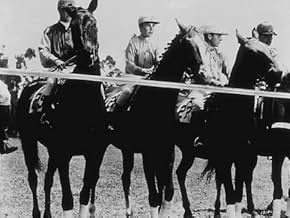
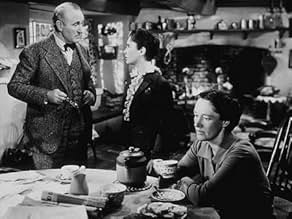
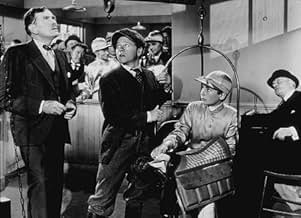


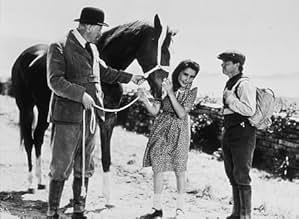


Jackie 'Butch' Jenkins
- Donald Brown
- (as Jackie Jenkins)


7,38.6K
1
2
3
4
5
6
7
8
9
10
Reseñas destacadas
"--- a 12-year old's single mindedness of commitment and trust ---"
If you last saw National Velvet with a Saturday matinée serial, for a ticket price of twenty-five cents (including popcorn) -- and you purchased the video to see it again with family -- be prepared to re-experience primal feelings from the early dawn of your history. Warm, wet tears will run down your cheeks. Warm, happy feelings will make you stand up and cheer, as if the posse were galloping to the rescue; but most of all, you will feel good -- it will happen often while viewing National Velvet. See the video many times -- cry and use a handkerchief (remember that piece of cloth mom tucked into your shirt pocket) -- jump up from the sofa and cheer; and FEEL GOOD again -- and again.
National Velvet was initially released in 1944; but I must have seen a re-release soon thereafter -- because I know that I was in grade school at the time. I did not see it again until I bought the DVD for my mother recently. And if asked what the movie was about, during that interim period of more than fifty years, I would have answered -- "it's about a horse." That's a boy's initial and lasting impression.
Animal lovers, (I'm sorry, but) National Velvet is not a horsey movie (and never has been)-- the film is really about the pre-teen innocence and enthusiasm of Velvet Brown (Elizabeth Taylor). No animal -- not the film's sorrel gelding, nor Charlie, my yellow labrador -- can compete with the budding beauty of Elizabeth Taylor for the camera's attention. But, stay focused on Velvet's three interwoven relationships -- with Mi Taylor (Mickey Rooney), with her mother (Anne Revere, best supporting actress Academy Award), and the horse, Pirate ("Pi"). What characterizes winsome Velvet, in these attachments, is a 12-year old's single mindedness of commitment and trust, together with her unwaivering loyalty -- admirable qualities also of Ms. Taylor in real life. Mi, whose father mentored Mrs. Brown, is a young itinerant from less fortunate circumstances, with a working knowledge of jumping horses. Mrs. Brown, ever mindful of her own growing experiences, is especially supportive of both her daughter and Mi. The spirited Pi is difficult handling for its owner, and the horse soon becomes a project for Mi and Velvet.
Angela Lansbury (Velvet's older sister, Edwina, aka TV's Jessica Fletcher fifty years later), Jackie Jenkins (the young brother), and particularly Donald Crisp (Mr. Brown, Velvet's father and village butcher) provide able and entertaining support roles. National Velvet received five Academy nominations, winning two.
Set in the 1920's English coastal village of Sewels and its green pasturelands (on location in Carmel, California), Enid Bagnold's book (1933)and the film (1944) tell us a lot about the moral and social structure of small villages (and our small towns, too). One meaningful scene shows Mrs. Brown stowing money in a kitchen pot on her pantry shelf, while Mi spies from the window -- we are wary of what he might do next. Villagers could be suspicious of strangers but they also extended trust, believing in a person's goodness. Front doors were left open -- grandparents will tell of neighbors regularly walking into an empty house, through the unlatched screen, to borrow a cup of sugar from the same cupboard where family monies were stored (my mother kept petty cash in an unused sugar bowl). Honesty was important, but entrusting friends and neighbors was equally valued. That unlatched screen with open front door was a symbol of our neighborliness and trust, and a more meaningful symbol of the times we lived in -- and yes, maybe it said something about our innocence too.
National Velvet was initially released in 1944; but I must have seen a re-release soon thereafter -- because I know that I was in grade school at the time. I did not see it again until I bought the DVD for my mother recently. And if asked what the movie was about, during that interim period of more than fifty years, I would have answered -- "it's about a horse." That's a boy's initial and lasting impression.
Animal lovers, (I'm sorry, but) National Velvet is not a horsey movie (and never has been)-- the film is really about the pre-teen innocence and enthusiasm of Velvet Brown (Elizabeth Taylor). No animal -- not the film's sorrel gelding, nor Charlie, my yellow labrador -- can compete with the budding beauty of Elizabeth Taylor for the camera's attention. But, stay focused on Velvet's three interwoven relationships -- with Mi Taylor (Mickey Rooney), with her mother (Anne Revere, best supporting actress Academy Award), and the horse, Pirate ("Pi"). What characterizes winsome Velvet, in these attachments, is a 12-year old's single mindedness of commitment and trust, together with her unwaivering loyalty -- admirable qualities also of Ms. Taylor in real life. Mi, whose father mentored Mrs. Brown, is a young itinerant from less fortunate circumstances, with a working knowledge of jumping horses. Mrs. Brown, ever mindful of her own growing experiences, is especially supportive of both her daughter and Mi. The spirited Pi is difficult handling for its owner, and the horse soon becomes a project for Mi and Velvet.
Angela Lansbury (Velvet's older sister, Edwina, aka TV's Jessica Fletcher fifty years later), Jackie Jenkins (the young brother), and particularly Donald Crisp (Mr. Brown, Velvet's father and village butcher) provide able and entertaining support roles. National Velvet received five Academy nominations, winning two.
Set in the 1920's English coastal village of Sewels and its green pasturelands (on location in Carmel, California), Enid Bagnold's book (1933)and the film (1944) tell us a lot about the moral and social structure of small villages (and our small towns, too). One meaningful scene shows Mrs. Brown stowing money in a kitchen pot on her pantry shelf, while Mi spies from the window -- we are wary of what he might do next. Villagers could be suspicious of strangers but they also extended trust, believing in a person's goodness. Front doors were left open -- grandparents will tell of neighbors regularly walking into an empty house, through the unlatched screen, to borrow a cup of sugar from the same cupboard where family monies were stored (my mother kept petty cash in an unused sugar bowl). Honesty was important, but entrusting friends and neighbors was equally valued. That unlatched screen with open front door was a symbol of our neighborliness and trust, and a more meaningful symbol of the times we lived in -- and yes, maybe it said something about our innocence too.
Revisiting a film after 50 years
During the 13 years of schooling I had from Kindergarten through high school, there was only one day that my class took a field trip. When I went to school, you went to school, from 8:30 until 3:30 and filed trips were not taken. But, for some reason I could not recall at this advanced age, we went to see a movie - National Velvet. I do not recall the movie, so, on the eve of my 57th year, I decided to revisit it.
It is a movie about a time that no longer exists. A time when people trusted others and didn't lock their houses. A time when people were given the benefit of the doubt. It was a time when family was the most important thing. This film shows all of that and more. It shows love and trust and caring and the goodness of people.
It would not be a bad thing for every family to view this film once in a while and discuss its message.
It was a treat to see the young Elizabeth Taylor, Mickey Rooney at his best, the Academy Award-winning performance of Anne Revere, Angela Lansbury before Murder, She Wrote, and Donald Crisp, who performed for almost sixty years.
What a movie!
It is a movie about a time that no longer exists. A time when people trusted others and didn't lock their houses. A time when people were given the benefit of the doubt. It was a time when family was the most important thing. This film shows all of that and more. It shows love and trust and caring and the goodness of people.
It would not be a bad thing for every family to view this film once in a while and discuss its message.
It was a treat to see the young Elizabeth Taylor, Mickey Rooney at his best, the Academy Award-winning performance of Anne Revere, Angela Lansbury before Murder, She Wrote, and Donald Crisp, who performed for almost sixty years.
What a movie!
A marvelous family film
A sentimental, heart-tugging family film set in England of the 1920s. A young Elizabeth Taylor wins a horse in a raffle and decides to enter him in the Grand National; fortunately, ex-jockey Mickey Rooney is around to give Liz some help. Director Clarence Brown displays some remarkable control with material that could've been excessively maudlin in someone else's hands. He and screenwriters Helen Deutsch and Theodore Reeves take great care in establishing genuine characterizations and developing the story naturally. True, there are one or two scenes that seem a bit forced, but overall it's quite affecting, and gorgeously filmed in Technicolor. The race itself is quite thrilling, and like so many great classics, there's a marvelous, three-hankie fade-out at the end. Liz proves that she was a real trooper right from the start, and Rooney--who I usually find rather annoying--is surprisingly subdued and really very good. Donald Crisp is terrif as Liz's gruff father and Angela Lansbury is a delight as her older, boy-crazy sister. Most of the acting kudos, however, belong to Anne Revere, who won a richly deserved Supporting Actress Oscar playing Liz's wise and caring mother.
Nearly 80 years later a female jockey finally wins the Grand National
I watched National Velvet ages ago, before Elizabeth Taylor ( who plays the jockey) befriended Michael Jackson. Anyway, I remembered this movie because of Rachael Blackmore's historic achievement in 2021 to be the first woman to win the Grand National. Art and life and all that, well done to everyone.
Magic
A lot of directors have broached childhood:Truffaut,Bunuel,Pialat,Comencini,Loach ,but no one did it as Clarence Brown used to do:his world is a rosy one ,a protected one where any dream can come true if you believe in it.Not realistic?Not that much :take "the yearling" for instance:the young hero's pal's death is not passed over in silence but Jody did tell him and us that somewhere in Heaven there are prairies full of coypus.In "National Velvet" ,the mother ,quoting the Book of Ecclesiastes ,tells her daughter that there's a time for everything,even a time to die.
Colors display something magic,closer to fairy tales than to a realistic story:this small town,with its colorful characters,its school where the teacher loves all of her students whom she's going to miss during the long holiday,its butcher's shop.The heroine's parents own it and their house suffuses with understanding,tenderness and love.The race is ,as far as Velvet is concerned , entirely implausible ,but it's nicely filmed.
A top-notch cast cannot fail to win over the audience:the couple Anne Revere/Donald Crisp are parents every child dreams of;Elizabeth Taylor has always been an underrated actress,to think that about 20 years later,she would be Martha in "who's afraid of Virginia Woolf?"!;Mickey Rooney 's pouty mouth and sullen expression avoid pathos and melodramatic effects.And there's also a young Angela Landsbury,long before "murder she wrote" ,on the threshold of a brilliant career.
It may not appeal to Today's children ,who got used to special effects and action-packed stories.But for the adults who've still got their child's soul,it's a true delight.
Colors display something magic,closer to fairy tales than to a realistic story:this small town,with its colorful characters,its school where the teacher loves all of her students whom she's going to miss during the long holiday,its butcher's shop.The heroine's parents own it and their house suffuses with understanding,tenderness and love.The race is ,as far as Velvet is concerned , entirely implausible ,but it's nicely filmed.
A top-notch cast cannot fail to win over the audience:the couple Anne Revere/Donald Crisp are parents every child dreams of;Elizabeth Taylor has always been an underrated actress,to think that about 20 years later,she would be Martha in "who's afraid of Virginia Woolf?"!;Mickey Rooney 's pouty mouth and sullen expression avoid pathos and melodramatic effects.And there's also a young Angela Landsbury,long before "murder she wrote" ,on the threshold of a brilliant career.
It may not appeal to Today's children ,who got used to special effects and action-packed stories.But for the adults who've still got their child's soul,it's a true delight.


¿Sabías que...?
- CuriosidadesMickey Rooney had to film all of his scenes in one month before he had to report for basic training to serve in World War II.
- PifiasThe horses are shown turning right at one point during the race. All turns on the Grand National course are made to the left.
- Citas
Mrs. Brown: That'll be a dispute to the end of time, Mr. Brown: whether it's better to do the right thing for the wrong reason or the wrong thing for the right reason.
- Créditos adicionalesA frame, with music, was added to the film at the end: "To families of servicemen and women: Pictures exhibited in this theater are given to the armed forces for showing in combat areas around the world. [signed] War Activities Committee/Motion Picture Industry"
- ConexionesEdited into A rienda suelta (1949)
- Banda sonoraGreensleeves
(uncredited)
Traditional English folk song
Selecciones populares
Inicia sesión para calificar y añadir a tu lista para recibir recomendaciones personalizadas
Detalles
- Fecha de lanzamiento
- País de origen
- Sitio oficial
- Idioma
- Títulos en diferentes países
- El sueño del Gran National
- Localizaciones del rodaje
- Empresa productora
- Ver más compañías en los créditos en IMDbPro
- Duración
- 2h 3min(123 min)
- Color
- Relación de aspecto
- 1.37 : 1
Contribuir a esta página
Sugerir un cambio o añadir el contenido que falta