PUNTUACIÓN EN IMDb
7,5/10
21 mil
TU PUNTUACIÓN


Un criado en la casa de Cumbres Borrascosas le cuenta a un viajero la desafortunada historia de los amantes Cathy y Heathcliff.Un criado en la casa de Cumbres Borrascosas le cuenta a un viajero la desafortunada historia de los amantes Cathy y Heathcliff.Un criado en la casa de Cumbres Borrascosas le cuenta a un viajero la desafortunada historia de los amantes Cathy y Heathcliff.
- Director/a
- Guionistas
- Estrellas
- Ganó 1 premio Óscar
- 10 premios y 7 nominaciones en total




Sarita Wooton
- Cathy (as a child)
- (as Sarita Wooten)


Frank Benson
- Heathcliff Servant
- (sin acreditar)

Romaine Callender
- Robert
- (sin acreditar)
Richard Clucas
- Little Boy
- (sin acreditar)
Vernon Downing
- Giles
- (sin acreditar)
7,521.2K
1
2
3
4
5
6
7
8
9
10
Reseñas destacadas
Shoot that poison arrow in my heart
I saw this film many years before I read the book, I know which I prefer - OK, maybe with rose-tinted spectacles on. The book by Emily Bronte is an undeniable classic as is this film version but imho this is a much better use of one hundred and five minutes of life. And though they keep trying, this will remain the best condensation of the story, Wuthering Lites c/o the original Fantasy Factory.
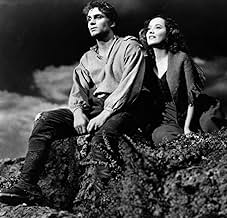
Waif brought into well off Yorkshire home, grows up to fall in violent love with the masters daughter and violent hate with the son, and eventually owns the estate but not the woman. Laurence Olivier and Merle Oberon are perfect as the manic birds of a feather Heathcliff and Cathy with David Niven as the elegant sidelined husband. Everyone is portrayed as faulty or unlikeable in some way, romance is seen as hopeless childishness leading at best to passionate petulance, at worst to death; love is as strange as people. It's relentlessly beautiful stuff, gloriously photographed by Gregg Toland with a glowing atmosphere and a most assured production than has not been possible to achieve again. The spirit of nonsensical romance has been lost in this more cynical age. Favourite bits: Miles Mander's melodramatics at the beginning resulting in Flora Robson's picture-long flashback; the windswept pair on the rocks; the pair gatecrashing the dance; Oberon's unravelling to Niven and the tear-jerking finale. Director William Wyler had a long and illustrious career, but to my mind he never bettered this effort.
Watch it and weep; not only at the film's content but for a cinematic era long dead and never coming back.
Waif brought into well off Yorkshire home, grows up to fall in violent love with the masters daughter and violent hate with the son, and eventually owns the estate but not the woman. Laurence Olivier and Merle Oberon are perfect as the manic birds of a feather Heathcliff and Cathy with David Niven as the elegant sidelined husband. Everyone is portrayed as faulty or unlikeable in some way, romance is seen as hopeless childishness leading at best to passionate petulance, at worst to death; love is as strange as people. It's relentlessly beautiful stuff, gloriously photographed by Gregg Toland with a glowing atmosphere and a most assured production than has not been possible to achieve again. The spirit of nonsensical romance has been lost in this more cynical age. Favourite bits: Miles Mander's melodramatics at the beginning resulting in Flora Robson's picture-long flashback; the windswept pair on the rocks; the pair gatecrashing the dance; Oberon's unravelling to Niven and the tear-jerking finale. Director William Wyler had a long and illustrious career, but to my mind he never bettered this effort.
Watch it and weep; not only at the film's content but for a cinematic era long dead and never coming back.
A Goldwyn-Wyler-Bronte Masterpiece
One of the finest romantic films ever filmed, this 1939 Samuel Goldwyn production rates with many - including myself - as being the most beloved version of Emily Bronte's haunting novel. Although it stops at chapter seventeen and the ending is seen as a bit trite by some, it's a brilliantly enacted, finely mounted production with beautiful photography and authentic period detail set-wise. Merle Oberon is well-cast as the selfish, vain and rather shallow Cathy. What makes her character so intriguing and interesting is that no matter what happens to her materially, she has an undying love for the gypsy-blooded heathen named Heathcliff. Laurence Olivier, never a great success in films prior to this, gives a brutally honest account of everything Bronte's Heathcliff should be: proud, bold, vengeful & darkly brooding -a tortured soul in general. Wyler's guiding hand is patent throughout: it was Olivier himself who gave credit to the meticulous director in teaching him the particular ropes of screen acting: it shows! Lady-like Isabella is well-played by the Irish Geraldine Page, while Ellen, the long-suffering servant is played sympathetically by the fine character actress Flora Robson. David Niven, ideally cast as the milquetoasty Edgar Linton, actually had a clause in his contract which freed him from having to do crying scenes! A timeless masterpiece of the "haunting" love story genre, this was Goldwyn's personal favourite of all his films.
"I cannot live without my life! I cannot die without my soul!"
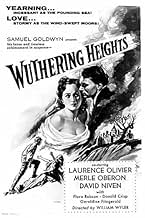
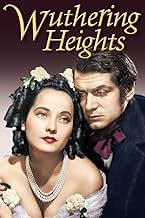
"Wuthering Heights" is a tragic romantic drama and an adaptation of Emily Brontë's novel of the same name, with a screenplay based solely on the first part of the book.
We follow a traveler, lost in a snowstorm, who finds shelter at the estate of a cold and ruthless host named Heathcliff. Reluctantly, Heathcliff allows him to stay in an upstairs room. During the night, the traveler is awakened by a chilling draft that pushes open the window shutters. Just as he moves to close them, he feels an icy hand grasp his own and hears the ghostly voice of a woman calling Heathcliff's name. Shaken, he calls for his host and recounts the eerie experience. Heathcliff, suddenly enraged and agitated, rushes out into the blizzard, shouting a woman's name into the snowy void. Ellen, the housekeeper, tells the stunned guest that he has heard and felt the presence of Catherine "Cathy" Earnshaw's spirit - Heathcliff's great love, who died many years ago...
Director William Wyler crafts an intense yet somber melodrama of deliberate pacing, one that faithfully captures the atmosphere of the novel's portion on which the screenplay is based. The film's bleak, wintry tone can stir melancholy, even depressive feelings in its audience. Dynamic twists or humor remain overshadowed by the overpowering emotional currents endured by the protagonists. Love, hatred, betrayal, pride, and revenge pulse through nearly every scene.
The production design is lavish and perfectly aligned with the characters' inner states. Long takes of the harsh, wind-swept Yorkshire moors and marshes are striking, while mist and shadow reveal the darkest corners of the main characters' souls. The interior of the house resembles a cold prison, burdened with words and secrets from the past that no one can escape. Dialogue is often heated and fierce, heightening the melodramatic atmosphere.
Thematically, the film explores impossible love across rigid class divisions, destructive passion steeped in moral ambiguity, and the inability of young people to temper pride and ego in pursuit of happiness. It asks the question: can love truly be a curse that destroys lives and leaves only despair, even when a fleeting ray of sunlight appears on the horizon?
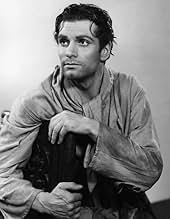
Laurence Olivier plays Heathcliff with an icy, almost demonic energy. His character is wounded, yet every scar fuels his drive for revenge, beneath which smolder deep sorrow and bitterness. Heathcliff is not merely a man tormented by unrequited love - he is also a manipulator and an avenger. Merle Oberon portrays Catherine "Cathy" Earnshaw Linton as a blend of wild cruelty and childlike innocence - unpredictable, passionate, and unwilling to give up "the game" regardless of the consequences.
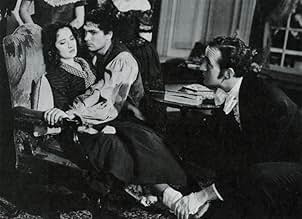
David Niven embodies Edgar Linton, a kind and well-mannered gentleman swept up by the stormy passions between Heathcliff and Cathy, fully aware that his love will never be returned in equal measure. Geraldine Fitzgerald gives life to Isabella Linton, a naïve young woman who becomes a victim of the infernal whirlwind from which there is no escape, carrying the scars of her own idealism.
Flora Robson, as Ellen Dean, serves as the moral backbone of the film - a quiet storyteller trying to bring a touch of warmth to the coldness of Wuthering Heights. Hugh Williams imbues Hindley Earnshaw with a bitter, self-destructive nature tainted by envy and malice.
"Wuthering Heights" is an intensely charged melodrama that faithfully conveys the spirit of Emily Brontë's novel. Its twists and turns can both freeze and burn the heart. I believe it to be a remarkable experience for every true lover of the genre.
We follow a traveler, lost in a snowstorm, who finds shelter at the estate of a cold and ruthless host named Heathcliff. Reluctantly, Heathcliff allows him to stay in an upstairs room. During the night, the traveler is awakened by a chilling draft that pushes open the window shutters. Just as he moves to close them, he feels an icy hand grasp his own and hears the ghostly voice of a woman calling Heathcliff's name. Shaken, he calls for his host and recounts the eerie experience. Heathcliff, suddenly enraged and agitated, rushes out into the blizzard, shouting a woman's name into the snowy void. Ellen, the housekeeper, tells the stunned guest that he has heard and felt the presence of Catherine "Cathy" Earnshaw's spirit - Heathcliff's great love, who died many years ago...
Director William Wyler crafts an intense yet somber melodrama of deliberate pacing, one that faithfully captures the atmosphere of the novel's portion on which the screenplay is based. The film's bleak, wintry tone can stir melancholy, even depressive feelings in its audience. Dynamic twists or humor remain overshadowed by the overpowering emotional currents endured by the protagonists. Love, hatred, betrayal, pride, and revenge pulse through nearly every scene.
The production design is lavish and perfectly aligned with the characters' inner states. Long takes of the harsh, wind-swept Yorkshire moors and marshes are striking, while mist and shadow reveal the darkest corners of the main characters' souls. The interior of the house resembles a cold prison, burdened with words and secrets from the past that no one can escape. Dialogue is often heated and fierce, heightening the melodramatic atmosphere.
Thematically, the film explores impossible love across rigid class divisions, destructive passion steeped in moral ambiguity, and the inability of young people to temper pride and ego in pursuit of happiness. It asks the question: can love truly be a curse that destroys lives and leaves only despair, even when a fleeting ray of sunlight appears on the horizon?
Laurence Olivier plays Heathcliff with an icy, almost demonic energy. His character is wounded, yet every scar fuels his drive for revenge, beneath which smolder deep sorrow and bitterness. Heathcliff is not merely a man tormented by unrequited love - he is also a manipulator and an avenger. Merle Oberon portrays Catherine "Cathy" Earnshaw Linton as a blend of wild cruelty and childlike innocence - unpredictable, passionate, and unwilling to give up "the game" regardless of the consequences.
David Niven embodies Edgar Linton, a kind and well-mannered gentleman swept up by the stormy passions between Heathcliff and Cathy, fully aware that his love will never be returned in equal measure. Geraldine Fitzgerald gives life to Isabella Linton, a naïve young woman who becomes a victim of the infernal whirlwind from which there is no escape, carrying the scars of her own idealism.
Flora Robson, as Ellen Dean, serves as the moral backbone of the film - a quiet storyteller trying to bring a touch of warmth to the coldness of Wuthering Heights. Hugh Williams imbues Hindley Earnshaw with a bitter, self-destructive nature tainted by envy and malice.
"Wuthering Heights" is an intensely charged melodrama that faithfully conveys the spirit of Emily Brontë's novel. Its twists and turns can both freeze and burn the heart. I believe it to be a remarkable experience for every true lover of the genre.
Very moving film
I have not read the Emily Bronte novel on which this film is based so obviously I cannot comment on the effectiveness of it as an adaptation (I understand that almost the entire second half of the book was excised). However, I thoroughly enjoyed the film. Oberon and especially Olivier, one of my favorites, are very convincing and moving as the doomed lovers Cathy and Heathcliff (according to my friend, Heathcliff is written as being much more likeable in the film than in the book). The supporting cast was also very good. Wuthering Heights just deals very poignantly with the effect that birth and status have on people's lives. Yet another winner from Wyler. My score 9/10.
Hardly Bronte, but nevertheless a truly great and extremely moving love story
SPOILERS Out of the cinematic versions of Emily Bronte's incredible tale, this 1939 version is one of the furthest from it. However, as a piece of cinematic art, it is the finest, a shining example of Hollywood craftmanship made at a time when so many classic movies were being churned out. Producer Sam Goldwyn said it was the best movie he ever made. It's certainly director William Wyler's best film, and that includes Ben Hur. While Bronte's novel is a lot more than just a love story, this almost reduces it to being just a love story. Never mind, because as a love story, this film works wonderfully. Like almost all great love stories, it's gloriously romantic, emotionally intense and ultimately incredibly moving.
The controversial decision to miss out almost the entire second half of the book allowed the filmmakers to concentrate on the Heathcliff/Cathy love story, and Laurence Olivier and Merle Oberon both have incredible chemistry and strengh in their performances. No, they are not Bronte's characters, especially the film's version of Heathcliff, who here is FAR too nice, but are definitely one of the greatest of Hollywood's cinematic couples. This is especially notable in the scenes set on the moors, where we are definitely in that Olde Hollywood romantic never never land where the music soars and passion had to be, and was, encapsulated in a kiss. Olivier is impressive delivering some of Bronte's lines, of which there are a surprising amount, and the film does follow the book's plot very closely, it just tones down the darkness.
There are many superbly done sequences- the incredibly atmospheric opening where a traveller arrives at Heathcliff's house, all the scenes on the moors, Cathy's speech to Nelly "I AM Heathcliff", and of course, more than any other scene, the death of Cathy. As Heathcliff takes the dying Cathy to the window to see the moors once more and she finally dies virtually standing up, all the while while Alfred Newman's love theme plays and plays. This is one of the moving and also one of the most beautiful and artistic deaths in Hollywood history, all the more powerful for actually being comparatively understated by Hollywood standards of the time. Only those who had read the book or knew of the missing second half would know there was more in the story to come, in the context of the film the tale seems complete. Some don't like the final scene of Heathcliff and Cathy's ghosts wondering in the snow, but it is actually closer to the book's actual ending than most seem to admit. It's also one of the best tearjerkers ever, period.
Most people read the book and are than disappointed when they see this. It's therefore best to see this first, and to appreciate it as one of the great Hollywood love stories, before THAN reading the book. Yes, the book is still better, but than most books are.
The controversial decision to miss out almost the entire second half of the book allowed the filmmakers to concentrate on the Heathcliff/Cathy love story, and Laurence Olivier and Merle Oberon both have incredible chemistry and strengh in their performances. No, they are not Bronte's characters, especially the film's version of Heathcliff, who here is FAR too nice, but are definitely one of the greatest of Hollywood's cinematic couples. This is especially notable in the scenes set on the moors, where we are definitely in that Olde Hollywood romantic never never land where the music soars and passion had to be, and was, encapsulated in a kiss. Olivier is impressive delivering some of Bronte's lines, of which there are a surprising amount, and the film does follow the book's plot very closely, it just tones down the darkness.
There are many superbly done sequences- the incredibly atmospheric opening where a traveller arrives at Heathcliff's house, all the scenes on the moors, Cathy's speech to Nelly "I AM Heathcliff", and of course, more than any other scene, the death of Cathy. As Heathcliff takes the dying Cathy to the window to see the moors once more and she finally dies virtually standing up, all the while while Alfred Newman's love theme plays and plays. This is one of the moving and also one of the most beautiful and artistic deaths in Hollywood history, all the more powerful for actually being comparatively understated by Hollywood standards of the time. Only those who had read the book or knew of the missing second half would know there was more in the story to come, in the context of the film the tale seems complete. Some don't like the final scene of Heathcliff and Cathy's ghosts wondering in the snow, but it is actually closer to the book's actual ending than most seem to admit. It's also one of the best tearjerkers ever, period.
Most people read the book and are than disappointed when they see this. It's therefore best to see this first, and to appreciate it as one of the great Hollywood love stories, before THAN reading the book. Yes, the book is still better, but than most books are.


¿Sabías que...?
- CuriosidadesLaurence Olivier found himself becoming increasingly annoyed with director William Wyler's exhausting style of filmmaking. After yet another take, he is said to have exclaimed, "For God's sake, I did it sitting down. I did it with a smile. I did it with a smirk. I did it scratching my ear. I did it with my back to the camera. How do you want me to do it?" Wyler's retort was, "I want it better." However, Olivier later said these multiple takes helped him learn to succeed as a movie actor.
- PifiasThough the social situations, and even the soundtrack, are consistent with the novel's timeframe of 1770-1801, the Colonial/Napoleonic era, the costumes are an odd mix of mid-Victorian and American Civil War.
- Citas
Heathcliff: Catherine Earnshaw, may you not rest so long as I live on! I killed you. Haunt me, then! Haunt your murderer! I know that ghosts have wandered on the Earth. Be with me always. Take any form, drive me mad, only do not leave me in this dark alone where I cannot find you. I cannot live without my life! I cannot die without my soul.
- Créditos adicionalesOpening credits prologue: On the barren Yorkshire moors in England, a hundred years ago, stood a house as bleak and desolate as the wastes around it. Only a stranger lost in a storm would have dared to knock at the door of Wuthering Heights.
- Versiones alternativasThere is an Italian edition of this film on DVD, distributed by DNA Srl: "CIME TEMPESTOSE (1939) + ORGOGLIO E PREGIUDIZIO (1940)" (2 Films on a single DVD), re-edited with the contribution of film historian Riccardo Cusin. This version is also available for streaming on some platforms.
- ConexionesFeatured in AFI Life Achievement Award: A Tribute to William Wyler (1976)
- Banda sonoraPiano Sonata in A major, K.331: Rondo alla Turca
(1778) (uncredited)
Music by Wolfgang Amadeus Mozart
Played by Alice Ehlers on harpsichord
Selecciones populares
Inicia sesión para calificar y añadir a tu lista para recibir recomendaciones personalizadas
Detalles
- Fecha de lanzamiento
- País de origen
- Sitio oficial
- Idioma
- Títulos en diferentes países
- Cims borrascosos
- Localizaciones del rodaje
- Empresa productora
- Ver más compañías en los créditos en IMDbPro
Taquilla
- Recaudación en Estados Unidos y Canadá
- 624.643 US$
- Fin de semana de estreno en EE. UU. y Canadá
- 15.493 US$
- 9 abr 1989
- Recaudación en todo el mundo
- 624.643 US$
- Duración
- 1h 44min(104 min)
- Color
- Relación de aspecto
- 1.37 : 1
Contribuir a esta página
Sugerir un cambio o añadir el contenido que falta