

Colección de interpretaciones animadas de grandes obras de la música clásica occidental, que van desde lo abstracto hasta las representaciones de la mitología y la fantasía, pasando por esce... Leer todoColección de interpretaciones animadas de grandes obras de la música clásica occidental, que van desde lo abstracto hasta las representaciones de la mitología y la fantasía, pasando por escenarios prehistóricos, sobrenaturales y sagrados.Colección de interpretaciones animadas de grandes obras de la música clásica occidental, que van desde lo abstracto hasta las representaciones de la mitología y la fantasía, pasando por escenarios prehistóricos, sobrenaturales y sagrados.
- Premios
- 9 premios y 1 nominación en total




- Narrator: Deems Taylor overdubs (2000 restoration)
- (voz)
- (sin acreditar)

- Mickey Mouse
- (segment "The Sorcerer")
- (voz)
- (sin acreditar)
- Narrator (1982 version)
- (voz)
- (sin acreditar)
- Percussionist
- (sin acreditar)

- Narrator (1985 version)
- (voz)
- (sin acreditar)
- Soloist
- (segment "Ave Maria")
- (doblaje en canto)
- (sin acreditar)
- Violinist
- (sin acreditar)
Reseñas destacadas
so close... if it had been 10 minutes shorter it would have been a 10!
1. Bach's Toccata- Brilliant silhouettes of the orchestra, and then masterful abstract images. The orchestra played the piece to a phenomenal standard, and I hate to say this, but I actually prefer the piece orchestrated. It was originally written for organ, you see. The best thing about Stokowski is that you see him conducting without a baton, which is exceedingly clever.
2. Tchaikovsky's Nutcracker- I recommend you see the ballet, because it is a knockout. This is coming from a classical music lover. The animation was superb in this vignette. The most impressive thing though was the fact that the finishes immediately went into the next scene, without it being hackneyed. The waltz, or Dance of the Snow Fairies, was the highlight of this vignette, reminding me so strongly of Christmas.
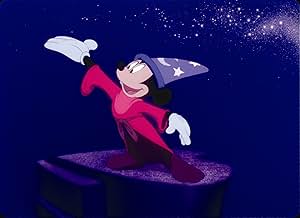
3. Dukas's Scorceror's Apprentice- The most famous vignette, is the only vignette to feature in the sequel. YenSid(Disney backwards) has a magic hat, which he leaves lying around, and Mickey Mouse picks it up, and encounters various problems. the animation is very good here, and while I'm not a huge fan of the piece, I still found it enjoyable.
4. Stravinsky's Rite of Spring- This is the only reason why the movie isn't a 10. This vignette is far too long It's longer than the Beethoven. It is an interesting subject, dinosaurs, but the ballet wasn't simplified enough. This was boring, and was better left out. It was only here to give some historical context. However, there was beautiful animation and some lovely instrumental solos. Stravinsky hated what the film did to his work, but anyway I don't like Stravinsky much. I had no problem with the animation or the way it was performed, it was just too long.
5. Beethoven's pastoral Symphony- This is a fantastic piece of music. I am a huge fan of Beethoven, and I have all his 9 symphonies on my IPod. My favourites are this, the Choral and the Eroica. I loved the fact that they chose a Greek mythological setting, because it looked gorgeous. My dad who is a conductor wasn't keen on the centaurs, but I loved the winged horses, Bacchus and Zeus (who competes with Chernabog as the most frightening character of the movie). This vignette was so relaxing to watch; think it as like reciting a poem.
6. Ponchielli's Dance of the Hours-This was the funniest vignette of the film, and one of the many gems of Disney. It was a bit unrealistic of course, but it was fun. At first, I was worried that the most famous scene from the opera La Giaconda, would be ruined by the animation. But it wasn't. It was perfect. Even the elephants and hippos, considering their size, danced so elegantly, I was shocked. This vignette is a must-see if you want some comedy.
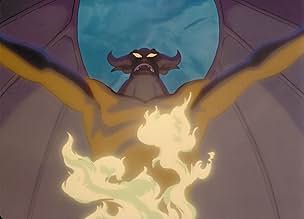
7. Mussorgsky's Night on Bare Mountain- Now this was my personal favourite, as when I first watched it when I was 10, and I was terrified of Chernabog. The music is also very hard to play, as the mood is very hard to capture, but this is undoubtedly the finest recording of this music. Chernabog was genuinely frightening, and a masterful creation. And the animation, while dark, matched the music, which is enough to give you nightmares, flawlessly. It was very like a Witch's Sabbath, which was what the composer originally intended. Do you know, that for his underrated fantasy movie Legend, Ridley Scott based Tim Curry's Darkness on Chernabog? Children may find it a bit too frightening, and adults may find it inappropriate, as there is a tiny glimpse of nudity. But it was still an effective vignette, and one of my favourite Disney moments actually.
8. Schubert's Ave Maria- This is a beautiful song, and Stokowski did it justice. The harmonies and animation were perfectly captured. how could you say this was boring? The animation couldn't have been happy looking, it would have completely ruined the mood of the song. It was beautifully sung by Juillietta Novis, who was so quiet that you had to turn the volume up, but that was the intention. The thing that impressed me most, was the complete contrast of this from the Mussorgsky, so the key of Ave Maria was so well chosen. (It is sung in many different keys.) In conclusion, the most underrated of the earlier Disney efforts, is well worth watching and a true animated classic! Also I was offended by the review that said that it was the worst movie ever made, and that the people who love this movie need new taste, that is plain insulting to anyone who grew up with this film. 9/10 Bethany Cox.
This is an example of a cinematic milestone
The eight segments are as follows:
1.) "Tocatta & Fugue in D-minor" composed by Johanne Sebastian Bach. This segment consists of shots of the Philadelphia Orchestra and their conductor Leopold Stokowski with a lot of cool shadow and color effects during the first three minutes, then we see a lot of shapes and random objects that Taylor would suggest to us might pop into our brains when listening to the music.
2.) "The Nutcracker Suite" composed by Tchaikovsky. In this part of the movie, we listen to excerpts of the famous ballet suite, and we see various fairies, flowers, fish and other nature-related creatures.
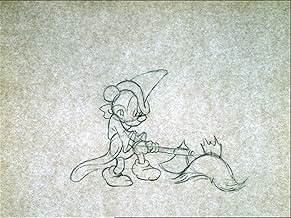
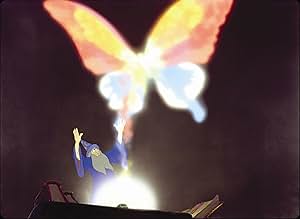
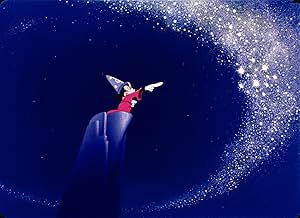
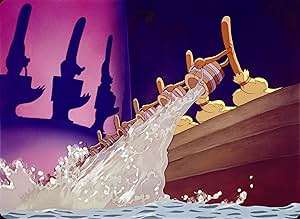
3.) Everyone's favorite "The Sorcerer's Apprentice" starring Sorcerer Mickey and Yen Sid (the sorcerer whose name is "Disney" spelled backwards). This is also the only segment to be seen again in this film's sequel, "Fantasia/2000" 60 years later, and in it the apprentice brings to life a magical broomstick to try to fill a cauldron with water, and the spell goes wrong so the apprentice gets reprimanded. This is then followed by Mickey greeting conductor Stokowski.
4.) "Rite of Spring" composed by Igor Stravinsky. This segment takes place billions and billions of years ago with the coming of the dinosaurs, where we see the creation of Earth in the beginning of time, and are later introduced to all of the different dinosaurs including the tyrannosaurus rex, which become extinct in the end of the segment.
5.) "Intermission/Meet the Soundtrack". At this point in the film, Deems Taylor introduces this string thingamajigger called the "Soundtrack" that he asks to make a lot of sounds resembling various instrument sounds.
6.) "Pastoral Symphony No. 6" composed by Beethoven. This segment is about a day in the countryside, and in it we see a lot of Greek mythology creatures like unicorns, satyrs, centaurs and centaurettes, cupids, Bacchus, Zeus, Iris, Apollo and Diana.
7.) "Dance of the Hours". This is where we see dancing ostriches, alligators, elephants and hippos. Each part of the piece suggests different hours of the day, and it all ends with a triumphant finale where the dancing hippo takes center stage.
8.) A combination of two pieces that are utterly different in mood and tone. They are "Night on Bald Mountain" in which a bat villain named Chernabog has Satan's evil spirits dance furiously until the coming of the sacred dawn, and then Franz Schubert's "Ave Maria" which is the one and only part of the whole film in which we hear lyrics sung, and then the movie ends.
I simply must say that not only is this film one of my all time favorite animated masterpieces, but it is also an example of a big highlight of the 1940's in cinematic history, all because of the ways it is so unique and special. In addition to this masterpiece, I also think "The Wizard of Oz", "Gone with the Wind", "Citizen Kane" and "Casablanca" are main icons of cinematic successes. I definitely think this should have been the first animated movie to be nominated for the Best Picture Academy Award instead of "Beauty and the Beast".
A human Movie
A Classic
What we are shown are a few animated musicals, filled with grand splendor and vivid colors.
"Fantasia" is one of those films that everyone knows by heart, and has watched since being a child.
My personal favorite was always the Mickey Mouse short - one of the darkest Mickey cartoons I've ever seen.
If you haven't seen "Fantasia" yet, then you must be from another planet. It is one of the best Disney musicals ever, which some push aside and forget too easily.
5/5 stars-
John Ulmer
Beautiful Combination of Classical Music and Animation
Yesterday I saw "Fantasia" again, now on the Special 60th Anniversary Edition DVD, restored and remastered with audio in THX inclusive with intermission. The program, for those that have eventually never seen or want to recall, is composed by the following:
(1) Toccata and Fugue in D Minor by Johann Sebastian Bach.
(2) Nutcracker Suite by Pyotr Ilyich Tchaikovsky.
(3) The Sorcerer's Apprentice by Paul Dukas.
(4) Rite of Spring by Igor Stravinsky.
(5) Intermission/Meet the Soundtrack.
(6) The Pastoral Symphony by Ludwig van Beethoven.
(7) Dance of the Hours by Amilcare Ponchielli.
(8) Night on Bald Mountain by Modest Mussorgsky.
(9) Ave Maria by Franz Schubert.
My vote is eight.
Title (Brazil): "Fantasia"


¿Sabías que...?
- CuriosidadesThe animators secretly modeled elements of the Sorcerer in "The Sorcerer's Apprentice" on their boss, Walt Disney. The raised eyebrow was regarded as a dead giveaway. They call the character Yen Sid, which is "Disney" spelled backwards.
- PifiasWhen introducing the "Pastoral" sequence, Deems Taylor mixes Greek and Roman names of deities: Bacchus, Vulcan and Diana are Roman; Zeus, Iris and Morpheus are Greek. Apollo is the only one whose Greek and Roman equivalents have the same name.
- Citas
[longer introduction to "Night On Bald Mountain" and "Ave Maria"; last spoken lines]
Deems Taylor: The last number on our Fantasia program is a combination of two pieces of music so utterly different in construction and mood that they set each other off perfectly. The first is "A Night On Bald Mountain" by one of Russia's greatest composers, Modest Mussorgsky. The second is Franz Schubert's world-famous "Ave Maria". Musically and dramatically, we have here a picture of the struggle between the profane and the sacred. "Bald Mountain", according to tradition, is the gathering place of Satan and his followers. Here, on Walpurgnisnacht, which is the equivalent of our own Halloween, the creatures of evil gather to worship their master. Under his spell, they dance furiously until the coming of dawn and the sounds of church bells send the infernal army slinking back into their abodes of darkness. And then we hear the "Ave Maria", with its message of the triumph of hope and life over the powers of despair and death.
- Créditos adicionalesThere are no closing credits of any kind. Not even the words "THE END" appear on the screen.
- Versiones alternativasBefore the 1990 re-release, the film was shown with no credits other than the title and the RKO logo. Leopold Stokowski received a written credit only on the posters advertising the film. In the film's original roadshow release, not even the title was shown at the beginning of the film - that was saved for the intermission break.
- ConexionesEdited into A World Is Born (1955)
- Banda sonoraToccata and Fugue in D Minor, BWV 565
Composed by Johann Sebastian Bach
Orchestrated by Leopold Stokowski (uncredited)
Played by The Philadelphia Orchestra
Conducted by Leopold Stokowski
Selecciones populares
Detalles
Taquilla
- Presupuesto
- 2.280.000 US$ (estimación)
- Recaudación en Estados Unidos y Canadá
- 76.408.097 US$
- Fin de semana de estreno en EE. UU. y Canadá
- 980.798 US$
- 10 feb 1985
- Recaudación en todo el mundo
- 76.415.382 US$
- Duración
- 2h 4min(124 min)
- Color
- Mezcla de sonido
- Relación de aspecto
- 1.37 : 1