

Un agotado pistolero en el Wyoming de 1880 comienza a imaginar una vida más tranquila después de entablar amistad con una familia de colonos con un hijo pequeño que lo idolatra, pero una ard... Leer todoUn agotado pistolero en el Wyoming de 1880 comienza a imaginar una vida más tranquila después de entablar amistad con una familia de colonos con un hijo pequeño que lo idolatra, pero una ardiente guerra en el campo le obliga a actuar.Un agotado pistolero en el Wyoming de 1880 comienza a imaginar una vida más tranquila después de entablar amistad con una familia de colonos con un hijo pequeño que lo idolatra, pero una ardiente guerra en el campo le obliga a actuar.
- Director/a
- Guionistas
- Estrellas
- Ganó 1 premio Óscar
- 8 premios y 13 nominaciones en total




- Jack Wilson
- (as Walter Jack Palance)


- Director/a
- Guionistas
- Todo el reparto y equipo
- Producción, taquilla y más en IMDbPro
Reseñas destacadas
A Fine Western from Days Gone By
This Is What Movies Are Supposed To Be
The direction makes it
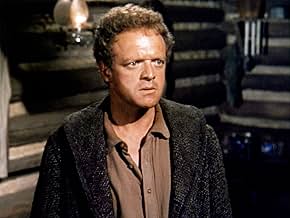
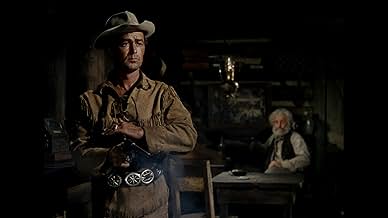
The story is one of those ones which has plenty of mileage in it. Alan Ladd plays a retired gunslinger who joins up with a group of settlers, including Van Heflin who is fine in support and bags a more interesting character than Ladd's. The settlers find themselves up against Emile Meyer as the cruel Ryker, and his various men including veteran genre star Ben Johnson and Jack Palance in a truly evil, star-making performance. Elisha Cook Jr. is here too, playing a tougher character than you'd expect.
A lot of the material is told through the eyes of your typically annoying American kid, but thankfully he's not too grating and at least his heart is in the right place. There's plenty of suspense and drama to keep the tale moving, but it's the action which really hits home. The excellent climax is a given - and Eastwood would later reference it in UNFORGIVEN - but it's the bar-room brawl which is something else, one of the most powerful fist-fights I've seen on a film. Top stuff indeed.
A Few Remarks On The Subtext
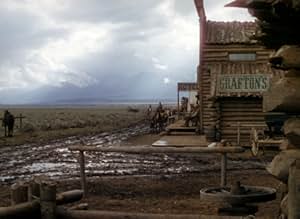
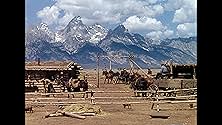
Besides the first-rate cast, majestic scenery, and excellent script, few Westerns capture the mythic history of the West better than Shane. The battle is really one between two types of society. The Rykers represent a feudal type with their land baron ownership of huge swaths of as yet barren land. I'm glad the script includes struggles they've had in taming the territory for their huge cattle-grazing purposes. It's not like they've sacrificed nothing for their dominant position. No doubt it would have been easy for the film to portray them as unadulterated bad guys.
On the other hand, The Starretts and their neighbors may be squatters on the land, but they represent a different future, one of broad settlement, farming pastures, and cooperative community. In short, they're a communal threat to the Strykers dominance. That's shown in their family gatherings, common purpose, and common desire to come together; that is, if they can resist The Strykers' effort to drive them apart. Actor Heflin's dad Starrett represents this resolve and dedication to the community dream, as well as a strong sense of personal morals, which are just the sort needed in order to lead the transition. He has the guts, but does he have the skills, and that's where Shane comes in.
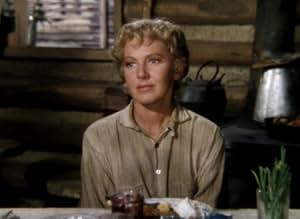
Of course, it's Shane and little Joey that represent the drama's appealing heart. In short, Shane amounts to the vital transition figure between the old and the new. As a gunfighter, he's a product of the open range of the Starretts, but as an exceptional man who's sampled the Starrett's family life he senses the need for constructive change and is willing to risk his life for it. Meanwhile, Joey, in a meaningful sense, represents the power of Shane's enduring norms, which Joey will no doubt carry into his own and the town's future. Ironically, however, Shane realizes that his strength is also an unintentional threat to the Starrett's cohesion as a family unit-- mom (Arthur) is attracted to him, while he's replacing dad as Joey's adult model. Thus, in the celebrated closing, Shane must ride away into an uncertain future, his contribution to civilizing the West his lasting legacy. At the same time, Joey will chase after the hope of somehow being the good man's equal in his coming years. And our last shot is Shane as he rides toward the majestic peaks he has now earned. Thus concrete events in the film transform into a spirit of the new West.
Anyway, this is my take on what I think is the film's powerful subtext embodied in characters and events. All in all, the movie was a critical hit when I was a kid, and I think it still is.
Shane is a Masterpiece of the western genre


¿Sabías que...?
- CuriosidadesPrincipal photography had been completed in October, 1951, but the amount of coverage shot by George Stevens resulted in such an extremely protracted editing process that the film wasn't released until August, 1953. All this drove up the costs of what should have been a simple, straightforward Western; in fact, they spiraled so much that Paramount approached Howard Hughes about taking on the property, but he declined. He changed his mind when he saw a rough cut and offered to buy the film on the spot. This made Paramount rethink its strategy--originally it was going to release it as a "B" picture but then decided it should be one of the studio's flagship films of the year. This proved to be a good decision, as the film was a major success and easily recouped its inflated budget.
- PifiasAt the beginning, when Shane rides a horse down the hill, Teton Pass Highway is visible in the background.
- Citas
Shane: I gotta be going on.
Joey: Why, Shane?
Shane: A man has to be what he is, Joey. Can't break the mould. I tried it and it didn't work for me.
Joey: We want you, Shane.
Shane: Joey, there's no living with... with a killing. There's no going back from one. Right or wrong, it's a brand. A brand sticks. There's no going back. Now you run on home to your mother, and tell her... tell her everything's all right. And there aren't any more guns in the valley.
Joey: Shane...
[Joey notices that Shane is wounded]
Joey: It's bloody! You're hurt!
Shane: [Shane starts to stroke Joey's hair] I'm all right, Joey. You go home to your mother and father and grow up to be strong and straight. And, Joey... take care of them, both of them.
Joey: Yes, Shane.
[Shane rides off]
- Créditos adicionalesIntroducing Brandon De Wilde
- Versiones alternativasThe film was shot in Academy Ratio (1.33:1 or 4:3), but this was done around the time widescreen filmmaking was coming around. As such, many theatres cropped the film into a widescreen ratio to take advantage of this, with many DVDs being cropped as well. The 2013 Blu-ray Disc release is in the proper Academy Ratio.
- ConexionesEdited into Go West, Young Man! (2003)
- Banda sonoraAbide With Me
(uncredited)
Music by William H. Monk (1861)
Hymn by Henry F. Lyte (1847)
Played on piano and sung by many at a meeting
Also played and sung at a funeral
Selecciones populares
Detalles
- Fecha de lanzamiento
- País de origen
- Idioma
- Títulos en diferentes países
- Shane, el desconocido
- Localizaciones del rodaje
- Empresa productora
- Ver más compañías en los créditos en IMDbPro
Taquilla
- Presupuesto
- 3.100.000 US$ (estimación)
- Recaudación en todo el mundo
- 21.412 US$
- Duración
- 1h 58min(118 min)
- Color
- Relación de aspecto
- 1.37 : 1(original aspect ratio)