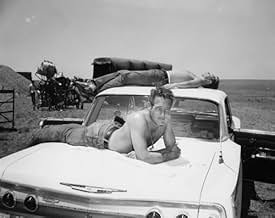
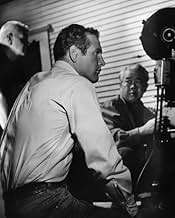
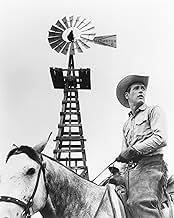
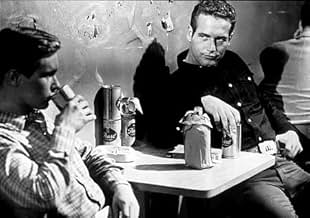
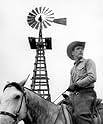
El honesto y trabajador ranchero de Texas, Homer Bannon, tiene un conflicto con su hijo arrogante y egoísta, Hud, quien se hundió en el alcoholismo después de matar accidentalmente a su herm... Leer todoEl honesto y trabajador ranchero de Texas, Homer Bannon, tiene un conflicto con su hijo arrogante y egoísta, Hud, quien se hundió en el alcoholismo después de matar accidentalmente a su hermano en un accidente automovilístico.El honesto y trabajador ranchero de Texas, Homer Bannon, tiene un conflicto con su hijo arrogante y egoísta, Hud, quien se hundió en el alcoholismo después de matar accidentalmente a su hermano en un accidente automovilístico.
- Director/a
- Guionistas
- Estrellas
- Ganó 3 premios Óscar
- 17 premios y 17 nominaciones en total
- Lonnie Bannon
- (as Brandon de Wilde)
- Myra
- (as Sharon Hillyer)
- Proprietor Sweeping Glass
- (sin acreditar)
- Director/a
- Guionistas
- Todo el reparto y equipo
- Producción, taquilla y más en IMDbPro
Reseñas destacadas
"Little by little the look of the country changes because of the men we admire."
Hud is an amoral and unemotional rancher. He, very often, comes into a conflict with his father, which has a negative impact on his young nephew. His father holds Hud responsible for the death of his other son. He tries to imbue his grandson with a sense of decency and responsibility to others. When their cattle fall ill, the conflict between father and son begins to escalate...
The Texas cow country is represented through a discord in a family. It's nothing new, but a realistic approach is enriched with dose of a sick materialism and immorality, which is probably the biggest asset of this film. This is a cold review of one human mind, which rejects any kind of traditional values. Characters is placed on the scale several times, but it is clear that there is no winner. One thing is certain, this is not a conflict between traditional and modern ways of thinking.
The scenery is a kind of combination between a poor ranch and cheap city. The atmosphere is grim and tense. Characterization is very good.
Paul Newman as Hud Bannon is a restless, arrogant and ambitious rancher. He is a man, who has fallen into a trap of modern understanding of life around him. He, at the same time, understands and despises the people around him. Mr. Newman is a charming monster in this film.
Melvyn Douglas as Homer Bannon is a traditional farmer who loves his ranch and cattle more than his own son. He is an old man who sees his own disappointment and shame in actions and behavior of his son. Mr. Douglas has offered a very touching performance.
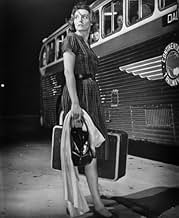
Brandon deWilde as Lonnie Bannon is a young man who is torn with relationship between his venerable grandfather and his harsh and greedy uncle. He is naive, sensitive and, perhaps, sexually depressed. Patricia Neal as Alma Brown is a lonely housewife with a broken heart and a strong dignity. Ms. Neal has almost stole this show.
A brilliantly evocative character study set against an arid Texas backdrop.
No One Gets Out Of Life Alive
Hud lives with his elderly father Homer (a wonderfully understated performance by Melvyn Douglas) and nephew Lonnie. Their small, struggling ranch serves not only as a livelihood, but also the source of Homer's ethical values. Another main character is Alma, the attractive housekeeper and cook. For all four of them it's a hard life, but a worthwhile life, at least as Homer sees it. Hud sees it differently. But then Hud is a product of modern times, with differing values from those of Homer and his generation. When a crisis occurs that puts their ranch in jeopardy, these differing values clash, resulting in tension between Hud and his father.
Hud's ongoing rebellion, rooted in heredity and environment, takes the form of booze, brawls, women, and anger. Hud is a heel, but a sympathetic heel. We understand his frustrations. Larry McMurtry's story presents a naturalistic interpretation of human character. Hud is constrained by forces over which he has no control. For him, like for many of us, freedom of choice is mostly an illusion. The morality of absolutes, as expressed by his father, does not work in Hud's favor.
But there's a fifth character in this morality tale ... the land. The bleak, desolate plains with its buzzards, ubiquitous dust, and lonesome vistas can depress the most optimistic spirit. In this film, the monochrome canvas accentuated by James Wong Howe's use of single source lighting makes the natural environment seem appropriately oppressive. And the film's sounds amplify the gritty realism of this unforgiving land.
I have a couple of minor criticisms. The screenplay puts too much emphasis on Alma, given that she is the housekeeper. Second, there's not enough music or humor. Others will disagree, but I would have preferred a more prominent role for the mournful sounds of Hank Williams type music, a la "The Last Picture Show".
Interestingly, Hud's comment on life is the same in meaning as the words spoken years later by a real-life nihilistic antihero, who said: "No one here gets out alive". While we think we know what happened to the real-life antihero, we don't know what became of Hud. Perhaps someday someone will make a credible sequel. Then they can add more music. Imagine the mood evoked by the sight of Hud riding off into the Texas sunset, to the sounds of "Riders On The Storm".
A Hard Western Look
A Classic
¿Sabías que...?
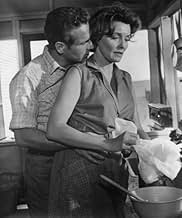
- CuriosidadesPatricia Neal was particularly proud of one unscripted moment that made it into the film. While talking to Hud about her failed marriage, a huge horsefly flew onto the set. Just as she says she's "done with that cold-blooded bastard," she zaps the fly with a dish towel. Martin Ritt loved it and printed the take.
- PifiasIn the first scene, you can see the cameramen and tripod of the cameras in the window of the store.
- Citas
Homer Bannon: Lonnie, little by little the look of the country changes because of the men we admire. You're just going to have to make up your own mind one day about what's right and what's wrong.
- ConexionesFeatured in The 40th Annual Academy Awards (1968)
- Banda sonoraThe Great Titanic (It Was Sad When That Great Ship Went Down)
(uncredited) (ca 1915)
American folk song
Sung a cappella by Paul Newman and Brandon De Wilde
Selecciones populares
- How long is Hud?Con tecnología de Alexa
Detalles
Taquilla
- Presupuesto
- 2.500.000 US$ (estimación)
- Duración
- 1h 52min(112 min)
- Color
- Relación de aspecto
- 2.39 : 1