PUNTUACIÓN EN IMDb
7,2/10
13 mil
TU PUNTUACIÓN


En la Nueva York de los 50, exploramos las amistades interraciales de la época del Beat.En la Nueva York de los 50, exploramos las amistades interraciales de la época del Beat.En la Nueva York de los 50, exploramos las amistades interraciales de la época del Beat.
- Director/a
- Guionistas
- Estrellas
- Nominado a 4 premios BAFTA
- 2 premios y 5 nominaciones en total



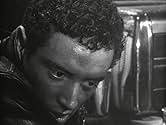


David Jones
- Davey
- (as Davey Jones)

- Director/a
- Guionistas
- Todo el reparto y equipo
- Producción, taquilla y más en IMDbPro
7,213.3K
1
2
3
4
5
6
7
8
9
10
Reseñas destacadas
The Vibrators
Shadows breathes the smell of New York's streets like no film before it. This kick off of Cassavetes' directorial work is as atmospheric as political and the initial spark for a renewal in American cinema.
Maybe it solicits for watching Cassavetes' first work in a double feature with another debut, Godard's À bout de soufflé. Both films shaped the cinematic production of their countries beyond decades and both breathe a peculiar lightness and jauntiness which was later rarely achieved by those filmmakers in their career.
Shadows tells from three Afro-American siblings, Ben (Ben Carruthers), Lelia (Lelia Goldoni) and Hugh (Hugh Hurd). The story is set in the New York jazz milieu and the driving rhythms on the soundtrack play a main part for the feverish, sometimes almost dreamlike atmosphere which draws through the entire film. There's not much happening in the plot. The everyday life of the three siblings is defined by problems in love relationship or in their jobs, but on both levels normality deceives. Without moralizing gestus, Cassavetes simply describes the mechanism of racial exclusion, in public and in private life. It was, regarding to the cinematic depiction of racism, a breakthrough film in the US.
This film owes also a lot to the performances of the three leading actors which were all almost completely unknown before. Especially Ben Carruthers established with his energetic portrayal the image of a new self-conception of young, urban blacks in America, an image which characterizes Spike Lee's films of the 80s and 90s. Revealingly, none of those three doubtlessly extremely talented actors was able to start a big career afterwards. Hollywood wasn't and isn't ready to ethnically expand its star system, and that is why Goldoni, Hurd and Carruthers only found small artistic niches in TV and independent films later on.
Perhaps Shadows is one of the less "beautiful" films ever shot, and one of the most beautiful ones at the same time; a film of shades and spaces, with a camera that merely watches the stream of life in the crowded street corners, bars, hotel lobbies, apartments, inducing an intriguing ramble through New York's vibrant streets.
Maybe it solicits for watching Cassavetes' first work in a double feature with another debut, Godard's À bout de soufflé. Both films shaped the cinematic production of their countries beyond decades and both breathe a peculiar lightness and jauntiness which was later rarely achieved by those filmmakers in their career.
Shadows tells from three Afro-American siblings, Ben (Ben Carruthers), Lelia (Lelia Goldoni) and Hugh (Hugh Hurd). The story is set in the New York jazz milieu and the driving rhythms on the soundtrack play a main part for the feverish, sometimes almost dreamlike atmosphere which draws through the entire film. There's not much happening in the plot. The everyday life of the three siblings is defined by problems in love relationship or in their jobs, but on both levels normality deceives. Without moralizing gestus, Cassavetes simply describes the mechanism of racial exclusion, in public and in private life. It was, regarding to the cinematic depiction of racism, a breakthrough film in the US.
This film owes also a lot to the performances of the three leading actors which were all almost completely unknown before. Especially Ben Carruthers established with his energetic portrayal the image of a new self-conception of young, urban blacks in America, an image which characterizes Spike Lee's films of the 80s and 90s. Revealingly, none of those three doubtlessly extremely talented actors was able to start a big career afterwards. Hollywood wasn't and isn't ready to ethnically expand its star system, and that is why Goldoni, Hurd and Carruthers only found small artistic niches in TV and independent films later on.
Perhaps Shadows is one of the less "beautiful" films ever shot, and one of the most beautiful ones at the same time; a film of shades and spaces, with a camera that merely watches the stream of life in the crowded street corners, bars, hotel lobbies, apartments, inducing an intriguing ramble through New York's vibrant streets.
Enchanting time capsule of late '50s New York
Shot on a minimal budget of $40,000 with a skeleton six person crew, SHADOWS offers an observation of the tensions and lives of three siblings in an African-American family in which two of the three siblings, Ben (Ben Carruthers) and Lelia (Lelia Goldoni), are light-skinned and able to pass for white. Cassavetes demanded that the actors retain their real names to reflect the actual conflicts within the group but saw the film as being concerned with human problems as opposed imply to racial ones. Cassavetes shot the film in ten minute takes and jagged editing, a reaction against 'seamless' Hollywood production values. Cassavetes main inspiration - at least in the cinematic style the film was shot - were the Italian neo-realists whilst also professing admiration for Welles' pioneering spirit. The use of amateurs and improvisation might resemble some of the Italian neo-realist directors, but with his bebop score by Charles Mingus ans Shafi Hadi, the film feels very different, very American, unlike anything made before really.
The song with the feathered girls, "I feel like a lolly-pop" (or something) feels like light years back to me, ancient history. But no matter how dated it might look, it still makes a delightful time capsule of late Fifties New York today. I think it's this is one of the first films made aspiring filmmakers realize they could shoot an independent film, without Hollywood, improvised and without a real budget. Seymour Cassel, who acted and was involved in SHADOWS, claims it was Jules Dassin's THE NAKED CITY (1948) that was the first and inspired them all, but I think this was the one that really opened the eyes of aspiring independent American filmmakers.
Camera Obscura --- 8/10
The song with the feathered girls, "I feel like a lolly-pop" (or something) feels like light years back to me, ancient history. But no matter how dated it might look, it still makes a delightful time capsule of late Fifties New York today. I think it's this is one of the first films made aspiring filmmakers realize they could shoot an independent film, without Hollywood, improvised and without a real budget. Seymour Cassel, who acted and was involved in SHADOWS, claims it was Jules Dassin's THE NAKED CITY (1948) that was the first and inspired them all, but I think this was the one that really opened the eyes of aspiring independent American filmmakers.
Camera Obscura --- 8/10
True Colors?
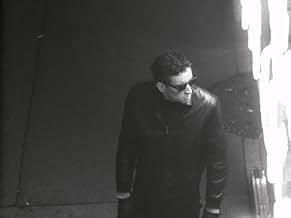
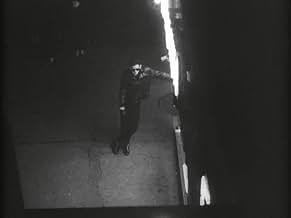
Like all Cassavetes, Shadows makes every movie in recent memory seem irrelevant to your life and how to live it. The theme of 1959's Shadows centers around race and its effects on relations between men and women. As in life, this falls a distant second to the theme of the pervasive and exhausting need for love. Shadows is often billed as the story of a 'black woman who passes as white.' Cassavetes' film illustrates how these stark delineations between races harms those who exist in the shadows in-between. Lelia is a light-skinned part-African woman in New York who falls for an infantile racist white man. When Lelia's boyfriend meets her darker brother Hugh, her lover's true colors are revealed. Hugh is a dignified and caring protector who refuses to let racism erode his positive nature, though he faces blatant economic persecution in his work. Lelia's second brother, a charismatic jazz musician played by the beautiful Benito Carruthers, is also light-skinned. We painfully watch as his displacement in both 'white' and 'black' social groups gives rise to self-loathing and isolation. Ben wandering New York alone, hiding behind a series of dark sunglasses, is an enduring image from the film. One crushing scene shows Ben promising Lelia's lover that he will convey the sickly reasoning behind the rejection to his sister. Ben's palpable pain is relevant to people of every 'shade.' The dismissal of the possibility of love, based solely on race or other peripheral facts, is tragic across the whole spectrum of social relationships.
very impressive...
This is the 3rd Cassavetes film I've watched and by far the most riveting -- and I can't tell you why. I realize there's a "debate" about it being improv. or not - but it doesn't matter. There is more honesty in this film (racial and otherwise) than in many others with far higher budgets. I was mesmerized thru the whole thing. New York in the early 60's is a sight to behold, but it's only the perfect backdrop to this film. It's the kind of art that you realize can only be done once. And this was it. The scenes at the MET with the Henry Moore sculptures and others underscored this for me. The movie was made once. The "score" was perfection. There can be no sequel, thank God. This is why film is considered an art form.
Without a doubt among the most influential of American films
What is there to say about an anti-establishment film that was produced in a time of such colourless void, social indifference and authoritarian contentment. Cassevettes first major independent film was not an instant box office success and still has not received the critical attention it deserves. I draw comparisons to this wave of American independent projects consisting of such 'Beat' filmmakers as Robert Frank and Harry Smith with the burgeoning scene emerging in Paris in the late 1950's known as the French new wave.
They discussed poetry and philosophy and vulnerability at a time when the rest of the culture was obsessed with rediscovering American cultural supremacy; even at this stage this peculiar, highly spontaneous brand of filmmaking fought against the establishment of such political lexicons and bigots that held the development of the arts in check in the mid twentieth century.
Cassevettes film examines race relations and portrays man as weak in the face of love because we, as a culture, are blinded by our own race bias and prejudice. The great element to most of Cassevettes work is that his films have almost a reversal minimalist effect; a mental reaction is evoked through subtle character relations, not so much imagery. This is why his work seems to linger because he takes a more intimate approach to defining charcters that rely less heavily on explicit actions and more upon interpretation.
Although my favourite Cassevettes film is 'Husbands', this one is his most important.
They discussed poetry and philosophy and vulnerability at a time when the rest of the culture was obsessed with rediscovering American cultural supremacy; even at this stage this peculiar, highly spontaneous brand of filmmaking fought against the establishment of such political lexicons and bigots that held the development of the arts in check in the mid twentieth century.
Cassevettes film examines race relations and portrays man as weak in the face of love because we, as a culture, are blinded by our own race bias and prejudice. The great element to most of Cassevettes work is that his films have almost a reversal minimalist effect; a mental reaction is evoked through subtle character relations, not so much imagery. This is why his work seems to linger because he takes a more intimate approach to defining charcters that rely less heavily on explicit actions and more upon interpretation.
Although my favourite Cassevettes film is 'Husbands', this one is his most important.


¿Sabías que...?
- CuriosidadesThis caused a stir as it fairly explicitly showed an unmarried couple in a post-coital position and its suggestion that a young woman would actively seek out sex.
- PifiasWhen Tony takes Lelia back to her apartment, Ben, Dennis, and Tom are sitting around the table playing poker and trying to arranges some dates. All three bear the marks of a fight that won't take place until near the end of the movie.
- Créditos adicionales"Presented by Jean Shepherd's Night People"
- Versiones alternativasCassavetes screened a finished version of Shadows in 1957 and 1958 that ran 78 minutes. Part of the original negative of this version was used for the 1959 version, which was completely re-shot with new actors. In 2002, Prof. Ray Carney of Boston University discovered the only remaining 16mm copy of this earlier version.
- ConexionesFeatured in Cinéastes de notre temps: John Cassavetes (1969)
- Banda sonoraBeautiful
Written by Jack Ackerman, Hunt Stevens and Eleanor Winters
Selecciones populares
Inicia sesión para calificar y añadir a tu lista para recibir recomendaciones personalizadas
- How long is Shadows?Con tecnología de Alexa
Detalles
Taquilla
- Presupuesto
- 40.000 US$ (estimación)
- Recaudación en todo el mundo
- 2729 US$
- Duración
- 1h 21min(81 min)
- Color
- Mezcla de sonido
- Relación de aspecto
- 1.37 : 1
Contribuir a esta página
Sugerir un cambio o añadir el contenido que falta