PUNTUACIÓN EN IMDb
7,2/10
5,1 mil
TU PUNTUACIÓN


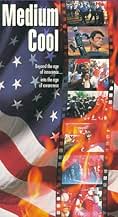
Añade un argumento en tu idiomaA TV news reporter finds himself becoming personally involved in the violence that erupts around the 1968 Democratic National Convention.A TV news reporter finds himself becoming personally involved in the violence that erupts around the 1968 Democratic National Convention.A TV news reporter finds himself becoming personally involved in the violence that erupts around the 1968 Democratic National Convention.
- Director/a
- Guionista
- Estrellas
- Premios
- 2 premios y 4 nominaciones en total


- Director/a
- Guionista
- Todo el reparto y equipo
- Producción, taquilla y más en IMDbPro
7,25.1K
1
2
3
4
5
6
7
8
9
10
Reseñas destacadas
A time capsule
This film is better upon the second viewing, the first time I saw this I thought it was somewhat dated or boring, I couldn't have been more wrong. Initially I watched this film because it was directed by Haskell Wexler whose work I admire, and I'm from Chicago and had heard it shows much of the city and the riots of 68. I enjoyed seeing the city forty years ago to see what was the same and what had changed, much has changed yet much remains the same from what I have seen of the people, places, buildings etc. It was great to see the Kinetic Playground on there, Chicago's electric ballroom, and other area's such as Lincoln Park. On the second viewing, I realized that this is a very important film in that it adroitly captures a moment in time, a moment we can never have again that is lost forever, that one second in our history that pivoted us as a nation between innocence and awareness and possibly that crucial moment which has brought us to the point we are at today. This movie is very important as a document of history, not to mention how well it's shot. The angles, the color, the way he goes in and out of focus make this a true gem that gets better the more you see it. Great soundtrack as well, Zappa, Mike Bloomfield and others.
An Indie if there ever was one.
Interesting approach to revealing the world of photo-journalism, news journalism, and political activism, conceived and directed by awardwinning cinematographer Haskell Wexler. Fictional narrative features a Chicago TV news crew intertwined with actual news footage in and around the Democratic Convention of 1968.
There is a good balance between the fiction and non-fiction elements in as much as Wexler attempts to make his point. The fictional story line (a love story) is real enough to keep us watching and deflective enough to make the harsh realities of the non-fiction elements palatable.
Attention to detail defines Medium Cool as a very personal film for Wexler. There definitely is a political perspective. Second and third viewings will call attention to painstaking perfectionism in construction of shots, timing, and pace--the subject matter and cinematic approach (low budget, hand-held, docu-style) may suggest a `student film' so don't be confused. This is an extremely well-crafted highly professional product. Nice interjects of great era-defining music compliment the visuals.
Inventive, some say ground-breaking, certainly well worth watching.
There is a good balance between the fiction and non-fiction elements in as much as Wexler attempts to make his point. The fictional story line (a love story) is real enough to keep us watching and deflective enough to make the harsh realities of the non-fiction elements palatable.
Attention to detail defines Medium Cool as a very personal film for Wexler. There definitely is a political perspective. Second and third viewings will call attention to painstaking perfectionism in construction of shots, timing, and pace--the subject matter and cinematic approach (low budget, hand-held, docu-style) may suggest a `student film' so don't be confused. This is an extremely well-crafted highly professional product. Nice interjects of great era-defining music compliment the visuals.
Inventive, some say ground-breaking, certainly well worth watching.
MEDIUM COOL (Haskell Wexler, 1969) ***1/2
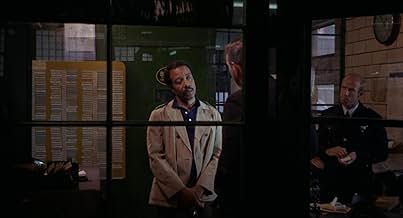
A brilliant film and a seminal one - a product by a major Hollywood studio handled in cinema-verite' style; besides, the various issues it raises - social, political and media-related - have scarcely been treated with such directness and power. The lack of star names in the cast (Peter Boyle, who appears briefly, was not yet established and, even if he had debuted in John Huston's REFLECTIONS IN A GOLDEN EYE [1967], lead Robert Forster's role was originally intended for John Cassavetes) certainly helps sell its inherent documentary feel.
Though, understandably, most meaningful to people who witnessed these turbulent times first-hand, and Americans in particular, despite its specific time-setting - Chicago 1968 (partly shot at the actual Democrats convention site, the film proved prophetic because the script involved riots breaking out...which is what actually happened!) - many of its concerns are still very much with us!! Fascinating therefore if slightly overlong - the subplot involving Verna Bloom and Harold Blankenship feels a bit like padding at first (and was actually what remained of a proposed film, with animal interest, about a poor country boy's adjustment to city life!)...but, ultimately, its point is made during the film's latter stages when Bloom goes to look for her missing son - creating an indelible image of a perplexed figure (incongruously dressed in a bright yellow outfit) getting embroiled in all the commotion hitting the streets at that same moment. This, however, results in a goof involving the unexplained presence very early on of Bloom (already wearing the yellow dress but whose introduction proper in the film takes place quite a bit later!) at a cocktail party for members of the press - a sequence intended to immediately precede the riots but which was then pushed forward during editing, so as to deal straight off with the film's major theme of media responsibility! The tragic yet ironic ending - presented as matter-of-factly as any of the news items covered by dispassionate TV cameraman Forster - is very effective.
This is certainly renowned cinematographer Wexler's most significant directorial effort; his camera-work (some of it hand-held) is simply incredible, as is Paul Golding's editing (which must have been quite a headache and, in fact, he mentions in the Audio Commentary that several scenes remained on the cutting-room floor; pity they weren't available for inclusion on the Paramount DVD - nor, apparently, were the rights to the 2001 documentary about the film, LOOK OUT HASKELL, IT'S REAL: THE MAKING OF 'MEDIUM COOL'!). Also essential to the unique texture of the film is the fantastic soundtrack (mostly by Mike Bloomfield but also featuring songs by Frank Zappa, among others).
Though, understandably, most meaningful to people who witnessed these turbulent times first-hand, and Americans in particular, despite its specific time-setting - Chicago 1968 (partly shot at the actual Democrats convention site, the film proved prophetic because the script involved riots breaking out...which is what actually happened!) - many of its concerns are still very much with us!! Fascinating therefore if slightly overlong - the subplot involving Verna Bloom and Harold Blankenship feels a bit like padding at first (and was actually what remained of a proposed film, with animal interest, about a poor country boy's adjustment to city life!)...but, ultimately, its point is made during the film's latter stages when Bloom goes to look for her missing son - creating an indelible image of a perplexed figure (incongruously dressed in a bright yellow outfit) getting embroiled in all the commotion hitting the streets at that same moment. This, however, results in a goof involving the unexplained presence very early on of Bloom (already wearing the yellow dress but whose introduction proper in the film takes place quite a bit later!) at a cocktail party for members of the press - a sequence intended to immediately precede the riots but which was then pushed forward during editing, so as to deal straight off with the film's major theme of media responsibility! The tragic yet ironic ending - presented as matter-of-factly as any of the news items covered by dispassionate TV cameraman Forster - is very effective.
This is certainly renowned cinematographer Wexler's most significant directorial effort; his camera-work (some of it hand-held) is simply incredible, as is Paul Golding's editing (which must have been quite a headache and, in fact, he mentions in the Audio Commentary that several scenes remained on the cutting-room floor; pity they weren't available for inclusion on the Paramount DVD - nor, apparently, were the rights to the 2001 documentary about the film, LOOK OUT HASKELL, IT'S REAL: THE MAKING OF 'MEDIUM COOL'!). Also essential to the unique texture of the film is the fantastic soundtrack (mostly by Mike Bloomfield but also featuring songs by Frank Zappa, among others).
10jzappa
I Wish I Could Make a Documentary Challenging Top Critics to Prove the Greater Imprint of Any Other Film of Its Decade.
One of the most truthful moments I've seen in a film in a long time: We hear MLK speaking on TV, a professional cameraman watching. We hear King's immortal words which have resounded through the decades, and when Forster finally speaks, he says, "God, I love shooting on film." Medium Cool is full of moments like this, where we see or hear something that plugs into what we're truly thinking, disconcertingly enough, at times when what we're thinking seems to obviously be something else. In Medium Cool, we respond to these things and, some forty years later, aren't quite sure what's real and what's not. This most head-on and seemingly makeshift of films was released in 1969 to reaction and surmise. Five years before, it would have been deemed unintelligible to the general movie audience. What happened, I suppose, is that by then we'd become so trained by the quick-cutting, idea suggestion and stream of consciousness of concepts in TV commercials that we process more quickly than feature-length movies can move. We get cinematic fast-sketch. And we like movies that recognize our intelligence.
Traditional film narratives pronounce themselves: We know all the main techniques/content and archetypal characters. Haskell Wexler's Medium Cool is one of several movies of the late 1960s and '70s that's conscious of these things about movie audiences, like Seconds, Easy Rider, Mean Streets, Who's That Knocking At My Door, The Graduate, The French Connection, etc. Of the bunch, Medium Cool is probably the most visceral. That may be since Wexler, for most of his career, has been a cinematographer, and so he's conditioned to see a movie pertaining to what's being shown and not shown on-screen more than its dialogue and story.
Wexler fabricates a fictional story about the TV cameraman, his passion, his profession, his girl and her son. There is also documentary footage about the riots during the Democratic convention. There is a chain of conscious scenarios that supposes reality (women taking marksmanship practice, the TV crew confronting black militants). There are fictitious characters in actual documentary scenes and vice versa. The misstep would be to segregate the real-life elements from the made-up. They're all equally meaningful. The National Guard troops are no more real than the love scene, or the artificial collision that ends the film. All the images have significance due to the way they are connected to each other.
Wexler induces our recollection of the zillions of other movies we've seen to import things about his plot that he never elucidates on screen. The essential account of the romance (young professional falls in love with war-widow, eventually obtains companionship of her resentful son) is surely not innovative. If Wexler had formalized it, it would have been commonplace and dull. Rather, he specializes in the emblematic and important features of this histrionic (the boy likes pigeons, the woman is a teacher, the location is Uptown, the time is the Democratic convention, the woman feels more authentic to the cameraman than the model he's living with). And these are the scenes Wexler shoots. The leftovers of the relationship are implicit and never shown, eschewing the often essentially unnecessary 2 on our way from 1 to 3.
And Medium Cool also sees not images but their purpose: Wexler doesn't see the hippie kids in Grant Park as hippie kids. He doesn't see the clothes or the folkways, and he doesn't hear the words. He distinguishes their purpose; they are there completely owing to the National Guard being there, and the opposite. Both sides have a purpose just when they encounter one another. Without the encounter, all you'd have would be the kids, dispersed all over the country, and the guardsmen, dressed in civilian clothes and spending the week on their daily grinds. That's interesting too, but it's not what they are that's significant in this film; it's what they're doing there.
Medium Cool is ultimately so seminal, and engaging, owing to the way Wexler braids all these components together. He has made a nearly consummate model of the movie of its time. Since we are so conscious this is a movie, it feels more pertinent and authentic than the graceful fictitious artifice of most other films, including better ones. This befits the last scene all by itself, that chance event that occurs for no reason at all. Chance events are invariably chance events, not fate, not God's will, not karma, and they never occur for a greater purpose. When we get it, it hit me that it's the first movie collision I've ever seen that we weren't anticipating for five minutes before.
Traditional film narratives pronounce themselves: We know all the main techniques/content and archetypal characters. Haskell Wexler's Medium Cool is one of several movies of the late 1960s and '70s that's conscious of these things about movie audiences, like Seconds, Easy Rider, Mean Streets, Who's That Knocking At My Door, The Graduate, The French Connection, etc. Of the bunch, Medium Cool is probably the most visceral. That may be since Wexler, for most of his career, has been a cinematographer, and so he's conditioned to see a movie pertaining to what's being shown and not shown on-screen more than its dialogue and story.
Wexler fabricates a fictional story about the TV cameraman, his passion, his profession, his girl and her son. There is also documentary footage about the riots during the Democratic convention. There is a chain of conscious scenarios that supposes reality (women taking marksmanship practice, the TV crew confronting black militants). There are fictitious characters in actual documentary scenes and vice versa. The misstep would be to segregate the real-life elements from the made-up. They're all equally meaningful. The National Guard troops are no more real than the love scene, or the artificial collision that ends the film. All the images have significance due to the way they are connected to each other.
Wexler induces our recollection of the zillions of other movies we've seen to import things about his plot that he never elucidates on screen. The essential account of the romance (young professional falls in love with war-widow, eventually obtains companionship of her resentful son) is surely not innovative. If Wexler had formalized it, it would have been commonplace and dull. Rather, he specializes in the emblematic and important features of this histrionic (the boy likes pigeons, the woman is a teacher, the location is Uptown, the time is the Democratic convention, the woman feels more authentic to the cameraman than the model he's living with). And these are the scenes Wexler shoots. The leftovers of the relationship are implicit and never shown, eschewing the often essentially unnecessary 2 on our way from 1 to 3.
And Medium Cool also sees not images but their purpose: Wexler doesn't see the hippie kids in Grant Park as hippie kids. He doesn't see the clothes or the folkways, and he doesn't hear the words. He distinguishes their purpose; they are there completely owing to the National Guard being there, and the opposite. Both sides have a purpose just when they encounter one another. Without the encounter, all you'd have would be the kids, dispersed all over the country, and the guardsmen, dressed in civilian clothes and spending the week on their daily grinds. That's interesting too, but it's not what they are that's significant in this film; it's what they're doing there.
Medium Cool is ultimately so seminal, and engaging, owing to the way Wexler braids all these components together. He has made a nearly consummate model of the movie of its time. Since we are so conscious this is a movie, it feels more pertinent and authentic than the graceful fictitious artifice of most other films, including better ones. This befits the last scene all by itself, that chance event that occurs for no reason at all. Chance events are invariably chance events, not fate, not God's will, not karma, and they never occur for a greater purpose. When we get it, it hit me that it's the first movie collision I've ever seen that we weren't anticipating for five minutes before.
Something very special...
Absorbing, thought provoking and, above all, a unique record of an important "place & time", why "Medium Cool" still fails to gain the attention it deserves remains one of life's great mysteries.
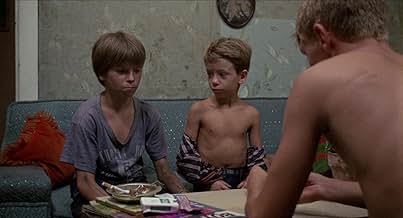
First off, it's a pretty good if somewhat disjointed story two "world-wise" middle class news reporters are sent to film the 1968 Democratic Convention in Chicago and become unwittingly involved in its political demonstrations, the inner city problems that have precipitated them, and the lives of a single mother and her young son in this harsh, confusing and seriously under-privileged world. Its acting, in particular from Robert Forster as the lead reporter and the 13 year old Harold Blankenship as the son, is excellent and at times so effective that it's difficult to remember you're watching a rigidly sequenced film rather than a social documentary. And, it's overlaid with some quite stunning cinema-photography from director Haskell Wexler, one of America's very best exponents of the art, backed up by a perfectly pitched late 60's soundtrack.
Good enough so far, but that's just the start. Add-in its extensive live footage from the streets of Chicago as the riots develop, taken by the film's camera crew as they themselves are caught-up in a very "real" political drama, its ominous sequencing of the build up of events from a fun "day in the park" for the hippies/yippies to serious "police state" level violence, its equally chilling images of what was going on inside the Convention Hall while all of this was taking place, and the clever and disturbing scenes of the mother's desperate search for her lost son as Wexler films her within the increasingly anarchic crowds of demonstrators & troops actually on the streets at the time, and you've got something very special.
Part film and part documentary, not all of what you think is "real" in "Medium Cool" is, and the lines between live and acted scenes are sometimes confusingly and frustratingly blurred, as in the famous call from one of the camera crew of "look out Haskell this is real" as a tear gas canister lands in front of them, which was in fact over-dubbed afterwards. But that's the whole point of the film as the final, almost startling scenes reveal. How far is the media in control? Is what you're seeing real, distorted or contrived? Wexler's brilliance is to take this underlying theme and to mould it into a fascinating exploration of inner city life, American society in a period of huge change, and the power/needs of the media in a TV dominated world, while, in parallel, producing a gripping record of what it's like to be in the centre of a demonstration that's spiralling out of control. Juxtaposing the impersonality of reporting with the very personal situations that are involved, it raises a whole series of questions on the way without falling into the trap of most films of the era in trying to ram home too many answers. And, as a result, it remains as relevant today as it did then.
Quite rightly regarded as one of the best "counter culture" films of the late 60's and much richer and more thought provoking than this classification usually implies, it remains one of the most under-rated films out there.
First off, it's a pretty good if somewhat disjointed story two "world-wise" middle class news reporters are sent to film the 1968 Democratic Convention in Chicago and become unwittingly involved in its political demonstrations, the inner city problems that have precipitated them, and the lives of a single mother and her young son in this harsh, confusing and seriously under-privileged world. Its acting, in particular from Robert Forster as the lead reporter and the 13 year old Harold Blankenship as the son, is excellent and at times so effective that it's difficult to remember you're watching a rigidly sequenced film rather than a social documentary. And, it's overlaid with some quite stunning cinema-photography from director Haskell Wexler, one of America's very best exponents of the art, backed up by a perfectly pitched late 60's soundtrack.
Good enough so far, but that's just the start. Add-in its extensive live footage from the streets of Chicago as the riots develop, taken by the film's camera crew as they themselves are caught-up in a very "real" political drama, its ominous sequencing of the build up of events from a fun "day in the park" for the hippies/yippies to serious "police state" level violence, its equally chilling images of what was going on inside the Convention Hall while all of this was taking place, and the clever and disturbing scenes of the mother's desperate search for her lost son as Wexler films her within the increasingly anarchic crowds of demonstrators & troops actually on the streets at the time, and you've got something very special.
Part film and part documentary, not all of what you think is "real" in "Medium Cool" is, and the lines between live and acted scenes are sometimes confusingly and frustratingly blurred, as in the famous call from one of the camera crew of "look out Haskell this is real" as a tear gas canister lands in front of them, which was in fact over-dubbed afterwards. But that's the whole point of the film as the final, almost startling scenes reveal. How far is the media in control? Is what you're seeing real, distorted or contrived? Wexler's brilliance is to take this underlying theme and to mould it into a fascinating exploration of inner city life, American society in a period of huge change, and the power/needs of the media in a TV dominated world, while, in parallel, producing a gripping record of what it's like to be in the centre of a demonstration that's spiralling out of control. Juxtaposing the impersonality of reporting with the very personal situations that are involved, it raises a whole series of questions on the way without falling into the trap of most films of the era in trying to ram home too many answers. And, as a result, it remains as relevant today as it did then.
Quite rightly regarded as one of the best "counter culture" films of the late 60's and much richer and more thought provoking than this classification usually implies, it remains one of the most under-rated films out there.


¿Sabías que...?
- CuriosidadesThe line "Look out, Haskell, it's real!" was actually dubbed in after the shooting. It was supposedly what Haskell Wexler was thinking to himself and he wanted to include it.
- PifiasWhen Eileen enters the L looks for Harold, she is wearing a white hair band, but when they show her sitting on the L, the hair band is missing.
- Citas
John Cassellis: If I gotta be afraid in order for your argument to work, then you got no argument.
- Créditos adicionalesStuds Terkel is credited as "Our Man in Chicago".
- Versiones alternativasDue to copyright disputes, all video releases feature some different songs on the soundtrack from the theatrical version.
- ConexionesEdited into El chico que conquistó Hollywood (2002)
- Banda sonoraSweet Georgia Brown
by Ben Bernie, Kenneth Casey and Maceo Pinkard
Performed by Brother Bones
Courtesy of Tempo Records
Played during roller derby scene
Selecciones populares
Inicia sesión para calificar y añadir a tu lista para recibir recomendaciones personalizadas
- How long is Medium Cool?Con tecnología de Alexa
Detalles
Taquilla
- Presupuesto
- 800.000 US$ (estimación)
- Recaudación en todo el mundo
- 411 US$
- Duración
- 1h 51min(111 min)
- Mezcla de sonido
- Relación de aspecto
- 1.85 : 1
Contribuir a esta página
Sugerir un cambio o añadir el contenido que falta