PUNTUACIÓN EN IMDb
6,5/10
9 mil
TU PUNTUACIÓN
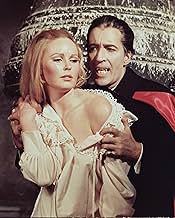
Al exorcizar el castillo de Drácula, el Conde regresa de entre los muertos. Drácula sigue al Monseñor de vuelta a su localidad natal, donde su bella sobrina y sus amigas se convierten en pre... Leer todoAl exorcizar el castillo de Drácula, el Conde regresa de entre los muertos. Drácula sigue al Monseñor de vuelta a su localidad natal, donde su bella sobrina y sus amigas se convierten en presa.Al exorcizar el castillo de Drácula, el Conde regresa de entre los muertos. Drácula sigue al Monseñor de vuelta a su localidad natal, donde su bella sobrina y sus amigas se convierten en presa.
- Director/a
- Guionistas
- Estrellas
- Premios
- 1 nominación en total
Christopher Cunningham
- Farmer
- (as Chris Cunningham)
Carrie Baker
- First victim
- (sin acreditar)
Donald Campbell
- Tavern Customer
- (sin acreditar)
Frank Forsyth
- Villager
- (sin acreditar)
Lindsay Hooper
- Tavern Customer
- (sin acreditar)
Philip Stewart
- Tavern Customer
- (sin acreditar)
John Timberlake
- Tavern Customer
- (sin acreditar)
- Director/a
- Guionistas
- Todo el reparto y equipo
- Producción, taquilla y más en IMDbPro
6,58.9K
1
2
3
4
5
6
7
8
9
10
Reseñas destacadas
Sags in the middle
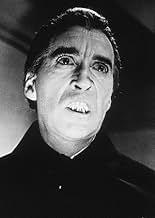
The fourth entry in the Hammer Dracula series has an excellent opening, occasional good scenes, and a fantastic finish, but film seems stuck in a rut. Too much of the film is predictable, with John Elder's screenplay being a paint-by-numbers job that resembles earlier entries. The visual effects by Frank George and Peter Melrose range from ok to excellent. James Bernard's score sounds like a replay of his scores from "Dracula--Prince of Darkness" (1966) and "Horror of Dracula" (1958). Christopher Lee is good. Barbara Ewing is amusing as Zena, a tavern girl. Everyone else looks the part. Arthur Grants' fine cinematography uses shadows well and makes the film look better than it is
The next two entries (1970's "Taste the Blood of Dracula" and "Scars of Dracula") are returns to form for the series. "Dracula Has Risen From the Grave" is a mild disappointment, with some good scenes and two spectacular scenes making it worth the watch.
fairly good Hammer Dracula entry
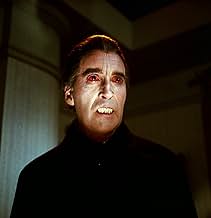
Early on, "Dracula Has Risen from the Grave" made me feel uneasy... From the scenes of a Monsignor (Rupert Davies) traveling with a priest to perform an exorcism on Castle Dracula in order to bring the superstitious (ha!) congregation back to church on Sunday, to the romantic subplot between a scholarly baker and the Monsignor's daughter, and a distinct lack of Drac, I began to wonder if I was being shortchanged by a title that looked to just capitalize on the success of the Hammer Dracula films. However, the more I kept with it, the more I enjoyed "Grave"--the above-mentioned plot threads, which at first seem corny, are interwoven with delicate skill by director Freddie Francis; the characters and their conflicts are surprisingly endearing (including an angle that brings atheism into the mix); and Christopher Lee is in fine form as the brooding, red-eyed Count (though the production suffers from the absence of frequent co-star Peter Cushing).
The Revenge of Dracula
One year after destroying Dracula (Christopher Lee), Monsignor (Rupert Davies) returns to his castle in the mountains with the local priest (Ewan Hooper) to exorcise his castle. However, the priest accidentally resurrects Dracula and becomes his slave. Meanwhile Monsignor returns home in Keinenberg on the day of the birthday of his niece Maria (Veronica Carlson), who lives with her mother Anna (Marion Mathie) in his house. Maria is in love with the atheist Paul (Barry Andrews), who works with the waitress Zena (Barbara Ewing) in the bar owned by his friend Max (Michael Ripper) where he also lives. Dracula decides to revenge on Monsignor and travels with the priest to Keinenberg. What will Dracula do next?
"Dracula Has Risen from the Grave" is the third film by Hammer featuring Christopher Lee in the role of Dracula. The film is still interesting almost fifty years later for fans of Dracula, but there are better ones. Paul staking Dracula that does not die because Paul does not pray is totally weird. My vote is six.
Title (Brazil): "Drácula, o Perfil do Diabo" ("Dracula, The Profile of the Devil")
"Dracula Has Risen from the Grave" is the third film by Hammer featuring Christopher Lee in the role of Dracula. The film is still interesting almost fifty years later for fans of Dracula, but there are better ones. Paul staking Dracula that does not die because Paul does not pray is totally weird. My vote is six.
Title (Brazil): "Drácula, o Perfil do Diabo" ("Dracula, The Profile of the Devil")
the ultimate amalgamation of Hammer Film's conventions
If a quintessential example of a Hammer Studio's exercise in Gothic Horror exists, it is probably this film. Not because it is a flawless piece of film-making, far from it. Rather because this film manages to squeeze just about all of Hammer's horror-show templates into it's 92 minute running time.
Here we have the unmistakeably distinctive set design and music score by Hammer mainstays Benard Robinson and James Benard; romantic leads transposing post Summer-of-Love sexual mores (and hairstyles!) to the film's indeterminate post Victorian location; two pub locales, one peopled with wary, hostile, superstitious East-Ender types, the other rollicking with high-spirited youthful inebriates; a pious religious figure (and a much less pious one); a cameo by Michael Ripper; day-for-night location shots; attractive women in low-cut bodices and nightgowns; yet another outlandish method of using trickling blood to revive the antagonist; an eventful screenplay that doesn't measure up to critical evaluation --- whew! I could go on and on.
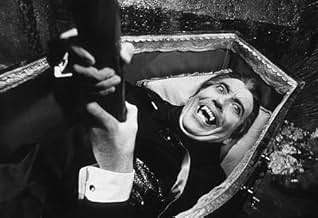
But please understand, I do not necessarily regard all of the above negatively, just realistically. "D.H.R.F.T.G." is a fun watch if you leave your thinking cap off. Several of the most memorable set-pieces in the Hammer canon are here; the discovery of the girl in the belfry, the attempted staking of Dracula, the Count's seduction of Veronica Carlson, and his over-the-top demise (I won't reveal it here). These scenes lingered for decades in my mind after I saw the film in the early seventies. I was joyful to find the videotape in the '90's and yes, I now happily own the DVD.
One of the harshest critics of this film, incidentally, was it's star. Christopher Lee, who entered the project enduring serious back pain (stuntman Eddie Powell handled the more strenuous action), disliked the script intensely, especially the attempted staking of the Count. His performance, however, betrays none of his vexation; this is one of his best outings as Dracula. Director Freddie Francis coaxes serviceable performances from the rest of the cast. Rupert Davies and Barbara Ewing stand out, as a noble cleric and lusty barmaid respectively.
At the end of the day, I really like this movie, despite it's shortcomings. Heck, I feel like putting on right now. So should you.
Here we have the unmistakeably distinctive set design and music score by Hammer mainstays Benard Robinson and James Benard; romantic leads transposing post Summer-of-Love sexual mores (and hairstyles!) to the film's indeterminate post Victorian location; two pub locales, one peopled with wary, hostile, superstitious East-Ender types, the other rollicking with high-spirited youthful inebriates; a pious religious figure (and a much less pious one); a cameo by Michael Ripper; day-for-night location shots; attractive women in low-cut bodices and nightgowns; yet another outlandish method of using trickling blood to revive the antagonist; an eventful screenplay that doesn't measure up to critical evaluation --- whew! I could go on and on.
But please understand, I do not necessarily regard all of the above negatively, just realistically. "D.H.R.F.T.G." is a fun watch if you leave your thinking cap off. Several of the most memorable set-pieces in the Hammer canon are here; the discovery of the girl in the belfry, the attempted staking of Dracula, the Count's seduction of Veronica Carlson, and his over-the-top demise (I won't reveal it here). These scenes lingered for decades in my mind after I saw the film in the early seventies. I was joyful to find the videotape in the '90's and yes, I now happily own the DVD.
One of the harshest critics of this film, incidentally, was it's star. Christopher Lee, who entered the project enduring serious back pain (stuntman Eddie Powell handled the more strenuous action), disliked the script intensely, especially the attempted staking of the Count. His performance, however, betrays none of his vexation; this is one of his best outings as Dracula. Director Freddie Francis coaxes serviceable performances from the rest of the cast. Rupert Davies and Barbara Ewing stand out, as a noble cleric and lusty barmaid respectively.
At the end of the day, I really like this movie, despite it's shortcomings. Heck, I feel like putting on right now. So should you.
Lights off, a few beers and a Hammer Horror movie - my perfect Saturday night!
Great opening for this installment, a deaf altar boy discovers a young woman hanging upside down from the church bell, blood dripping from her neck. Move forward a year and Count Dracula is accidentally revived. He goes on his usual round of terror and bloodsucking, his target of desire being the beautiful Veronica Carlson. He certainly has great taste in women!
The sets are great, I felt like I was almost in the mountain village. Good cast, nice to see Hammer's most prolific actor Michael Ripper have a larger part than normal. No Peter Cushing here, which makes the vampire hunter aspect interesting. There is some debate within the film of faith versus atheism, apparently staking a vampire does not work if the person doing the staking lacks religious belief. Interesting.
We have no nudity but there are sexual overtones. Thankfully we get plenty of blood, plus Hammer's trademark day for night scenes and swirling fog.
Not one of the studio's best vampire movies but it's still a wonderful piece of Gothic horror, I grew up on watching these films and love immersing myself into them, over and over again.
¿Sabías que...?
- CuriosidadesThis was the first ever movie to receive a rating from the MPAA in 1968.
- PifiasWhen the bell-ringer arrives at the church at the beginning of the movie he leaves his bicycle on the steps of the front door. When the priest arrives and rushes to investigate the screaming, the bicycle is no longer there.
- Versiones alternativasThe UK cinema version was cut by the BBFC to remove some closeup shots of Dracula pulling a stake from his heart. Later video and DVD releases were uncut.
- ConexionesFeatured in El poder de la sangre de Drácula (1970)
Selecciones populares
Inicia sesión para calificar y añadir a tu lista para recibir recomendaciones personalizadas
Detalles
- Fecha de lanzamiento
- País de origen
- Idiomas
- Títulos en diferentes países
- Dràcula torna de la tomba
- Localizaciones del rodaje
- Empresa productora
- Ver más compañías en los créditos en IMDbPro
- Duración
- 1h 32min(92 min)
- Mezcla de sonido
- Relación de aspecto
- 1.66 : 1(original/negative ratio)
Contribuir a esta página
Sugerir un cambio o añadir el contenido que falta