

En la Kenia colonial del siglo XX, una baronesa danesa, propietaria de una plantación, mantiene una apasionada relación amorosa con un cazador de espíritu libre.En la Kenia colonial del siglo XX, una baronesa danesa, propietaria de una plantación, mantiene una apasionada relación amorosa con un cazador de espíritu libre.En la Kenia colonial del siglo XX, una baronesa danesa, propietaria de una plantación, mantiene una apasionada relación amorosa con un cazador de espíritu libre.
- Director/a
- Guionistas
- Estrellas
- Ganó 7 premios Óscar
- 30 premios y 31 nominaciones en total




Reseñas destacadas
A Dream of Africa
There are two movie cuts floating around, which I tried to pursue through Universal, and then Disney. Forget it. Suffice to say there is a theatrical version and a Disney TV version, with little consequential difference to the plot except that the latter edits out a little of Karen's physical lovemaking with Denys and slightly expands her intellectual relationship with Farah; which to some degree helped buttress the development of his absolute devotion to her.
The screenplay resembles Isaak Dinesen's semi-autobiographical book very little; even so, she did not tell the whole truth in her book. You'll have to get over it, except that I think the character development suffered the loss of Blixen's deep involvement with the displaced Kikuyu tribe working her coffee plantation. Also, without an understanding of the historical times, it would be too easy to say simplistically that this is a woman trying to live within the terms of a marriage of convenience and then compensating with pursuit of a doomed passion.
What was crafted out of a mishmash of a more-or-less factual account and director Sydney Pollack's vision is still a beautiful love and adventure story in the midst of British colonial rule and an earlier, more racially and sexually biased era.
Klaus Maria Brandauer as Baron Bror von Blixen (whew! - who called Karen "Tannen," adding to my initial confusion) perfectly portrays that fun man you like immensely but could never really trust with anything important like your feelings. He along with several of the key male figures and symbols in this movie will eventually bow in respect to the "man" Karen Blixen becomes despite his often shabby treatment and other travails, because she rises above it all and perseveres. Redford plays mostly Redford. His Finch Hatton's sense of independence is fragile and illusory and will ultimately cost him dearly.
There are a couple of continuity problems that bother me to this day, including the disappearing-reappearing champagne and the continually retracking parade marchers, but for the most part few expenses or attentions to detail were spared, especially in the lavish costuming. "Bare-breasted native women" will unfortunately also make their National Geographic appearance.
Even so, Out of Africa is a treasure with a half dozen or more perfect and unforgettable scenes; a movie as long as this review, but I hope you'll agree, worth your patience.
surprising
Superb Meryl Streep's Best Performance
wonderful cast, save one; glorious scenery - "Out of Africa"
Meryl Streep stars as Karen Blixen, a Danish woman, who marries Bror Blixen and becomes a Baroness. The couple move to Africa in 1913 and start a coffee plantation.
Blixen cheats on her and is away often for business, while she stays at home working the plantation. Ultimately he gives her VD.
She falls in love with Denys Finch-Hatton (Robert Redford). The relationship is frustrating for her -- Denys does not want a commitment, he wanted freedom. When she returns to her native country, she writes about her experience as Isak Dinesen.
The film shows a lot of interesting history: the class consciousness, for one, as Karen was looked down on because of her humble beginnings. Also, it shows Europeans trying to impose their culture on a foreign people.
It definitely portrays how the different tribes saw the Europeans, basically as people who did not belong there.
It also shows the simplicity of the natives, and how their knowledge of their own country was superior. All of this is before World War II and very interesting.
Interestingly, Sikh Indians are brought to the English Gentlemen's club to act as servants and when Karen dares to enter the men's only den, it's the Sikh who is responsible for escorting her out; none of the English "gentlemen" have the balls or nerve to do it. An interesting observation on the English White man's view of the world before World War I.
Many of the lesser characters were real people. Kumante was apparently consulted by the filmmakers. Felicity is based on aviatrix Beryl Markham.
The cast includes Klaus Maria Brandauer, Michael Kitchen, Michael Gough, and Rachel Kempson, all wonderful actors.
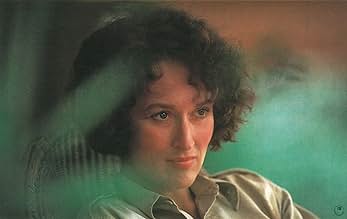
Meryl Streep does a beautiful job as Karen/Isak. Robert Redford is miscast as Denys, who is supposed to be a British aristocrat. If he speaks with an American accent, he can't be a British aristocrat. Apparently Redford used an accent but Sydney Pollack made him overdub his lines; he thought they would distract the audience.
I think he should have been encouraged to work on and use the accent so his portrayal could have closer to the real man. As it is, he comes off as miscast -- and American. He also doesn't register as well as he could, given his looks and charm.
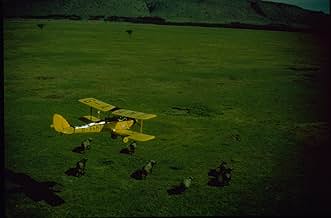
The scenery in this film is the true star. So many of us don't have a strong picture of Africa; this film displays its great beauty.
Interestingly, the story of Isak Dinesen was considered for Greta Garbo, and Audrey Hepburn was offered the role before Streep.
Deserved praise?
I'm not saying that Out of Africa is the best film I've ever seen (I've yet to see that one!) but I think I can safely say that it has secured a place for itself both in cinematic history and the future of entertainment. You see at it heart it is a well made, timeless epic.
Yes there will always be the people who take exception to the accents, dislike the ending or believes it drags on for too long, but that's their lost, I can't help thinking they haven't been patient enough (and this annoys me).
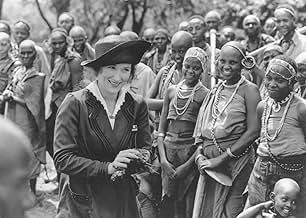
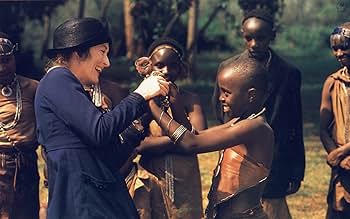
You see the thing is in many ways the endless beauty of this film lies in its subtleties. Yes you have Meryl Streep and Redford flanked by the scenery and music, but for me it's the things like Pollock's direction, Michael Kitchen's performance and Karen's interaction with member's of the tribe that make the film.
Part of me wants to tie my mate to a chair and make her sit and watch this until she gets it. The other half is slightly relieved, because I feel that with her rejection this film is ever so slightly more exclusively mine, and I know that although I'm still only young I will always have time a space for it!
Oscars Best Picture Winners, Ranked
Oscars Best Picture Winners, Ranked


¿Sabías que...?
- CuriosidadesThe town of Karen, just outside Nairobi, is named after Karen Blixen.
- PifiasWhen Denys Finch Hatton brings a record player to Karen Blixen's home, he lowers his hand and the sound volume decreases. Volume was set at recording time, not at playback.
- Citas
Karen Blixen: When you go away... you don't always go on safari, do you? Just want to be away.
Denys: It's not meant to hurt you.
Karen Blixen: It does.
Denys: I'm with you because I choose to be with you. I don't want to live someone else's idea of how to live. Don't ask me to do that. I don't want to find out one day that I'm at the end of someone else's life. I'm willing to pay for mine. To be lonely sometimes. To die alone, if I have to. I think that's fair.
Karen Blixen: Not quite. You want me to pay for it as well.
Denys: No, you have a choice, and you're not willing to do the same for me.
- Créditos adicionalesEpilogue: "Karen Blixen published her first stories in 1934 under the name Isak Dinesen. She never returned to Africa."
- Versiones alternativasNetwork TV version features additional footage not included in theatrical release.
- ConexionesEdited into Canción de África (2000)
- Banda sonoraConcerto for clarinet and orchestra in A (K.622)
Written by Wolfgang Amadeus Mozart
Performed by Jack Brymer Clarinet, The Academy of St. Martin-in-the-Fields
Directed by Neville Marriner
Used Courtesy of Philips Classic Productions, The Netherlands
Selecciones populares
- How long is Out of Africa?Con tecnología de Alexa
Detalles
- Fecha de lanzamiento
- País de origen
- Sitio oficial
- Idiomas
- Títulos en diferentes países
- Memòries d'Àfrica
- Localizaciones del rodaje
- Empresa productora
- Ver más compañías en los créditos en IMDbPro
Taquilla
- Presupuesto
- 31.000.000 US$ (estimación)
- Recaudación en Estados Unidos y Canadá
- 87.071.205 US$
- Fin de semana de estreno en EE. UU. y Canadá
- 3.637.290 US$
- 22 dic 1985
- Recaudación en todo el mundo
- 227.514.205 US$
- Duración
- 2h 41min(161 min)
- Color
- Relación de aspecto
- 1.85 : 1