PUNTUACIÓN EN IMDb
7,9/10
40 mil
TU PUNTUACIÓN
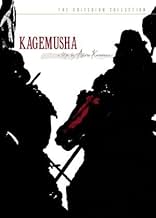
Un ladrón mezquino que se parece a un señor de la guerra samurai es contratado como doble. Cuando el señor de la guerra muere más tarde, el ladrón se ve obligado a tomar armas en su lugar.Un ladrón mezquino que se parece a un señor de la guerra samurai es contratado como doble. Cuando el señor de la guerra muere más tarde, el ladrón se ve obligado a tomar armas en su lugar.Un ladrón mezquino que se parece a un señor de la guerra samurai es contratado como doble. Cuando el señor de la guerra muere más tarde, el ladrón se ve obligado a tomar armas en su lugar.
- Director/a
- Guionistas
- Estrellas
- Nominado para 2 premios Óscar
- 20 premios y 5 nominaciones en total
- Director/a
- Guionistas
- Todo el reparto y equipo
- Producción, taquilla y más en IMDbPro
7,940.4K
1
2
3
4
5
6
7
8
9
10
Reseñas destacadas
epic with static scenes
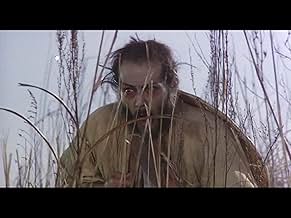
A petty thief is pulled from crucifixion and made to be the double of the ruthless powerful warlord Shingen Takeda. Both the warlord and his brother Nobukado are impressed. It's 1573. Shingen is mortally wounded at a siege. He orders his generals to hide his death for at least 3 years and not to advance from their domain. When he dies in secret, Nobukado proposes to use the double. However the double is uncontrollable and he discovers the dead body. Meanwhile spies are looking for the truth.
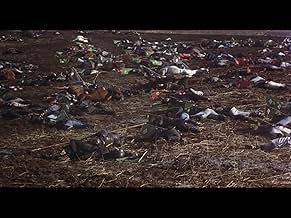
Director Akira Kurosawa has made a meticulous movie. It is big. There are lots of costumes. The battles have lots of participants. It's real. It is 3 hours and lots of it is very static. It's very old school in that respect. The action isn't very visceral. It is more cerebral. What I mean is that it is visions of formation. There are few actual fights and little blood or gore. The big battle is seen not in the action but in the reaction of the people seeing the action. It is a different way of doing action. It's poetic but also a bit sterile.
10Hitchcoc
Another Brilliant Epic
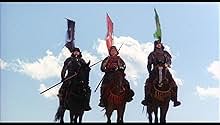
This is a great epic of war and a film of great emotion. At the center is a man who has nothing. He is thrust into a world he didn't create. He is a petty thief and really would like to just get on with his life. What he also has is great loyalty to his now deceased lord, and despite his great concern for his ability to carry it off, he agrees to the position. He has to know that at some point this will all come crashing down. The Samurai code makes it so that he has few options. He runs the war the best he can but occasionally falls victim to who he is. Even with advisers watching his every move, he becomes so much a part of the entire picture that he is left to destroy himself, and, in the process, the clan that he represents. The battle scenes are remindful of the other huge films like "Ran" and "Throne of Blood." They sweep across the screen with the flag carrying horsemen and the infantry fighting until there is nothing left but total carnage. Because of the complexity of the story and the wonderful acting, I would put this at or near the top of my Kurosawa list.
My God, Look at Those Colors!
Akira Kurosawa is certainly one of the most important directors who ever lived. Most of his most famous films were made in the 50s and 60s. Rashomon, Ikiru, Yojimbo, and The Seven Samurai may be the four most famous films he made, and they were all in black and white. That format was wonderful. His films had a definitive look in that era.
I would like to suggest, though, that he was the single best director of the color image who has existed thus far (whose work I am familiar with). I have only seen two of his color films (I don't even know how many he made), this film and Ran, but his sense of color in these two films is exquisite. I had to pause it several times during Kagemusha just to stare at the beautiful composition.
I personally think that Kurosawa's talents rested mainly in the technical aspects of his films rather than the content (and I'm sure many people would argue against me here). So as for the film itself, I'd give it a 9/10 for two reasons. I was only emotionally involved during small sections of the film (the end was particularly powerful), and the story was somewhat difficult to follow (I was confused during Yojimbo and The Seven Samurai, too). I prefer Ran to this film (and to all the other films of his I've seen, which include Rashomon, The Seven Samurai, and Yojimbo). Still, Kagemusha is very good.
I would like to suggest, though, that he was the single best director of the color image who has existed thus far (whose work I am familiar with). I have only seen two of his color films (I don't even know how many he made), this film and Ran, but his sense of color in these two films is exquisite. I had to pause it several times during Kagemusha just to stare at the beautiful composition.
I personally think that Kurosawa's talents rested mainly in the technical aspects of his films rather than the content (and I'm sure many people would argue against me here). So as for the film itself, I'd give it a 9/10 for two reasons. I was only emotionally involved during small sections of the film (the end was particularly powerful), and the story was somewhat difficult to follow (I was confused during Yojimbo and The Seven Samurai, too). I prefer Ran to this film (and to all the other films of his I've seen, which include Rashomon, The Seven Samurai, and Yojimbo). Still, Kagemusha is very good.
One of the best serious samurai-movies
This film is one of Kurosawa's masterpieces and gives an profound insight in the pre-Tokugawa period of Japan. Especially remarkable is the very elaborated atmosphere of this film to which contribute the pure and simple dialogues and the use of very well-made sceneries. Kurosawa's favorite actor Tatsuya Nakadai is here at his best. Although the atmosphere is very elaborated and almost perfectly historic; tension of the viewer is heightened by the simplicity of the scenes. Kurosawa leaves certain parts to the viewer's imagination rather than showing it. The movie is highly philosophical as well as emotionally touching and presents the soul of the way of samurai and Japan's old samurai system much better and more serious than countless cheap- and bad-made martial arts movies about samurai. This is a warning to all who expect fast martial arts action and blood covered katana. This film is a Kurosawa-style mixture between opulent costume- drama, a philosophic and tragic story and the sensitivity only Kurosawa has displaying Japan's traditional way-of-life.
incredibly BIG and beautiful but also very sterile
I have seen nearly all of Akira Kurosawa's films, so my opinion shouldn't be completely ignored. Although I am in the distinct minority, I didn't particularly like KAGEMUSHA. Yes, it was big and beautiful and had great scope but it was also emotionally sterile and bore little resemblance to Kurosawa's earlier, more famous works. The same, by the way, can be said about RAN. Both films had relatively HUGE budgets but the dialog and connectedness between the characters was lacking. As a result, I felt pretty bored when I watched both of them--especially this film.
So, if you compare these two movies with THE 7 SAMURAI or YOJIMBO, for example, they seem VERY different. These older films, though not filmed in color, had a greater sense of humanity about them--great importance was placed on the INTERRELATIONSHIPS between the characters AND the camera work was very different, with more closeups and a more intimate feel. So, while RAN and KAGEMUSHA were pretty to look at, I felt much more detached from them and cared much less about the characters. I really think the problem with these two movies, and the reason I like them less than the average Kurosawa film, was that the big budget in these later films actually HURT them, as too much emphasis was placed on effects and dialog was purely secondary.
So, in summary, I am the odd-ball that didn't love this film. You will probably disagree and might be tempted to mark my review as "not helpful", as the reviews on IMDb are generally glowing. But having seen many Japanese films, I can't help but feel there are better films out there waiting to be seen. Most any other Kurosawa film, and films by other great directors (such as THE SAMURAI TRILOGY, the films of Yasujiro Ozu) are more appealing to me. I think the popularity of this film is in part due to its having been seen in theaters by more Westerners than any other of Kurosawa's films--SEEK OUT HIS EARLIER AND MID-CAREER FILMS--they are better and far more emotionally involving.
So, if you compare these two movies with THE 7 SAMURAI or YOJIMBO, for example, they seem VERY different. These older films, though not filmed in color, had a greater sense of humanity about them--great importance was placed on the INTERRELATIONSHIPS between the characters AND the camera work was very different, with more closeups and a more intimate feel. So, while RAN and KAGEMUSHA were pretty to look at, I felt much more detached from them and cared much less about the characters. I really think the problem with these two movies, and the reason I like them less than the average Kurosawa film, was that the big budget in these later films actually HURT them, as too much emphasis was placed on effects and dialog was purely secondary.
So, in summary, I am the odd-ball that didn't love this film. You will probably disagree and might be tempted to mark my review as "not helpful", as the reviews on IMDb are generally glowing. But having seen many Japanese films, I can't help but feel there are better films out there waiting to be seen. Most any other Kurosawa film, and films by other great directors (such as THE SAMURAI TRILOGY, the films of Yasujiro Ozu) are more appealing to me. I think the popularity of this film is in part due to its having been seen in theaters by more Westerners than any other of Kurosawa's films--SEEK OUT HIS EARLIER AND MID-CAREER FILMS--they are better and far more emotionally involving.
¿Sabías que...?
- CuriosidadesMuch of the film recounts actual historical events, including Shingen's death and the two-year secret, and the climactic Battle of Nagashino in 1575. Those scenes are also modeled closely on detailed accounts of the battle.
- PifiasIn the final battle there are at least 100 riflemen shown firing their matchlock rifles in volleys. The smoke generated by the matchlocks almost immediately dissipates. This indicates a more modern gunpowder was used in the matchlocks as the historically correct black powder load would blanket the battlefield with thick smoke after a handful of volleys.
- Citas
Nobukado Takeda: The shadow of a man can never stand up and walk on its own.
- Versiones alternativasIn the original Japanese version, there are 20 minutes featuring Kenshin Uesugi. For some reason, these scenes were cut out of the USA version.
- ConexionesFeatured in A.K. (1985)
Selecciones populares
Inicia sesión para calificar y añadir a tu lista para recibir recomendaciones personalizadas
Detalles
- Fecha de lanzamiento
- Países de origen
- Idioma
- Títulos en diferentes países
- Kagemusha: The Shadow Warrior
- Localizaciones del rodaje
- Himeji Castle, Himeji, Japón(Nobunaga's castle)
- Empresas productoras
- Ver más compañías en los créditos en IMDbPro
Taquilla
- Presupuesto
- 6.000.000 US$ (estimación)
- Recaudación en Estados Unidos y Canadá
- 4.000.000 US$
- Recaudación en todo el mundo
- 4.018.532 US$
- Duración
- 3h(180 min)
- Color
- Mezcla de sonido
- 4-Track Stereo(original version)
- Relación de aspecto
- 1.85 : 1
Contribuir a esta página
Sugerir un cambio o añadir el contenido que falta