

Un periodista estadounidense radical se involucra con la revolución comunista en Rusia y espera llevar su espíritu e idealismo a los Estados Unidos.Un periodista estadounidense radical se involucra con la revolución comunista en Rusia y espera llevar su espíritu e idealismo a los Estados Unidos.Un periodista estadounidense radical se involucra con la revolución comunista en Rusia y espera llevar su espíritu e idealismo a los Estados Unidos.
- Director/a
- Guionistas
- Estrellas
- Ganó 3 premios Óscar
- 22 premios y 37 nominaciones en total
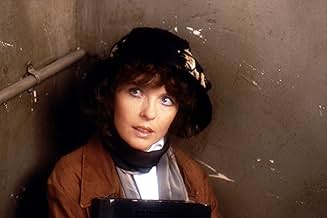
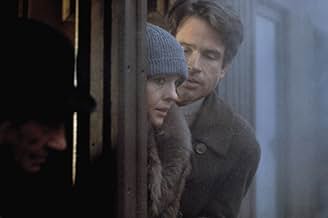
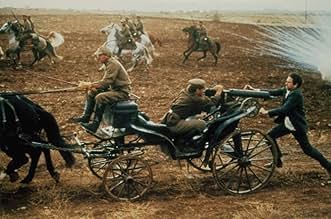


Eleanor Wilson
- Mrs. Reed
- (as Eleanor D. Wilson)


- Director/a
- Guionistas
- Todo el reparto y equipo
- Producción, taquilla y más en IMDbPro
7,326.3K
1
2
3
4
5
6
7
8
9
10
Reseñas destacadas
A Monumental Achievement in Epic Film-Making
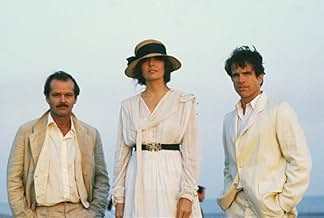
"Reds" is a 200-minute epic masterpiece which deals with left-wing American journalist John Reed (Warren Beatty in an Oscar-nominated performance) and his coverage of the Russian Revolution of the 1910s. Beatty's passion is what carries this ambitious film, which could have easily been a multi-million dollar disaster. His Oscar-winning direction, screenplay, and overall performance carry the film as far as it can possibly go. The top-flight performances by Diane Keaton, Jack Nicholson (both Oscar-nominated), and Maureen Stapleton (Oscar-winning) all add great depth to the performance. Paul Sorvino, Edward Herrmann, and Gene Hackman also make lasting impressions in supporting roles. Overall a great achievement all the way around. 5 stars out of 5.
Reds
An engrossing film about John Reed's love affair with Louise Bryant and his struggles in the midst of the Russian Revolution. There are great performances from Beatty, Keaton, Nicholson (excellent as Eugene O'Neill) and Stapelton in her Oscar winning performance as Emma Goldman. Beatty's precision and timing in the use of his camera in this picture is a superb achievement. There is a touch of David Lean in director Beatty in this film. The color, the editing, the sound. All of those important filmic elements are at play here in great form. Beatty won the Best Director Oscar, but lost the Best Picture award to Chariots of Fire.
They don't make them like this anymore
Imagine going into a room and telling a studio you want to make a film about American Communist reporters during the 1917 Russian revolution and that it will be over three hours long and you won't even get to Russia until almost two hours in. But it was really very simple. It was Warren Beatty doing the plugging. And it actually made money. Today getting this kind of film made would be impossible for anybody. The suits want creatures from some other world wearing capes and carrying tridents spouting vague dialogue that is supposed to sound deep with lots and lots of special effects. But I digress.
So this is basically the story of John Reed and Louise Bryant, two left-wing writers and activists whose affair and marriage only lasted five years, ending with his death in Russia in 1920, but covering some incredibly important American and world history. Bryant first meets Reed when he speaks at the Liberal Club in Portland, Oregon. She's pretentious - denying that she's married or even believes in marriage - as she and Reed have an all-night discussion of writing and politics - and nothing else - at her studio around the corner. When they encounter each other by chance some days later, surrounded by people who know them both, the truth comes out in an extended meet cute encounter that Bryant is married to a dentist and living a bourgeoisie lifestyle. But she is dissatisfied and wants more.
At Reed's invitation, Bryant follows Reed back to New York City and moves into his apartment. But at first she isn't respected when she's cross examined by Reed's highbrow circle of radical friends, asked what she does, and she says she writes about "everything". The couple fights, makes up, engages in socialist politics and activism, and are separated for long periods of time, usually because Reed is galivanting about the country writing about this or that. Ultimately, the Czar is overthrown in Russia and the pair go there when it looks like the Bolsheviks will overthrow the provisional government instituted after the downfall of the Czar.
It's downhill from there for our socialist couple, because it is at this point they encounter the tired but true old saying that absolute power corrupts absolutely. Back in the United States, energized by what has happened in Russia, the Socialist Party fractures into a conventional and Communist wing, and then the Communist wing fractures yet again, largely over the issue of control. When Reed returns to Russia after the Communists have had a chance to consolidate power, he finds them to have become dogmatic and are censoring what he is allowed to say when speaking to crowds. He dies young and disillusioned in a Russian hospital.
Technically this was for sure a great accomplishment. It does a good job of drawing you into the time and place it is set. I felt like I was experiencing these important events myself rather than just watching them be recreated onscreen. The witnesses add some context, although I wish I knew more about them. I remember at the time wondering when these conversations were recorded, because in 1981 they would have had to be over 90 to have known either Reed or Bryant. The love story is convincing although the couple spends long periods of time apart.
I'd recommend it, but realize it is not for the faint of heart or those short in attention span.
So this is basically the story of John Reed and Louise Bryant, two left-wing writers and activists whose affair and marriage only lasted five years, ending with his death in Russia in 1920, but covering some incredibly important American and world history. Bryant first meets Reed when he speaks at the Liberal Club in Portland, Oregon. She's pretentious - denying that she's married or even believes in marriage - as she and Reed have an all-night discussion of writing and politics - and nothing else - at her studio around the corner. When they encounter each other by chance some days later, surrounded by people who know them both, the truth comes out in an extended meet cute encounter that Bryant is married to a dentist and living a bourgeoisie lifestyle. But she is dissatisfied and wants more.
At Reed's invitation, Bryant follows Reed back to New York City and moves into his apartment. But at first she isn't respected when she's cross examined by Reed's highbrow circle of radical friends, asked what she does, and she says she writes about "everything". The couple fights, makes up, engages in socialist politics and activism, and are separated for long periods of time, usually because Reed is galivanting about the country writing about this or that. Ultimately, the Czar is overthrown in Russia and the pair go there when it looks like the Bolsheviks will overthrow the provisional government instituted after the downfall of the Czar.
It's downhill from there for our socialist couple, because it is at this point they encounter the tired but true old saying that absolute power corrupts absolutely. Back in the United States, energized by what has happened in Russia, the Socialist Party fractures into a conventional and Communist wing, and then the Communist wing fractures yet again, largely over the issue of control. When Reed returns to Russia after the Communists have had a chance to consolidate power, he finds them to have become dogmatic and are censoring what he is allowed to say when speaking to crowds. He dies young and disillusioned in a Russian hospital.
Technically this was for sure a great accomplishment. It does a good job of drawing you into the time and place it is set. I felt like I was experiencing these important events myself rather than just watching them be recreated onscreen. The witnesses add some context, although I wish I knew more about them. I remember at the time wondering when these conversations were recorded, because in 1981 they would have had to be over 90 to have known either Reed or Bryant. The love story is convincing although the couple spends long periods of time apart.
I'd recommend it, but realize it is not for the faint of heart or those short in attention span.
You Forget..
.
I am old enough to have lived through (probably) three different Americas. These are radically different worlds. It isn't just the mood, styles or state of the economy; its the adoption of a whole cosmology. Religions change under our feet. Family, love, belonging. These things are malleable yet largely beyond our control and we forget what "things were like." Memory always is constructed in terms of the present world.
Always.
So projects like this are necessary. We cannot know who we are unless we remind ourselves who we were.
The ordinary fold here is a romance, folded into grand political actions. Here they are a bit more cerebral than usual, but never getting past the notion of simple justice.
The more unusual and complex fold is that we see a story based on real events and people. Interspersed with that story are interviews of people who were personally involved in the story. These are remarkable, the way they are captured and the way they are edited to overlap with and annotate the story. But much more engaging is that these are enticing people, many with minds and phases that invite us into their faces made warmer and more open by Beatty's camera. I compare this to the "Up" serious and the contrast is astonishing. True, here we want to be informed about the lives of others, and the "Up" goals pretend that the people randomly selected decades ago are remotely worth knowing.
But these folks are. We want more, simply based on their implicit invitation, and we carry ourselves into the narrative more forcefully, sort of like the characters do. This is folding doing its job and doing it well. They remember. I remember, and therefore am.
Ted's Evaluation -- 3 of 3: Worth watching.
I am old enough to have lived through (probably) three different Americas. These are radically different worlds. It isn't just the mood, styles or state of the economy; its the adoption of a whole cosmology. Religions change under our feet. Family, love, belonging. These things are malleable yet largely beyond our control and we forget what "things were like." Memory always is constructed in terms of the present world.
Always.
So projects like this are necessary. We cannot know who we are unless we remind ourselves who we were.
The ordinary fold here is a romance, folded into grand political actions. Here they are a bit more cerebral than usual, but never getting past the notion of simple justice.
The more unusual and complex fold is that we see a story based on real events and people. Interspersed with that story are interviews of people who were personally involved in the story. These are remarkable, the way they are captured and the way they are edited to overlap with and annotate the story. But much more engaging is that these are enticing people, many with minds and phases that invite us into their faces made warmer and more open by Beatty's camera. I compare this to the "Up" serious and the contrast is astonishing. True, here we want to be informed about the lives of others, and the "Up" goals pretend that the people randomly selected decades ago are remotely worth knowing.
But these folks are. We want more, simply based on their implicit invitation, and we carry ourselves into the narrative more forcefully, sort of like the characters do. This is folding doing its job and doing it well. They remember. I remember, and therefore am.
Ted's Evaluation -- 3 of 3: Worth watching.
Warren Beatty's Communist Baby
"Reds" was Warren Beatty's ambitious passion project of 1981, the film that was supposed to clean up at the Oscars that year. The Academy ended up being fairly cool toward it, giving it only three awards out of 12 nominations, but it did finally recognize Beatty for his balls if nothing else by giving him the Best Director Oscar.
It's a good film that holds up well, even if it can be a bit dry at times. Beatty (Oscar nominated) is compelling as Communist revolutionary John Reed, who worked tirelessly to bring a Socialist revolution to America, but he's outshone in the acting department by Diane Keaton (also Oscar nominated), who gets a chance to shed her Woody Allen persona and prove what a good dramatic actress she could be. I could have done with less of the domestic squabbling that drags down the middle part of the film, and found the parts detailing the couple's experiences in Russia to be the most engrossing. The movie has a whopper of a running time (3 and a half hours) but even at the slower parts I never felt especially impatient with its length.
Maureen Stapleton won an Oscar for her fiery performance as Emma Goldman, and Vittorio Storaro won his second Oscar for cinematography (bookended by his work on "Apocalypse Now" and "The Last Emperor"). The film's other nomination were for Best Picture, Best Actor (Beatty), Best Supporting Actor (Jack Nicholson, never especially convincing as playwright Eugene O'Neill), Best Original Screenplay, Best Art Direction, Best Costume Design, Best Film Editing, and Best Sound. Alas, no nomination for Stephen Sondheim who provided the original score.
Incidentally, "Reds" became the 13th and last film to win Oscar nominations in all four acting categories until David O. Russell added back to back films number 14 and 15 with "Silver Linings Playbook" and "American Hustle." He's the only director to achieve that feat two years in a row.
Grade: A
It's a good film that holds up well, even if it can be a bit dry at times. Beatty (Oscar nominated) is compelling as Communist revolutionary John Reed, who worked tirelessly to bring a Socialist revolution to America, but he's outshone in the acting department by Diane Keaton (also Oscar nominated), who gets a chance to shed her Woody Allen persona and prove what a good dramatic actress she could be. I could have done with less of the domestic squabbling that drags down the middle part of the film, and found the parts detailing the couple's experiences in Russia to be the most engrossing. The movie has a whopper of a running time (3 and a half hours) but even at the slower parts I never felt especially impatient with its length.
Maureen Stapleton won an Oscar for her fiery performance as Emma Goldman, and Vittorio Storaro won his second Oscar for cinematography (bookended by his work on "Apocalypse Now" and "The Last Emperor"). The film's other nomination were for Best Picture, Best Actor (Beatty), Best Supporting Actor (Jack Nicholson, never especially convincing as playwright Eugene O'Neill), Best Original Screenplay, Best Art Direction, Best Costume Design, Best Film Editing, and Best Sound. Alas, no nomination for Stephen Sondheim who provided the original score.
Incidentally, "Reds" became the 13th and last film to win Oscar nominations in all four acting categories until David O. Russell added back to back films number 14 and 15 with "Silver Linings Playbook" and "American Hustle." He's the only director to achieve that feat two years in a row.
Grade: A


¿Sabías que...?
- CuriosidadesReportedly, Warren Beatty reshot some scenes up to 35 times. Paul Sorvino said he did as many as 70 takes for one scene, and Maureen Stapleton said she did as many as 80 takes for another. Reportedly, of this, she famously once said to Warren Beatty, "Are you out of your fucking mind?" This earned her a round of applause from the crew.
- PifiasThe Finnish doctor tells Reed that his blood pressure is too high, but at that time, hypertension was not considered a problem by most doctors, who did not even consider treating it. Not until the mid-'40s did doctors begin to understand the dangers of high blood pressure.
- Citas
Eugene O'Neill: If you were mine, I wouldn't share you with anybody or anything. It'd be just you and me. We'd be the center of it all. I know it would feel a lot more like love than being left alone with your work.
- Créditos adicionalesAs the credits roll, additional interviews with the 'witnesses' play.
- Versiones alternativasThree seconds of horse falls were cut from the British version. The DVD supplements showing these shots are also cut in England.
- ConexionesFeatured in Sneak Previews: Rollover, Quartet, My Dinner with Andre, Reds (1981)
- Banda sonoraYou're a Grand Old Flag
Written by George M. Cohan
Selecciones populares
Inicia sesión para calificar y añadir a tu lista para recibir recomendaciones personalizadas
- How long is Reds?Con tecnología de Alexa
Detalles
Taquilla
- Presupuesto
- 32.000.000 US$ (estimación)
- Recaudación en Estados Unidos y Canadá
- 40.382.659 US$
- Fin de semana de estreno en EE. UU. y Canadá
- 2.325.029 US$
- 6 dic 1981
- Recaudación en todo el mundo
- 40.383.348 US$
Contribuir a esta página
Sugerir un cambio o añadir el contenido que falta