Calendario de lanzamientosLas 250 mejores películasPelículas más popularesExplorar películas por géneroTaquilla superiorHorarios y ticketsNoticias sobre películasNoticias destacadas sobre películas de la India
    Qué hay en la TV y en streamingLas 250 mejores seriesProgramas de televisión más popularesExplorar series por géneroNoticias de TV
    ¿Qué verÚltimos tráileresOriginales de IMDbSelecciones de IMDbDestacado de IMDbGuía de entretenimiento familiarPodcasts de IMDb
    OscarsHoliday Watch GuideGotham AwardsPremios STARmeterCentral de premiosCentral de festivalesTodos los eventos
    Personas nacidas hoyCelebridades más popularesNoticias de famosos
    Centro de ayudaZona de colaboradoresEncuestas
Para profesionales de la industria
  • Idioma
  • Totalmente compatible
  • English (United States)
    Parcialmente compatible
  • Français (Canada)
  • Français (France)
  • Deutsch (Deutschland)
  • हिंदी (भारत)
  • Italiano (Italia)
  • Português (Brasil)
  • Español (España)
  • Español (México)
Lista de seguimiento
Iniciar sesión
  • Totalmente compatible
  • English (United States)
    Parcialmente compatible
  • Français (Canada)
  • Français (France)
  • Deutsch (Deutschland)
  • हिंदी (भारत)
  • Italiano (Italia)
  • Português (Brasil)
  • Español (España)
  • Español (México)
Usar la aplicación
  • Reparto y equipo
  • Reseñas de usuarios
  • Curiosidades
  • Preguntas frecuentes
IMDbPro

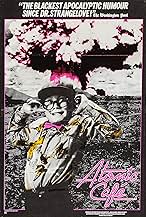
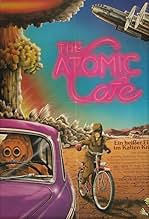
El café atómico

Título original: The Atomic Cafe
  • 1982
  • Not Rated
  • 1h 26min
PUNTUACIÓN EN IMDb
7,6/10
4,8 mil
TU PUNTUACIÓN
El café atómico (1982)
Official Trailer
Reproducir trailer2:25
1 vídeo
8 imágenes
DocumentalHistoria

Inquietante colección de películas de propaganda emitidas por los Estados Unidos en las décadas de 1940 y 1950, diseñadas para tranquilizar a los estadounidenses en el sentido de que la bomb... Leer todoInquietante colección de películas de propaganda emitidas por los Estados Unidos en las décadas de 1940 y 1950, diseñadas para tranquilizar a los estadounidenses en el sentido de que la bomba atómica no constituía una amenaza.Inquietante colección de películas de propaganda emitidas por los Estados Unidos en las décadas de 1940 y 1950, diseñadas para tranquilizar a los estadounidenses en el sentido de que la bomba atómica no constituía una amenaza.
  • Directores/as
    • Jayne Loader
    • Kevin Rafferty
    • Pierce Rafferty
  • Estrellas
    • Paul Tibbets
    • Harry S. Truman
    • W.H.P. Blandy
  • Ver la información de la producción en IMDbPro
  • PUNTUACIÓN EN IMDb
    7,6/10
    4,8 mil
    TU PUNTUACIÓN
    • Directores/as
      • Jayne Loader
      • Kevin Rafferty
      • Pierce Rafferty
    • Estrellas
      • Paul Tibbets
      • Harry S. Truman
      • W.H.P. Blandy
    • 63Reseñas de usuarios
    • 43Reseñas de críticos
  • Ver la información de la producción en IMDbPro
    • Nominado a 1 premio BAFTA
      • 2 premios y 1 nominación en total

    Vídeos1

    The Atomic Cafe
    Trailer 2:25
    The Atomic Cafe

    Imágenes7

    Ver cartel
    Ver cartel
    Ver cartel
    Ver cartel
    Ver cartel
    Ver cartel
    Ver cartel

    Reparto Principal31

    Editar
    Paul Tibbets
    Paul Tibbets
    • Self
    • (metraje de archivo)
    Harry S. Truman
    Harry S. Truman
    • Self
    • (metraje de archivo)
    • (as President Harry S Truman)
    W.H.P. Blandy
    • Self - Commander of the Bikini Test
    • (metraje de archivo)
    • (as Vice Admiral W.H.P. Blandy)
    Brien McMahon
    • Self
    • (metraje de archivo)
    • (as Sen. Brian McMahon)
    Lloyd Bentsen
    Lloyd Bentsen
    • Self
    • (metraje de archivo)
    • (as Rep. Lloyd Bentsen)
    Owen Brewster
    • Self
    • (metraje de archivo)
    • (as Sen. Owen Brewster)
    Julius Rosenberg
    Julius Rosenberg
    • Self
    • (metraje de archivo)
    Ethel Rosenberg
    Ethel Rosenberg
    • Self
    • (metraje de archivo)
    Val Peterson
    • Self - Director of Civil Defense
    • (metraje de archivo)
    • (as Gov. Val Peterson)
    Lyndon B. Johnson
    Lyndon B. Johnson
    • Self
    • (metraje de archivo)
    • (as Sen. Lyndon B. Johnson)
    Lewis Strauss
    Lewis Strauss
    • Self - Chairman, Atomic Energy Commission
    • (metraje de archivo)
    • (as Lewis L. Strauss)
    George Molan
    • Self
    • (metraje de archivo)
    • (as Cpl. George Molan)
    George Portell
    • Self
    • (metraje de archivo)
    • (as Tech Sgt. George Portell)
    Jerry Schneider
    • Self
    • (metraje de archivo)
    Sergeant Weaver
    • Self
    • (metraje de archivo)
    Seymour Melman
    • Self - Columbia University
    • (metraje de archivo)
    • (as Prof. Seymour Melman)
    Mario Salvadori
    • Self - Columbia University
    • (metraje de archivo)
    • (as Prof. Mario Salvadori)
    Nikita Khrushchev
    Nikita Khrushchev
    • Self
    • (metraje de archivo)
    • Directores/as
      • Jayne Loader
      • Kevin Rafferty
      • Pierce Rafferty
    • Todo el reparto y equipo
    • Producción, taquilla y más en IMDbPro

    Reseñas de usuarios63

    7,64.7K
    1
    2
    3
    4
    5
    6
    7
    8
    9
    10

    Reseñas destacadas

    9Calaboss

    Duck And Cover Everyone!

    With no narration other than that provided by historical clips, this movie justly states how ludicrous the idea of nuclear war was, and is. The producers of this film spent years going through declassified governmental film archives to find some of the most chilling, and hilarious, footage ever taken. It also tells how the US government screwed over the Bikini Islanders, and has some fine coverage of the spoon-feeding of propaganda to the US public through the 40's and 50's.

    A great movie for just a laugh, or for some interesting historical perspective on a unique time in the recent US past. I loved the clip of the guy who invented a lead-lined suit, put it on his son, and then had him try to ride a bike. Could we have possibly been this gullible just a few decades ago? Can you say "duct tape and plastic sheeting"?

    Duck and cover everyone!
    9elwinter

    Documentary, w/o latter day interpretation

    I saw The Atomic Cafe in a theater when it was first released. Someone exclaimed derogatorily as they walked out on it. But I thought it was brilliant. Sort of a sub-genre of documentary, this one had no commentary, narrative or explanations for the material presented. No retroactive interviews with those who were there. It relied 100% on archival materials.

    A few years back, I visited the Trinity Site (here in New Mexico) on the 50th anniversary of the first test of the bomb. Quite a few of those who were somehow involved back then and still living turned up for the event. So I did get to hear some hindsight comments. Definitely different than what was being said back then, and such commentary could have really changed the picture.

    This is a rare approach, and therefore thought provoking. One can argue that the choice of material, editing and music track impose some interpretation, and there may be something to that. Although it's unlikely that one could turn the story into something really different unless latter-day, hindsight interviews were added to provide a different spin.

    Being a "Baby Boomer", I was born during the times depicted in the movie, and have some early memories of them. For those who were alive in that time, it's fascinating to see how it tweaks your memory. I, for one, didn't think deep thoughts about the "duck and cover" drills at school - it was just another thing that got us out of our seats, like fire drills and recess. But it does tweak memory, to bring back things not thought of for many years. Interesting to consider how one's own memory is incomplete, wanders, can be influenced, etc. (Now, re-read Orwell's 1984.)

    Brilliant, and disturbing. Interesting to consider in light of current events (spring 2003).
    8Theo Robertson

    Make Up Your Own Minds

    THE ATOMIC CAFE is one of those few rare documentaries that doesn't have a narrator or a framing figure . All it consists of are clips in a chronological order of the history of the atomic bomb and of the early stages of the geo-political situation of what became known as " The Cold War " which was the direct result of the bomb . There's two ways of looking at this . One is the subject matter is a little bit dry and absurd and the second point of view of view is that the audience are allowed to make up there own mind and it's somewhat refreshing to see a documentary that doesn't involve someone bludgeoning the audience over the head while sticking their opinions down their throat in a painfully smug and snide manner . You can tell this wasn't made by Michael Moore

    One wonders what life was like in a pre-nuclear age ? I remember the cold war in the 1980s and the paranoia of that era was chilling , so much so that for people of my generation still refer to the 1984 BBC docu-drama THREADS as the most terrifying thing they have ever seen . That said it could also be argued that if it wasn't for the bomb then a conventional war that would have surpassed the death toll of the second world war might have broken out between 1945 and the collapse of the Soviet Union in 1991 . Reagen in The White House and Brezhnev in the Kremlin ? Not really a recipe for peace and the fact that nuclear weapons are so terrible to contemplate probably focused the minds of world leaders

    Being an American documentary all the clips are from an American point of view with an exception of a clip that's almost certainly from an early edition of PANORAMA from the BBC . This is a pity because I would liked to have seen what sort of propaganda if any the USSR was producing at the same time . That said the old cliché of " Americans don't understand irony " is evident as someone praises the virtues of American freedom " because we have shopping malls that are full of food and clothes and most families can afford cars " . I think someone is confusing system of government with economics .As I write this in 2014 China has shopping malls full of food and clothes and the Chinese people can afford to drive cars . The difference is there's no democratic system of government in China so democracy and capitalism are not the one and the same thing , but I guess that clip is to illustrate the inherent absurdity of propaganda ? Likewise we get clips of real life footage of American servicemen being used to test the effects of being caught in an atomic blast " There's nothing to worry about " and of relaxing should your city be caught up in a nuclear war . Did someone say " Absurd ? "

    One very interesting point that is often talked about by the CND mob is in relation to the bombing of Hiroshima and Nagasaki as in " Why didn't the Americans drop the bombs in a remote unpopulated area of Japan to force their surrender ? " I've often thought that myself and am unable to give a counter argument to that question . Here we see an interview with Paul Tibbets the pilot who dropped the bomb on Hiroshima who goes in to some detail - it's because these cities were untouched by arial bombing and the American government wanted to study the effects on a bombed city after the war had ended . Some people might think this is amoral or cruelly cynical but you can make up your own mind as to morality during wartime and THE ATOMIC CAFE does allow the audience to think for themselves no matter what the opinions of this documentary's producers are . In that respect it's very refreshing
    Douglas_Holmes

    Horrifying and hilarious.

    A great look into the ultra-paranoid mindset of the Cold War which I lived through. It is truly amazing how such madness (paranoia and intolerance of someone who dares to exercise REAL freedom of speech, of which examples are clearly shown) was accepted in those times.

    The "Bert the Turtle" sequence cracked me up. I REMEMBER doing this "Duck and Cover" idiocy! When I was in grade school, we had Civil Defense drills: we were taught to leave the classroom, go out in the hall, face the wall, lean against it and cover our faces with our folded arms. Never you mind that the wall that was behind us consisted mostly of window glass! A shockwave hitting it would have blasted the shards into our backs. It would have looked like the St. Valentine's Day Massacre!

    A great film.
    ayse_hamid

    History Repeating

    Watching Atomic Café is like witnessing history repeating, since the scenes are a compilation of bits and pieces from pre-existing films taken from government and education films from the '40s and '50s. As a compilation film, Atomic Café has resulted in a totally new film that is much richer and more meaningful than the sum of its parts.

    Atomic Café, will be more understandable if we are familiar with the roots of its historical material. As a history film, Atomic Café takes us to experience three levels of time. The first is the internal time, the Cold War, communism versus the free world, when propaganda about the atomic bomb was made to persuade the people that only nuclear weapons would protect them from the "Evil Empire". The period of the'Nuclear Free' movement comes next. And thirdly, the present time, when the world is changed but has to face the same irony that still is just as relevant today, the fear of weapons of mass destruction.

    In the beginning, the film appears to be a straightforward history of America's development and use of atomic weapons. Historical footage is used to add credibility to the information presented. The power of the bomb is demonstrated by showing dramatic footage of the Trinity test; interviews with Bikini Islanders, and preserved eyewitness congressional testimony of atomic bomb veterans. The impact of the weapon is documented through footage of the bomb victims. The intention is not to make us become objective about certain issues, rather it 'is designed to make us question the nature of the information presented' (Freeman Reading Packet, 108).

    The film uses unique techniques. It is like a collage that 'sacrifices the conventions of continuity editing and the sense of a very specific location in time and place that follows from it to explore associations and patterns that involve temporal rhythms and spatial juxtaposition' (Nichols, 102). It is all about editing raw material and splicing segments? of military training films, civil defense films, archive footage, interviews, newsreel material, and fifties music. Many sequences are edited to show the most ridiculous side of the duck-and-cover drills and how naïve the Americans were at that time. To make it more derisive the film shows how the military training films were so amateurishly acted and misleading, such as the scene about the beauty of the H-bomb. I believe that the filmmakers have made their point in choosing all the footage for the film. Perhaps the intention is to challenge and deprive the intended message of the original footage.

    If we take a look in more detail, Atomic Café chooses and juxtaposes its various elements to support its point-of-view. One of the examples is the continual references to radio receivers. Perhaps it is a symbol that is used to invoke the idea of the power of mass media. The intention is 'to sensitize us to the danger of uncritical media consumption' (Freeman Reading Packet, 110). It is so ironic to see how people in the '50s could be so passive that they believed in every single thing that they heard about the atom bomb on the radio. We can see from the footage how people became so afraid and escaped to their shelter after hearing that a bomb was launched. Perhaps fear had taken such control of these people that the more frightened they were, the more they were easily persuaded.

    I guess it would be a great mistake to ignore the political message that is contained in the film. Maybe for some viewers this is just a gimmick about the Cold War and things that happens during the '50's. But really, Atomic Café gives us an historical perspective for reconsidering the effect of the issues of war, nuclear warfare and weapons of mass destruction.

    Más del estilo

    Manufactured Landscapes
    7,2
    Manufactured Landscapes
    Testamento final
    6,9
    Testamento final
    El juego de la guerra
    7,9
    El juego de la guerra
    El zorro gris
    7,3
    El zorro gris
    Punishment Park
    7,7
    Punishment Park
    Streetwise
    8,2
    Streetwise
    Boletín especial
    7,5
    Boletín especial
    Vernon, Florida
    7,0
    Vernon, Florida
    Tres vidas de mujer
    7,1
    Tres vidas de mujer
    Countdown to Looking Glass
    6,9
    Countdown to Looking Glass
    The Act of Seeing with One's Own Eyes
    6,9
    The Act of Seeing with One's Own Eyes
    La batalla de Chile: La lucha de un pueblo sin armas - Segunda parte: El golpe de estado
    8,2
    La batalla de Chile: La lucha de un pueblo sin armas - Segunda parte: El golpe de estado

    Intereses relacionados

    Dziga Vertov in El hombre de la cámara (1929)
    Documental
    Liam Neeson in La lista de Schindler (1993)
    Historia

    Argumento

    Editar

    ¿Sabías que...?

    Editar
    • Curiosidades
      The segment "Duck and Cover" showed how school children were reassured by "Bert the Turtle" that they would survive a nuclear bomb by simply forming a huddle together by the wall of the school-house. "The Atomic Cafe" has been attributed to raising public consciousness of the short film "Duck and Cover" and introducing it to a whole a new generation.
    • Citas

      Army information film: When not close enough to be killed, the atomic bomb is one of the most beautiful sights in the world.

    • Conexiones
      Edited into Dare to Dream (1990)
    • Banda sonora
      When the Atom Bomb Fell
      Written by Karl Victor Davis and Connecticut 'Harty' Taylor

      Performed by Karl and Harty

      Courtesy of CBS Records, Inc.

    Selecciones populares

    Inicia sesión para calificar y añadir a tu lista para recibir recomendaciones personalizadas
    Iniciar sesión

    Preguntas frecuentes16

    • How long is The Atomic Cafe?Con tecnología de Alexa

    Detalles

    Editar
    • Fecha de lanzamiento
      • 29 de octubre de 1982 (Finlandia)
    • País de origen
      • Estados Unidos
    • Sitio oficial
      • Up Close and Personal with Producer Jayne Loader
    • Idioma
      • Inglés
    • Títulos en diferentes países
      • The Atomic Cafe
    • Empresa productora
      • The Archives Project
    • Ver más compañías en los créditos en IMDbPro

    Taquilla

    Editar
    • Presupuesto
      • 300.000 US$ (estimación)
    • Recaudación en Estados Unidos y Canadá
      • 22.293 US$
    • Fin de semana de estreno en EE. UU. y Canadá
      • 4098 US$
      • 5 ago 2018
    • Recaudación en todo el mundo
      • 22.293 US$
    Ver información detallada de taquilla en IMDbPro

    Especificaciones técnicas

    Editar
    • Duración
      • 1h 26min(86 min)
    • Color
      • Black and White
      • Color
    • Mezcla de sonido
      • Mono
    • Relación de aspecto
      • 1.33 : 1

    Contribuir a esta página

    Sugerir un cambio o añadir el contenido que falta
    • Más información acerca de cómo contribuir
    Editar página

    Más por descubrir

    Visto recientemente

    Habilita las cookies del navegador para usar esta función. Más información.
    Obtener la aplicación IMDb
    Inicia sesión para tener más accesoInicia sesión para tener más acceso
    Sigue a IMDb en las redes sociales
    Obtener la aplicación IMDb
    Para Android e iOS
    Obtener la aplicación IMDb
    • Ayuda
    • Índice del sitio
    • IMDbPro
    • Box Office Mojo
    • Licencia de datos de IMDb
    • Sala de prensa
    • Anuncios
    • Empleos
    • Condiciones de uso
    • Política de privacidad
    • Your Ads Privacy Choices
    IMDb, una empresa de Amazon

    © 1990-2025 by IMDb.com, Inc.