PUNTUACIÓN EN IMDb
7,1/10
6,7 mil
TU PUNTUACIÓN


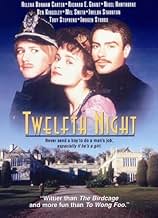
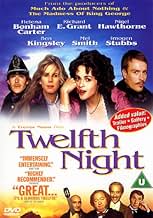
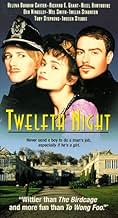
Adaptación de la obra de Shakespeare que cuenta la historia de dos hermanos separados tras un naufragio, cada uno creyendo que el otro ha muerto.Adaptación de la obra de Shakespeare que cuenta la historia de dos hermanos separados tras un naufragio, cada uno creyendo que el otro ha muerto.Adaptación de la obra de Shakespeare que cuenta la historia de dos hermanos separados tras un naufragio, cada uno creyendo que el otro ha muerto.
- Director/a
- Guionistas
- Estrellas
- Premios
- 1 premio y 2 nominaciones en total



Sidney Livingstone
- Captain
- (as Sid Livingstone)


David Burke
- Party Guest
- (sin acreditar)
- …
- Director/a
- Guionistas
- Todo el reparto y equipo
- Producción, taquilla y más en IMDbPro
7,16.7K
1
2
3
4
5
6
7
8
9
10
Reseñas destacadas
One of the best interpretations of Shakespeare
In Illyria, Orsino (Toby Stephens), a nobleman, is saddened because he cannot have the love of Lady Olivia (Helena Bonham-Carter) who is mourning the loss of her brother. Meanwhile, twins Sebastian (Stephen Mackintosh) and Viola (Imogen Stubbs) both survive a terrible shipwreck off the coast, but each thinks the other has died. Viola takes the guise of a man and goes to work in the household of the nobleman, falling in love with Duke Orsino. Meanwhile Olivia is taken with Viola who calls herself Cesario. This is the premise of one of William Shakespeare's most appealing comedies, Twelfth Night: Or What You Will, updated from Elizabethan England to late 19th century and brought to life by director Trevor Nunn. It is one of the best interpretations of Shakespeare that I have seen on film.
Reminiscent of other Shakespearean cross-dressing comedies such as As You Like It, Twelfth Night is mostly about the ins and outs of romantic love but it is also about pride, "overweening ambition", disguises, and mistaken identities. The play contains some of Shakespeare's most memorable characters: Sir Toby Belch (Mel Smith), Olivia's drunken uncle, his friend Sir Andrew Aguecheek (Richard E. Grant) who is also trying to court Olivia, Olivia's gentlewoman Maria (Imelda Staunton), Feste (Ben Kingsley), the house clown, and Malvolio (Nigel Hawthorne) the prudish steward. Nunn has assembled a cast that more than does justice to the play. Imogen Stubbs as Viola actually looks like a handsome young man and has a sense of purity and innocence that makes her instantly likable. Helena Bonham Carter brings warmth to the character of Olivia who like Orsino seems to be in love with the idea of love not the reality. Some have noticed a similarity between the character of Olivia and Queen Elizabeth and interestingly, Olivia is addressed by Feste as "madonna", the only time the word is used in all of Shakespeare, perhaps a wry comment about the myth of the Virgin Queen.
The main story involves a love triangle between Orsinio, Viola, and Olivia but the minor characters have more than ample time on stage. Malvolio is both a comic and a tragic figure, said to caricature Sir Christopher Hatton, a courtier, romantic pursuer of the Queen and rival of the Earl of Oxford. Hatton was so fawning Elizabeth called him her "sheep" or "mutton" and this allusion is present early in the play as Malvolio is called a "rascally sheep-biter", harking back to Hatton's letter assuring Elizabeth that "The sheep hath no tooth to bite while the Boar's (Oxford) tusk doth raze and tear." Malvolio is a puritan who rails against people having fun, a trait that earns him the enmity of Sir Toby and Maria. To strike back, Maria engineers a joke on Malvolio. She forges a love letter supposedly from Olivia telling him that if he wants her to notice him, he should dress in yellow stockings and crossed garters and, as he woos Olivia dressed in his strange attire, Malvolio cuts a ridiculous figure (incidentally this is the same costume worn by Henry VIII when he danced with Anne Boleyn, Queen Elizabeth's mother, at a masked ball, before he had her beheaded for adultery).
While there are many great performances, the star for me is Ben Kingsley who is totally convincing as Feste, a fool but a knowing one who functions as an objective commentator of the scene around him, exuding an air of righteous superiority. His portrayal of the priest Sir Topas who interrogates Malvolio in a darkened room has overtones of the 1581 trial and execution of Edmund Campion, a Jesuit priest who was executed by the English government in 1581. In his speech of less than fifty words, which appears to resemble nothing but nonsense, there are no less than five phrases which refer directly to Edmund Campion and his 1580-81 mission to England.
Richard Desper has pointed out that the mock trial scene works as a parody of the government persecution of Catholic martyrs. "The playwright," he writes, "demonstrates for us a world turned upside down, with clowns passing themselves off as men of learning, while men of learning are pressed to deny what they believe to be true to serve political ends." The ending is too delightful to give anything away but it reminded me of the Ingmar Bergman comedy Smiles of a Summer Night, where mismatched couples get together at a summer cottage to sort everything out. Malvolio is pitiable in trying to redeem a shred of dignity but we feel for him when he exits saying, "I shall be revenged on the whole pack of you". As he leaves, he is the only person suffering in a sea of happy faces, those on screen as well as those at home.
Reminiscent of other Shakespearean cross-dressing comedies such as As You Like It, Twelfth Night is mostly about the ins and outs of romantic love but it is also about pride, "overweening ambition", disguises, and mistaken identities. The play contains some of Shakespeare's most memorable characters: Sir Toby Belch (Mel Smith), Olivia's drunken uncle, his friend Sir Andrew Aguecheek (Richard E. Grant) who is also trying to court Olivia, Olivia's gentlewoman Maria (Imelda Staunton), Feste (Ben Kingsley), the house clown, and Malvolio (Nigel Hawthorne) the prudish steward. Nunn has assembled a cast that more than does justice to the play. Imogen Stubbs as Viola actually looks like a handsome young man and has a sense of purity and innocence that makes her instantly likable. Helena Bonham Carter brings warmth to the character of Olivia who like Orsino seems to be in love with the idea of love not the reality. Some have noticed a similarity between the character of Olivia and Queen Elizabeth and interestingly, Olivia is addressed by Feste as "madonna", the only time the word is used in all of Shakespeare, perhaps a wry comment about the myth of the Virgin Queen.
The main story involves a love triangle between Orsinio, Viola, and Olivia but the minor characters have more than ample time on stage. Malvolio is both a comic and a tragic figure, said to caricature Sir Christopher Hatton, a courtier, romantic pursuer of the Queen and rival of the Earl of Oxford. Hatton was so fawning Elizabeth called him her "sheep" or "mutton" and this allusion is present early in the play as Malvolio is called a "rascally sheep-biter", harking back to Hatton's letter assuring Elizabeth that "The sheep hath no tooth to bite while the Boar's (Oxford) tusk doth raze and tear." Malvolio is a puritan who rails against people having fun, a trait that earns him the enmity of Sir Toby and Maria. To strike back, Maria engineers a joke on Malvolio. She forges a love letter supposedly from Olivia telling him that if he wants her to notice him, he should dress in yellow stockings and crossed garters and, as he woos Olivia dressed in his strange attire, Malvolio cuts a ridiculous figure (incidentally this is the same costume worn by Henry VIII when he danced with Anne Boleyn, Queen Elizabeth's mother, at a masked ball, before he had her beheaded for adultery).
While there are many great performances, the star for me is Ben Kingsley who is totally convincing as Feste, a fool but a knowing one who functions as an objective commentator of the scene around him, exuding an air of righteous superiority. His portrayal of the priest Sir Topas who interrogates Malvolio in a darkened room has overtones of the 1581 trial and execution of Edmund Campion, a Jesuit priest who was executed by the English government in 1581. In his speech of less than fifty words, which appears to resemble nothing but nonsense, there are no less than five phrases which refer directly to Edmund Campion and his 1580-81 mission to England.
Richard Desper has pointed out that the mock trial scene works as a parody of the government persecution of Catholic martyrs. "The playwright," he writes, "demonstrates for us a world turned upside down, with clowns passing themselves off as men of learning, while men of learning are pressed to deny what they believe to be true to serve political ends." The ending is too delightful to give anything away but it reminded me of the Ingmar Bergman comedy Smiles of a Summer Night, where mismatched couples get together at a summer cottage to sort everything out. Malvolio is pitiable in trying to redeem a shred of dignity but we feel for him when he exits saying, "I shall be revenged on the whole pack of you". As he leaves, he is the only person suffering in a sea of happy faces, those on screen as well as those at home.
Good looking & well acted effort at an implausible Shakespearian plot
As with most Shakespearian comedies, the plot is deeply implausible. However, the excellent Cornish locations at St Michael's Mount & Lanhyrock give a good sense of place and the winter setting (apart from the scene of apple picking!) comes across well - it really does look like an English winter, rather than a picture postcard snow-scene.
The play is cut down to a manageable length without losing the sense of it, The broad comedy aspects (Toby Belch et al) are thankfully limited.
The acting is well done by a cast of British stalwarts. Amazingly, Viola and Sebastian actually do look broadly alike.
This film is best viewed as an amusing light romantic comedy rather than a side-splitter.
The play is cut down to a manageable length without losing the sense of it, The broad comedy aspects (Toby Belch et al) are thankfully limited.
The acting is well done by a cast of British stalwarts. Amazingly, Viola and Sebastian actually do look broadly alike.
This film is best viewed as an amusing light romantic comedy rather than a side-splitter.
Excellent
Reading other reviews of 'Twelfth Night' it is interesting to see that some people think it is a slow film and others quite fast. It gripped me from the opening gust of rain on a dark night to Feste dancing off into the sunset. Grappling with Shakespeare is a perilous activity but I thought Trevor Nunn brought out the comedy and the emotions of the story well. It is a film to make you smile at the follies of mankind but also their charm.
Ben Kingsley is amazing. I've never seen Feste played that way but it seemed perfect. Imogen Stubbs does the comedy and the drama equally well. The scene with Orsino in the bathtub is a stock one but she does it beautifully, balancing the humour of the situation with the tenderness and the longing. Imelda Staunton brings unusual depth to the character of Maria. The rest of the cast are great too.
The text of the play is changed around but not unnaturally so. The scene that cuts between Feste's song and Viola/Cesario and Orsino playing cards is wonderful, taking in eight of the characters and telling you more about them. The last act of the play is difficult to stage well but Nunn gives it a good shot.
The Cornwall setting is lovely, the radiant sunshine, the green leaves and fine buildings are captured gorgeously by the cameras. I also liked the music very much and find some of the tunes quite hummable.
Very enjoyable and worth seeing again and again.
Ben Kingsley is amazing. I've never seen Feste played that way but it seemed perfect. Imogen Stubbs does the comedy and the drama equally well. The scene with Orsino in the bathtub is a stock one but she does it beautifully, balancing the humour of the situation with the tenderness and the longing. Imelda Staunton brings unusual depth to the character of Maria. The rest of the cast are great too.
The text of the play is changed around but not unnaturally so. The scene that cuts between Feste's song and Viola/Cesario and Orsino playing cards is wonderful, taking in eight of the characters and telling you more about them. The last act of the play is difficult to stage well but Nunn gives it a good shot.
The Cornwall setting is lovely, the radiant sunshine, the green leaves and fine buildings are captured gorgeously by the cameras. I also liked the music very much and find some of the tunes quite hummable.
Very enjoyable and worth seeing again and again.
Entertaining Film
Slick Shakespeare adaptation, well acted and very humorous (in parts) in its telling. Naturally, there's always going to be some differences from stage to cinema. The film took advantage of this, of course, to avoid a "stage" feel. The perceptions, or rather the misperceptions, of people and motivations are well explored and portrayed. Ben Kingsley is a standout, for his interesting twist on the character Feste. In short, a good adaptation and film. Recommended.
Lively
A lively, bubbly production of one of Shakespeare's more difficult plays. It's hard to know just what Shakespeare was getting at with this story. The text doesn't always seem to make sense. That's reflected in this, as well as any other, production. At times, one wonders what the expressions on characters' faces are meant to indicate. Just after Feste has fooled Malvolio with his imitation of the curate, for instance, Maria has a perturbed look on her face. As if the joke that she herself so elaborately designed now troubles her. There's nothing in the text to indicate that her expression should show remorse; and yet Sir Toby soon after says that he's sick of the whole thing. Why? That's one example of the difficulty of the text (which may have been corrupted over the centuries), and how it is manifested in this particular production's choices. I don't know why Sir Toby remarks at this point that he's sick of the joke, nor do I know whether Maria should share his feelings.
Another difficulty is the role of Feste. Ben Kingsley fills this role, and because Ben Kingsley is a major star, he magnifies this character (in my opinion) out of all proportion. He becomes a sort of Zen master, pompous and oppressive. His jokes aren't funny (maybe we can't find Shakespeare's jokes funny today, but Kingsley's heavy delivery precludes humor), and his last confrontation with Malvolio comes off as a sort of thundering divine retribution. The entire play, the entire cast, stops dead and Feste takes over as if the whole point of the play has been his apotheosis at the expense of the degraded Malvolio. This surely cannot be what Shakespeare had in mind. Throughout the play he has a disconcerting habit of staring at other characters or the camera with what almost be described as a leer.
Maybe Shakespeare would have sighed and commiserated with the producer of this film, because the clowns in his day were also big stars who demanded a lot of meat in their roles. The trouble is that there just isn't much meat in Feste's role according to the text, so we're stuck with leers and thundering retribution and other inventions. Shakespeare had to accommodate his clowns with ever-more important roles, climaxing with characters like Touchstone and Lear's fool. Kingsley is just inventing his own character. At times his work is interesting, but his weight in the production is, as I said, oppressive.
Still, his screen time is relatively small, and much of the rest of the play is a joy, even if the point of the story isn't always clear. Bonham-Carter was never more alluring, Hawthorne is priceless as Malvolio (he was born for the role), and Smith and Grant are the perfect combination of Belch and Aguecheek. I suppose you might object that all four of them put their eyebrows to such prodigious use that their acting might be characterized as hamming. But I don't see how any of these characters can be played straight if the play is to work.
One thing is for sure, no one would ever accuse this production of bogging down. The pace is lively, the sets and the cinematography are always striking, the score is invigorating, and I suspect that I could watch this film dubbed in Swahili and it would still be a lot of fun. Visually arresting is perhaps the best description.
Another difficulty is the role of Feste. Ben Kingsley fills this role, and because Ben Kingsley is a major star, he magnifies this character (in my opinion) out of all proportion. He becomes a sort of Zen master, pompous and oppressive. His jokes aren't funny (maybe we can't find Shakespeare's jokes funny today, but Kingsley's heavy delivery precludes humor), and his last confrontation with Malvolio comes off as a sort of thundering divine retribution. The entire play, the entire cast, stops dead and Feste takes over as if the whole point of the play has been his apotheosis at the expense of the degraded Malvolio. This surely cannot be what Shakespeare had in mind. Throughout the play he has a disconcerting habit of staring at other characters or the camera with what almost be described as a leer.
Maybe Shakespeare would have sighed and commiserated with the producer of this film, because the clowns in his day were also big stars who demanded a lot of meat in their roles. The trouble is that there just isn't much meat in Feste's role according to the text, so we're stuck with leers and thundering retribution and other inventions. Shakespeare had to accommodate his clowns with ever-more important roles, climaxing with characters like Touchstone and Lear's fool. Kingsley is just inventing his own character. At times his work is interesting, but his weight in the production is, as I said, oppressive.
Still, his screen time is relatively small, and much of the rest of the play is a joy, even if the point of the story isn't always clear. Bonham-Carter was never more alluring, Hawthorne is priceless as Malvolio (he was born for the role), and Smith and Grant are the perfect combination of Belch and Aguecheek. I suppose you might object that all four of them put their eyebrows to such prodigious use that their acting might be characterized as hamming. But I don't see how any of these characters can be played straight if the play is to work.
One thing is for sure, no one would ever accuse this production of bogging down. The pace is lively, the sets and the cinematography are always striking, the score is invigorating, and I suspect that I could watch this film dubbed in Swahili and it would still be a lot of fun. Visually arresting is perhaps the best description.


¿Sabías que...?
- CuriosidadesIn the mid 1950s, director Joseph L. Mankiewicz tried to set up a version with Audrey Hepburn and Danny Kaye, but it failed to materialize.
- PifiasDuring one of the final scenes, when Malvolio reenters, it can be seen that his left shoe is missing. However, as he is walking up the stairs, you can clearly hear both heels clicking on the steps.
Selecciones populares
Inicia sesión para calificar y añadir a tu lista para recibir recomendaciones personalizadas
- How long is Twelfth Night?Con tecnología de Alexa
Detalles
- Fecha de lanzamiento
- Países de origen
- Sitio oficial
- Idioma
- Títulos en diferentes países
- Noche de reyes o lo que vosotros queráis
- Localizaciones del rodaje
- Lanhydrock House, Bodmin, Cornwall, Inglaterra, Reino Unido(Olivia's house and garden)
- Empresas productoras
- Ver más compañías en los créditos en IMDbPro
Taquilla
- Presupuesto
- 5.000.000 US$ (estimación)
- Recaudación en Estados Unidos y Canadá
- 588.621 US$
- Fin de semana de estreno en EE. UU. y Canadá
- 33.451 US$
- 27 oct 1996
- Recaudación en todo el mundo
- 588.621 US$
Contribuir a esta página
Sugerir un cambio o añadir el contenido que falta