PUNTUACIÓN EN IMDb
7,5/10
32 mil
TU PUNTUACIÓN


Añade un argumento en tu idiomaA look at the life and work of doctor-assisted suicide advocate Jack Kevorkian.A look at the life and work of doctor-assisted suicide advocate Jack Kevorkian.A look at the life and work of doctor-assisted suicide advocate Jack Kevorkian.
- Director/a
- Guionista
- Estrellas
- Ganó 2 premios Primetime Emmy
- 11 premios y 38 nominaciones en total



- Director/a
- Guionista
- Todo el reparto y equipo
- Producción, taquilla y más en IMDbPro
7,531.6K
1
2
3
4
5
6
7
8
9
10
Reseñas destacadas
Quite a departure for Al
What a different role for Pacino! But, he was just as great and totally brilliant and believable in this quiet but driven, eccentric role as he usually is in his other roles where he furiously eats the scenery throughout.
I wasn't sure if his "Midwestern" accent was a Fargo caricature or if he was merely channeling Chief Dan George in Little Big Man, but it sure was interesting to hear an NYC Italian able to be so believable in his upper midwest accent that was located about 10 miles east of Minneapolis, or close thereabouts. Meryl Streep, move over.
The philosophy of this controversial subject is much more serious. America is so far behind the rest of the world in assisted suicide, as many countries now allow a person to die an assisted death for any reason, with no incurable illness or the like required. All it requires is a waiting period to be positive of the hard decision made. And here we are in the good old retarded USofA, still not allowing the dignified assisted death of terribly suffering and/or terminal souls who merely and quietly want nothing more disruptive than a personal, peaceful, and painless end to their agonizing day-to-day existence. (I totally agree with the rest of the world that it is as much or more an individual decision as is having an abortion and no political or religious entity should have any say in what a person makes up his mind to do in this matter. These intruding entities should not play any part at all in influencing and determining the right and wrong of it, as there is none to a rational thinker.)
All supporting roles were well done, with John Goodman bringing much needed comic relief at times to this achingly serious story. Brenda Vaccaro as the doc's conflicted sister and fellow death-with-dignity proponent Susan Sarandon were truly positive additions to the cast. Direction by the brilliant Barry Levinson was nonpariel and as good as his earlier Rain Man.
I truly hope this film moves the assisted death argument forward in America as it couldn't go any further backward, and more is the pity for that unevolved thinking.
I wasn't sure if his "Midwestern" accent was a Fargo caricature or if he was merely channeling Chief Dan George in Little Big Man, but it sure was interesting to hear an NYC Italian able to be so believable in his upper midwest accent that was located about 10 miles east of Minneapolis, or close thereabouts. Meryl Streep, move over.
The philosophy of this controversial subject is much more serious. America is so far behind the rest of the world in assisted suicide, as many countries now allow a person to die an assisted death for any reason, with no incurable illness or the like required. All it requires is a waiting period to be positive of the hard decision made. And here we are in the good old retarded USofA, still not allowing the dignified assisted death of terribly suffering and/or terminal souls who merely and quietly want nothing more disruptive than a personal, peaceful, and painless end to their agonizing day-to-day existence. (I totally agree with the rest of the world that it is as much or more an individual decision as is having an abortion and no political or religious entity should have any say in what a person makes up his mind to do in this matter. These intruding entities should not play any part at all in influencing and determining the right and wrong of it, as there is none to a rational thinker.)
All supporting roles were well done, with John Goodman bringing much needed comic relief at times to this achingly serious story. Brenda Vaccaro as the doc's conflicted sister and fellow death-with-dignity proponent Susan Sarandon were truly positive additions to the cast. Direction by the brilliant Barry Levinson was nonpariel and as good as his earlier Rain Man.
I truly hope this film moves the assisted death argument forward in America as it couldn't go any further backward, and more is the pity for that unevolved thinking.
Pacino's not dead yet - and this is a killer performance
Actors have been known to sit on their laurels. Some would argue that, with Oscar, Emmy, and Tony as best mates on the mantelpiece, Al Pacino can do just that. Do we respectfully think that all his truly great performances are in the past? Godfather, Michael Corleone? Or Scarface, Tony Montana? Happily we can think again. Seeing You Don't Know Jack, we know it's the film Pacino fans have waited for.
Opening scenes give us Dr 'Death' Kevorkian. Before he invents his famous assisted suicide machine. I look closely at this point. I have to reassure myself it is indeed Pacino, not a docu-drama cut-in. For Pacino looks more like Kevorkian than Kevorkian does. Face, body language, tone of voice, the works.
The first achievement is to captivate with the character himself. Not the divisive issues he represents. Bypass the hazards of predictable biopics. Or monotonous 'message' movies. This is quality mainstream film-making and at its best. It doesn't seek to change views, and the spiky Mr Kevorkian leaves plenty of room to disagree, isolating himself often from even his own supporters. This is a passionate man who has little time for other people's views in any general sense. "Who cares what other people think?" he exclaims. "It's what my patient feels." This is not the first time director Barry Levinson has astounded audiences. Slick approaches shaking up accepted thinking. Wag the Dog was to be a wildcard that would embarrass Clinton's government. The Oscar-winner, Rain Man, was criticised for creating a misleading stereotype (Is every autistic person a closet savant? Of course not.) But what Rain Man did do was raise awareness. Make it OK to talk openly about autism. And – perhaps this is the secret – You Don't Know Jack could have a similar effect just because it is just as funny, just as entertaining, just as engaging and just as challenging. We so get many different emotions in fast succession on the screen, until we're primed to consider , "How do I really feel about this?" Real people (including death scenes with Kevorkian's patients) are more gutsier coathooks for feelings than the vague ethical constructs debated in every high school.
If movies learn anything from TV, it's how to keep audience attention. And You Don't Know Jack is suitably punchy. It dismisses any thought of getting up for coffee. No boring arguments for or against euthanasia. None of those Clint Eastwood, long and meditative, 'Million Dollar Baby' moments. Susan Sarandon even brings some of her own caustic lines to a film that often brims over with dark, surreal humour. "Is that Santa Claus stepping on a baby?" she asks casually at an exhibition of Kevorkian's bizarre paintings.
There are powerful performance in abundance, not least from the underrated Danny Huston who plays Fieger, Kevorkian's larger-than-life attorney. (Immediately after the movie first aired, the real Geoffrey Fieger announced he will 'maybe stand again' for governor.) Fieger is a colourful, over-the-top character in real life, perfectly suited to Huston's strengths. After watching Danny Huston's talent wasted in lesser films, such as the well-intentioned Boogie Woogie, it is a joy to see him shine.
Bare-knuckle scenes in You Don't Know Jack are explicit. Both in the physical acts of assisted suicide and in their emotional intensity. Kevorkian recalls his own mother's death to Janet Good (Sarandon). "She told me, 'Imagine the worst toothache in the world – now imagine that toothache in every bone in your body." He is almost penniless (for he never charged) and, with scientific precision, he at one point tries to save on lethal gas. He places his emphysema patient in a plastic hood (to catch the gas, rather than using a face-mask). But the patient panics and it is nearly the last straw for friend and assistant Neal Nicol, played effortlessly by John Goodman. Such scenes are not for the squeamish.
The sense of sincerity and conviction which Pacino gives the role could make it rather uncomfortable viewing if you disagree outright. But this intense, yet sidelong glance at a deeply polarising topic, seriously tackled but deftly relieved with a sharp witty screenplay, might just give new life to a debate that suffers from political hubris set against rather static public opinion.
You Don't Know Jack reveals a person a long way from popular conceptions. Even if you read his autobiography and see him in interview, as I have, he was and still is, a hard person to fathom. An egocentric – or to use a word he suggested himself – a zealot – it often seems that Kevorkian believes in himself to the point of being inaccessible. "You're gonna need some business cards you know!" chides his sister. For this driven man who is happy to live on a pittance and then go on hunger strike, the importance of such details can, it seems, easily be missed.
At over two hours long, the movie occasionally verges on repetition. Levinson, back on form after several also-rans, maintains the pace with intelligent humour and inventive cinematography. "You understand what prison is?" Judge Jessica Copper asks Kevorkian, who seems oblivious of the potential consequences of his actions. "Did you see The Shawshank Redemption, Sir?" During the hunger strike, a fast montage of slamming doors and uneaten foodtrays makes an impression on our ears and eyes faster than any amount of words – and also provides a welcome change of tempo.
This is cinema of the unexpected. With subject matter that should have been unbankably inauspicious. Yet You Don't Know Jack triumphs to take your breath away. Even without a plastic hood.
Opening scenes give us Dr 'Death' Kevorkian. Before he invents his famous assisted suicide machine. I look closely at this point. I have to reassure myself it is indeed Pacino, not a docu-drama cut-in. For Pacino looks more like Kevorkian than Kevorkian does. Face, body language, tone of voice, the works.
The first achievement is to captivate with the character himself. Not the divisive issues he represents. Bypass the hazards of predictable biopics. Or monotonous 'message' movies. This is quality mainstream film-making and at its best. It doesn't seek to change views, and the spiky Mr Kevorkian leaves plenty of room to disagree, isolating himself often from even his own supporters. This is a passionate man who has little time for other people's views in any general sense. "Who cares what other people think?" he exclaims. "It's what my patient feels." This is not the first time director Barry Levinson has astounded audiences. Slick approaches shaking up accepted thinking. Wag the Dog was to be a wildcard that would embarrass Clinton's government. The Oscar-winner, Rain Man, was criticised for creating a misleading stereotype (Is every autistic person a closet savant? Of course not.) But what Rain Man did do was raise awareness. Make it OK to talk openly about autism. And – perhaps this is the secret – You Don't Know Jack could have a similar effect just because it is just as funny, just as entertaining, just as engaging and just as challenging. We so get many different emotions in fast succession on the screen, until we're primed to consider , "How do I really feel about this?" Real people (including death scenes with Kevorkian's patients) are more gutsier coathooks for feelings than the vague ethical constructs debated in every high school.
If movies learn anything from TV, it's how to keep audience attention. And You Don't Know Jack is suitably punchy. It dismisses any thought of getting up for coffee. No boring arguments for or against euthanasia. None of those Clint Eastwood, long and meditative, 'Million Dollar Baby' moments. Susan Sarandon even brings some of her own caustic lines to a film that often brims over with dark, surreal humour. "Is that Santa Claus stepping on a baby?" she asks casually at an exhibition of Kevorkian's bizarre paintings.
There are powerful performance in abundance, not least from the underrated Danny Huston who plays Fieger, Kevorkian's larger-than-life attorney. (Immediately after the movie first aired, the real Geoffrey Fieger announced he will 'maybe stand again' for governor.) Fieger is a colourful, over-the-top character in real life, perfectly suited to Huston's strengths. After watching Danny Huston's talent wasted in lesser films, such as the well-intentioned Boogie Woogie, it is a joy to see him shine.
Bare-knuckle scenes in You Don't Know Jack are explicit. Both in the physical acts of assisted suicide and in their emotional intensity. Kevorkian recalls his own mother's death to Janet Good (Sarandon). "She told me, 'Imagine the worst toothache in the world – now imagine that toothache in every bone in your body." He is almost penniless (for he never charged) and, with scientific precision, he at one point tries to save on lethal gas. He places his emphysema patient in a plastic hood (to catch the gas, rather than using a face-mask). But the patient panics and it is nearly the last straw for friend and assistant Neal Nicol, played effortlessly by John Goodman. Such scenes are not for the squeamish.
The sense of sincerity and conviction which Pacino gives the role could make it rather uncomfortable viewing if you disagree outright. But this intense, yet sidelong glance at a deeply polarising topic, seriously tackled but deftly relieved with a sharp witty screenplay, might just give new life to a debate that suffers from political hubris set against rather static public opinion.
You Don't Know Jack reveals a person a long way from popular conceptions. Even if you read his autobiography and see him in interview, as I have, he was and still is, a hard person to fathom. An egocentric – or to use a word he suggested himself – a zealot – it often seems that Kevorkian believes in himself to the point of being inaccessible. "You're gonna need some business cards you know!" chides his sister. For this driven man who is happy to live on a pittance and then go on hunger strike, the importance of such details can, it seems, easily be missed.
At over two hours long, the movie occasionally verges on repetition. Levinson, back on form after several also-rans, maintains the pace with intelligent humour and inventive cinematography. "You understand what prison is?" Judge Jessica Copper asks Kevorkian, who seems oblivious of the potential consequences of his actions. "Did you see The Shawshank Redemption, Sir?" During the hunger strike, a fast montage of slamming doors and uneaten foodtrays makes an impression on our ears and eyes faster than any amount of words – and also provides a welcome change of tempo.
This is cinema of the unexpected. With subject matter that should have been unbankably inauspicious. Yet You Don't Know Jack triumphs to take your breath away. Even without a plastic hood.
10D_Burke
Compelling DocuDrama Void of Exploitation, & Pacino's Best Performance in Years
If you remember the 90's, Dr. Jack Kevorkian needs no introduction. His name was as much the subject of medical controversy as it was the punchline of countless jokes. His name was as notorious to some as O.J. Simpson or Richard Ramirez, yet also as admirable to others as Bill Clinton or Michael Jordan.
In the hands of many other directors, Kevorkian's biopic could have been treated more like a farce based on the doctor's past eccentricities, such as showing up in court wearing a powdered wig. Of course, Kevorkian's unabashed behaviors in front of camera lenses are depicted in this film, but fortunately, the details of his assisted suicides are not ever given any sugar coated treatments.
"You Don't Know Jack" tells the story about Dr. Kevorkian we should already know. Taking place from approximately 1990-1999, the film takes us from Kevorkian's days of being an unemployed physician to the trial that brought an end to his morally questionable practice for good. The lighting throughout this film is dark and often times dreary, but never dull thanks foremost to an impressive performance by Al Pacino that may be his best since "Scent of a Woman".
When watching this film, there was rarely a moment where I thought to myself, "That's Al Pacino playing Dr. Kevorkian". Pacino's signature eyes and husky voice are still ever present, but he disappears into his role so effectively that I found myself saying, "That is Dr. Kevorkian". Not only is that feat so hard to accomplish for an actor so iconic as Pacino, but it's also hard to play someone who most of the American public knew so well from being on TV all the time.
While it's impressive for Pacino to play the Jack we do know, he plays the Jack many "don't know" with a wry wit that makes an appealing character, even if you don't agree with assisted suicide. A great scene involved Pacino delving a subtle verbal blow to protesters outside his apartment building. When he says that the God he believes in, namely Johann Sebastian Bach, isn't imaginary like the God the protesters believe in, you can't help but laugh. I'm Catholic, and I thought it was hilarious.
However, this movie's strength comes in its nonjudgmental view on Kevorkian's practices. The movie never tells you how you should feel, but also clears up the notion that Kevorkian practiced his assisted suicides with reckless abandon. Many of the suicides in the movie focus on the patients themselves, and their absolute certainty that they want their suffering to end. Of course, leaving their loved ones is their hardest decision, something the film indeed recognizes. Is it still wrong? This movie doesn't tell, nor should it.
What's interesting, though, is the focus on Pacino's eyes during the scene where he performs his first procedure. They move back and forth on the screen as the operation continues, and don't try to mask any emotion of any kind. It could mean that Kevorkian doesn't care about his patients, or that he cares enough about them to keep the procedure as precise as possible. The main point: You decide.
The same is true for Kevorkian's unabashed character on camera. It's all here in this film, but director Barry Levinson resists the temptation for Pacino as Kevorkian to wink and nod at the camera. Considering Levinson directed excellent character-centric comedy/dramas like "Good Morning Vietnam" and "Man of the Year", the temptation must have been there. Fortunately, he used his knack for dramas like "Rainman" and "Avalon" instead, and the effect worked wonders.
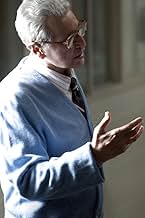
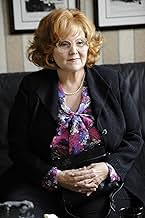
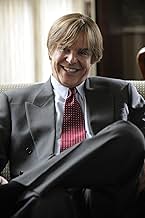
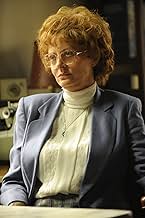
The supporting cast behind Pacino is excellent. Danny Huston is fantastic as Geoffrey Fieger, Kevorkian's successful lawyer, and is equally as good interacting with Pacino as he is in the courtroom scenes. Brenda Vaccaro, Susan Sarandon, and John Goodman are great supporting members of this film as colleagues who believe in Kevorkian's mission, but also have the outside vantage point to know what he's inevitably destined for.
Whether you agree with Kevorkian's practices or not, it is impossible not to be compelled by this movie. The story draws you in, the characters are well developed in all the right areas, and it doesn't take more than five minutes for Pacino to convince you he is Dr. Jack Kevorkian. Do you know Jack by the end of this film? I'm still not sure. But I know an excellent movie when I see one, and this deserves 10 stars. See it!
In the hands of many other directors, Kevorkian's biopic could have been treated more like a farce based on the doctor's past eccentricities, such as showing up in court wearing a powdered wig. Of course, Kevorkian's unabashed behaviors in front of camera lenses are depicted in this film, but fortunately, the details of his assisted suicides are not ever given any sugar coated treatments.
"You Don't Know Jack" tells the story about Dr. Kevorkian we should already know. Taking place from approximately 1990-1999, the film takes us from Kevorkian's days of being an unemployed physician to the trial that brought an end to his morally questionable practice for good. The lighting throughout this film is dark and often times dreary, but never dull thanks foremost to an impressive performance by Al Pacino that may be his best since "Scent of a Woman".
When watching this film, there was rarely a moment where I thought to myself, "That's Al Pacino playing Dr. Kevorkian". Pacino's signature eyes and husky voice are still ever present, but he disappears into his role so effectively that I found myself saying, "That is Dr. Kevorkian". Not only is that feat so hard to accomplish for an actor so iconic as Pacino, but it's also hard to play someone who most of the American public knew so well from being on TV all the time.
While it's impressive for Pacino to play the Jack we do know, he plays the Jack many "don't know" with a wry wit that makes an appealing character, even if you don't agree with assisted suicide. A great scene involved Pacino delving a subtle verbal blow to protesters outside his apartment building. When he says that the God he believes in, namely Johann Sebastian Bach, isn't imaginary like the God the protesters believe in, you can't help but laugh. I'm Catholic, and I thought it was hilarious.
However, this movie's strength comes in its nonjudgmental view on Kevorkian's practices. The movie never tells you how you should feel, but also clears up the notion that Kevorkian practiced his assisted suicides with reckless abandon. Many of the suicides in the movie focus on the patients themselves, and their absolute certainty that they want their suffering to end. Of course, leaving their loved ones is their hardest decision, something the film indeed recognizes. Is it still wrong? This movie doesn't tell, nor should it.
What's interesting, though, is the focus on Pacino's eyes during the scene where he performs his first procedure. They move back and forth on the screen as the operation continues, and don't try to mask any emotion of any kind. It could mean that Kevorkian doesn't care about his patients, or that he cares enough about them to keep the procedure as precise as possible. The main point: You decide.
The same is true for Kevorkian's unabashed character on camera. It's all here in this film, but director Barry Levinson resists the temptation for Pacino as Kevorkian to wink and nod at the camera. Considering Levinson directed excellent character-centric comedy/dramas like "Good Morning Vietnam" and "Man of the Year", the temptation must have been there. Fortunately, he used his knack for dramas like "Rainman" and "Avalon" instead, and the effect worked wonders.
The supporting cast behind Pacino is excellent. Danny Huston is fantastic as Geoffrey Fieger, Kevorkian's successful lawyer, and is equally as good interacting with Pacino as he is in the courtroom scenes. Brenda Vaccaro, Susan Sarandon, and John Goodman are great supporting members of this film as colleagues who believe in Kevorkian's mission, but also have the outside vantage point to know what he's inevitably destined for.
Whether you agree with Kevorkian's practices or not, it is impossible not to be compelled by this movie. The story draws you in, the characters are well developed in all the right areas, and it doesn't take more than five minutes for Pacino to convince you he is Dr. Jack Kevorkian. Do you know Jack by the end of this film? I'm still not sure. But I know an excellent movie when I see one, and this deserves 10 stars. See it!
Tour de force acting by Pacino a must-see
I've seen "You Don't Know Jack" twice now and will certainly watch it several times more with friends coming to watch my DVR HD recording of this HBO TV movie. It's not easy to watch the harrowing scenes of terminal patients in great distress. But with an outstandingly intelligent script, first-class cinematography and stellar performances by all the actors it becomes compelling viewing. Like Marion Cotillard's portrayal of Edith Piaf in "La Vie en Rose", Pacino's incredible performance will leave us with the feeling that he has indeed become Dr Kevorkian for us. His powerful acting gains pace as the movie progresses until the final dramatic courtroom scenes end the remarkable story of a pioneer eccentric's human rights obsession. While overtly sympathetic to Kevorkian, all sides of the arguments for or against assisted suicide are fairly presented and leave one thinking about the subject for days. In addition to Pacino's tour de force role I think that Barry Levinson's inspired direction brings this movie to masterpiece status. I hope it will be released on DVD soon so that a much wider audience can see it.
Don't Let the "Made For TV" Fool You
Confession: I have long been a fan of Jack Kevorkian, and believed in his cause. Yes, he does walk a thin line at times, and raises some ethical issues, but his general point always seemed sound to me.
Here is the first film on his life (at least the part that we care about) that merits watching. It tells the whole story, does it very effectively, and gives us one of the best Al Pacino roles in years. Also, we learn more about his friend Neil and his attorney, both of whom were always played down in the news.
Although the film runs a bit on the long side, and could possibly be trimmed by ten minutes, I really enjoyed it. Pacino should be proud, and Kevorkian himself could ask of no greater portrayal of his work.
Here is the first film on his life (at least the part that we care about) that merits watching. It tells the whole story, does it very effectively, and gives us one of the best Al Pacino roles in years. Also, we learn more about his friend Neil and his attorney, both of whom were always played down in the news.
Although the film runs a bit on the long side, and could possibly be trimmed by ten minutes, I really enjoyed it. Pacino should be proud, and Kevorkian himself could ask of no greater portrayal of his work.


¿Sabías que...?
- CuriosidadesBased on Neal Nicol's and Harry Wylie's novel, "Between the Dying and the Dead: Dr. Jack Kevorkian, the Assisted Suicide Machine and the Battle to Legalize Euthanasia." It was published by Vision in 2006.
- PifiasDr. Kevorkian's original death machine (using IV drugs) was called the Thanatron, not Mercitron. The Mercitron was the name of his carbon monoxide based death machine.
- Citas
Lynn Mills: Have you no religion? Have you no God?
Jack Kevorkian: Oh, I do, lady, I have a religion, his name is Bach. Johann Sebastian Bach. And at least my God isn't an invented one.
- Banda sonoraEarly in the Morning
Written by Dallas Bartley, Leo Hickman & Louis Jordan
Performed by Harry Nilsson
Courtesy of RCA Records
By Arrangement with Sony Music Entertainment
Selecciones populares
Inicia sesión para calificar y añadir a tu lista para recibir recomendaciones personalizadas
Detalles
- Fecha de lanzamiento
- País de origen
- Sitio oficial
- Idioma
- Títulos en diferentes países
- You Don't Know Jack
- Localizaciones del rodaje
- Empresas productoras
- Ver más compañías en los créditos en IMDbPro
Taquilla
- Presupuesto
- 18.000.000 US$ (estimación)
- Duración
- 2h 14min(134 min)
- Color
- Mezcla de sonido
- Relación de aspecto
- 1.78 : 1
- 1.85 : 1
Contribuir a esta página
Sugerir un cambio o añadir el contenido que falta