Calendario de lanzamientosLas 250 mejores películasPelículas más popularesExplorar películas por géneroTaquilla superiorHorarios y ticketsNoticias sobre películasNoticias destacadas sobre películas de la India
    Qué hay en la TV y en streamingLas 250 mejores seriesProgramas de televisión más popularesExplorar series por géneroNoticias de TV
    ¿Qué verÚltimos tráileresOriginales de IMDbSelecciones de IMDbDestacado de IMDbGuía de entretenimiento familiarPodcasts de IMDb
    OscarsBest Of 2025Holiday Watch GuideGotham AwardsPremios STARmeterCentral de premiosCentral de festivalesTodos los eventos
    Personas nacidas hoyCelebridades más popularesNoticias de famosos
    Centro de ayudaZona de colaboradoresEncuestas
Para profesionales de la industria
  • Idioma
  • Totalmente compatible
  • English (United States)
    Parcialmente compatible
  • Français (Canada)
  • Français (France)
  • Deutsch (Deutschland)
  • हिंदी (भारत)
  • Italiano (Italia)
  • Português (Brasil)
  • Español (España)
  • Español (México)
Lista de seguimiento
Iniciar sesión
  • Totalmente compatible
  • English (United States)
    Parcialmente compatible
  • Français (Canada)
  • Français (France)
  • Deutsch (Deutschland)
  • हिंदी (भारत)
  • Italiano (Italia)
  • Português (Brasil)
  • Español (España)
  • Español (México)
Usar la aplicación
  • Reparto y equipo
  • Reseñas de usuarios
  • Curiosidades
  • Preguntas frecuentes
IMDbPro

Waste Land

  • 2010
  • Not Rated
  • 1h 39min
PUNTUACIÓN EN IMDb
7,8/10
9,5 mil
TU PUNTUACIÓN
Waste Land (2010)
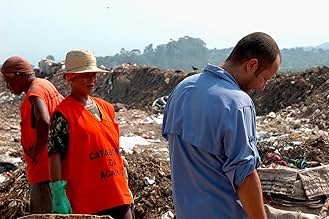
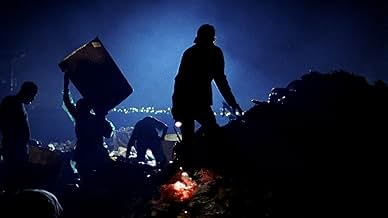
Filmed over nearly three years, Waste Land follows renowned artist Vik Muniz as he journeys from his home base in Brooklyn to his native Brazil and the world's largest garbage dump, Jardim Gramacho, located on the outskirts of Rio de Janeiro.
Reproducir trailer2:16
2 vídeos
21 imágenes
portuguésDocumental

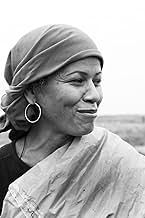
En las afueras de Río de Janeiro, Jardim Gramacho, el mayor basurero del mundo. Hombres y mujeres rebuscan para ganarse la vida. El artista Vik Muniz retrata a los trabajadores, conociendo s... Leer todoEn las afueras de Río de Janeiro, Jardim Gramacho, el mayor basurero del mundo. Hombres y mujeres rebuscan para ganarse la vida. El artista Vik Muniz retrata a los trabajadores, conociendo sus historias.En las afueras de Río de Janeiro, Jardim Gramacho, el mayor basurero del mundo. Hombres y mujeres rebuscan para ganarse la vida. El artista Vik Muniz retrata a los trabajadores, conociendo sus historias.

  • Directores/as
    • Karen Harley
    • João Jardim
    • Lucy Walker
  • Estrella
    • Vik Muniz
  • Ver la información de la producción en IMDbPro
  • PUNTUACIÓN EN IMDb
    7,8/10
    9,5 mil
    TU PUNTUACIÓN
    • Directores/as
      • Karen Harley
      • João Jardim
      • Lucy Walker
    • Estrella
      • Vik Muniz
    • 25Reseñas de usuarios
    • 86Reseñas de críticos
    • 78Metapuntuación
  • Ver la información de la producción en IMDbPro
    • Nominado para 1 premio Óscar
      • 29 premios y 13 nominaciones en total
    Vídeos2

    Waste Land
    Trailer 2:16
    Waste Land
    Lucy Walker in Three Films
    Clip 3:12
    Lucy Walker in Three Films
    Lucy Walker in Three Films
    Clip 3:12
    Lucy Walker in Three Films

    Imágenes21

    Ver cartel
    Ver cartel
    Ver cartel
    Ver cartel
    Ver cartel
    Ver cartel
    + 15
    Ver cartel

    Reparto1

    Editar
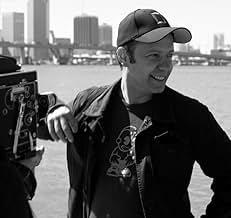
    Vik Muniz
    Vik Muniz
    • Self
    • Directores/as
      • Karen Harley
      • João Jardim
      • Lucy Walker
    • Todo el reparto y equipo
    • Producción, taquilla y más en IMDbPro

    Reseñas de usuarios25

    7,89.4K
    1
    2
    3
    4
    5
    6
    7
    8
    9
    10

    Reseñas destacadas

    8nesfilmreviews

    A simply wonderful documentary

    An moving documentary highlighting the transformative power of art, and the beauty of the human spirit. Top-selling contemporary artist Vik Muniz rooted in New York decides to give back to a community where he was born and raised. He travels to Jardim Gramacho, the largest landfill in the world on the outskirts of Rio de Janeiro. With the intention to help the pickers to improve their lives using his art, what starts as an introduction to the devastating poverty and lack of infrastructure in the slums of Rio de Janeiro, begins to transform into a story of unrelenting spirit, strength, and inspiration. Perhaps director Lucy Walker initially intended to make the film about Muniz. If so, her subject led her to a better one; as he returns to Rio to photograph pickers for a series of portraits, she begins to focus on their lives. We see where they live, we meet their families, we hear their stories, we learn of the society and economy they have constructed around Jardim Gramacho, the "Garbage Garden." Zumbi, a member of the association, who began a library from his home from books that had been discarded, Irma, a cook who makes stews and roasts from edible meat to feed the workers, Suelem, an 18-year old girl who has been working in the garbage dump since she was only seven years old, and Valter, an elderly man who entertains with stories and songs and who decides to participate because he believes that "it will raise awareness of all us pickers." Once the initial photographs are made, Muniz projects an enlarged version of each photo onto the floor of his studio and hires the pickers to add refuse from the landfill onto the canvas, photographing the result from overhead. This then becomes the finished art work, ready to be exhibited at auctions and museums around the world-- with the pickers traveling to such cities as London and New York, the first time they have ever left Gramacho. (Heavily debated decision and the possible ramifications.) Life is unpredictable that way. "Waste Land" is a testament that things can go from good to bad in an instant. But they can also improve just as quickly. A social documentary based around a self reliant community of people disregarded and largely ignored, who find unrealized beauty in their everyday work, modern art, and in themselves. I can never again put out my recycling bin without giving thought to how much more this film communicates than just that.
    Chrysanthepop

    Recycling Yourself

    I had only heard little about 'Waste Land' and didn't know what to expect other than be introduced to some artworks by Vik Muniz. Also the concept of making art from garbage and involving the garbage pickers who work at the dumpsite got me curious. What I got from this film in the end was far more than what I expected. The camera follows Muniz to the world's largest waste land in Rio de Janeiro. One by one the viewer is introduced to some of the people who work there while Muniz proposes his project to them. The people, who are considered by many, to be of the lowest of classes, are portrayed beautifully as high spirited people, in this film. Just like any other common working human being, the pickers work hard to provide for their families and many of them are quite proud of what they do . There is also a wonderful sense of unity. What Muniz offers them is to be a part of something big, to dream again. It's a sight to behold, when the workers' faces light up as they realize they are becoming/ have become a part of something unique, beautiful and important. These are three adjectives that I'd additionally use to describe this inspiring, insightful and unique gem.
    JohnDeSando

    Not a waste to watch

    Vic Muniz's art has never been as influential as when he decided to spend 2 years at the world's largest landfill outside of Rio. The catadores or pickers became his subjects, a ragtag group of Shakespearean types who love what they do for a living, making something out of someone else's nothing. Waste land is the title for this engrossing documentary about art as few have experienced it till now.

    Making a living is what they made until Muniz changed the way they looked a recyclables. He bonded the artifacts with the humans and created memorable portraits of the pickers. A show in London, which they attended, became a catalyst for change in their lives and in the lives of spectators who had no idea Rio's garbage had become Rio's recyclables under the hands of these professional pickers.

    Muniz makes sure no one condescends, no one feels sorry for his subjects, some of whom have never known anything but the landfill and others who have chosen it rather than deal drugs or prostitute themselves. Waste Land is as dignified a story about the potential of the poor class to rise out of its garbage and transform it into art and a better life. For this reason, Muniz can stand with the great humanitarians like Albert Schwitzer and Mother Theresa.
    10howard.schumann

    An inspiring documentary

    Following in the path of Edvard Munch who said, "I will paint living people who breathe and feel and suffer and love," artist Vik Muniz travels from his studio in Brooklyn to Rio de Janeiro to "give back" to the people of Brazil where he was born and raised. In Lucy Walker's (Countdown to Zero) inspiring documentary, Waste Land, winner of the Audience Award for World Cinema Documentary at the Sundance Film Festival, we are taken inside the squalid landfill known as Jardim Gramacho on the outskirts of Rio to see the largest garbage dump in the world where 7,000 tons of Rio's trash is deposited every day. The film is seen through the eyes of the "pickers," called catadores who live and work in this squalid environment, eking out a living of $20-25 U.S. a day.

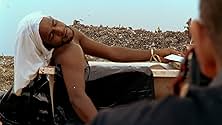
    The catadores, who number in the thousands, work under burning hot sun and overpowering odors collecting and selling recyclable materials such as bottles, plastic, and metal to wholesalers and middlemen who turn them into such resalable items as buckets or bumpers for automobiles. Vic Muniz' plan is to select and paint a group of six catadores to pose as photographic subjects that will mimic such classic paintings as "The Death of Marat" by Jacques-Louis David. Money from sales of the resulting art will go to the pickers association for the benefit of the workers. The project included Tiao, the leader of ACAMJG (Association of Collectors of the Metropolitan Landfill of Jardim Gramacho) who went on a hunger strike to dramatize the conditions of the pickers and built an organization that helped create a skills-training center and a medical clinic for the workers.

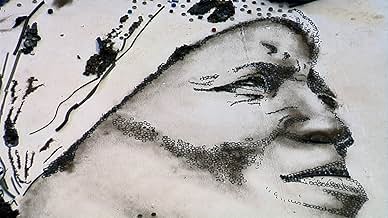
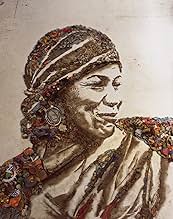
    There was also Zumbi, a member of the association, who began a library from his home from books that had been discarded, Irma, a cook who makes stews and roasts from edible meat to feed the workers, Suelem, an 18-year old girl who has been working in the garbage dump since she was only seven years old, and Valter, an elderly man who entertains with stories and songs and who decides to participate because he believes that "it will raise awareness of all us pickers." Once the initial photographs are made, Muniz projects an enlarged version of each photo onto the floor of his studio and hires the pickers to add refuse from the landfill onto the canvas, photographing the result from overhead. This then becomes the finished art work, ready to be exhibited at auctions and museums around the world with the pickers traveling to such cities as London and New York, the first time they have ever left Gramacho.

    Waste Land is not only a biography of an artist, but a look at the artist in the context of the community in which his art is created. Muniz reveals the courage and resilience of the people in spite of their grinding poverty and depressing environment. Many are former middle class residents of the suburbs who chose the life of the picker rather than becoming prostitutes or drug dealers and are happy with their choice. Though Muniz's goal was, "to be able to change the lives of a group of people with the same material that they deal with every day," he never dreamed that his work would impact the lives of the people so dramatically.

    Through his efforts, many of the residents who worked for him have changed their life and either reconciled with their families or gone on to more rewarding jobs. Modernization has also begun to take shape at Gramacho. A recycling plant has been built and the workers have been separated into categories for more efficient organization. Though admittedly just a beginning, Muniz has demonstrated that the power of art is available to all people regardless of their circumstances, allowing them to experience their inner beauty and believe in themselves in a new way. Not succumbing to the temptations of melodramatic excess, Waste Land has been shortlisted for an Oscar for Best Documentary and fully deserves to be among the finalists.
    9claudio_carvalho

    A Must See Uplifting Documentary

    The Brazilian artist Vik Muniz rooted in New York decides to make the difference and travels to Jardim Gramacho, the largest landfill of the world in the outskirt of Rio de Janeiro, with the intention to help the pickers to improve their lives using his art. Vik recalls an event when he was very poor and lived in Brazil. He tried to break up a fight between two men, and he was shot when he was walking to his car. Later the shooter gave him some money that allowed Vik to travel to USA.

    Vik and his friend Fábio spend two years in Jardim Gramacho and get closer to a group of pickers of recyclable materials and takes pictures of them. He uses his talent to make art using recyclable material and photographs the results. Then he travels to London and sells one of the portraits in an auction. With the money, the pickers buy a truck, equipment and build a leaning center and a library. The pickers that worked with him leans how to improve their lives and leave Jardim Gramacho.

    "Waste Land" is a must see uplifting documentary that shows another side of Rio de Janeiro unusual in the cinema: the lives of people that earn their lives honestly working in the greatest landfill of the world and how they could improve their lives with social investment.

    Vik Muniz gives a lesson to our corrupt politicians that embezzle money that are dedicated to people of the lower classes and shows how it is possible to improve lives using the money properly. His humanitarian work should be publicized worldwide and specially in my country. Maybe in the future, the president and politicians would be outraged not with handcuffed corrupts but with the damage that corruption causes to our people. My vote is nine.

    Title (Brazil): "Lixo Extraordinário" ("Extraordinary Garbage")

    Más del estilo

    GasLand
    7,6
    GasLand
    Líbranos del mal
    7,9
    Líbranos del mal
    Deus é Brasileiro
    6,0
    Deus é Brasileiro
    A Melhor Mãe do Mundo
    7,4
    A Melhor Mãe do Mundo
    El prisionero de Zenda
    7,6
    El prisionero de Zenda
    Which Way Home
    7,8
    Which Way Home
    Wander to Wonder
    6,7
    Wander to Wonder
    Lady Lou
    6,3
    Lady Lou
    Enmienda XIII
    8,2
    Enmienda XIII
    Exit Through the Gift Shop
    7,9
    Exit Through the Gift Shop
    ¿Dónde está mi cuerpo?
    7,5
    ¿Dónde está mi cuerpo?
    Margarita Gautier
    7,3
    Margarita Gautier

    Intereses relacionados

    Alexandre Rodrigues in Ciudad de Dios (2002)
    portugués
    Dziga Vertov in El hombre de la cámara (1929)
    Documental

    Argumento

    Editar

    ¿Sabías que...?

    Editar
    • Curiosidades
      The Gramacho landfill was in fact deactivated in 2012. It is now a green area once again, wherein its native life has returned. However, many of the pickers forced into retirement were left without jobs and in poor quality of life.
    • Citas

      Valter: [talking about the importance of recycling] People sometimes say "But one single can?" One single can is of great importance. Because 99 is not 100, and that single one will make the difference.

    • Conexiones
      Featured in The 83rd Annual Academy Awards (2011)
    • Banda sonora
      Isolate
      Written by Moby

      Performed by Moby

      Produced by Moby

      Moby appears courtesy of © Little Idiot Music

      Published by Richard Hall Music, Inc

      Administered by Kobalt Music Publishing Limited

      All rights reserved

    Selecciones populares

    Inicia sesión para calificar y añadir a tu lista para recibir recomendaciones personalizadas
    Iniciar sesión

    Preguntas frecuentes17

    • How long is Waste Land?Con tecnología de Alexa

    Detalles

    Editar
    • Fecha de lanzamiento
      • 21 de enero de 2011 (Brasil)
    • Países de origen
      • Brasil
      • Reino Unido
    • Sitios oficiales
      • Official Facebook
      • Official site
    • Idiomas
      • Portugués
      • Inglés
    • Títulos en diferentes países
      • Wasteland
    • Localizaciones del rodaje
      • Jardim Gramacho, Río de Janeiro, Brasil(landfill)
    • Empresas productoras
      • Almega Projects
      • O2 Filmes
    • Ver más compañías en los créditos en IMDbPro

    Taquilla

    Editar
    • Presupuesto
      • 1.500.000 US$ (estimación)
    • Recaudación en Estados Unidos y Canadá
      • 187.716 US$
    • Fin de semana de estreno en EE. UU. y Canadá
      • 9806 US$
      • 31 oct 2010
    • Recaudación en todo el mundo
      • 291.307 US$
    Ver información detallada de taquilla en IMDbPro

    Especificaciones técnicas

    Editar
    • Duración
      • 1h 39min(99 min)
    • Color
      • Color
    • Mezcla de sonido
      • Dolby Digital
    • Relación de aspecto
      • 1.85 : 1

    Contribuir a esta página

    Sugerir un cambio o añadir el contenido que falta
    • Más información acerca de cómo contribuir
    Editar página

    Más por descubrir

    Visto recientemente

    Habilita las cookies del navegador para usar esta función. Más información.
    Obtener la aplicación IMDb
    Inicia sesión para tener más accesoInicia sesión para tener más acceso
    Sigue a IMDb en las redes sociales
    Obtener la aplicación IMDb
    Para Android e iOS
    Obtener la aplicación IMDb
    • Ayuda
    • Índice del sitio
    • IMDbPro
    • Box Office Mojo
    • Licencia de datos de IMDb
    • Sala de prensa
    • Anuncios
    • Empleos
    • Condiciones de uso
    • Política de privacidad
    • Your Ads Privacy Choices
    IMDb, una empresa de Amazon

    © 1990-2025 by IMDb.com, Inc.