

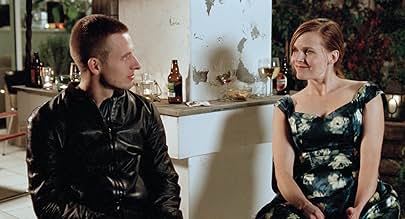
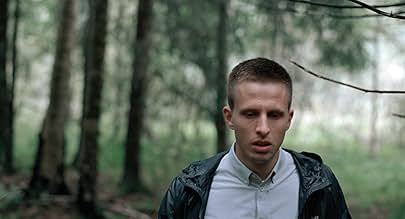
Un día en la vida de Anders, un joven adicto a las drogas en recuperación, que se toma un breve descanso de su centro de tratamiento para una entrevista de trabajo y ponerse al día con viejo... Leer todoUn día en la vida de Anders, un joven adicto a las drogas en recuperación, que se toma un breve descanso de su centro de tratamiento para una entrevista de trabajo y ponerse al día con viejos amigos en Oslo.Un día en la vida de Anders, un joven adicto a las drogas en recuperación, que se toma un breve descanso de su centro de tratamiento para una entrevista de trabajo y ponerse al día con viejos amigos en Oslo.
- Director/a
- Guionistas
- Estrellas
- Premios
- 19 premios y 21 nominaciones en total





Aksel Thanke
- Terapeut
- (as Aksel M. Thanke)

Tone Beate Mostraum
- Tove
- (as Tone B. Mostraum)


- Director/a
- Guionistas
- Todo el reparto y equipo
- Producción, taquilla y más en IMDbPro
7,632.5K
1
2
3
4
5
6
7
8
9
10
Reseñas destacadas
Minimal, stylistic, tragic and utterly engrossing.
The sober rationality of the young Norwegian intellectual classes provides a perfectly blank canvas on which to paint the conversely complex neuroses of the anti-hero, Anders. Anders is an intelligent and gifted opinionist and writer, but his addiction has left him riddled with insecurity. The film focuses on the most pivotal moment of this young man's life as he's tragically stuck between recovery and regression: that moment is both sprinkled with glimmers of hope and drenched in melancholia. Anders' contradiction is the eternal paradox of the addict, and perhaps Trier is presenting it as an allegory of the modern human condition. Anders Danielsen Lie gives an incredible performance as the enigmatic hero and the acting throughout is consistently authentic, convincing and engrossing. The soft-focus cinematography (Jakob Ihre) works well with a particularly engaging sound design which, along with very conscious direction, editing and general production design, makes for technically masterful cinema with an aesthetic that is both selectively minimal and enjoyably rich. Oslo is a tragedy. Its simple, melancholic tone and metropolitan landscapes make the film undeniably reminiscent of the French New Wave - think Hiroshima Mon Amour in present day Oslo. The film is minimal and stylized, presenting social realism in an artistic form without losing any of its dramatic potency to surrealism. Utterly convincing and captivating: an instant indie classic.
10maddo16
Beautiful, true and devastating
The most hard-hitting and resonant film I've seen in a long time, Oslo August 31st sets itself up with serene, fuzzy home footage and tales of blissful memories spent in the titular city of Oslo only to cut to the bleak life of Anders, a former heroin addict on his first day of life out of rehab. Searching for a meaning and a purpose in this new life he finds little in his friends' bourgeois city routines, which he neither desires nor feels he could achieve anyway, and their claims that "it'll all get better" fail to move a mind constantly probing and analysing the reality of his situation.
He soon undergoes an intense conversation in a park overlooking the city with his closest friend, wherein Anders pours out his thoughts of the time the two have spent apart, and the precision of their rapport matched with the lead's acting make the whole scene feel horribly real.
Anders wanders the often-empty city like a ghost, sitting in a café surrounded by the hollow dreams of others ("Plant a tree. Swim with dolphins. Write a great novel") and dwelling on the weight of his own existence. In two minds whether to leave the city, increasingly desperate and always beautifully shot, we follow him through the night until sunrise, when Anders appears to us in a sequence at his most unpredictable.
Undeniably disturbing, yet intimate and tender, this is a film that already feels close to my heart, one unafraid to bring up difficult questions and brilliantly able to provoke an idea of the absurdity of it all.
He soon undergoes an intense conversation in a park overlooking the city with his closest friend, wherein Anders pours out his thoughts of the time the two have spent apart, and the precision of their rapport matched with the lead's acting make the whole scene feel horribly real.
Anders wanders the often-empty city like a ghost, sitting in a café surrounded by the hollow dreams of others ("Plant a tree. Swim with dolphins. Write a great novel") and dwelling on the weight of his own existence. In two minds whether to leave the city, increasingly desperate and always beautifully shot, we follow him through the night until sunrise, when Anders appears to us in a sequence at his most unpredictable.
Undeniably disturbing, yet intimate and tender, this is a film that already feels close to my heart, one unafraid to bring up difficult questions and brilliantly able to provoke an idea of the absurdity of it all.
24 hours
'Oslo, August 31' (2011), the second film by Norwegian director Joachim Trier, is inspired by a French novel written in 1931, which was also brought to screen by Louis Malle during the Nouvelle Vague period of his career. Trier, a great admirer of this cinematic current, transplanted the story to the Norwegian capital, which is the favorite setting of his films. In fact, the film opens with an almost documentary journey through the city, with urban sequences associated with the thoughts of its permanent or temporary inhabitants. The city is the background for the lives and problems of those who live in it or pass through it, but it does not play an active role. One of the characters expresses this indifferent relationship with a phrase that can be a motto of the film: 'Society does not save those who want to self-destruct'.
The narrative structure of the film reminded me of the American TV series '24' which was very popular 15-20 years ago. Its hero, played by Kiefer Sutherland, saves the city, America or the world within 24 hours. The hero of Joachim Trier's film, Anders (Anders Danielsen Lie), tries to save himself in the entire interval between two sunrises, and the mission proves to be no less difficult. Anders is nearing the end of a detox cure that has lasted several years. The result of the treatment is fragile. Physically, drug and alcohol addiction seems to have gone away. Psychologically, however, the motivation that makes most people continue to live beyond crises has disappeared - professional ambition, emotions in relationships with women or friends. In addition, the world has moved forward, age is beginning to show signs, friends have established families, years of absence from the CV raise questions when he is trying to get a job. The 24 hours that Anders spent in Oslo, during which he tries to renew contacts with the world from which he was absent, confronts him with the indifference of the surrounding society, all the more so as it is dressed in the velvet gloves of Scandinavian politeness and civility.
'Oslo, August 31' is not a 'feel good' film but rather a 'feel bad' one - melancholic and quite depressing. It was very difficult for me to identify in any way with the hero of the film, maybe because addiction to substances, feelings like uselessness and boredom, and the morals and codes of the world of northern Europe are foreign to me. I appreciated the way 'Oslo, August 31st' is filmed and the acting, especially Anders Danielsen Lie, although I also have a doubt about that. The role in this film is so similar to the one he played in 'Reprise', Joachim Trier's debut film, that I should see another film or more in which Danielsen Lie plays something different to be convinced by the quality and depth of his talent. Joachim Trier is without a doubt a talented director, very connected to what has happened or is happening in world cinema but also very attached to the city of Oslo where the stories in all his films that I have seen so far take place. These movies fall into the category of movies that I appreciate but not of those that I love.
The narrative structure of the film reminded me of the American TV series '24' which was very popular 15-20 years ago. Its hero, played by Kiefer Sutherland, saves the city, America or the world within 24 hours. The hero of Joachim Trier's film, Anders (Anders Danielsen Lie), tries to save himself in the entire interval between two sunrises, and the mission proves to be no less difficult. Anders is nearing the end of a detox cure that has lasted several years. The result of the treatment is fragile. Physically, drug and alcohol addiction seems to have gone away. Psychologically, however, the motivation that makes most people continue to live beyond crises has disappeared - professional ambition, emotions in relationships with women or friends. In addition, the world has moved forward, age is beginning to show signs, friends have established families, years of absence from the CV raise questions when he is trying to get a job. The 24 hours that Anders spent in Oslo, during which he tries to renew contacts with the world from which he was absent, confronts him with the indifference of the surrounding society, all the more so as it is dressed in the velvet gloves of Scandinavian politeness and civility.
'Oslo, August 31' is not a 'feel good' film but rather a 'feel bad' one - melancholic and quite depressing. It was very difficult for me to identify in any way with the hero of the film, maybe because addiction to substances, feelings like uselessness and boredom, and the morals and codes of the world of northern Europe are foreign to me. I appreciated the way 'Oslo, August 31st' is filmed and the acting, especially Anders Danielsen Lie, although I also have a doubt about that. The role in this film is so similar to the one he played in 'Reprise', Joachim Trier's debut film, that I should see another film or more in which Danielsen Lie plays something different to be convinced by the quality and depth of his talent. Joachim Trier is without a doubt a talented director, very connected to what has happened or is happening in world cinema but also very attached to the city of Oslo where the stories in all his films that I have seen so far take place. These movies fall into the category of movies that I appreciate but not of those that I love.
Joachim Trier does it again.
After seeing Reprise some years ago I had been eagerly awaiting for Joachim Trier's next film. Loosely based on the same novel Louis Malle's Le Feu Follet is based on by Pierre Drieu La Rochelle, Oslo, August 31st retells this story for the new age. By no means this movie happens to be a remake. The movie happens to have some similar basic elements here and there, as well as different encounters for the main character played this time out by Anders Danielsen Lie who was also happened to be one of the leads in Reprise who this time around plays a wonderful role on his own .
This is a story about a 34 year old recovering drug addict who has screwed up his life due to excessive partying, doing heavy drugs and alienating his loved ones that at his age he finds himself stuck and unable to move forward in his life. As he's about to finish his rehab stint, he's allowed to go into town for a job interview and in the process he decides to use this opportunity to visit old friends and relatives which in a way ends up making matters much worse for him. With all his old friends now married with children and successful careers he feels completely useless and overwhelmed. As he's end up being given the sympathetic pep talks, or being lectured at by unsympathetic characters who are trying to protect themselves throughout the day he finds himself challenging their personal views head on while struggling to convey his frustrations that no one seems to fully understand yet take personally.
In my opinion there's not much to compare Oslo, August 31st to Le Feu Follet. Louis Malle's version (1963) which I am a huge fan of is one of those cinematic gems that story-wise packs a punch. Le Feu Follet also stands next to other classic black and white pictures like Fellini's 8 ½ as one of the best looking black and white movies ever made and I highly recommend everyone to see it.
Oslo, August 31st in itself has an entirely different approach and has a more melancholic feel throughout the film. With almost 50 year gap difference from Le Feu Follet to be told as a modern day tale this story depicts modern day tactlessness that society potentially sees these situations as almost insignificant when dealing with recovering addicts. Sure, maybe some people will try to try and understand but the world is also more likely to let a person deal with his/her own demons for they can't be bothered and even distance themselves for they have their own problems to deal with no matter how much a friend or a loved one really needs their help to get through life.
Oslo, August 31st has been called a "Devastating and Heartbreaking" Film by some, and I agree. If you're expecting to see another Reprise this might probably not be it, but it could be just as great of a film depending on the person. I will even go as far as to say this can be a total "hit and miss" for some viewers. To me this is still a beautiful film that really moved me and made me feel sad watching it. I will definitely be on the lookout for the DVD when it finally comes out for sale. Overall, make sure to watch this movie with an open mind then make your own opinion. 7 out of 10.
This is a story about a 34 year old recovering drug addict who has screwed up his life due to excessive partying, doing heavy drugs and alienating his loved ones that at his age he finds himself stuck and unable to move forward in his life. As he's about to finish his rehab stint, he's allowed to go into town for a job interview and in the process he decides to use this opportunity to visit old friends and relatives which in a way ends up making matters much worse for him. With all his old friends now married with children and successful careers he feels completely useless and overwhelmed. As he's end up being given the sympathetic pep talks, or being lectured at by unsympathetic characters who are trying to protect themselves throughout the day he finds himself challenging their personal views head on while struggling to convey his frustrations that no one seems to fully understand yet take personally.
In my opinion there's not much to compare Oslo, August 31st to Le Feu Follet. Louis Malle's version (1963) which I am a huge fan of is one of those cinematic gems that story-wise packs a punch. Le Feu Follet also stands next to other classic black and white pictures like Fellini's 8 ½ as one of the best looking black and white movies ever made and I highly recommend everyone to see it.
Oslo, August 31st in itself has an entirely different approach and has a more melancholic feel throughout the film. With almost 50 year gap difference from Le Feu Follet to be told as a modern day tale this story depicts modern day tactlessness that society potentially sees these situations as almost insignificant when dealing with recovering addicts. Sure, maybe some people will try to try and understand but the world is also more likely to let a person deal with his/her own demons for they can't be bothered and even distance themselves for they have their own problems to deal with no matter how much a friend or a loved one really needs their help to get through life.
Oslo, August 31st has been called a "Devastating and Heartbreaking" Film by some, and I agree. If you're expecting to see another Reprise this might probably not be it, but it could be just as great of a film depending on the person. I will even go as far as to say this can be a total "hit and miss" for some viewers. To me this is still a beautiful film that really moved me and made me feel sad watching it. I will definitely be on the lookout for the DVD when it finally comes out for sale. Overall, make sure to watch this movie with an open mind then make your own opinion. 7 out of 10.
Great little foreign film
I think I learned about this film when I searched for the highest rated films on Rotten Tomatoes. I saw it had earned nearly universal high marks, so I decided to check it out.
It follows a recovering addict named Anders who is granted a leave from the rehab clinic where he is currently residing to go into Oslo for a job interview. While in Oslo, which he has not visited in some time since going to the clinic, he meets a number of old friends, attempts to reconnect with a former girlfriend, and visits some old haunts.
That is essentially all in the way of plot. What makes the film so affecting are the conversations he has with these friends about life, feelings of regret, lost opportunities, etc. The conversations seemed so authentic and realistic; the writers never gave into the temptation of injecting false notes of sentimentality..
Even though Anders is an addict, this isn't really an "addiction movie." His addiction is always there in the background, but the themes that the film explores are far more universal and general. And the lead actor's performance was very poignant and impressive. I definitely recommend this to anybody interested in a strong dialog and character-driven film.
It follows a recovering addict named Anders who is granted a leave from the rehab clinic where he is currently residing to go into Oslo for a job interview. While in Oslo, which he has not visited in some time since going to the clinic, he meets a number of old friends, attempts to reconnect with a former girlfriend, and visits some old haunts.
That is essentially all in the way of plot. What makes the film so affecting are the conversations he has with these friends about life, feelings of regret, lost opportunities, etc. The conversations seemed so authentic and realistic; the writers never gave into the temptation of injecting false notes of sentimentality..
Even though Anders is an addict, this isn't really an "addiction movie." His addiction is always there in the background, but the themes that the film explores are far more universal and general. And the lead actor's performance was very poignant and impressive. I definitely recommend this to anybody interested in a strong dialog and character-driven film.


¿Sabías que...?
- CuriosidadesRenate Reinsve's feature film debut. She had two lines. She would later reunite with director Joachim Trier, as the lead in La peor persona del mundo (2021).
- ConexionesFollowed by La peor persona del mundo (2021)
- Banda sonoraPatch To Lucy
Written by E. Skodvin/O. Totland
Performed by Deaf Center
© 2005 Type Records
Selecciones populares
Inicia sesión para calificar y añadir a tu lista para recibir recomendaciones personalizadas
- How long is Oslo, August 31st?Con tecnología de Alexa
Detalles
- Fecha de lanzamiento
- Países de origen
- Sitio oficial
- Idiomas
- Títulos en diferentes países
- Oslo, August 31st
- Localizaciones del rodaje
- Henrik Ibsens Gate 36, Oslo, Noruega(restaurant where Anders meets his sister's girlfriend)
- Empresas productoras
- Ver más compañías en los créditos en IMDbPro
Taquilla
- Recaudación en Estados Unidos y Canadá
- 101.475 US$
- Fin de semana de estreno en EE. UU. y Canadá
- 9564 US$
- 27 may 2012
- Recaudación en todo el mundo
- 1.481.665 US$
- Duración
- 1h 35min(95 min)
- Color
- Mezcla de sonido
- Relación de aspecto
- 1.85 : 1
Contribuir a esta página
Sugerir un cambio o añadir el contenido que falta