CALIFICACIÓN DE IMDb
8.1/10
28 k
TU CALIFICACIÓN


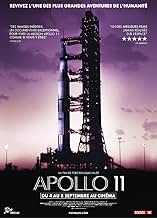
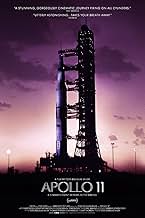
La misión Apollo 11 aterriza en la luna dirigida por Neil Armstrong y pilotada por Buzz Aldrin and Michael Collins.La misión Apollo 11 aterriza en la luna dirigida por Neil Armstrong y pilotada por Buzz Aldrin and Michael Collins.La misión Apollo 11 aterriza en la luna dirigida por Neil Armstrong y pilotada por Buzz Aldrin and Michael Collins.
- Ganó 3 premios Primetime Emmy
- 59 premios ganados y 44 nominaciones en total





Neil Armstrong
- Self - Mission Commander
- (material de archivo)

Mike Collins
- Self - Command Module Pilot
- (material de archivo)

Buzz Aldrin
- Self - Lunar Module Pilot
- (material de archivo)
- (as Edwin 'Buzz' Aldrin)

Deke Slayton
- Self - Director of Flight Crew Operations
- (material de archivo)
Clifford E. Charlesworth
- Self - Flight Director Green Team
- (material de archivo)

Bruce McCandless II
- Self - Capsule Commuicator (CAPCOM) Green Team
- (material de archivo)
- (as Bruce McCandless)

Charles Duke
- Self - Capsule Communicator (CAPCOM) White Team
- (material de archivo)
Gene Kranz
- Self - Flight Director White Team
- (material de archivo)


Jim Lovell
- Self - Backup Commander
- (material de archivo)

John F. Kennedy
- Self - President of the United States of America
- (material de archivo)

Janet Armstrong
- Self
- (material de archivo)
Patricia Mary Finnegan
- Self
- (material de archivo)
Andy Aldrin
- Self
- (material de archivo)
Joan Ann Archer
- Self
- (material de archivo)
- (sin créditos)

Walter Cronkite
- Self
- (material de archivo)
- (sin créditos)

Lyndon B. Johnson
- Self
- (material de archivo)
- (sin créditos)
8.128.3K
1
2
3
4
5
6
7
8
9
10
Opiniones destacadas
Astonishingly good recounting of the 1969 mission to the Moon.
This documentary was made using a lot of recently discovered film, much of it is high-definition, large format film. It truly gives amazing images.
But the story of course is the real meat here. I attended the same University as Armstrong, I had just graduated with my Master's when the Moon landing happened. I remember it well and will always have a connection, Armstrong and I walked the same college walkways, had classes in some of the same buildings, both watched the Boilermakers play football in the same stadium. Just a few years apart.
Recently I discovered separate online interviews with both Armstrong and Aldrin, in the documentary we see them as young men about to get the ride of a lifetime, then we see them nearer the end of their lives putting it all in perspective.
Great documentary, worth a viewing for anyone.
But the story of course is the real meat here. I attended the same University as Armstrong, I had just graduated with my Master's when the Moon landing happened. I remember it well and will always have a connection, Armstrong and I walked the same college walkways, had classes in some of the same buildings, both watched the Boilermakers play football in the same stadium. Just a few years apart.
Recently I discovered separate online interviews with both Armstrong and Aldrin, in the documentary we see them as young men about to get the ride of a lifetime, then we see them nearer the end of their lives putting it all in perspective.
Great documentary, worth a viewing for anyone.
Experience the Apollo 11 mission like you have never before
"Apollo 11" (2019 release; 93 min.) is a documentary about the Apollo 11 mission. As the movie opens, we are informed it is "July 16, 1969" and a mere 3 hours away from the launch. We get full-color footage of the enormous crowds 15 mi. away from the launching pad. Meanwhile, through a quick photo montage, we get a quick glimpse at the three astronauts' life, as they are getting their space suits on. The TV commentator meanwhile talks about "the burdens and hope they carry for all mankind". It is then time for the astronauts to be driven to the Apollo. At this point we are then 10 min. into the movie.
Couple of comments: this documentary is directed and edited by Todd Douglas Miller. There have been many documentaries about the Apollo 11 mission before, so what sets this one apart? Several things: first and foremost, during the collaboration between the film makers and NASA, never before seen 70 mm full color footage was unearthed. That, combined with previously available 16 mm and 32 mm footage allowed the film makers to present this story in a way never before experienced. Frankly, words are not enough. The astronauts' elevator ride up to the top of the Apollo space ship (over 300 ft. tall) finally give a sense of how freaking high that is. Second, the film makers decided to use no voice-over or narrator, and instead let the TV commentary and the internal NASA discussions do all of the talking. Third, there is a fabulous electronic score, courtesy of composer Matt Morton. And get this: Morton used only instruments that were around at the time of Apollo 11's trip to the moon in July, 1969, including including the Moog modular Synthesizer IIIc, the Binson Echorec 2, and the Mellotron. Wow, just wow. When you combine all of these elements, it makes for outright compelling viewing. Even though we of course know the outcome, I nevertheless STILL felt tense as I was watching all of this unfold.
You may or may not be aware that Neil Armstrong spent the last 40 years of his life here in Cincinnati (where I live), including teaching at the University of Cincinnati. Upon his retirement, he became an even more private person than he already was, and public appearances were rare. I had the great fortune of seeing him narrate the "Lincoln Portrait" at a Cincinnati Pops performance in 2009, and the outpouring of love, respect and affection from the public for this true American hero made the hairs stand on my arms. Meanwhile, "Apollo 11" is an unforgettable movie experience, and highly recommended!
*UPDATE Jan 13, 2020* This past weekend I saw an edited version of the film called "Apollo 11 - First Steps Edition" at the Omnimax theater of the Cincinnati Museum Center. It is the exact same footage as in the original film, cut down to 45 min. so as to fit the IMAX/Omnimax schedules. I was incredibly excited beforehand, as I thought this would be true Imax/Omnimax footage, but alas, that is not the case. It's as before but projected on the half-dome screen that is the Omnimax. Still very enjoyable, and I love, LOVE the original score by Matt Morton blasting away in an Omnimax setting.
Couple of comments: this documentary is directed and edited by Todd Douglas Miller. There have been many documentaries about the Apollo 11 mission before, so what sets this one apart? Several things: first and foremost, during the collaboration between the film makers and NASA, never before seen 70 mm full color footage was unearthed. That, combined with previously available 16 mm and 32 mm footage allowed the film makers to present this story in a way never before experienced. Frankly, words are not enough. The astronauts' elevator ride up to the top of the Apollo space ship (over 300 ft. tall) finally give a sense of how freaking high that is. Second, the film makers decided to use no voice-over or narrator, and instead let the TV commentary and the internal NASA discussions do all of the talking. Third, there is a fabulous electronic score, courtesy of composer Matt Morton. And get this: Morton used only instruments that were around at the time of Apollo 11's trip to the moon in July, 1969, including including the Moog modular Synthesizer IIIc, the Binson Echorec 2, and the Mellotron. Wow, just wow. When you combine all of these elements, it makes for outright compelling viewing. Even though we of course know the outcome, I nevertheless STILL felt tense as I was watching all of this unfold.
You may or may not be aware that Neil Armstrong spent the last 40 years of his life here in Cincinnati (where I live), including teaching at the University of Cincinnati. Upon his retirement, he became an even more private person than he already was, and public appearances were rare. I had the great fortune of seeing him narrate the "Lincoln Portrait" at a Cincinnati Pops performance in 2009, and the outpouring of love, respect and affection from the public for this true American hero made the hairs stand on my arms. Meanwhile, "Apollo 11" is an unforgettable movie experience, and highly recommended!
*UPDATE Jan 13, 2020* This past weekend I saw an edited version of the film called "Apollo 11 - First Steps Edition" at the Omnimax theater of the Cincinnati Museum Center. It is the exact same footage as in the original film, cut down to 45 min. so as to fit the IMAX/Omnimax schedules. I was incredibly excited beforehand, as I thought this would be true Imax/Omnimax footage, but alas, that is not the case. It's as before but projected on the half-dome screen that is the Omnimax. Still very enjoyable, and I love, LOVE the original score by Matt Morton blasting away in an Omnimax setting.
The closest thing to a real-life time machine.
The restored 70mm footage looks like it was shot yesterday. It will make your jaw drop on the massive screen. There's something simply astounding about old restored 35mm, 65mm and 70mm footage viewed in full resolution today - it's like stepping into a time-machine and being transported, like you are really there. Any 70mm footage projected on an IMAX screen is simply magical, but this is not just real footage, but footage capturing possibly the most important moment in human history - certainly the most inspiring. You won't be able to experience the same thing at home, so I wish everyone would go out to their local IMAX and experience this first-hand. This is the kind of thing schools should require their students to experience.
The only reason I don't give it a perfect 10/10 is that because the film is made in a cinéma-vérité style, the audience simply experiences the event without really learning very much about the incredible engineering, science, training and logistics of the incredible Apollo program. So I hope this film inspires people to also seek out The Right Stuff (1983), Apollo 13 (1995), the massively underrated miniseries From the Earth to the Moon (1998) and the invaluable documentary In the Shadow of the Moon (2007) - possibly the definitive documentary about the Apollo program - which you should watch as a companion piece to this film.
The only reason I don't give it a perfect 10/10 is that because the film is made in a cinéma-vérité style, the audience simply experiences the event without really learning very much about the incredible engineering, science, training and logistics of the incredible Apollo program. So I hope this film inspires people to also seek out The Right Stuff (1983), Apollo 13 (1995), the massively underrated miniseries From the Earth to the Moon (1998) and the invaluable documentary In the Shadow of the Moon (2007) - possibly the definitive documentary about the Apollo program - which you should watch as a companion piece to this film.
Perfect Cinéma Vérité
The film starts the morning of launch day July 16, 1969. There are no actors, no reenactments, no narrator. It is 100% restored archival footage and recorded audio, most of which I had never seen before. Opening footage of the crowds gathering around Kennedy Space Center gave you the sense it was apparent to everyone the magnitude of what was about to happen.
They had audio and video of (an issue I won't spoil, something during launch prep I had never heard of before). Obviously there is no external footage of the spacecraft from the time it leaves earth orbit until it arrived at the moon but the editing and coverage used are excellent and you never feel like you're in the dark or missing out.
There is no attempt made at politicizing the event or manipulating the viewer, it is raw, factual cinéma vérité. Although I did find Kennedy's speech moving, they made the excellent choice to NOT show the famous portion we've all heard about landing a man on the moon and returning him safely by the end of the decade. It was the rest of that speech, which I'm not sure I'd ever heard, that was astute, prophetic and even funny at one point.
My one very minor caution is that viewers who aren't already aware how critical/dangerous some maneuvers were could miss out on the gravity of the situation. The filmmakers do assist with this with the score, which is absolutely fantastic (and according to the credits, composed entirely with instruments available in July '69), and some minor on-screen graphics (e.g. FUEL 30 seconds, 1202 alarm). It's a trivial concern but viewers who are familiar with the space program in general, and this mission in particular, will get the most out of the experience.
The film wraps up after our astronauts are safely home and cleared from quarantine. During the credits there are a few more interesting shots of some of the celebrations.
They had audio and video of (an issue I won't spoil, something during launch prep I had never heard of before). Obviously there is no external footage of the spacecraft from the time it leaves earth orbit until it arrived at the moon but the editing and coverage used are excellent and you never feel like you're in the dark or missing out.
There is no attempt made at politicizing the event or manipulating the viewer, it is raw, factual cinéma vérité. Although I did find Kennedy's speech moving, they made the excellent choice to NOT show the famous portion we've all heard about landing a man on the moon and returning him safely by the end of the decade. It was the rest of that speech, which I'm not sure I'd ever heard, that was astute, prophetic and even funny at one point.
My one very minor caution is that viewers who aren't already aware how critical/dangerous some maneuvers were could miss out on the gravity of the situation. The filmmakers do assist with this with the score, which is absolutely fantastic (and according to the credits, composed entirely with instruments available in July '69), and some minor on-screen graphics (e.g. FUEL 30 seconds, 1202 alarm). It's a trivial concern but viewers who are familiar with the space program in general, and this mission in particular, will get the most out of the experience.
The film wraps up after our astronauts are safely home and cleared from quarantine. During the credits there are a few more interesting shots of some of the celebrations.
See It On The Biggest Screen You Can
A half-century ago, Neil Armstrong stepped off the ladder of the Lunar Module Eagle and into the history books. In the decades since, that moment and the flights of NASA's Apollo program have been chronicled in seemingly countless documentaries. At the top of that list remains 1989's For All Mankind from the late Al Reinert and 2007's In The Shadow Of The Moon from British filmmakers David Sington and Christopher Riley. Up there with them now is 2019's Apollo 11, an exciting new film from Todd Douglas Miller that is begging for you to see it on the biggest screen possible.
Why?
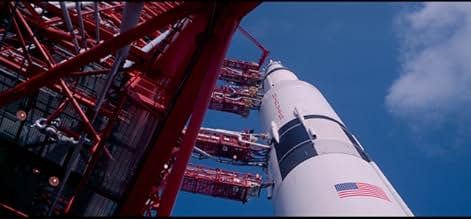
In part because of Miller who, like those other great filmmakers of Apollo before him, wasn't content to merely do a rehash of what had come before. Miller's Apollo 11 is in part a deep dive into the NASA archives, uncovering things that even the most seasoned space enthusiast has likely never seen before. There's a wealth of pre-launch footage, for example, tracing the preparations from the rollout of the massive Saturn V rocket to the launch pad to multiple perspectives of the launch itself. Even when events move into space, there's still a wealth of rare material to experience including conversations between the astronauts themselves as well as between them and Mission Control in Houston. Even where footage that has become synonymous with the mission and the era such as the stage separations of the rocket or the Lunar Module's descent to the surface of the Moon, it's presented with clarity and scale rarely seen elsewhere. For that alone, the film renders excellent service.
It does so in other ways, as well. Unlike those two documentaries I mentioned at the top of this review, Miller doesn't use astronaut interviews (either aural or visual) to help tell the story. Instead, Apollo 11 unfolds entirely through archival sources ranging from the transmissions to the voice of NASA's public affairs or well-known TV commentators like Walter Cronkite. To help aid visually for parts of the mission where there isn't much or anything to show, the film employees simple animation alongside such commentaries. The film also makes effective use of split-screen and captions to portray mission control or to show events such as the actual walk on the Moon from multiple perspectives. As much as the footage itself on a cinema screen does, it presents the sheer scale of the endeavor but without losing the viewer in the technicalities involved in spaceflight.
In some ways, that's the greatest triumph of Apollo 11 the documentary. It's a film keen to present Apollo 11 the mission in awe-inspiring yet understandable terms, one that emphasizes how incredible in scope and achievement that flight five decades ago this July was. It's also a reminder, at a time when cinema screens find themselves increasingly dominated by would-be blockbusters and superhero flicks, of the raw power of cinema to present stories. Both of those are things we need reminding of, it seems, and the film does a superb job of both.
Why?
In part because of Miller who, like those other great filmmakers of Apollo before him, wasn't content to merely do a rehash of what had come before. Miller's Apollo 11 is in part a deep dive into the NASA archives, uncovering things that even the most seasoned space enthusiast has likely never seen before. There's a wealth of pre-launch footage, for example, tracing the preparations from the rollout of the massive Saturn V rocket to the launch pad to multiple perspectives of the launch itself. Even when events move into space, there's still a wealth of rare material to experience including conversations between the astronauts themselves as well as between them and Mission Control in Houston. Even where footage that has become synonymous with the mission and the era such as the stage separations of the rocket or the Lunar Module's descent to the surface of the Moon, it's presented with clarity and scale rarely seen elsewhere. For that alone, the film renders excellent service.
It does so in other ways, as well. Unlike those two documentaries I mentioned at the top of this review, Miller doesn't use astronaut interviews (either aural or visual) to help tell the story. Instead, Apollo 11 unfolds entirely through archival sources ranging from the transmissions to the voice of NASA's public affairs or well-known TV commentators like Walter Cronkite. To help aid visually for parts of the mission where there isn't much or anything to show, the film employees simple animation alongside such commentaries. The film also makes effective use of split-screen and captions to portray mission control or to show events such as the actual walk on the Moon from multiple perspectives. As much as the footage itself on a cinema screen does, it presents the sheer scale of the endeavor but without losing the viewer in the technicalities involved in spaceflight.
In some ways, that's the greatest triumph of Apollo 11 the documentary. It's a film keen to present Apollo 11 the mission in awe-inspiring yet understandable terms, one that emphasizes how incredible in scope and achievement that flight five decades ago this July was. It's also a reminder, at a time when cinema screens find themselves increasingly dominated by would-be blockbusters and superhero flicks, of the raw power of cinema to present stories. Both of those are things we need reminding of, it seems, and the film does a superb job of both.


¿Sabías que…?
- TriviaSeveral of the recordings captured by the astronauts during the mission are featured in this documentary. These recordings by Neil Armstrong, Buzz Aldrin and Mike Collins earned them honorary memberships in the American Society of Cinematographers.
- ErroresThe incident involving Buzz Aldrin's bio-med sensors going out, leading him to crack wise, saying, "I promise I will let you know if I stop breathing," occurred during the return voyage, on day 8 of the mission, but is depicted (at approx 48 minutes into the film) as happening during the approach to the moon before the separation of the command and lunar modules.
- Citas
Neil Armstrong: One small step for man... one giant leap for mankind.
- Versiones alternativasIn 2019, an edited version of the film, cut down to 45 minutes for exhibition in museum IMAX theaters, was released as Apollo 11: First Steps.
- ConexionesFeatured in WatchMojo: Top 10 Best Movies of 2019 (So Far) (2019)
- Bandas sonorasMother Country
Written and Performed by John Stewart
Selecciones populares
Inicia sesión para calificar y agrega a la lista de videos para obtener recomendaciones personalizadas
Detalles
- Fecha de lanzamiento
- País de origen
- Sitios oficiales
- Idioma
- También se conoce como
- Apollo 11: First Steps
- Locaciones de filmación
- Sea of Tranquility, The Moon, Space(Apollo 11 landing site)
- Productoras
- Ver más créditos de la compañía en IMDbPro
Taquilla
- Total en EE. UU. y Canadá
- USD 9,039,891
- Fin de semana de estreno en EE. UU. y Canadá
- USD 1,607,040
- 3 mar 2019
- Total a nivel mundial
- USD 15,343,649
- Tiempo de ejecución
- 1h 33min(93 min)
- Color
- Mezcla de sonido
- Relación de aspecto
- 2.20 : 1
Contribuir a esta página
Sugiere una edición o agrega el contenido que falta