CALIFICACIÓN DE IMDb
6.1/10
4.2 k
TU CALIFICACIÓN

Agrega una trama en tu idiomaTwo boxers compete for the love of a woman.Two boxers compete for the love of a woman.Two boxers compete for the love of a woman.
- Dirección
- Escritura
- Estrellas
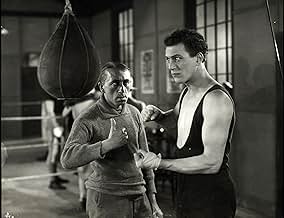
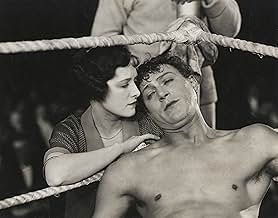
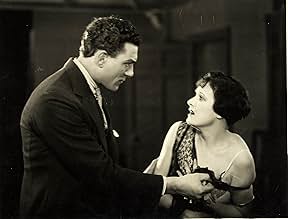
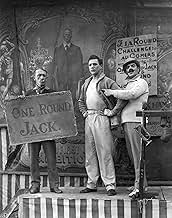
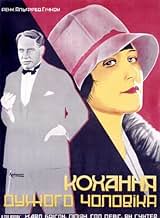
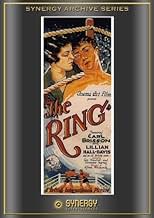
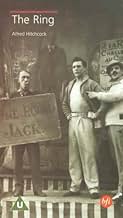


Lillian Hall-Davis
- The Girl
- (as Lilian Hall Davis)


Eugene Corri
- Eugene Corri
- (sin créditos)

Charles Farrell
- Second
- (sin créditos)

Clare Greet
- Fortune Teller
- (sin créditos)

Lawrence Hanray
- Clerrgyman in Black Cassock
- (sin créditos)

Tom Helmore
- Spectator
- (sin créditos)

Alfred Hitchcock
- Man-Dipping Attraction Worker
- (sin créditos)

Minnie Rayner
- Boxing Contestant's Wife
- (sin créditos)
Brandy Walker
- Spectator
- (sin créditos)
Bombardier Billy Wells
- Boxer
- (sin créditos)
- Dirección
- Escritura
- Todo el elenco y el equipo
- Producción, taquilla y más en IMDbPro
6.14.2K
1
2
3
4
5
6
7
8
9
10
Opiniones destacadas
Hitchcock shows early promise
Alfred Hitchcock's only screen writing credit follows the story of two aspiring boxers as they slowly work their way to the top of their game. 'One-Round' Jack (Carl Brisson) works in a carnival show, using the gimmick of being able to knock any challengers out in one round to draw the crowds. When onlooker Bob Corby is reluctantly talked into going a round with Jack, he knocks him out, much to Jack's dismay and surprise. Caught between the two fighters is Jack's girlfriend Mabel (Lilian Hall Davis) who takes a liking to Bob, especially as he begins his rise up the boxing ranks. As Jack's frustration and jealousy grows, so does his success. As the two fight their way to the top, the likelihood of a climatic bout between the two protagonists increases with every fight. Ultimately it becomes a mental and physical battle for the love of Mabel.
The meaning of the title is multi-layered - of course referring the boxing ring, but also the arm bracelet that Mabel receives from Bob that comes to represent the everlasting loop that the three lead characters are caught up in. Although relatively little-seen compared to some of the popular boxing movies, Hitchcock's silent has undoubtedly had a great impact of the sport genre, especially on Scorsese's Raging Bull. Hitchcock was fascinated with boxing - the idea of a physical and mental duel between two gladiators, and also with the dirty feel of the arena. Halls would be filled by both smartly-dressed socialites, and the working-class looking for a bit of escapism. The place would be filled with cigarette smoke, sweat and dirt trampled in by the masses. Although this doesn't quite have the cinematic flair of Scorsese's masterpiece, the photography is clearly comparable, and is extremely impressive given its era. This is Hitchcock's early experiment, where he would develop techniques he would come to perfect in his long-list of truly great films. A fascinating film from the man that would become one of the giants of cinema.
www.the-wrath-of-blog.blogspot.com
The meaning of the title is multi-layered - of course referring the boxing ring, but also the arm bracelet that Mabel receives from Bob that comes to represent the everlasting loop that the three lead characters are caught up in. Although relatively little-seen compared to some of the popular boxing movies, Hitchcock's silent has undoubtedly had a great impact of the sport genre, especially on Scorsese's Raging Bull. Hitchcock was fascinated with boxing - the idea of a physical and mental duel between two gladiators, and also with the dirty feel of the arena. Halls would be filled by both smartly-dressed socialites, and the working-class looking for a bit of escapism. The place would be filled with cigarette smoke, sweat and dirt trampled in by the masses. Although this doesn't quite have the cinematic flair of Scorsese's masterpiece, the photography is clearly comparable, and is extremely impressive given its era. This is Hitchcock's early experiment, where he would develop techniques he would come to perfect in his long-list of truly great films. A fascinating film from the man that would become one of the giants of cinema.
www.the-wrath-of-blog.blogspot.com
"The Ring," while flawed, remains astonishingly powerful.
This early film has its flaws-- a predictable plot and some overlong scenes of dubious relevance-- but it already clearly demonstrates Hitchcock's mastery of editing and the use of powerful images. It's also among the most expressionist of his films stylistically; note, for examples, the weird distortions he uses during the party sequence and the frequent echoes of both title and plot in the imagery.
Its core, though, remains the final match, which is still among the more exciting examples of cinematic boxing. Even though you know that the hero has to win, it becomes quite believable that he will lose, and the movement of his wife from the champion's corner to his, motivating the final plot pay-off, is very well entwined with the progress of the match. The inserts of the stopwatch do exactly what they should; you can almost hear the ticking (even though this is a silent film, the visuals often have a surprisingly auditory feel to them). The pacing becomes astonishingly rapid, and the viewer gets sucked into the excitement and brutality of both the match and the sexual jealousy which underlies it.
The only DVD release with which I am familiar is that of Laserlight, a public domain company. As with each Hitchcock silent they've released, they've attached various musical selections, mostly orchestral, to the action. The sound editing is frequently sloppy, and the sound quality varies widely, but some genuine care seems to have gone into most of the actual choices, and the music accompanying the final match works extremely well; it is unlikely that this sequence will ever be better accompanied than it is here.
This is a much more impressive film than its present obscurity would suggest. It deserves an honorable place in both the Hitchcock canon and the slender list of worthwhile boxing films.
Its core, though, remains the final match, which is still among the more exciting examples of cinematic boxing. Even though you know that the hero has to win, it becomes quite believable that he will lose, and the movement of his wife from the champion's corner to his, motivating the final plot pay-off, is very well entwined with the progress of the match. The inserts of the stopwatch do exactly what they should; you can almost hear the ticking (even though this is a silent film, the visuals often have a surprisingly auditory feel to them). The pacing becomes astonishingly rapid, and the viewer gets sucked into the excitement and brutality of both the match and the sexual jealousy which underlies it.
The only DVD release with which I am familiar is that of Laserlight, a public domain company. As with each Hitchcock silent they've released, they've attached various musical selections, mostly orchestral, to the action. The sound editing is frequently sloppy, and the sound quality varies widely, but some genuine care seems to have gone into most of the actual choices, and the music accompanying the final match works extremely well; it is unlikely that this sequence will ever be better accompanied than it is here.
This is a much more impressive film than its present obscurity would suggest. It deserves an honorable place in both the Hitchcock canon and the slender list of worthwhile boxing films.
I really wanted to like this one
I really wanted to like this one, even watching it twice in the past week, thinking that it might grow on me (as Hitchcock's Number Seventeen has done, slightly) but it just doesn't do anything for me. Apparently, it didn't do much for the audiences in 1927 either, because from what I've been able to find out about it, despite being popular with critics, it sank at the box office.
Hitchcock not only directed but also wrote this boring melodrama, a combination of two of my least favourite genres: boxing, and romance. The world of boxing provides the backdrop for this formulaic triangle between two competitors and the girl who loves them both: but which man does she really want to marry?
The title is good, with several layered meanings in relation to the story. The fact that the film used few title cards was unique, letting visuals tell the story by themselves. There are a lot of clever visuals by Hitchcock: as we look up through the water of a pond at the two lovers; placing the ring on her finger at the marriage ceremony, only to have the bracelet slip down to her wrist, reminding her (and the audience) of the other man; girl, sitting on hubby's lap, glances across the room toward a mirror, and sees reflection of the "other man"; fingers flittering away on the ivories, distorted - but the plot, again written by Hitchcock himself, was a routine melodrama which could hardly hold my attention.
Beautiful, slightly Gothic looking church in which the ceremony occurs is an asset to the film in its few, brief scenes. Goofball comically blowing the suds off the beer, then downing it, and the film's subsequent distorted Point-Of-View shot is an amusing moment. Was this film, released October 1927, the first to use POV shots?
Hitchcock not only directed but also wrote this boring melodrama, a combination of two of my least favourite genres: boxing, and romance. The world of boxing provides the backdrop for this formulaic triangle between two competitors and the girl who loves them both: but which man does she really want to marry?
The title is good, with several layered meanings in relation to the story. The fact that the film used few title cards was unique, letting visuals tell the story by themselves. There are a lot of clever visuals by Hitchcock: as we look up through the water of a pond at the two lovers; placing the ring on her finger at the marriage ceremony, only to have the bracelet slip down to her wrist, reminding her (and the audience) of the other man; girl, sitting on hubby's lap, glances across the room toward a mirror, and sees reflection of the "other man"; fingers flittering away on the ivories, distorted - but the plot, again written by Hitchcock himself, was a routine melodrama which could hardly hold my attention.
Beautiful, slightly Gothic looking church in which the ceremony occurs is an asset to the film in its few, brief scenes. Goofball comically blowing the suds off the beer, then downing it, and the film's subsequent distorted Point-Of-View shot is an amusing moment. Was this film, released October 1927, the first to use POV shots?
"One round Jack's finally met his match"
The Ring was made from the only screenplay Hitchcock wrote himself and it deals, as many of his earliest pictures do, with a love triangle. At first glance, it looks like a more cynical update of the infidelity-themed morality comedies of Cecil B. De Mille, but more than that it is the first really competent Hitchcock picture. Even if he was not yet using the ideas and motifs of suspenseful thrillers, he was at least developing the tools with which to create suspense.
As well as being a student of the German Expressionist style, the rhythmic editing style of Sergei Eisenstein had had its impact upon Hitchcock. But here he keeps tempo not just with the edits but with the content of the imagery. This is apparent from the opening shots, where spinning fairground rides brilliantly establish a smooth tempo. And like Eisenstein, the editing style seems to suggest sound for example when a split-second shot of the bell being rung is flashed in, we almost subconsciously hear the sound because the image is so jarring.
There is also a contrast, particularly with silent films from the US, in that The Ring is not cluttered up with too many title cards. As much as possible is conveyed by imagery, and Hitch has enough faith in the audience to either lip-read or at least infer the meaning of the bulk of the characters' speech. And it's not done by contrived symbolism or overacting, it's all done by getting the right angles and the right timing, particularly with point-of-view shots, as well as some strong yet subtle performances. There are unfortunately a few too many obvious expressionist devices (particularly double exposures), many of which were unnecessary, but there is far less of this than there is in The Lodger.
Let's make a few honourable mentions for the aforementioned actors. First up, the stunningly handsome and very talented Carl Brisson in the lead role. In spite of his talent I was at first a bit confused as to why he got the role, as to be honest he looks more like a ballet dancer than a pugilist! But that just goes to show how much I know, as it turns out Brisson was in fact a former professional boxer and inexperienced in acting. Playing his rival is the competent Ian Hunter, who would go on to have a lengthy career in supporting roles right up to the 60s. The most demanding role in The Ring has to be that given to Lillian Hall-Davis, torn between two lovers. She pulls it off very well however with an emotive, understated performance, and it's a shame her career never lasted in the sound era. And last but not least the great Gordon Harker provides some comic relief in what is probably his best ever role.
The Ring's climactic fight scene is among the most impressive moments of silent-era Hitchcock. Martin Scorcese may have had his eye on The Ring when he directed the fight scenes in Raging Bull, as his watchword for these scenes was "Stay inside the ring". The fight in The Ring starts off with some fairly regular long shots, but when the action intensifies Hitchcock drops us right in the middle of it, with close-ups and point-of-view shots. Hitchcock's aim always seems to have been to involve his audience, and this was crucial in his later career where the secret of his success was often in immersing the viewer in the character's fear or paranoia.
The Ring really deserves more recognition than the inferior but better known The Lodger. It's a much more polished and professional work than the earlier picture, and probably the best of all his silent features.
As well as being a student of the German Expressionist style, the rhythmic editing style of Sergei Eisenstein had had its impact upon Hitchcock. But here he keeps tempo not just with the edits but with the content of the imagery. This is apparent from the opening shots, where spinning fairground rides brilliantly establish a smooth tempo. And like Eisenstein, the editing style seems to suggest sound for example when a split-second shot of the bell being rung is flashed in, we almost subconsciously hear the sound because the image is so jarring.
There is also a contrast, particularly with silent films from the US, in that The Ring is not cluttered up with too many title cards. As much as possible is conveyed by imagery, and Hitch has enough faith in the audience to either lip-read or at least infer the meaning of the bulk of the characters' speech. And it's not done by contrived symbolism or overacting, it's all done by getting the right angles and the right timing, particularly with point-of-view shots, as well as some strong yet subtle performances. There are unfortunately a few too many obvious expressionist devices (particularly double exposures), many of which were unnecessary, but there is far less of this than there is in The Lodger.
Let's make a few honourable mentions for the aforementioned actors. First up, the stunningly handsome and very talented Carl Brisson in the lead role. In spite of his talent I was at first a bit confused as to why he got the role, as to be honest he looks more like a ballet dancer than a pugilist! But that just goes to show how much I know, as it turns out Brisson was in fact a former professional boxer and inexperienced in acting. Playing his rival is the competent Ian Hunter, who would go on to have a lengthy career in supporting roles right up to the 60s. The most demanding role in The Ring has to be that given to Lillian Hall-Davis, torn between two lovers. She pulls it off very well however with an emotive, understated performance, and it's a shame her career never lasted in the sound era. And last but not least the great Gordon Harker provides some comic relief in what is probably his best ever role.
The Ring's climactic fight scene is among the most impressive moments of silent-era Hitchcock. Martin Scorcese may have had his eye on The Ring when he directed the fight scenes in Raging Bull, as his watchword for these scenes was "Stay inside the ring". The fight in The Ring starts off with some fairly regular long shots, but when the action intensifies Hitchcock drops us right in the middle of it, with close-ups and point-of-view shots. Hitchcock's aim always seems to have been to involve his audience, and this was crucial in his later career where the secret of his success was often in immersing the viewer in the character's fear or paranoia.
The Ring really deserves more recognition than the inferior but better known The Lodger. It's a much more polished and professional work than the earlier picture, and probably the best of all his silent features.
Hitchcock fans might be surprised at this type of film, but it's worth seeing.
'One-Round' Jack Sander is called that because he's a carnival boxer who fights any man in the audience. If they can last one round, they win a prize--a popular way to draw customers into traveling shows long ago. Jack is in love with the ticket girl, Mabel, though her head is quickly turned when Bob Corby enters the ring to try his chances with Jack. What no one at the fight knows is that Bob is the champ, so he's able to beat Jack--though it takes him some work. As a result, Bob asks Jack to become his sparring partner and give up the carnival circuit. Later, Jack improves so much that he, too, becomes a legitimate boxer. Slowly, he works his way up the rankings until he's nearly ready to take on the Champ.
In the meantime, the Champ and Mabel start running around behind Jack's back--even though by now Mabel has married Jack. So, when the final fight occurs between Jack and Bob, it's very personal and Jack is ready to kill him. Is he good enough? Will rise justifiable rage against Bob help or hinder his performance? Tune in and see.
This film was directed by Alfred Hitchcock and while today this sort of film seems strange for a director known for mystery-suspense films, back in the 1920s, Hitchcock had no fixed genre which he directed or wrote (he did both for this film). In fact, in many ways this film is more indicative of Hitchcock's silent style, as a somewhat similar plot came up in one of his next silents, THE MANXMAN (also starring Carl Brisson as the wronged husband). So, while this seems a lot like a standard boxing film of the day, it was not a radical departure for this great director--even with its rather formulaic ending.
Overall, while a bit predictable and having Ian Hunter playing a boxing champ seems silly, the film works well. While far from a perfect silent, it's well worth seeing and packs a nice punch.
In the meantime, the Champ and Mabel start running around behind Jack's back--even though by now Mabel has married Jack. So, when the final fight occurs between Jack and Bob, it's very personal and Jack is ready to kill him. Is he good enough? Will rise justifiable rage against Bob help or hinder his performance? Tune in and see.
This film was directed by Alfred Hitchcock and while today this sort of film seems strange for a director known for mystery-suspense films, back in the 1920s, Hitchcock had no fixed genre which he directed or wrote (he did both for this film). In fact, in many ways this film is more indicative of Hitchcock's silent style, as a somewhat similar plot came up in one of his next silents, THE MANXMAN (also starring Carl Brisson as the wronged husband). So, while this seems a lot like a standard boxing film of the day, it was not a radical departure for this great director--even with its rather formulaic ending.
Overall, while a bit predictable and having Ian Hunter playing a boxing champ seems silly, the film works well. While far from a perfect silent, it's well worth seeing and packs a nice punch.


¿Sabías que…?
- TriviaAccording to the dialogue card at 1:19:06, the big fight between Jack Saunders and Bob Corby was refereed by Eugene Corri, who entered the ring wearing a tux. Corri made boxing history in December 1907 by being the first referee to referee inside the ring during a fight.
- ErroresDuring the first boxing scene, when the assistant is helping the sailor put on his coat, the coat is on nearly all the way; then, in the next shot, it is shown being put back on again.
- Citas
The Promoter: If you win this next fight with the nigger, you'll be in the running for the championship.
- ConexionesFeatured in Silent Britain (2006)
Selecciones populares
Inicia sesión para calificar y agrega a la lista de videos para obtener recomendaciones personalizadas
- How long is The Ring?Con tecnología de Alexa
Detalles
- Tiempo de ejecución
- 1h 56min(116 min)
- Mezcla de sonido
- Relación de aspecto
- 1.33 : 1
Contribuir a esta página
Sugiere una edición o agrega el contenido que falta