
Agrega una trama en tu idiomaWhile visiting China, an American man falls in love with a young Chinese woman, but he then has second thoughts about the relationship.While visiting China, an American man falls in love with a young Chinese woman, but he then has second thoughts about the relationship.While visiting China, an American man falls in love with a young Chinese woman, but he then has second thoughts about the relationship.
- Dirección
- Escritura
- Estrellas
- Premios
- 1 premio ganado en total




- Dirección
- Escritura
- Todo el elenco y el equipo
- Producción, taquilla y más en IMDbPro
6.61K
1
2
3
4
5
6
7
8
9
10
Opiniones destacadas
Beautifully told and photographed story. This film is now available on the "Treasures from American Film Archives" DVD.
This beautifully told story was written by Frances Marion, the highest paid and most famous woman screenwriter of the early film days. It is beautifully photographed in color, one of the first. The story loosely follows Madame Butterfly and is tender and touching.
Historic and Beautiful
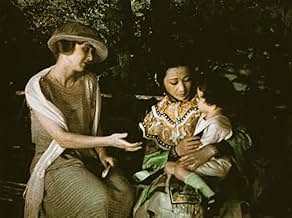
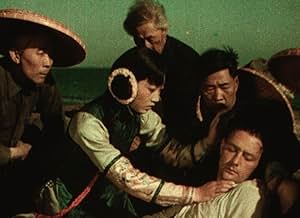
This 1922 film is apparently the first feature length film ever made in color, which alone makes it worth watching. It stars the beautiful, incomparable Anna May Wong, who was 17 at the time. She already shows remarkable maturity as an actress. The story unfolds when Lotus Flower discovers a Caucasian man floating in the sea and enlists help to save him. They fall in love and get married. Does the love last? This film is very dramatic, and it lasts under one hour. The story is told simply, with interesting twists in the tale. The film was thought lost for years until it was found, with the ending needing to be re shot. See it for the historical, pioneering aspect of it. But, most important, see it for the great performance of Anna May Wong. This movie cements the brilliant and varied versatility that she had as an actress.
Fine Performance By Anna May Wong, & Also Interesting Historically
This movie would be interesting historically if for no other reason than to see its pioneering use of the two-strip Technicolor, which still looks good over 80 years later. It's also well worth seeing to watch Anna May Wong in an early starring role, when she was still a teenager.
The story takes the "Madame Butterfly" plot and changes it slightly, setting it in China and adding some emphasis on the role of the sea. The story is simple, yet potentially packed with emotion, with its themes of clash between cultures and broken promises in relationships. Much of this particular production seems understandably to have been devoted to ways of showing off the potential of its new color process, and as a result there are times when the visual is emphasized over the dramatic potential.
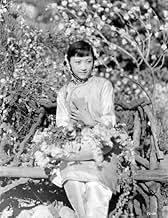
Wong, as you would expect, is quite good in her role. She looks quite young, with plenty of youthful innocence instead of the full degree of elegance that characterized her later roles. But she already had the ability to use the smallest of expressions and gestures to express her character's emotions economically and convincingly.
The rest of the production (other than Wong and the color process) is merely solid for the time. Kenneth Harlan rarely shows much energy as Carver, although fortunately it often works positively in bringing out his character's spineless nature.
The basic story makes some powerful statements about relationships and cultures, and thanks to Wong, much of that comes through. It does miss a few opportunities, but it hits more than it misses, and the combination of Wong plus the chance to see what early Technicolor looked like is more than enough to recommend "The Toll of the Sea" to any silent movie fan.
The story takes the "Madame Butterfly" plot and changes it slightly, setting it in China and adding some emphasis on the role of the sea. The story is simple, yet potentially packed with emotion, with its themes of clash between cultures and broken promises in relationships. Much of this particular production seems understandably to have been devoted to ways of showing off the potential of its new color process, and as a result there are times when the visual is emphasized over the dramatic potential.
Wong, as you would expect, is quite good in her role. She looks quite young, with plenty of youthful innocence instead of the full degree of elegance that characterized her later roles. But she already had the ability to use the smallest of expressions and gestures to express her character's emotions economically and convincingly.
The rest of the production (other than Wong and the color process) is merely solid for the time. Kenneth Harlan rarely shows much energy as Carver, although fortunately it often works positively in bringing out his character's spineless nature.
The basic story makes some powerful statements about relationships and cultures, and thanks to Wong, much of that comes through. It does miss a few opportunities, but it hits more than it misses, and the combination of Wong plus the chance to see what early Technicolor looked like is more than enough to recommend "The Toll of the Sea" to any silent movie fan.
One of the first films using two tone color
This film has a bit of fame as one of the first films using the process of two tone color. I saw it at MOMA when they were showing a retrospective of the history of color in moving pictures. It was shown without any music and for a silent film this is usually death, but the film was utterly engrossing and terribly moving. I still think of it ten years after I've seen it and would LOVE to get my hands on a copy. Anna May Wong is poignant and fragile in the lead role in this adaptation of the Madame Butterfly story.
Anna May shines
For a long time I only knew of this film for it's historical place as the earliest surviving 2 strip Technicolor film. I was curious to see it but expected little more than an interesting museum piece.
A wonderful surprise then, to discover this version of Madam Butterfly, self produced by Technicolor, is a poignant gem of silent cinema, deserving much wider exposure than it's status as a technical first would indicate.
On the technical side the colour is extremely attractive and well integrated into the story. Unlike some two colour films (The Viking, Show of Shows and King of Jazz) where colour correction is used to bring out blue's which originally photographed as silver grey, "Toll of the Sea" is authentic and unretouched, aside from the final lost sequence which had to be reshot in 1985. Since the process wasn't yet refined for filming in artificial light, the "interiors" in "Toll" are filmed in daylight. This is no drawback, however, since the real exteriors lend the film a freshness lacking from later studio bound works.
Another big plus is that the makers actually cast an Asian actress in the central role, instead of going the route of say Broken Blossoms. Perhaps this was because few actors would risk working on such an experimental project, or perhaps the film makers wanted the film to be as authentic as possible. Either way it gives the film an honesty absent from Hollywood's occasional treatments of such themes.
Sensitive direction and the wonderful performance of Anna May Wong, make this a particularly compelling piece. Although just 19, Wong's acting is both subtle and deeply felt. Witness the devastating moment when he tells her she can't come to America with him. The hurt and pain in Wong's face and eyes, which she bravely covers, could melt the stoniest heart. (I'll definitely keep an eye open for Wong's other work) Her leading man is somewhat stiffer but then his performance fits with the confused character he's playing.
Even if like me, you start watching this for the colour, you'll swiftly be caught up in it's story and by the artistry of it's youthful star.
A wonderful surprise then, to discover this version of Madam Butterfly, self produced by Technicolor, is a poignant gem of silent cinema, deserving much wider exposure than it's status as a technical first would indicate.
On the technical side the colour is extremely attractive and well integrated into the story. Unlike some two colour films (The Viking, Show of Shows and King of Jazz) where colour correction is used to bring out blue's which originally photographed as silver grey, "Toll of the Sea" is authentic and unretouched, aside from the final lost sequence which had to be reshot in 1985. Since the process wasn't yet refined for filming in artificial light, the "interiors" in "Toll" are filmed in daylight. This is no drawback, however, since the real exteriors lend the film a freshness lacking from later studio bound works.
Another big plus is that the makers actually cast an Asian actress in the central role, instead of going the route of say Broken Blossoms. Perhaps this was because few actors would risk working on such an experimental project, or perhaps the film makers wanted the film to be as authentic as possible. Either way it gives the film an honesty absent from Hollywood's occasional treatments of such themes.
Sensitive direction and the wonderful performance of Anna May Wong, make this a particularly compelling piece. Although just 19, Wong's acting is both subtle and deeply felt. Witness the devastating moment when he tells her she can't come to America with him. The hurt and pain in Wong's face and eyes, which she bravely covers, could melt the stoniest heart. (I'll definitely keep an eye open for Wong's other work) Her leading man is somewhat stiffer but then his performance fits with the confused character he's playing.
Even if like me, you start watching this for the colour, you'll swiftly be caught up in it's story and by the artistry of it's youthful star.


¿Sabías que…?
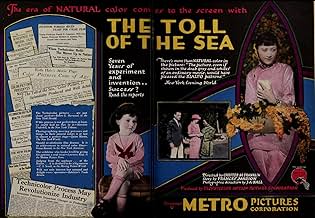
- TriviaThe seventh color feature, the second Technicolor feature, the first color feature made in Hollywood, and the first color feature anywhere that did not require a special projector to be shown.
- Citas
Old Chinese Gentleman: Whence comes this foreign face?
Lotus Flower: Alone in my garden I heard the cry of wind and wave. I came hurrying fast - and he was here!
Old Chinese Gentleman: Beware of this stranger! The sea is treacherous. His coming bodes no good!
- Versiones alternativasIn 1985, this film was restored using original negative materials, by Richard Dayton and Pete Comandini of the YCM Laboratories, and Robert Gitt of the UCLA Film and Television Archives, using funds from the AFI/NEA Film Preservation Program. Because the last 3-minute sequence of the Pacific Ocean was missing, it was re-shot using Frances Marion's titles from her scenario and an authentic 2-strip Technicolor camera. The film ran 53 minutes plus about one minute of explanatory information and restoration credits.
- ConexionesFeatured in Les premiers pas du cinéma - Un rêve en couleur (2004)
Selecciones populares
Inicia sesión para calificar y agrega a la lista de videos para obtener recomendaciones personalizadas
- How long is The Toll of the Sea?Con tecnología de Alexa
Detalles
- Tiempo de ejecución
- 54min
- Mezcla de sonido
- Relación de aspecto
- 1.33 : 1
Contribuir a esta página
Sugiere una edición o agrega el contenido que falta