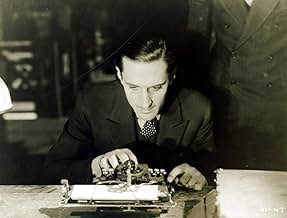
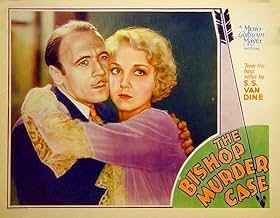
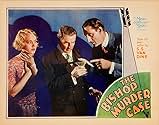
Cuando se encuentra el cuerpo de un hombre apodado «Cock Robin» con una flecha en el corazón en un campo de tiro con arco y un alfil de ajedrez como pista, Philo Vance investiga.Cuando se encuentra el cuerpo de un hombre apodado «Cock Robin» con una flecha en el corazón en un campo de tiro con arco y un alfil de ajedrez como pista, Philo Vance investiga.Cuando se encuentra el cuerpo de un hombre apodado «Cock Robin» con una flecha en el corazón en un campo de tiro con arco y un alfil de ajedrez como pista, Philo Vance investiga.
- Dirección
- Escritura
- Estrellas
Charles Quatermaine
- John Pardee
- (as Charles Quartermaine)
Sidney Bracey
- Pyne
- (as Sydney Bracey)
Richard Cramer
- Detective in Park
- (sin créditos)
Frank Fanning
- Officer Manning
- (sin créditos)
Marcia Mae Jones
- Hungry Child in Park
- (sin créditos)
Broderick O'Farrell
- Dr. Van Pelt
- (sin créditos)
- Dirección
- Escritura
- Todo el elenco y el equipo
- Producción, taquilla y más en IMDbPro
6.1932
1
2
3
4
5
6
7
8
9
10
Opiniones destacadas
Nursery Rhymes, Chess, and Archery
S. S. Van Dine's socialite detective is brought to film for the third time - this time having Basil Rathbone play Philo Vance. While I will not argue with some of the critical assertions that the film is static, stationary, and decidedly creaky, not too mention very far-fetched and predictable, The Bishop Murder Case was made in 1930 when sound was just coming into its own. That is very evident in this film as much of the dialog is hard to hear and comprehend. The stationary microphone was used throughout with director Nick Grinde using lots of expansive scenes with the actors standing around the screened microphone as was the case for sound pictures then. That being said, the film is a pretty decent detective mystery for its time. Rathbone makes an affable Vance. His character is given little depth, however. The mystery, while not entirely and sufficiently explained to me has some things going for it with red herrings involving chess pieces, archery, Ibsen plays, and murders emulating nursery rhymes of a kind. While Grinde directs with the limitations at hand, I did like some of his wide shots. The balcony of the building scene when the professor discovers a man killed by an arrow looked quite impressive, and you can see some wide shots that most definitely mirror German film expressionism of the 1920s with some large, long windows shot in the backdrops of several scenes. All the actors are competent with some real nice character turns by the likes of Charles Quartermaine as a chess expert, George F. Marion as a hunchbacked pseudo-intellectual, James Donlan as a police sergeant(giving the film some of its much needed light moments), and Roland Young, Cosmo Topper himself, turning in a sly, witty performance as a possible suspect. The script is unfortunately riddled with too much ambiguity to make any real sense, but when all is said and done, The Bishop Murder case is mildly entertaining - again making consideration for the time it was made.
A very satisfying Philo Vance entry though a little creaky in spots
"The Bishop Murder Case" is one of the best in the Philo Vance film series. The mystery seems a bit silly at first when children's nursery rhymes are used by the perpetrator of the crimes to publicize his murders, not unlike methods used by present-day serial killers. But once the plot unfolds the nursery rhyme angle makes complete sense. The Bishop is a key figure in solving the mystery as the title indicates. So keep your eyes focused on that clue. I won't say any more except to add that this is a complex mystery.
Basil Rathbone is second only to William Powell in breathing life into S.S. Van Dine's famous private investigator. It's obvious from this performance why Rathbone was chosen at the end of the decade to play Sherlock Holmes. The other actor who shines in this movie is Roland Young. Though much of the acting hearkens back to the silent era which was coming to an end, Rathbone and Young seem modern in their approach. From playing on stage and in silent pictures, actors were used to wild exaggerations and outlandish gesticulations which were no longer needed now that movies could talk. Several of the characters in "The Bishop Murder Case" have not yet adjusted to working with sound. Not so Rathbone and Young.
Another early talky distraction for modern viewers is the absence of music for dramatic effect. Since live music was used to accentuate the silent screen action and mood, it seems strange that music was not immediately utilized for the same purposes on the talky screen. Producers were misinformed that music coming from nowhere would puzzle and confuse the audience. So it took a few years for Hollywood to rid itself of this misconception. The decision not to use music plus fairly primitive sound effects (the viewer will readily recognize the sound of thunder as the sound of huge sheets of metal being snapped)take away from the overall effects of this otherwise clever and well-written murder mystery.
Basil Rathbone is second only to William Powell in breathing life into S.S. Van Dine's famous private investigator. It's obvious from this performance why Rathbone was chosen at the end of the decade to play Sherlock Holmes. The other actor who shines in this movie is Roland Young. Though much of the acting hearkens back to the silent era which was coming to an end, Rathbone and Young seem modern in their approach. From playing on stage and in silent pictures, actors were used to wild exaggerations and outlandish gesticulations which were no longer needed now that movies could talk. Several of the characters in "The Bishop Murder Case" have not yet adjusted to working with sound. Not so Rathbone and Young.
Another early talky distraction for modern viewers is the absence of music for dramatic effect. Since live music was used to accentuate the silent screen action and mood, it seems strange that music was not immediately utilized for the same purposes on the talky screen. Producers were misinformed that music coming from nowhere would puzzle and confuse the audience. So it took a few years for Hollywood to rid itself of this misconception. The decision not to use music plus fairly primitive sound effects (the viewer will readily recognize the sound of thunder as the sound of huge sheets of metal being snapped)take away from the overall effects of this otherwise clever and well-written murder mystery.
Just a regular Sherlock Holmes
I recently learned that Willard Huntington Wright aka S.S. Van Dine the author of the Philo Vance mysteries sold the various screen rights to his stories one at a time to the various studios who would pay for them. It's the reason that Paramount, MGM, Warner Brothers and later the B independent Producer's Releasing Corporation all had a hand in the series and we have so many Philos to compare styles with.
Basil Rathbone takes his turn at Philo and the Philo he creates isn't too much different from Sherlock Holmes. He's got no Watson to be his scribe and record his genius, but otherwise he's the same clever fellow who found out the secret of that hound of the Baskervilles, etc.
S.S. Van Dine did create a dumb flatfoot of a police sergeant Heath for Vance to constantly show up. At Paramount and later at Warner Brothers it was Eugene Palette, here we have James Donlon who even the maid puts down regularly. I'm not sure what Heath is there for because the District Attorney just calls in Vance for help when there's an interesting case.
Here we have the discovery of a dead body found on an archery field with an arrow through him. Of course the minute Vance gets there he deduces all is not as it appears.
I will say this, the murderer here was a surprise to me and even more important four people die in this film, but only the first murder was a planned one. The others happened because of some unforeseen circumstances our culprit didn't see coming.
That Philo, he's a regular Sherlock Holmes when it comes to solving these murders.
Basil Rathbone takes his turn at Philo and the Philo he creates isn't too much different from Sherlock Holmes. He's got no Watson to be his scribe and record his genius, but otherwise he's the same clever fellow who found out the secret of that hound of the Baskervilles, etc.
S.S. Van Dine did create a dumb flatfoot of a police sergeant Heath for Vance to constantly show up. At Paramount and later at Warner Brothers it was Eugene Palette, here we have James Donlon who even the maid puts down regularly. I'm not sure what Heath is there for because the District Attorney just calls in Vance for help when there's an interesting case.
Here we have the discovery of a dead body found on an archery field with an arrow through him. Of course the minute Vance gets there he deduces all is not as it appears.
I will say this, the murderer here was a surprise to me and even more important four people die in this film, but only the first murder was a planned one. The others happened because of some unforeseen circumstances our culprit didn't see coming.
That Philo, he's a regular Sherlock Holmes when it comes to solving these murders.
Good for 1930
Good effort given the primitive technology. This very early talkie does not creak like most of them did, and you believe that the same team could have done much better only a few years later.
Check out the innovative scene of Hyams at the three-way mirror. Beautiful scene that directors even today should view for technique. There are several little skilled touches added to this film that make you realize that the only limitation on the talent was the primitive lower-than-low tech.
Rathbone and Hyams seem more modern than the movie and they definitely do not creak.
Must reluctantly give it a "5" because of old set-bound look of the film and the lack of music but it is rewarding if you can overlook such drawbacks.
Check out the innovative scene of Hyams at the three-way mirror. Beautiful scene that directors even today should view for technique. There are several little skilled touches added to this film that make you realize that the only limitation on the talent was the primitive lower-than-low tech.
Rathbone and Hyams seem more modern than the movie and they definitely do not creak.
Must reluctantly give it a "5" because of old set-bound look of the film and the lack of music but it is rewarding if you can overlook such drawbacks.
A passable murder mystery, but with pitiful comedy and lots of red herrings.
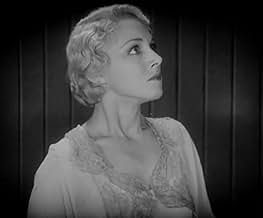
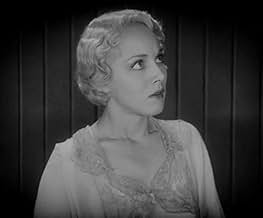
Basil Rathbone makes a good Philo Vance in this murder mystery involving nursery rhymes. It's a forerunner of his great portrayal of Sherlock Holmes later in his career. He even uses his powers of observation to deduce that the sergeant (James Donlan) wrote a check that afternoon, soon has a date with a woman, etc., much the same way Holmes did, continually astounding Dr. Watson. But the comedy Donlan provides - and he's the only comic relief in the film - is on an infantile level. When he sees Rathbone for the first time, he says "I've solved this case, Mr. Vance. It's a murder." The script is really less than lacking in the humor department. On the other hand, all the other characters do not behave as stupid, and are believable in their roles. I loved the interesting faces and characterizations of George F. Marion and Charles Quartermaine. And there is one lovely photographed scene when Leila Hyams is sitting at a desk with a triple mirror when a sinister hand opens the door. You see her terrified face from four different angles at once, and it's a stunning effect.
This is the type of mystery that is virtually impossible to figure out. You have to go with the flow and watch the events unfold until the end when they are explained. There are lots of red herrings along the way, so I found myself switching from one suspect to another as the probable murderer. It was fun.
¿Sabías que…?
- TriviaSeveral times Sigurd Arnesson (Roland Young) sarcastically calls Philo Vance (Basil Rathbone) "Sherlock Holmes". Nine years later, Rathbone would take the role of Holmes in El mastín de los Baskerville (1939) (and 14 sequels), and it became his iconic role.
- ErroresWhen Vance and fellow detectives investigate the body of Robin, who has been shot with an arrow, the angle of the arrow changes. Sometimes it's straight up out of the body, other times it's at almost a 45 degree angle.
- Citas
Philo Vance: [to Heath] Sergeant, you're much too trusting for this deceitful world. If everything happened as easy as that, life would be very simple and very dull.
- ConexionesFollowed by The Benson Murder Case (1930)
- Bandas sonorasWaltz of the Flowers
(1891-2) (uncredited)
from "The Nutcracker Suite, Op.71a"
Written by Pyotr Ilyich Tchaikovsky
Played on piano by Basil Rathbone
Selecciones populares
Inicia sesión para calificar y agrega a la lista de videos para obtener recomendaciones personalizadas
- How long is The Bishop Murder Case?Con tecnología de Alexa
Detalles
- Fecha de lanzamiento
- País de origen
- Idioma
- También se conoce como
- Дело об убийстве епископа
- Locaciones de filmación
- Grant's Tomb, Riverside Drive, Nueva York, Nueva York, Estados Unidos(Vance's car drives past in a second unit shot)
- Productora
- Ver más créditos de la compañía en IMDbPro
- Tiempo de ejecución
- 1h 28min(88 min)
- Color
Contribuir a esta página
Sugiere una edición o agrega el contenido que falta