

Cuando la policía de una ciudad alemana no es capaz de atrapar a un asesino de niños, otros criminales deciden participar en la búsqueda.Cuando la policía de una ciudad alemana no es capaz de atrapar a un asesino de niños, otros criminales deciden participar en la búsqueda.Cuando la policía de una ciudad alemana no es capaz de atrapar a un asesino de niños, otros criminales deciden participar en la búsqueda.
- Dirección
- Escritura
- Estrellas
- Premios
- 2 premios ganados en total




- Dirección
- Escritura
- Todo el elenco y el equipo
- Producción, taquilla y más en IMDbPro
Resumen
Opiniones destacadas
Ahead of its time
The murderer, artfully played by Peter Lorre, has been killing children that have no link to him personally for months. The police, despite all of their efforts, are unable to catch him, mainly because there is no rhyme or reason in his choice of victims. At first there is a focus on the victims and the hole left in their families by their killing. Then, the film shifts to two normally opposed groups - the police and the underworld. After several months of no results by the authorities, the police are unhappy because it reflects badly upon them, and the underworld is unhappy because their activities are being disrupted because of the police doing constant raids in their efforts to capture the killer.
In a particularly well-done part of the film the scene shifts back and forth between a conference of police and one of the underworld. They discuss how they are going to catch the killer. The police settle upon the idea of looking for people with a history of past mental problems that were pronounced cured and released. The underworld decides to enlist an invisible group - the beggars - to follow every child at all times and therefore catch the killer. Both groups focus on the right suspect, the question is - who gets there first? M is a fascinating film that raises many topics - the death penalty, a group of criminals that are criminals by choice causing less stress on society than a lone criminal that acts out of an uncontrollable compulsion, and the motivations of the authorities often being their own bureaucratic survival rather than the larger issue of ending a series of horrible acts against humanity.
Fritz Lang's (sound) masterpiece- a taut and quintessentially suspenseful story, and Lorre
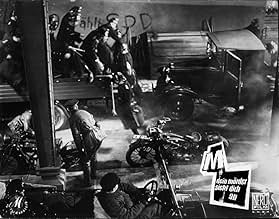
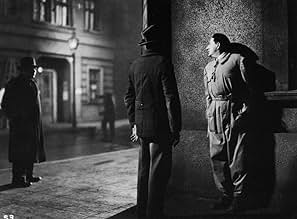
On the first viewing I just went straight for the story, which is able to suck one in enough to make you feel dizzy. But on the multiple viewings it becomes even more interesting as one can study the intricacy, and indeed full-on artistry, of Lang's camera. He puts it in unusual places at times, and adds for good measure shades of dark and gray in many of the night scene (this is, by the way, a precursor to 'film-noir', which Lang later became an important director in the 40's and 50's). On top of this, there is a very modern sense of style in the editing- I remember a couple of scenes that surprised me editing wise. One is where the cops (I think it was the cops) have an argument about the investigation- two of them get into a shouting match, and we get medium close-ups of them going back and forth. This is done quickly, with a kind of intensity that isn't even captured in today's thrillers. There is also the hunt for Lorre in the digging of the house, where Lang cuts around constantly, heightening the tension between the predators (the criminals) and the prey (Lorre), until it's almost too much to take.
The disturbing aspects of the story, of child abduction and murder, have become benchmarks of a number of today's thrillers, where the cop is usually the subject and the killer left more in the shadows, in cat & mouse style. This doesn't happen here, and because of it by the time we get to the final scene, with Lorre being interrogated and giving his "I can't help it" speech, it becomes something poetic, tragic, frightening. Lang doesn't leave his "message" so simplistically, he makes sure we know Lorre's side too, however twisted it has become, and the antagonist is shown as human as opposed to these present-day thriller where the killers are barely given one dimension let alone two. There were reports that during filming Lang put Lorre through torture, ultimately causing the two to never work together again. But nevertheless, out of this comes a towering performance of a small, wild-eyed criminal in the midst of an extremely well-told and unpredictable mystery story. In short, if you don't know what you're in for when you hear that whistle, those several infamous notes, you may not at all.
Influential and unforgettable masterpiece.
Even though M was Lang's (and Germany's) first sound film, many historians cite it as the initial masterpiece of cinema to appear following the introduction of sound into films in the late 1920's. While most early "talkies" return films to their static, visually monotonous, stage- imitative beginnings and thus limit rather than expand the artistic possibilities of the medium, M avoids the failing by skillfully balancing asynchronous, off-screen sounds with the more limiting use of synchronous dialogue. The film's editing, particularly its elaborate use of parallel cutting, also contributes kinetic energy and fluidity to the storytelling. Of course, many of the film's sound effects are also imaginative and memorable, none more so than the compulsive whistling of the film's central character, the stalker and serial killer of little girls Hans Beckert (magnificently played by Peter Lorre).
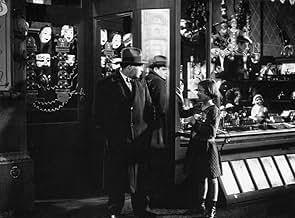
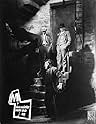
Sound is also an important contributor to M's rich and influential use of off screen space. One famous example is the scene that introduces Beckert as a shadow against his own Wanted poster, creepily intoning to his next victim, Elsie Beckmann, "You have a very pretty ball." Not only is Beckert's shadow a bow toward Lang's expressionist artistic roots, but it ironically places the murderer in the implied space in front of the image - that is, among us, the human community of viewers of which he is an innocuous-appearing, albeit monstrous, member. Another example of Lang's use of off-screen space is the montage of shots whose common denominator is Elsie's absence from them: an empty chair at the Beckmann dinner table, the vertiginous stairwell down which Elsie's mother searches compulsively and futilely for signs of her daughter's arrival, the attic play area that awaits Elsie's return from school. Most memorable of all - and most often alluded to visually in other films - is the series of shots that indirectly record Beckert's assault and murder of the innocent child, representing these off screen events metonymically via the entry of Elsie's ball from bushes along on the right edge of the frame and the release of her balloon from telephone wires and off the left edge of the frame. Never in the history of cinema has something so terrible been communicated through such powerfully understated images.
Beyond its technical brilliance, the keys to M's lasting impact are its psychologically convincing portrait of Hans Beckert's twisted compulsion and the still relevant ambivalence of his capture and "trial." Unlike contemporary cinematic examples of the serial killer, Beckert is not presented simply as a grotesque psychopath. Nor is the issue of how society should deal with him at all clear-cut. To be sure, the gut-reaction of most film audiences is to root on the underworld mobsters and petty thieves who, beating the established authorities to their mutual quarry, capture Beckert and bring him to a mock- formal trial whose conclusion is foregone. Like many in America today, Beckert's accusers are disinclined to listen to insanity pleas and would just as soon be rid of the "monster" in the surest way possible: a summary death penalty with as little fretting about legal rights as possible.
Considering the heinousness of Beckert's crimes and the imperfections of a legal/medical system that could well turn him loose to kill again, this emotional response is hard to resist. Yet M is by no means an endorsement of vigilantism - quite the contrary. Through the unlikely rhetorical persuasions of Beckert's unkempt "court appointed" defense attorney and Beckert's own impassioned monologue, Lang strongly implies that impatience with democratic judicial procedure and a paranoid eagerness to scapegoat others (guilty or not) in the name of order are symptomatic of the social hysteria breeding Nazism in 1930s Germany. That the ruthless killer who heads the underworld looks, dresses, and gestures like a Gestapo officer is no accident. Moreover, the letter "M" chalked on Beckert's back by one of his pursuers not only stands for "murderer" but also alludes to God's marking of Cain. While the popular misconception holds that the mark of Cain symbolizes his evil, it in fact represents God's warning to Cain's flawed fellow creatures not to mete out wrathful vengeance, but to leave justice in God's hands. Translated into secular terms (and literally entering the shot from the top of the frame), God's hands in M belong to the legitimate authorities that intervene at the last moment to arrest and try Hans Beckert "in the name of the Law."
Far Ahead Of Its Time And May Always Will Be
The film is lead by Peter Lorre in a transcending performance who plays the serial killer and rapist in which the film is centered around. In this performance Lorre is successful in something that at the very least is rare to see in any kind of film, compassion for a child killer and rapist. Lorre makes the viewer see, that he is not a criminal by choice but by a sickness of compulsion. Too often then not is our perception of a psychotic killer having that look that puts fear into his or hers victims' eyes. Lorre doesn't do that but rather displays a frightened man, a scared man. One in which his desperation leads to his hazardous behavior. His portrayal of a killer is not of a fearless one but of one consumed by fear. Something that even today we as a people cannot understand, let alone in 1931.
The direction and writing of Fritz Lang is beyond comprehensible as he taps into the mind of a serial killer and his complexities. He does so in such that we get an empathetic and compassionate illustration of all sides of the story. This in which by then end of the film all points of view are more then well delivered to the audience. Fritz Lang here, has simply created here a timeless masterpiece. One that excels in its technical aspects and enlightens the audience on a topic that other films still have not yet to match M in.
I highly recommend this film for many obvious reasons and conclusions. This film was created by one of the all time great directors in Fritz Lang, Lang's command for the screen is mesmerizing and a joy to witness and so on and so forth. Yet much of this is mostly superficial and a waste of time to continuously state. M, as I mentioned before takes a strong and original stance on an issue that we as a society yet have not fully resolved. This film may not give you THE answer on this issue but it may sway that moral compass of yours that lies inside of all of us.
Mörder...
Ultimately this film asks the question: what makes us who we are, how responsible are we for our actions and what should be done about it and by whom? To this day, as subjective a set of questions as you could wish to ask - but ones we will forever continue to try and answer and cinema will continue to catch in its shadows.


¿Sabías que…?
- TriviaContrary to popular belief, Fritz Lang did not change the title from "The Murderers are Among Us" to "M" due to fear of persecution by the Nazis. He changed the title during filming, influenced by the scene where one of the criminals writes the letter on his hand. Lang thought "M" was a more interesting title.
- ErroresWhen the gangsters find M in the attic and turn on the light, the clock behind M moves back five minutes from 11:55 to 11:50.
- Citas
Hans Beckert: I can't help what I do! I can't help it, I can't...
Criminal: The old story! We never can help it in court!
Hans Beckert: What do you know about it? Who are you anyway? Who are you? Criminals? Are you proud of yourselves? Proud of breaking safes or cheating at cards? Things you could just as well keep your fingers off. You wouldn't need to do all that if you'd learn a proper trade or if you'd work. If you weren't a bunch of lazy bastards. But I... I can't help myself! I have no control over this, this evil thing inside of me, the fire, the voices, the torment!
Schraenker: Do you mean to say that you have to murder?
Hans Beckert: It's there all the time, driving me out to wander the streets, following me, silently, but I can feel it there. It's me, pursuing myself! I want to escape, to escape from myself! But it's impossible. I can't escape, I have to obey it. I have to run, run... endless streets. I want to escape, to get away! And I'm pursued by ghosts. Ghosts of mothers and of those children... they never leave me. They are always there... always, always, always!, except when I do it, when I... Then I can't remember anything. And afterwards I see those posters and read what I've done, and read, and read... did I do that? But I can't remember anything about it! But who will believe me? Who knows what it's like to be me? How I'm forced to act... how I must, must... don't want to, must! Don't want to, but must! And then a voice screams! I can't bear to hear it! I can't go on! I can't... I can't...
- Créditos curiososAll of the original credits appear only in the beginning with no music.
- Versiones alternativasIn the English and French language versions, in addition to having been dubbed, had some footage re shot. These scenes include the telephone conversation between the minister and the police commissioner, and the ending of the film. Peter Lorre's performance in the trial was re shot, however this time he spoke his lines in English or French, depending upon the version. The shots of him are lit and photographed much differently than Fritz Lang's original footage. Additionally, a shot of the police arriving was inserted, taken from an earlier part of the film (whereas in the original German version no police forces are shown at all). The court scenes have been eliminated and replaced with happy endings where young children play a game similar to the one seen in the opening (English) or a smiling couple watching their children play in the street (French).
- ConexionesEdited into Juden ohne Maske (1937)
Selecciones populares
- How long is M?Con tecnología de Alexa
Detalles
Taquilla
- Total en EE. UU. y Canadá
- USD 35,566
- Fin de semana de estreno en EE. UU. y Canadá
- USD 6,123
- 17 mar 2013
- Total a nivel mundial
- USD 35,566
- Tiempo de ejecución
- 1h 57min(117 min)
- Color
- Mezcla de sonido
- Relación de aspecto
- 1.19 : 1
- 1.20 : 1