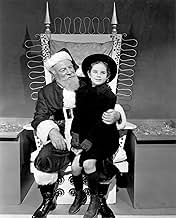
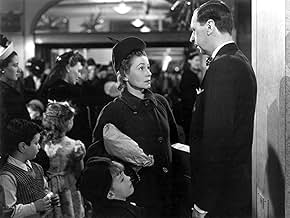
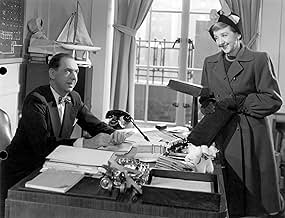
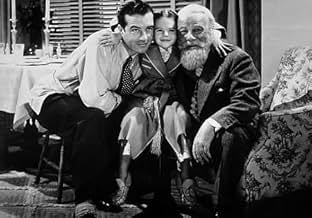
Cuando un buen anciano que dice ser Papá Noel es institucionalizado como loco, un joven abogado decide defenderlo argumentando en la justicia que él es el verdadero.Cuando un buen anciano que dice ser Papá Noel es institucionalizado como loco, un joven abogado decide defenderlo argumentando en la justicia que él es el verdadero.Cuando un buen anciano que dice ser Papá Noel es institucionalizado como loco, un joven abogado decide defenderlo argumentando en la justicia que él es el verdadero.
- Dirección
- Escritura
- Estrellas
- Ganó 3 premios Óscar
- 10 premios ganados y 1 nominación en total
Jack Albertson
- Post Office Mail Sorter Next to Lou
- (sin créditos)
Harry Antrim
- Mr. R.H. Macy
- (sin créditos)
Arline Bletcher
- Courtroom Spectator
- (sin créditos)
Lela Bliss
- Mrs. Shellhammer
- (sin créditos)
Symona Boniface
- Courtroom Spectator
- (sin créditos)
Walden Boyle
- Judge's Clerk
- (sin créditos)
Kevin Burke
- Child on Santa's Lap
- (sin créditos)
Dorothy Christy
- Secretary
- (sin créditos)
Dick Cogan
- Department Store Head
- (sin créditos)
- Dirección
- Escritura
- Todo el elenco y el equipo
- Producción, taquilla y más en IMDbPro
7.958.7K
1
2
3
4
5
6
7
8
9
10
Opiniones destacadas
10Boyo-2
Classic holiday fare
Its very easy to see why this movie won the Oscar for Screenplay that year. Its very intelligent and has a lot to say about several topics - how to raise a child, how a person of questionable sanity gets treated, how greedy businessmen are, how politics play out in a courtroom..and what to do with all that damn mail addressed to Santa Claus!
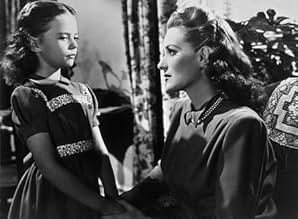
Its also very mature in some ways - Doris (Maureen O'Hara) is divorced and the mother of Susie (Natalie Wood). Doris has raised Susie to be very practical and to think for herself, but she neglected to teach Susie one thing - how to be a child, when you ARE a child. Enter Mr. Gayley (John Payne), a struggling lawyer who befriends Susie as a way to get to know her Mom better.
Doris works at Macy's and is organizing their Thanksgiving Day Parade, when the Santa they've hired is intoxicated. In a pinch they hire the REAL Kris Kringle to appear in the parade. He ends up being such a big hit that he gets hired to work at Macy's also. He is not the traditional employee, however, and this comes to light when he sends a customer (the venerable Thelma Ritter) to ANOTHER STORE! Schoenfeld's, he says, has what she's looking for. Then he is overheard, by the store manager no less, sending another customer to GIMBELS!
Don't want to give away any more, but the movie is touching, dramatic and hysterical - Doris on the phone with her co-workers' wife, who has been given too much liquor, is worth a million bucks alone. Whenever I want to make my sister laugh, I do a pretty decent imitation of her saying "HELLO?" Also, I can sing the song Kris sings to the girl from Rotterdam..the girl who is so thrilled that Kris can communicate with her in her language. Susie overhearing this is beginning to think that Kris might be the real thing, and she's a pretty hard nut to crack, for a little kid.
See it, own it, memorize it..and pity the 31 souls in 'User Ratings' who gave this a '1', which is ridiculous but it takes all kinds I guess.
Its also very mature in some ways - Doris (Maureen O'Hara) is divorced and the mother of Susie (Natalie Wood). Doris has raised Susie to be very practical and to think for herself, but she neglected to teach Susie one thing - how to be a child, when you ARE a child. Enter Mr. Gayley (John Payne), a struggling lawyer who befriends Susie as a way to get to know her Mom better.
Doris works at Macy's and is organizing their Thanksgiving Day Parade, when the Santa they've hired is intoxicated. In a pinch they hire the REAL Kris Kringle to appear in the parade. He ends up being such a big hit that he gets hired to work at Macy's also. He is not the traditional employee, however, and this comes to light when he sends a customer (the venerable Thelma Ritter) to ANOTHER STORE! Schoenfeld's, he says, has what she's looking for. Then he is overheard, by the store manager no less, sending another customer to GIMBELS!
Don't want to give away any more, but the movie is touching, dramatic and hysterical - Doris on the phone with her co-workers' wife, who has been given too much liquor, is worth a million bucks alone. Whenever I want to make my sister laugh, I do a pretty decent imitation of her saying "HELLO?" Also, I can sing the song Kris sings to the girl from Rotterdam..the girl who is so thrilled that Kris can communicate with her in her language. Susie overhearing this is beginning to think that Kris might be the real thing, and she's a pretty hard nut to crack, for a little kid.
See it, own it, memorize it..and pity the 31 souls in 'User Ratings' who gave this a '1', which is ridiculous but it takes all kinds I guess.
Santa is in New York!
The movie starts out in a festive atmosphere. It is Thanksgiving and the employees of Macy's department store are busy with preparations for the annual Thanksgiving day parade. Doris. Walker (Maureen O'Hare) is in charge of the parade. She anxiously hires Kris Kringle (Edmund Gwenn) to replace the man she hired to play Santa Claus when she discovers the original Santa is too intoxicated to even get on the float. Kris does such a good job that Mrs. Walker asks him to stay on in the role and be the department store's Santa. She soon has serious doubts about her decision when she discovers that her new Santa really believes he is Santa Claus.
Mrs. Walker is working, single mother, who works for Macy's Department Store in New York City. Natalie Wood plays her daughter, Susan. As the result of a failed Marriage, Doris raises her daughter to accept reality. There is no room for fantasy or make believe in her life. Susan is a quiet, child who acts more like a grown up than a 6 year old. She has difficulty using her imagination, and has become just as skeptical as her mother.
Since Kris, believes that "the important thing is to make children happy," winning the affection of Susan and her mother is his main objective.
Whether or not Kris is the real Santa Claus, there is no doubt that he seem to have an influence on almost everyone he meets--except for Macy's staff psychologist .Mr. Sawyer believes that Kris is delusional, and has him committed to thrown into a mental institution. In order to get out, Kris must face a court hearing, where not only is his sanity questioned, but the state of New York will decide if there really is a Santa Claus. Fred Gailey (played by John Payne) a neighbor of Doris Susan Walker agrees to represent Kris. The predictable end to the story is that Fred and Doris become attracted to each other, and as Fred works hard to secure Kris' freedom, Doris finds herself not only believing in Kris, but also in believing in fantasy.
Maureen O'Hara portrays Doris Walker with poise and sophistication. Although the movie is over 55 years old, the idea of a single working mom trying to raise her daughter after a bitter divorce, tells a story that is relevant by today's standards. Natalie Wood does such a good job at playing as the bright six year old, Susan, that you can almost imagine her going straight from being a baby to being an adult. John Payne, as Fred Gailey, predictably plays the handsome attorney who falls in love with Mrs. Walker. Even though it seems a bit unbelievable, this movie is all about fantasy, so we'll allow a bit of romance. Finally, Edmund Gwenn's portrayal of Santa Claus is so believable, that you almost believe that truly is the jolly old elf himself!
This reviewer would give the movie a 5 out of 5 rating. It is a Christmas classic that will be remembered for years to come as one of the best Christmas movies ever filmed. The message of the movie is not about the real meaning of Christmas, nor is it about the commercialism that has overshadowed the holiday for years. The message of the movie is that make believe and fantasy play an important role in our live. Without them we would have no basis for our hopes and dreams
Mrs. Walker is working, single mother, who works for Macy's Department Store in New York City. Natalie Wood plays her daughter, Susan. As the result of a failed Marriage, Doris raises her daughter to accept reality. There is no room for fantasy or make believe in her life. Susan is a quiet, child who acts more like a grown up than a 6 year old. She has difficulty using her imagination, and has become just as skeptical as her mother.
Since Kris, believes that "the important thing is to make children happy," winning the affection of Susan and her mother is his main objective.
Whether or not Kris is the real Santa Claus, there is no doubt that he seem to have an influence on almost everyone he meets--except for Macy's staff psychologist .Mr. Sawyer believes that Kris is delusional, and has him committed to thrown into a mental institution. In order to get out, Kris must face a court hearing, where not only is his sanity questioned, but the state of New York will decide if there really is a Santa Claus. Fred Gailey (played by John Payne) a neighbor of Doris Susan Walker agrees to represent Kris. The predictable end to the story is that Fred and Doris become attracted to each other, and as Fred works hard to secure Kris' freedom, Doris finds herself not only believing in Kris, but also in believing in fantasy.
Maureen O'Hara portrays Doris Walker with poise and sophistication. Although the movie is over 55 years old, the idea of a single working mom trying to raise her daughter after a bitter divorce, tells a story that is relevant by today's standards. Natalie Wood does such a good job at playing as the bright six year old, Susan, that you can almost imagine her going straight from being a baby to being an adult. John Payne, as Fred Gailey, predictably plays the handsome attorney who falls in love with Mrs. Walker. Even though it seems a bit unbelievable, this movie is all about fantasy, so we'll allow a bit of romance. Finally, Edmund Gwenn's portrayal of Santa Claus is so believable, that you almost believe that truly is the jolly old elf himself!
This reviewer would give the movie a 5 out of 5 rating. It is a Christmas classic that will be remembered for years to come as one of the best Christmas movies ever filmed. The message of the movie is not about the real meaning of Christmas, nor is it about the commercialism that has overshadowed the holiday for years. The message of the movie is that make believe and fantasy play an important role in our live. Without them we would have no basis for our hopes and dreams
The best of three versions
The remakes just don't carry the magic of the original, and what a cast we find in the original, starting with the beautiful Maureen O'Hara and the (then) child star Natalie Wood. Edmund Gwinn is perfect as Santa Claus, who appears on the scene when the Macy's Santa shows up drunk for the Thanksgiving Day Parade.
There are dozens of small comedic touches in the film, such as Santa sending customers to other stores when Macy's doesn't have what they need, and then the rivalry between Macy's and Gimball's when they copy the tactic.
Of course, the big payoff is the courtroom scenes, which just get funnier and funnier. This is one of the true Christmas Classics. Watch and enjoy. :-)
There are dozens of small comedic touches in the film, such as Santa sending customers to other stores when Macy's doesn't have what they need, and then the rivalry between Macy's and Gimball's when they copy the tactic.
Of course, the big payoff is the courtroom scenes, which just get funnier and funnier. This is one of the true Christmas Classics. Watch and enjoy. :-)
Sweet movie not without social comment
This is certainly a lovely warmhearted movie, but since other reviewers have described the plot in detail, I'll move on to other topics.
I love movies like this for the insight they provide into the customs of a lost era. Watch the clothing - everybody is so dressed up! - women in dresses, gloves, and hats, men in hats and suits. Notice that when O'Hara enters a room filled with Macy's executives, even though they are the bosses and she is lower management, they all stand up instantly.
The social satire, most on display in the courtroom scenes, also is very 1940s. Apparently audiences of that era took a kind of genial corruption in the judicial system in stride. Business leaders, like "Mr. Macy" were expected to be sharp and profit-oriented, but also decent people like the rest of us. It's a much more nuanced view than the "businessman as criminal villain" so common in today's movies.
The character played by Maureen O'Hara probably needs explanation for modern viewers. Late 1940s audiences knew that the social and economic situation of a divorced working woman with a child was much more precarious than it is now. Divorce was still somewhat shocking - this is brought out neatly in the movie when her would-be lover does a double take when he learns from her daughter about the divorce - he probably had assumed she was a war widow. Divorced moms were still rare in the middle classes. Society universally agreed that women should stay home to raise their children. Economically, women in management positions were still very rare, couldn't expect promotion, and were last hired, first fired. I think O'Hara's performance brings out these qualities in a way that the audience of the 1940s would have understood easily. The character's stiffness, fear of losing control, and anxiety about her job make a great deal of sense. It would have been nice to see a few scenes showing her loosening up, perhaps at dinner with her boyfriend; no doubt those got left on the cutting room floor.
I really like the scene where Santa talks to the little Dutch orphan. First, this scene also must have resonated with the audience; in 1947 the western European countries had only started to recover from World War II, and probably many Americans were familiar with the idea of adopting a war orphan, just as many sent CARE packages. Second, by making Santa fluent in Dutch, the writer cleverly left the viewer thinking that hey, he might really be Santa Claus (isn't Santa Claus fluent in all languages)?
Some reviewers don't like the acting and think that modern actors are "better". I think the older actors aren't better or worse, just different. The audiences of the 1940s expected a certain style of acting, and the directors and actors gave that to them. Then as now, Hollywood paid top dollar and got very talented people, but like all of us they were shaped by their own time and place, more particularly the requirement to make movies that audiences would like. Move Maureen O'Hara to 2004, or Tom Cruise to 1947, and you'd see them acting in the style of that decade.
I love movies like this for the insight they provide into the customs of a lost era. Watch the clothing - everybody is so dressed up! - women in dresses, gloves, and hats, men in hats and suits. Notice that when O'Hara enters a room filled with Macy's executives, even though they are the bosses and she is lower management, they all stand up instantly.
The social satire, most on display in the courtroom scenes, also is very 1940s. Apparently audiences of that era took a kind of genial corruption in the judicial system in stride. Business leaders, like "Mr. Macy" were expected to be sharp and profit-oriented, but also decent people like the rest of us. It's a much more nuanced view than the "businessman as criminal villain" so common in today's movies.
The character played by Maureen O'Hara probably needs explanation for modern viewers. Late 1940s audiences knew that the social and economic situation of a divorced working woman with a child was much more precarious than it is now. Divorce was still somewhat shocking - this is brought out neatly in the movie when her would-be lover does a double take when he learns from her daughter about the divorce - he probably had assumed she was a war widow. Divorced moms were still rare in the middle classes. Society universally agreed that women should stay home to raise their children. Economically, women in management positions were still very rare, couldn't expect promotion, and were last hired, first fired. I think O'Hara's performance brings out these qualities in a way that the audience of the 1940s would have understood easily. The character's stiffness, fear of losing control, and anxiety about her job make a great deal of sense. It would have been nice to see a few scenes showing her loosening up, perhaps at dinner with her boyfriend; no doubt those got left on the cutting room floor.
I really like the scene where Santa talks to the little Dutch orphan. First, this scene also must have resonated with the audience; in 1947 the western European countries had only started to recover from World War II, and probably many Americans were familiar with the idea of adopting a war orphan, just as many sent CARE packages. Second, by making Santa fluent in Dutch, the writer cleverly left the viewer thinking that hey, he might really be Santa Claus (isn't Santa Claus fluent in all languages)?
Some reviewers don't like the acting and think that modern actors are "better". I think the older actors aren't better or worse, just different. The audiences of the 1940s expected a certain style of acting, and the directors and actors gave that to them. Then as now, Hollywood paid top dollar and got very talented people, but like all of us they were shaped by their own time and place, more particularly the requirement to make movies that audiences would like. Move Maureen O'Hara to 2004, or Tom Cruise to 1947, and you'd see them acting in the style of that decade.
It makes you want belive that Santa Claus really exists
Miracle On 34Th Street was a great Christmas movie. The major conflict of the movie was whether or not Santa Claus really existed.
The movie begins with Kris Cringle (Edmund Gwen) walking by a store with a man setting up a display of reindeer and notices that they are not in order. Kris tells the man politely how to fix them in the right positions, but the man gives him a strange look and goes back to work. Kris Cringle believes himself to be Santa Claus although most everyone else thinks he is crazy. Even little Susan (Natalie Wood) thinks he is a fake and doesn't believe in any fairytales'. Her mother, Doris Walker (Maureen O'Hara), taught her that to believe in fairytales' is childish and impractical. Kris is later made a part of the Macy's parade when the Santa Claus that was supposed to be in the parade is found drunk. When asked if he had ever had any experience, Kris replied, `Many times.' Doris makes him the department store Santa Claus at Macy's where he tells many people that he is the real Santa Claus.
As more people find out about Kris Cringle calling himself Santa Claus', they get upset saying that no such person really exists. Many people took it more literally and said that it would be impossible for reindeer to fly or for anyone to live in the North Pole. He is forced to take a mental examination and the doctor convinces Doris that Kris is mentally ill after he gets in a fight. Kris is arrested and taken to court and his lawyer is Mr. Gailey who starts to believe, along with Doris and Susan, the he actually is Santa Claus.
I thought that this was a really good holiday movie that focus on something that all of us as little kids went through- believing or not believing in Santa Claus. It even feels like I should believe in Santa after watching it. I thought that Edmund Gwen was a really good actor and perfect for his part. He played his role very innocently, which made him very believable as Santa Claus. Natalie Wood was a great actress who played very well the typical role of the cynical child. The acting and the plot was very well written. It was a very innocent movie that is entertaining for all types of audiences.
The movie begins with Kris Cringle (Edmund Gwen) walking by a store with a man setting up a display of reindeer and notices that they are not in order. Kris tells the man politely how to fix them in the right positions, but the man gives him a strange look and goes back to work. Kris Cringle believes himself to be Santa Claus although most everyone else thinks he is crazy. Even little Susan (Natalie Wood) thinks he is a fake and doesn't believe in any fairytales'. Her mother, Doris Walker (Maureen O'Hara), taught her that to believe in fairytales' is childish and impractical. Kris is later made a part of the Macy's parade when the Santa Claus that was supposed to be in the parade is found drunk. When asked if he had ever had any experience, Kris replied, `Many times.' Doris makes him the department store Santa Claus at Macy's where he tells many people that he is the real Santa Claus.
As more people find out about Kris Cringle calling himself Santa Claus', they get upset saying that no such person really exists. Many people took it more literally and said that it would be impossible for reindeer to fly or for anyone to live in the North Pole. He is forced to take a mental examination and the doctor convinces Doris that Kris is mentally ill after he gets in a fight. Kris is arrested and taken to court and his lawyer is Mr. Gailey who starts to believe, along with Doris and Susan, the he actually is Santa Claus.
I thought that this was a really good holiday movie that focus on something that all of us as little kids went through- believing or not believing in Santa Claus. It even feels like I should believe in Santa after watching it. I thought that Edmund Gwen was a really good actor and perfect for his part. He played his role very innocently, which made him very believable as Santa Claus. Natalie Wood was a great actress who played very well the typical role of the cynical child. The acting and the plot was very well written. It was a very innocent movie that is entertaining for all types of audiences.
Top-Rated Christmas Movies to Stream This Season
See the very best Christmas movies streaming this season, according to IMDb fan ratings.
¿Sabías que…?
- TriviaIn the untranslated dialogue with the Dutch girl, Kris asks her what she wants for Christmas. She says she wants nothing, telling him she got her gift by being adopted by her new mother.
- ErroresKris claims that John Quincy Adams' Vice-President was Daniel D. Tompkins; actually, it was John C. Calhoun. Tompkins served under James Monroe from 1817-1825. The confusion likely occurred because Adams was the 6th President, whereas Tompkins was the 6th Vice-President, as Thomas Jefferson and James Madison had three Vice-Presidents between them.
- Citas
Mr. Shellhammer: But... but maybe he's only a little crazy like painters or composers or... or some of those men in Washington.
- Créditos curiososThe film's credits do not contain the standard "All characters and events are fictional..." disclaimer, leaving many people to believe that this was a true story.
- Versiones alternativasAlso available in two computer colorized versions. The film was first colorized in 1985 by Color Systems Technology, Inc. and again in 2006 by Legend Films using much-improved technology. Prints came with a disclaimer: "It has been altered without the participation of the principal director, screenwriter and other creators of the original film."
- ConexionesFeatured in The Screen Writer (1950)
- Bandas sonorasJingle Bells
(1857) (uncredited)
Written by James Pierpont
Played at the announcement of the parade
Played occasionally in the score
Sung a cappella a bit by Percy Helton and later by Jack Albertson
Selecciones populares
Inicia sesión para calificar y agrega a la lista de videos para obtener recomendaciones personalizadas
Holiday Movie Posters We Love
We've rounded up some of our favorite posters for holiday movies over the years. Which ones are your favorites?
- How long is Miracle on 34th Street?Con tecnología de Alexa
Detalles
- Fecha de lanzamiento
- País de origen
- Idiomas
- También se conoce como
- Milagro en la calle 34
- Locaciones de filmación
- 24 Derby Road, Port Washington, Long Island, Nueva York, Estados Unidos(Susan's dream house)
- Productora
- Ver más créditos de la compañía en IMDbPro
Taquilla
- Total a nivel mundial
- USD 3,851
- Tiempo de ejecución
- 1h 36min(96 min)
- Color
- Relación de aspecto
- 1.37 : 1
Contribuir a esta página
Sugiere una edición o agrega el contenido que falta