

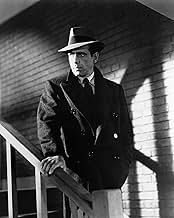
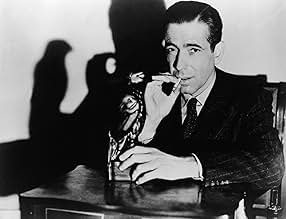
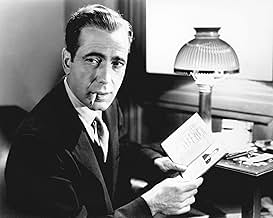
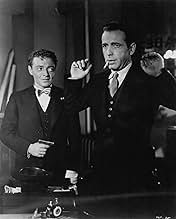
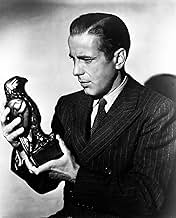
Un detective privado asume un caso que lo involucra con tres criminales excéntricos, un mentiroso magnífico y su búsqueda de una estatuilla invaluable.Un detective privado asume un caso que lo involucra con tres criminales excéntricos, un mentiroso magnífico y su búsqueda de una estatuilla invaluable.Un detective privado asume un caso que lo involucra con tres criminales excéntricos, un mentiroso magnífico y su búsqueda de una estatuilla invaluable.
- Dirección
- Escritura
- Estrellas
- Nominado a 3 premios Óscar
- 8 premios ganados y 4 nominaciones en total



Charles Drake
- Reporter
- (sin créditos)

Chester Gan
- Bit Part
- (sin créditos)

Creighton Hale
- Stenographer
- (sin créditos)

Robert Homans
- Policeman
- (sin créditos)

William Hopper
- Reporter
- (sin créditos)
- Dirección
- Escritura
- Todo el elenco y el equipo
- Producción, taquilla y más en IMDbPro
7.9172.8K
1
2
3
4
5
6
7
8
9
10
Opiniones destacadas
Top notch mystery that kicked off the film noir genre of the 1940s
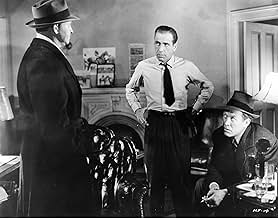
"The Maltese Falcon", scripted and directed by Hollywood first-timer John Huston (from Dashiell Hammett's novel), would go on to become an American film classic. Humphrey Bogart chews the scenery in his star-making turn as acid-tongued private eye Sam Spade, whose association with the beautiful and aloof Brigid O'Shaughnessy (Mary Astor), neurotic Joel Cairo (Peter Lorre), and morbidly obese Kasper Gutman (Sydney Greenstreet, in his Oscar-nominated screen debut) over the recovery of the title object, sets in motion a movie experience that is as much crackling as it is dazzling. While much of the action and dialogue is considerably dated by modern standards, the film's essential power to mystify and entrance remains undiminished despite its age. While this was the third adaptation of Hammett's story (the first was made in 1931 and the second was "Satan Met a Lady" (1936)), this is also the best remembered and most praised, due largely in part to Bogart's seemingly effortless portrayal of the tough but softhearted, world-weary hero. Mary Astor and Lee Patrick were, respectively, the definitive femme fatale and girl Friday, and the villianous roles of Cairo, Gutman and Wilmer (Elisha Cook Jr.) were equally remarkable. What may not be wholly obvious is the fact that these three men have homosexual tendencies (as given in the novel), but just look at what's given: Cairo's delicate speech and manner, Wilmer's questionable quick tempered attitude towards Spade (could this be covering up the fact that he finds Spade attractive?) and Gutman's clutching of Spade's arm when Sam arrives at his hotel room. A polished film noir that gave rise to Bogart's mounting popularity. (Sidenote: The character of Sam Spade was originally offered to George Raft, who turned it down. Raft also turned down "Casablanca" (1942), "High Sierra" (1941) and William Wyler's "Dead End" (1937), all of which went to Bogart and helped to boost his star status. Bogart had Raft to thank for his enduring popularity.) A must-see masterpiece. ****
The best detective story.
I love this movie. I didn't love it until I'd watched it a couple of times.
And I didn't love it quite so much until I'd read Harvey Greenberg's "Movies on Your Mind."
But I now think that, within the strictures of its budget, it's about as good as it can get. Sam Spade is a marvelous character in this film. He gives practically nothing away, while gathering information from others simply by letting them talk, kind of like a shrink.
And it's hard to believe that they could have found a cast that fit the templates of the novel so perfectly. Sidney Greenstreet IS the "fat man." Peter Lorre IS the queer. My nomination for best scene: When Greenstreet attempts to peel off the black enamel from the captured bird and finds that it's nothing but lead and begins to hack away at it, as if it were alive and he were trying to kill it. Nothing is more amusing than a fat man lipid with rage.
If you see this one, and I hope you do, make note of the phenomenal black and white photography. (I hope you have a good connection.) Watch, for instance, the glissade of the camera when Bogart says, "You have brains. Yes, you do."
In case you're worried about this being too sophisticated for enjoyment by an ordinary audience, I should mention that I showed this (in one connection or another, I forget) to a class of Marines at Camp Lejeune. They enjoyed the hell out of it, especially the scene in which Mary Astor kicks Peter Lorre in the shins.
Don't miss it.
And I didn't love it quite so much until I'd read Harvey Greenberg's "Movies on Your Mind."
But I now think that, within the strictures of its budget, it's about as good as it can get. Sam Spade is a marvelous character in this film. He gives practically nothing away, while gathering information from others simply by letting them talk, kind of like a shrink.
And it's hard to believe that they could have found a cast that fit the templates of the novel so perfectly. Sidney Greenstreet IS the "fat man." Peter Lorre IS the queer. My nomination for best scene: When Greenstreet attempts to peel off the black enamel from the captured bird and finds that it's nothing but lead and begins to hack away at it, as if it were alive and he were trying to kill it. Nothing is more amusing than a fat man lipid with rage.
If you see this one, and I hope you do, make note of the phenomenal black and white photography. (I hope you have a good connection.) Watch, for instance, the glissade of the camera when Bogart says, "You have brains. Yes, you do."
In case you're worried about this being too sophisticated for enjoyment by an ordinary audience, I should mention that I showed this (in one connection or another, I forget) to a class of Marines at Camp Lejeune. They enjoyed the hell out of it, especially the scene in which Mary Astor kicks Peter Lorre in the shins.
Don't miss it.
Greatest leading man ever?
If not, it's pretty damn close. My husband and I are different than most because instead of just looking for movies we tend to find actors we love and then watch all of their movies. We're fans of the star first and then the movie second. Humphrey Bogart had it all. He was authentic, compelling, and could convey so many emotions with just a twinkle or a tinge of doubt, or suspicion, or fear, or lust, or greed, whatever it was he had to convey, he did it with full conviction. If there's a better movie star that ever lived, I can't name them. There may be actors with more range, but not better movie stars. I think actors can be great even if they don't transform as Day-Lewis does. Don't get me wrong, Day-Lewis is a genius, but an actor who is completely authentic and compelling (something going on underneath) is just as interesting to watch as an actor who transforms themselves.
The Fat Man Cometh
Considered by many film historians as the very first noir film, "The Maltese Falcon" is cinematically important also for making Humphrey Bogart into a Hollywood star, and for being the debut of John Huston as film Director.
The film's story is complex and convoluted, typical of detective films of that era, and involves a valuable statuette. The plot stalls and meanders throughout most of the film, as we encounter an assortment of strange characters and side issues. But this is not a plot-driven film. It is character-driven.
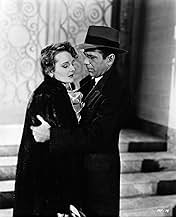
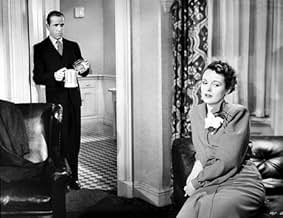
And the main character, of course, is PI Sam Spade (Bogart). He's not a particularly nice guy. He comes across as overconfident and egotistic. He smirks a lot. But he's tough as nails. And he knows how to nail the bad guys. A big part of the film is Spade's relationship to femme fatale Brigid (Mary Astor). They engage each other in a battle of wits. And there's more than a hint of romantic involvement between the two. But Brigid is the one who propels Spade into the deceiving and double-crossing world of bad guys who yearn with greed for the priceless Maltese Falcon.
Enter Kasper Gutman, that thoroughly rotund and intimidating (in a gentlemanly sort of way) king of greed, portrayed with verve and panache by the inimitable Sydney Greenstreet. Gutman, AKA the "Fat Man", is nothing if not erudite and self-assured. In one scene, Sam Spade makes a bold offer. Gutman responds articulately: "That's an attitude sir that calls for the most delicate judgment on both sides, because as you know sir, in the heat of action, men are likely to forget where their best interests lie ...".
And Peter Lorre is a hoot as Gutman's mischievous elf, Joel Cairo, who tries, without success, to threaten Sam Spade, but only succeeds at getting on Sam's nerves.
The film's high contrast B&W lighting renders an effective noir look and feel, one that would be copied in films for years to come. Acting varies from very good to overly melodramatic. The script is very talky. For the most part, the film is just a series of conversations that take place in interior sets.
Stylistic and cinematically innovative, "The Maltese Falcon" has endured as a film classic. I suspect the main reason for its continued popularity is the continued popularity of Bogart. But I personally prefer the performance of Sydney Greenstreet, the enticing fat man. Yet, together they would reappear in later films, one of which would follow, in 1942, as the classic of all classics.
The film's story is complex and convoluted, typical of detective films of that era, and involves a valuable statuette. The plot stalls and meanders throughout most of the film, as we encounter an assortment of strange characters and side issues. But this is not a plot-driven film. It is character-driven.
And the main character, of course, is PI Sam Spade (Bogart). He's not a particularly nice guy. He comes across as overconfident and egotistic. He smirks a lot. But he's tough as nails. And he knows how to nail the bad guys. A big part of the film is Spade's relationship to femme fatale Brigid (Mary Astor). They engage each other in a battle of wits. And there's more than a hint of romantic involvement between the two. But Brigid is the one who propels Spade into the deceiving and double-crossing world of bad guys who yearn with greed for the priceless Maltese Falcon.
Enter Kasper Gutman, that thoroughly rotund and intimidating (in a gentlemanly sort of way) king of greed, portrayed with verve and panache by the inimitable Sydney Greenstreet. Gutman, AKA the "Fat Man", is nothing if not erudite and self-assured. In one scene, Sam Spade makes a bold offer. Gutman responds articulately: "That's an attitude sir that calls for the most delicate judgment on both sides, because as you know sir, in the heat of action, men are likely to forget where their best interests lie ...".
And Peter Lorre is a hoot as Gutman's mischievous elf, Joel Cairo, who tries, without success, to threaten Sam Spade, but only succeeds at getting on Sam's nerves.
The film's high contrast B&W lighting renders an effective noir look and feel, one that would be copied in films for years to come. Acting varies from very good to overly melodramatic. The script is very talky. For the most part, the film is just a series of conversations that take place in interior sets.
Stylistic and cinematically innovative, "The Maltese Falcon" has endured as a film classic. I suspect the main reason for its continued popularity is the continued popularity of Bogart. But I personally prefer the performance of Sydney Greenstreet, the enticing fat man. Yet, together they would reappear in later films, one of which would follow, in 1942, as the classic of all classics.
Attack of the Raptors...
Sam Spade and Miles Archer are detectives, the private type who you can give directives, after meeting with a dame, there then begins a deadly game, with a group who seem to have, their own perspectives; although they all have as their goal a missing falcon, and soon there are some folks, who find their souls gone, as beneath the dark veneer, there are those quite insincere, as you'll find after a number of liaisons; as the story ratchets up the threads combine, and at the centre of the plot's a large waistline, that speaks with eloquence and intent, as deep within, passions ferment, in a film that is a classic of its time.
Great cast, great story, great film - but isn't Sydney Greenstreet outstanding!
Great cast, great story, great film - but isn't Sydney Greenstreet outstanding!


¿Sabías que…?
- TriviaThree of the falcon statuettes made for the production still exist and are conservatively valued at over $1 million each. This makes them some of the most valuable film props ever made; indeed, each is now worth more than three times what the film cost to make.
- ErroresSpade doesn't wear rings or a watch throughout the movie except for one scene. At one point he walks into his office wearing a wedding band on his left hand, another large ring on his right hand and an expensive looking wristwatch. He sits down to have a quick chat with his secretary where the rings and watch are in plain view. He then walks through a doorway into his inner office and the rings and watch are gone.
- Citas
Joel Cairo: You always have a very smooth explanation ready.
Sam Spade: What do you want me to do, learn to stutter?
- Versiones alternativasAlso available in a computer colorized version.
- ConexionesEdited into Cuentos de la cripta: You, Murderer (1995)
Selecciones populares
Inicia sesión para calificar y agrega a la lista de videos para obtener recomendaciones personalizadas
Detalles
- Fecha de lanzamiento
- País de origen
- Idioma
- También se conoce como
- The Maltese Falcon
- Locaciones de filmación
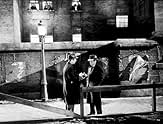
- Bush Street, San Francisco, California, Estados Unidos(death of Miles Archer)
- Productora
- Ver más créditos de la compañía en IMDbPro
Taquilla
- Presupuesto
- USD 375,000 (estimado)
- Total en EE. UU. y Canadá
- USD 18,180
- Total a nivel mundial
- USD 41,894
- Tiempo de ejecución
- 1h 40min(100 min)
- Color
- Relación de aspecto
- 1.37 : 1
Contribuir a esta página
Sugiere una edición o agrega el contenido que falta