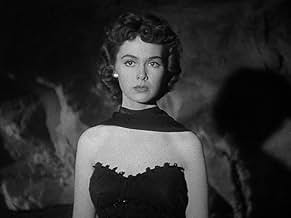
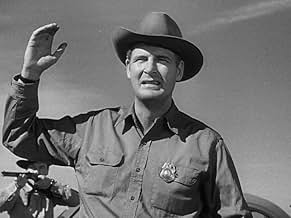
Un ovni llega al desierto de Arizona y cuando los lugareños empiezan a actuar de forma extraña los únicos que sospechan influencia alienígena son un astrónomo aficionado y una profesora.Un ovni llega al desierto de Arizona y cuando los lugareños empiezan a actuar de forma extraña los únicos que sospechan influencia alienígena son un astrónomo aficionado y una profesora.Un ovni llega al desierto de Arizona y cuando los lugareños empiezan a actuar de forma extraña los únicos que sospechan influencia alienígena son un astrónomo aficionado y una profesora.
- Dirección
- Escritura
- Estrellas
- Premios
- 1 premio ganado y 4 nominaciones en total
- Posseman
- (sin créditos)
- Dugan
- (sin créditos)
- Man
- (sin créditos)
- Sam
- (sin créditos)
- Dave Loring
- (sin créditos)
- Dr. Snell
- (sin créditos)
- Perry
- (sin créditos)
- Posseman
- (sin créditos)
- Bob - Dr. Snell's Assistant
- (sin créditos)
- Toby
- (sin créditos)
- Posseman
- (sin créditos)
- Mrs. Daylon
- (sin créditos)
- Dirección
- Escritura
- Todo el elenco y el equipo
- Producción, taquilla y más en IMDbPro
Opiniones destacadas
Good story for the 1950s
Set in and around a small town in the Arizona desert, it tells the story of an amateur astronomer who was trying to get to the truth behind a large, fiery object that fell to earth in the desert. Was it a meteroid, as the Army had proclaimed after its investigation, or a crashed space ship? Though he caught a glimpse of the latter, the evidence was buried in a landslide in the crater before anyone else got there.
Ray Bradbury's believable story is the now-common question of how we deal with things we don't understand, or are "ugly".
I thought it played well, had decent special effects, etc., for a film made for 1950s audiences' sensibilities and movie-watching sophistication.
One scene included a shapely, flirty young woman who really had nothing to do with the story. It wasn't until I heard this was a 3D movie that her presence on screen made any sense.
Great then and still great
Clothes Encounters
Arnold uses Theremin music to great effect, the photography is eerie, dialog (by Ray Bradbury) poetic, and the alien is a large crawling mass with one bulging eye that leaves a snail-like trail in its path. Incognito as humans so as not to terrify earthlings with their unique physicality, the aliens are NOT bent on destruction - an interesting precursor to Steven Spielberg's expensive "Close Encounters of the Third Kind" (1977) - even its main titles are also at the end.
In an unconscious insight into social behavior, a scene has Carlson speaking to the sheriff (Charles Drake) while watching a spider on the desert ground ("...Why are you afraid of it? Because it has 8 legs, its mouth moves from side to side, instead of up and down? What would you do if it came towards you?"). The sheriff squashes it. This holds true for animals, as well as people (who have different coloring, etc.), avoiding, ridiculing, harming or destroying, sadly. The classic Twilight Zone episode "Eye of the Beholder" (1960) is a fine example: most of the "monsters" in these science-fiction/horror films just look different than humans, we might be "monsters" to them. This is low-key, intelligent, satisfying drama. Russell Johnson, Joe Sawyer, and Kathleen Hughes co-star.
Universal ruled the 1950s science fiction boom.
Likable, earnest Richard Carlson stars as John Putnam, an amateur astronomer in the small town of Sand Rock, Arizona. One night he (and others) witness a "meteor" violently crashing to Earth (in one of the most startling introductions to a film of this kind). The aliens on board stealthily go about abducting local citizens and altering their appearance to look like these people. All they really want is to be able to work on their ship in peace, and leave before too long, but naturally there are humans who don't want to get with the program, like hot tempered sheriff Matt Warren (Charles Drake).
Lovely Barbara Rush is Carlsons' appealing leading lady in this extremely well directed, succinct film with as much moody black & white atmosphere as one could ask from this kind of entertainment. One will notice that all we get at the beginning is the title; the cast and crew credits are all saved for the final few minutes - an interesting (but not THAT uncommon) innovation for an older film. There's fine use of stock music from such composers as Henry Mancini, and the cinematography by Clifford Stine is excellent. The aliens are effectively hideous looking in their natural guise, but they begin to be revealed perhaps a bit too soon into the story. The alien P.o.V. shots are pretty cool.
As was said, Rush is very appealing, but it's unfortunate that her role keeps requiring her to scream at things: a Joshua tree, a kid in a costume, an undisguised alien (well, at least that one is understandable). The supporting cast is impressive, right down the line: Drake, Russell Johnson, Joe Sawyer, George Eldredge, Bradford Jackson, Dave Willock.
Although originally filmed in 3-D, "It Came from Outer Space" works just as fine without it.
Seven out of 10.
Don't See This In A Theatre With Aussies!
Between about 1975 and 1986, three 1950s sci-fi films were held in very high regard by me - It Came From Outer Space, Forbidden Planet and The Incredible Shrinking Man. All three were liked so much I constantly listened to them on audio tape. They were regarded as solid sci-fi movies to be taken very seriously. Then in the late 1980s I made the mistake of seeing these films in Sydney theatres with people who were not really in tune with 1950s movies. These films became comedy to them.
ICFOS begins with the male and female lead getting all romantic with each other. This cinema crowd almost laughed this scene off the screen. Too corny for them. Later, one character describes Richard Carlson as "a man who thinks for himself", the laughing was louder this time. And again, Carlson looks into space and starts talking to himself, out loud, about aliens. The laughing was getting stronger. And so it went on. What was once great mystery and suspense, such as Russell Johnson looking into the sun, was now comedy. They had good reason to laugh as it was funny. But this crowd destroyed a childhood favourite of mine. I did'nt like this film being laughed at. I did'nt want to know the funny side. Other cinema screenings of Forbidden Planet and The Incredible Shrinking Man were given the same reaction. For a while I wondered if all of my 1950s/1960s sci-fi favourites were just ... bad in the eyes of the public. Or was it just the Australian sense of humour?
I will rate this film by my 1970s reactions. It is a classic. The music score is dated but everything else is fine. The desert creates such mystery. Great sci-fi.
¿Sabías que…?
- TriviaAlthough credited to Harry Essex, most of the script, including dialogue, is copied almost verbatim from Ray Bradbury's initial film treatment.
- ErroresWhen the alien first goes walking about in the desert, the camera cuts to a startled owl, which tries to fly away only to be jerked back by the visible string tied to its leg.
- Citas
Sheriff Matt Warren: Did you know, Putnam, more murders are committed at ninety-two degrees Fahrenheit than any other temperature? I read an article once - lower temperatures, people are easy-going. Over ninety two, it's too hot to move. But just ninety-two, people get irritable.
- Créditos curiososThe credits are at the end rather than at the beginning. They include shots of the characters with the cast names, and the pictures would mean nothing if seen before the film.
- Versiones alternativasThere is an Italian edition of this film on DVD, distributed by DNA Srl: "IT CAME FROM OUTER SPACE 3-D (1953) + L'UOMO DAL PIANETA X (1951)" (2 Films on a single DVD, with "Destinazione Terra!" in double version 2D and 3D), re-edited with the contribution of film historian Riccardo Cusin. This version is also available for streaming on some platforms.
- ConexionesEdited into Monstruos de piedra (1957)
Selecciones populares
Detalles
Taquilla
- Presupuesto
- USD 800,000 (estimado)
- Total a nivel mundial
- USD 270
- Tiempo de ejecución
- 1h 21min(81 min)
- Color