

Dos personas viven una relación maravillosa, pero sus convicciones políticas los distancian.Dos personas viven una relación maravillosa, pero sus convicciones políticas los distancian.Dos personas viven una relación maravillosa, pero sus convicciones políticas los distancian.
- Ganó 2 premios Óscar
- 6 premios ganados y 8 nominaciones en total







7.030.2K
1
2
3
4
5
6
7
8
9
10
Opiniones destacadas
the never-changing look of a God
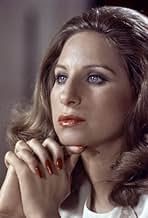
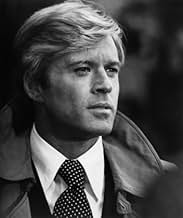
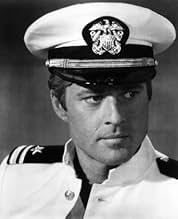
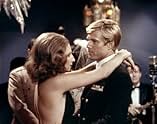
It's WWII. Katie Morosky (Barbra Streisand) is a Jewish girl working in New York radio pumping out patriotic programming among her many activist jobs. In a nightclub, she runs into former crush and Naval officer Hubbell Gardiner (Robert Redford). In college, she was a communist student leader struggling to rally against Franco with Frankie McVeigh (James Woods). He was the WASP star athlete, the man around campus, and outwardly lived a carefree life. He's taken with her tenacity and she admires his writing. In the post war years, they are married in Hollywood where he writes for the studio and she fights against Mcarthyism.
She has the better part. He's playing the trophy wife. His hemming and hawing with his writing is a bit infuriating. He's too cool for school except for a few emotional outbursts. Those are great for showing some depth in his character although the couple seems to have only two polar opposite gears. As for her, Streisand gives it her all. There is a grating edge to her character which is not that appealing. I do like that these two flawed characters struggle with their undeniable connection until I can't take their unending fight about politics. Another issue is the unchanging Grecian God beauty of Redford's look. This movie takes place over decades. He needs to change. Maybe give him a buzz cut during the war years. There is the famous song which I wouldn't diss or praise. Pollack delivers a solid melodrama although the relationship gets too melodramatic at times.
She has the better part. He's playing the trophy wife. His hemming and hawing with his writing is a bit infuriating. He's too cool for school except for a few emotional outbursts. Those are great for showing some depth in his character although the couple seems to have only two polar opposite gears. As for her, Streisand gives it her all. There is a grating edge to her character which is not that appealing. I do like that these two flawed characters struggle with their undeniable connection until I can't take their unending fight about politics. Another issue is the unchanging Grecian God beauty of Redford's look. This movie takes place over decades. He needs to change. Maybe give him a buzz cut during the war years. There is the famous song which I wouldn't diss or praise. Pollack delivers a solid melodrama although the relationship gets too melodramatic at times.
Opposites attract, but rarely last
"The Way We Were" released in 1973, stars two of the biggest names in show biz then and now, Barbra Streisand and Robert Redford. The story is basically a weepy melodrama, but who cares? Both of these superstars are the reason to watch. At first, we cannot imagine what they see in one another. They meet in college, circa 1937 -- Katie (Streisand) is a wallflower political activist, Hubble (Redford) is the Golden Boy track star. Yes, both were too old to play college students, so it is obvious the director surrounded them with people their own age, with some decent supporting actors like Lois Chiles and a younger James Woods. The two are reunited by World War II, Redford is in the military but also part of the uppity "Beekman Street" crowd, Streisand is a liberal who is nuts about FDR and working on various political causes. The unlikely twosome fall in love, get married, and do not always have an easy time. Redford doesn't mind his wife's political activity, but he is bored by politics and cannot relate to them. The turbulent 1950's hit, Redford is a writer in "Red Scare" Hollywood who takes the easy way out; Streisand believes people should always stand up for their principles, no matter the cost. Sydney Pollack directed this fine film, and had to convince his friend Redford to take on the part of Hubble Gardner; Redford was reluctant, and it is easy to see why. His character, while a decent guy at heart, is also shallow, somewhat superficial, and doesn't take life seriously. The film obviously exploits Redford's golden boy looks, something he always detested. Streisand's part is obviously the more interesting one, as the part was exclusively written for her. And while her character may not fit in on "Beekman Street," she looks fabulous here. All in all, this is one of the finest romances to come out of the 1970's that also has intelligence and class.
One of the best romances of all-time!
There are movies about love being made all of the time. After awhile, they all begin to look the same. However, once in awhile, one is made that truly stands out. THE WAY WE WERE is such a film. This film, mixing love and politics, finds two individuals (Barbra Streisand and Robert Redford) who meet in college, but years pass before a romance blooms. She is an political activist, he's bored by politics. She's stern and serious, he's easygoing and laid-back. Although they love each other deeply, their differences begin to tear them apart. As far as romantic tearjerkers go, they don't get much better than this. Both Striesand and Redford are perfectly cast and their characters are ones in which viewers will grow to love and care about. Many viewers will also appreciate the realistic ending. This is a beautiful film.
"If We Had The Chance To Do It All Again, Tell Me, Would We, Could We?"
I recall a line from The Alamo in which John Wayne says to Linda Cristal that political differences don't make for good breakfast talk between a man and a woman. That's a piece of wisdom that Barbra Streisand and Robert Redford should have remembered for their characters in The Way We Were.
Meet Hubbell Gardiner and Katie Marofsky from the Thirties at Columbia University. Redford as Gardiner is your all American athlete and the Prince Charming of many a young girl's dreams. An elegant WASP Ivy League future is in store for him if he wants it.
One of those girls who thinks Redford is Prince Charming is Barbra Streisand as Katie Marofsky. She's a member of the young Communists and is one eloquent campus radical for her cause. When we see her she's got a picture of Lenin in her dormitory room. We see her talking about the cause of Republican Spain and the budding young Ivy League Republicans on the campus are hooting her down. All, but Redford who's impressed by her convictions even if he doesn't share them.
But when the USA does get into World War II and Redford is in the Navy and Streisand now working for the Office of War Information now meet. Politics seem to take a back seat to romance and Streisand lives out a real life fairy tale as a Brooklyn Jewish Cinderella.
Their love gets really tested in the post World War II period during the Red Scare. Streisand's not quite the Communist she once was, a picture of FDR is now in her room. That was in fact one of FDR's main contributions to our body politic, winning over budding revolutionaries like Streisand to support our democratic, (big and small "D") way of life. But he's gone now and the Soviet Union has become our cold war enemy. A lot of people are now caught in the post war reaction.
Because Hollywood is the glamor capital of the world and right-wing politicos can't get any mileage out of investigating Communist plumbers, it's to the movie capital that the House Un-American Activities Committee turns. Redford is now working in that industry as is Streisand.
Redford sees the problem in personal terms, Streisand sees the big picture, but that's all she does see. How things resolve themselves is the basis of The Way We Were.
With all the political differences there beats the heart of one of the best love stories ever done in Hollywood. When Redford's around, Streisand lights up the screen with her passion for him. But it never quite covers the different world views they have.
With such detail given to the stars by director Sydney Pollack, the supporting cast and it's a good one, never really establish their characters. Maybe that's what he wanted, to have them appear as plastic as Streisand's Katie Marofsky thinks they are.
The Way We Were contains the title song written by Marvin Hamlisch and Alan and Marilyn Bregman which became one of Streisand's best loved ballads. Her singing of that song is unforgettable whether heard on record or if fortunate, live at one of her concerts. Bing Crosby also made a nice recording of it for one of his last albums. Hamlisch also won an Oscar for Best overall Musical Score that year, they were the only two Oscars won by The Way We Were.
The sad thing about The Way We Were is that Streisand and Redford hold such different views and yet are fundamentally decent people who cannot agree to disagree. It's what makes The Way We Were such a beautiful, yet ultimately sad film.
Meet Hubbell Gardiner and Katie Marofsky from the Thirties at Columbia University. Redford as Gardiner is your all American athlete and the Prince Charming of many a young girl's dreams. An elegant WASP Ivy League future is in store for him if he wants it.
One of those girls who thinks Redford is Prince Charming is Barbra Streisand as Katie Marofsky. She's a member of the young Communists and is one eloquent campus radical for her cause. When we see her she's got a picture of Lenin in her dormitory room. We see her talking about the cause of Republican Spain and the budding young Ivy League Republicans on the campus are hooting her down. All, but Redford who's impressed by her convictions even if he doesn't share them.
But when the USA does get into World War II and Redford is in the Navy and Streisand now working for the Office of War Information now meet. Politics seem to take a back seat to romance and Streisand lives out a real life fairy tale as a Brooklyn Jewish Cinderella.
Their love gets really tested in the post World War II period during the Red Scare. Streisand's not quite the Communist she once was, a picture of FDR is now in her room. That was in fact one of FDR's main contributions to our body politic, winning over budding revolutionaries like Streisand to support our democratic, (big and small "D") way of life. But he's gone now and the Soviet Union has become our cold war enemy. A lot of people are now caught in the post war reaction.
Because Hollywood is the glamor capital of the world and right-wing politicos can't get any mileage out of investigating Communist plumbers, it's to the movie capital that the House Un-American Activities Committee turns. Redford is now working in that industry as is Streisand.
Redford sees the problem in personal terms, Streisand sees the big picture, but that's all she does see. How things resolve themselves is the basis of The Way We Were.
With all the political differences there beats the heart of one of the best love stories ever done in Hollywood. When Redford's around, Streisand lights up the screen with her passion for him. But it never quite covers the different world views they have.
With such detail given to the stars by director Sydney Pollack, the supporting cast and it's a good one, never really establish their characters. Maybe that's what he wanted, to have them appear as plastic as Streisand's Katie Marofsky thinks they are.
The Way We Were contains the title song written by Marvin Hamlisch and Alan and Marilyn Bregman which became one of Streisand's best loved ballads. Her singing of that song is unforgettable whether heard on record or if fortunate, live at one of her concerts. Bing Crosby also made a nice recording of it for one of his last albums. Hamlisch also won an Oscar for Best overall Musical Score that year, they were the only two Oscars won by The Way We Were.
The sad thing about The Way We Were is that Streisand and Redford hold such different views and yet are fundamentally decent people who cannot agree to disagree. It's what makes The Way We Were such a beautiful, yet ultimately sad film.
Epic and anchored by the history of the century.
Oh, the way they used to make movies. Robert Redford and Babs. The ultimate star-crossed lovers, him a privileged golden boy for whom everything came too easy, but he knew it, and her a socialist politico who had to work harder for everything because she was plain, jewish, and poor.
Through Beekman Place, McCarthyism, Hollywood, World War II and the fact that they simply weren't cut out for each other, they tried until they couldn't try any more. Barbra is deep and intellectual, at least she wants to be, but ends up being the ultimate drama queen, "I'm not pretty enough for you, am I?" and "Nobody will ever love you like I do." Redford is aloof and chilly and beautiful and as shallow as a mud puddle.
BUT, if you can watch that last scene, "I can't Katie." "I know." and not open up the waterworks then pack up your DVD player and give it to the Goodwill, because movies are not for you.
Epic and anchored by the history of the century, The title, The Way We Were refers to all of us. It's how we once were when things mattered and we cared. Too often dismissed as a chick flick or a tear jerker, this is two of the best there ever were at their personal best.
Through Beekman Place, McCarthyism, Hollywood, World War II and the fact that they simply weren't cut out for each other, they tried until they couldn't try any more. Barbra is deep and intellectual, at least she wants to be, but ends up being the ultimate drama queen, "I'm not pretty enough for you, am I?" and "Nobody will ever love you like I do." Redford is aloof and chilly and beautiful and as shallow as a mud puddle.
BUT, if you can watch that last scene, "I can't Katie." "I know." and not open up the waterworks then pack up your DVD player and give it to the Goodwill, because movies are not for you.
Epic and anchored by the history of the century, The title, The Way We Were refers to all of us. It's how we once were when things mattered and we cared. Too often dismissed as a chick flick or a tear jerker, this is two of the best there ever were at their personal best.


¿Sabías que…?
- TriviaFilmed amid the ongoing Watergate political scandal, Robert Redford initially wanted the film to focus on the blacklisting of actors and writers during the McCarthy era. He was unhappy with cuts made to the film following a preview. "I think we'd both have preferred a more political Dalton Trumbo-type script," Redford recalled, "but finally Sydney came down on the side of the love story. He said, 'This is first and foremost a love affair,' and we conceded that. We trusted his instincts, and he was right."
- ErroresWhen the radio announcer refers to the time of Franklin Roosevelt's death, he says it occurred at 5:45 in the morning. President Roosevelt died in the early afternoon.
- Citas
Hubbell Gardiner: I'm telling you that people - *people* are more important than a goddamn witch hunt. You and me. Not causes. Not principles.
Katie Morosky: Hubbell, people *are* their principles.
- ConexionesFeatured in Film Extra: Sydney Pollock (1973)
- Bandas sonorasThe Way We Were
Composed by Marvin Hamlisch
Lyrics by Marilyn Bergman and Alan Bergman
Sung by Barbra Streisand before the opening credits and during the end credits.
Music played often in the score
Selecciones populares
Inicia sesión para calificar y agrega a la lista de videos para obtener recomendaciones personalizadas
Detalles
- Fecha de lanzamiento
- País de origen
- Idiomas
- También se conoce como
- Cherie Bitter
- Locaciones de filmación
- Productoras
- Ver más créditos de la compañía en IMDbPro
Taquilla
- Presupuesto
- USD 5,000,000 (estimado)
- Total en EE. UU. y Canadá
- USD 45,000,000
- Total a nivel mundial
- USD 45,001,190
Contribuir a esta página
Sugiere una edición o agrega el contenido que falta