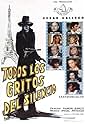
A photographer (Mario Pardo) works for a Parisian newspaper when one night he is shot dead by a mysterious assailant. He dies in his darkroom, and some of his work is stolen. His best friend, journalist Gerard Roland (Naschy), vows to unmask the killer, immediately clashing with police commissioner Alain (Máximo Valverde). Naschy's first step is to speak with colleagues who worked with Pardo, but the journalist who was his last partner is also murdered. The two victims had collaborated on a story about a construction fraud perpetrated by the architect, who has just been released on a technicality. At the same time, Naschy discovers that his girlfriend Elvire (Rosa Valenty) has disappeared. He becomes convinced that her disappearance is connected to the murders, and his investigation leads him to the gym of former boxer Nino "The Hammer" Lara (Goyo Peralta). The boxer and some friends beat up Naschy, but he links them to the high-flying businessman Montan (José María Prada). Naschy tries to coerce the industrialist into revealing what he knows, but his attempts are thwarted by his wife (María Mahor). Naschy is determined to force a confrontation and find out what happened to his girlfriend.
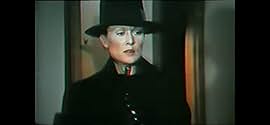
Although classified as Giallo by critics, there isn't much to this collaboration between director Barco and star Naschy. There's a black-clad assassin with a silencer lurking about, weaving his way through much of the supporting cast, but in other respects, this venture feels more like a corruption thriller. It's also significant that the assassin uses a silenced pistol, which isn't the typical weapon of a Giallo killer. The result, of course, is that the murders seem straight out of an American police procedural. Under these circumstances, the plot bears much of the weight, but sadly, there isn't much to it. Barco manages to conceal this quite effectively during the first half, but by the time Naschy learns more secrets about his girlfriend's life that she's kept from him, it becomes clear that the story has been stalled for some time. It's also revealed that the assassin is part of a shadowy criminal organization, but we never discover what it is or what it does, and it remains tangential to the crimes. The final revelation is also not difficult to guess, although events go beyond what was expected, which is a kind of unexpected twist.
Starring Naschy gives lousy acting. His specialty as an actor was strong horror characters like Waldemar Daninsky, and he displays so little humanity here that his quest for personal justice is unconvincing. Sleeping with the roommate of his missing girlfriend, played by the unknown and rather unattractive Renë D'Grie in her only film, won't exactly win the audience's attractiveness either. His investigation process is also suspect, making a lot of noise but discovering very little.
The family life of the inspector played by the good-looking Máximo Valverde offers a brief glimmer of light, specifically his beautiful wife, played by Mirta Miller. The banter with her weary and jaded husband brightens the screen, but it's brief, and she is, at best, a minor character. The most noteworthy aspect is the brief appearances of some actresses from the era's so-called "Destape" (a period of intense sexual liberation) - although there's no nudity typical of Giallo films - such as Mirta Miller, Blanca Estrada, and Rosa Valenty; while the experienced and veteran María Mahor lends professionalism to the production. Perhaps the most unusual element is one of the members of Valverde's investigation team, played by Ramón Centenero. It's not that the character has anything particularly interesting or noteworthy to do; it's his name: Inspector Closseau. Alongside them are some familiar faces like Mario Pardo, Antonio Gamero, Paloma Cela, and José María Prada.
The film is streaming in very low quality, only available on YouTube, making it difficult to comment on its technical aspects. There are some exterior shots filmed by cinematographer Emilio Foriscot in Paris, where the story is set, but many scenes take place in small rooms, which appear to be real homes rather than purpose-built sets, suggesting limited resources.
It's a very mediocre film, directed by the relatively unknown Ramón Barco, based on a story by Naschy himself and written by Juan José Porto. It's professionally made, but there's no individual signature on the work, nor any signs of inventiveness or creativity. Barco's irst film credit was on the 8-minute short film "Espectro siete" (1969). He wrote the music and co-wrote the screenplay with the prolific director Javier Aguirre. On the other hand, Barco's subsequent filmography is, in fact, quite sparse. He debuted as a screenwriter and director with the psychological drama "Mecanismo interior" (1971), starring María Mahor who would repeat with Barco in this film. It took him four years to complete his project with Naschy, but only one more year until his last film, the little-known "El avispero" (1975) with Ángel Aranda, reached theaters. It's a very minor film, only for Naschy fans, but it's only worth seeking out if you're a die-hard Giallo fan, even though this time it's not knives but a silent gun used for killing.