

El teniente John Dunbar, asignado a un remoto puesto de avanzada de la Guerra Civil occidental, se hace amigo de los lobos y los indios, lo que lo convierte en una aberración intolerable en ... Leer todoEl teniente John Dunbar, asignado a un remoto puesto de avanzada de la Guerra Civil occidental, se hace amigo de los lobos y los indios, lo que lo convierte en una aberración intolerable en el ejército.El teniente John Dunbar, asignado a un remoto puesto de avanzada de la Guerra Civil occidental, se hace amigo de los lobos y los indios, lo que lo convierte en una aberración intolerable en el ejército.
- Ganó 7 premios Óscar
- 55 premios ganados y 40 nominaciones en total

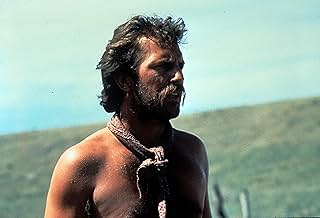
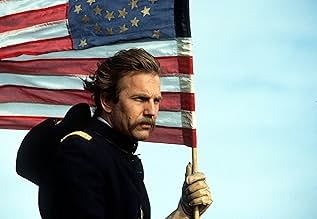

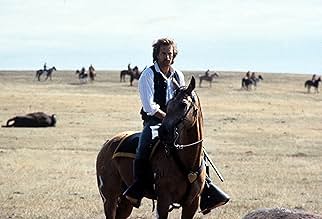



- Ten Bears
- (as Floyd Red Crow Westerman)


- Dirección
- Escritura
- Todo el elenco y el equipo
- Producción, taquilla y más en IMDbPro
Opiniones destacadas
Magnificent
Rediscover "Dances With Wolves"
This is, simply put, filmmaking of the highest order. Everything magically works in this absolutely engaging 3-hour epic Western. The extended director's cut is an hour longer and most of the added material is worthwhile and fleshes out the characters more than the theatrical cut. I recommend watching the 3-hour version and, if you want more, check out the expanded version.
Over the years I've heard some grumbling about the film's PC-influenced negative portrayal of whites in general and also its supposed romanticized portrayal of Indians as super-virtuous. Hence, before viewing the film again I was braced for the worst. After seeing it, I must say that most of these grumblings are hogwash. No kidding. Really, only a rigid white redneck "patriot" would take offense to this story (and, don't get me wrong, I'm patriotic but not mindlessly so). The film rings of authenticity and the characters are anything but one-dimensional. Want proof? (No major spoilers).
- The Pawnee are the first Indians the viewer encounters in the film and they are portrayed as completely hostile to whites and other NA tribes - so hostile that they'll kill a white person on sight without mercy. I'd say this is a negative, stereotypical portrayal of Indians, wouldn't you agree?
- Also, Wind In His Hair (Rodney A. Grant) clearly states that the Sioux should kill Dunbar at the council meeting; I'm sure there were others who agreed with him but it was ultimately decided that killing Dunbar would likely cause more problems than solve.
- Not all white people are shown in a negative light; in fact, Dunbar himself - the film's protagonist - is white. What about the "foul" guy, Timmons, who escorts Dunbar to the abandoned fort? I've met people just like him. He's not portrayed as evil, but merely uncouth in dress and manners. Anyway, when Timmons gets savagely murdered by a band of Pawnee he begs over and over that the Indians not hurt his mules; his dying words are words of love (for his animals!). Also, when he says goodbye to Dunbar at the fort he says, "Good luck, Lieutenant" and you know he means it; the words show love and respect. Obviously this was a disgusting guy with a heart of gold. Again I know people just like him; it rings of authenticity.
- The story takes place during the Indian Wars where there's very little love & compassion of whites towards Indians and vice versa. The U.S. Army is there to do a job and, as usual, go by the book. Is this a negative portrayal or simply the way it was? The answer is obvious. Hence, most of the officers are not shown in a negative light but merely as military leaders carrying out their duty. Although some of the main enlisted soldiers come off as clueless sheetheads, again, the characters ring of true life. I met people just like 'em in the military.
- Besides, I repeat, not all Natives are depicted as virtuous. The Pawnee are obviously ruthless villains and quite a few Indians are shown helping the U.S. Army and are, therefore, traitors to their people.
- Is the small tribe of Lakota Sioux really super-virtuous? Is their lifestyle really a paradise? No, they're merely portrayed as real people living, pursuing happiness, uncertain about the amassing whites, fighting and persevering through hardships (like the winter camp).
- Is the massive annihilation of Bison (leaving their skinless carcasses to rot in the sun) a negative depiction of whites or just the way it was? Such people would likely shoot a wolf for the "fun" of it. Again, it smacks of reality.
This is just a taste. Clearly, the people in the film are not as one-dimensional as some maintain. Neither is the movie as pro-Indian/anti-white as some insist. It's more complicated than that.
As to the accuracy of the story itself, the fact is that many whites have "gone injun" and many Natives have assimilated with whites. The story explores the possibility of what would happen if a white man dropped all prejudices and tried to get along with some Sioux neighbors; and what if this small band of Natives was open and curious enough to accept him? Is it unlikely that this band would have an available good-looking white woman amongst them that Dunbar could fall in love with? Is there a bit of romanticization? Yes, but it IS a Hollywood movie, after all. Regardless, it's presented in a believable, compelling and captivating way.
"Dances" is almost 20 years old but remains timeless like most great films; it is the definition of why films are made.
The film was shot mostly in Western South Dakota with additional shooting in Jackson, Wyoming, as well as Nebraska and Kansas.
GRADE: A+
Fantastic
The film is of epic length, and by no means perfect. I would have preferred it without the love story, and for more centering on the native characters. The soundtrack is also intrusive, and there were many instances where I found myself thinking that the scene would have played more effectively had it been set to minimal audio. As for the criticism that it uses the 'white savior' trope, I didn't see it that way - if anything, Costner's character is the one saved, both spiritually and then physically as he's about to be hanged for treason. It's much more about the beauty of coexistence and of respecting other cultures, and how tragic the historical genocide was.
The film is clearly a labor of love, and Costner took a lot of risks with it. The casting of Native actors quite honestly felt decades ahead of its time, and Graham Greene (Kicking Bird), Rodney A. Grant (Wind In His Hair), and Floyd Red Crow Westerman (Chief Ten Bears) are all wonderful. The cinematography on location mostly in South Dakota is simply stunning. However, what I love most about it is its heart, and how it shows simple appreciation for the Sioux people. "They were a people so eager to laugh, so devoted to family, so dedicated to each other. The only word that comes to mind is harmony," the main character says. Would love to see more films like this, and from a native perspective. 31 years later, it's long overdue, but give Costner credit for what he accomplished in 1990.
Hard to believe
Not in top 250?
9/10
Oscars Best Picture Winners, Ranked
Oscars Best Picture Winners, Ranked

Banda sonora


¿Sabías que…?
- TriviaBecause of the film's enormous success and sympathetic treatment of the Native Americans, the Lakota Nation adopted Kevin Costner as an honorary member.
- ErroresElectric power lines are visible during the buffalo hunt.
- Citas
Wind In His Hair: [in Lakota; subtitled] Dances with Wolves! I am Wind In His Hair. Do you see that I am your friend? Can you see that you will always be my friend?
- Versiones alternativasThe 236-minute "extended version" or "Director's Cut" has been released on home video, altering the movie as such:
- 38 x new scene
- 15 x extended scene
- 12 x alternative footage
- 5 x alternative text
- 1 x new text
- 3 x postponed scene
- 3 x altered arrangement of scenes
- 3 x shortened scene.
- Bandas sonorasFire Dance
By Peter Buffett
Selecciones populares
Detalles
- Fecha de lanzamiento
- Países de origen
- Sitios oficiales
- Idiomas
- También se conoce como
- Dances with Wolves
- Locaciones de filmación
- Badlands National Park, South Dakota, Estados Unidos(Fort Hays to Fort Sedgewick Wagon journey)
- Productoras
- Ver más créditos de la compañía en IMDbPro
Taquilla
- Presupuesto
- USD 22,000,000 (estimado)
- Total en EE. UU. y Canadá
- USD 184,208,848
- Fin de semana de estreno en EE. UU. y Canadá
- USD 598,257
- 11 nov 1990
- Total a nivel mundial
- USD 424,208,848
- Tiempo de ejecución
- 3h 1min(181 min)
- Color
- Relación de aspecto
- 2.39 : 1