CALIFICACIÓN DE IMDb
6.9/10
3.3 k
TU CALIFICACIÓN

Es el año 2163, y una nave espacial Ikarie emprende un largo viaje a través del Universo para buscar vida en los planetas de Alfa Centauri.Es el año 2163, y una nave espacial Ikarie emprende un largo viaje a través del Universo para buscar vida en los planetas de Alfa Centauri.Es el año 2163, y una nave espacial Ikarie emprende un largo viaje a través del Universo para buscar vida en los planetas de Alfa Centauri.
- Dirección
- Escritura
- Estrellas
- Premios
- 1 premio ganado en total



- Dirección
- Escritura
- Todo el elenco y el equipo
- Producción, taquilla y más en IMDbPro
6.93.2K
1
2
3
4
5
6
7
8
9
10
Opiniones destacadas
Better then expected....
This czech scifi made in 1963 is surprisingly fresh compared to most films within the scifi genre.
The story of a multinational crew heading to unknown planet and along its path has to deal with many dangerous situations, has to be one of the most used story lines in scifi.
Even though we've seen so many times this film uses a very lowkey, socialrealistic approach. More reminiscent of latter efforts like Alien (1979), Silent Running (1972), Outland (1981).
This film portrays the crew and its members, struggling with everyday problems. Like childbirth, parties, relationships in space etc.
There is also the fact that this film was made during communist rule in Czechoslovakia which might explain the lack of glamorous, action filled scenes. In fact the films hints that decadent, capitalistic society is doomed to fail.
But there is also hints that the communistic state might contain flaws as well.
Todays audience might be disapproving against the sometimes slow, socialrealistic tone/style of the film but I for one found it quite refreshing.
Well-made scifi films without action, ridiculous high tempo, is hard to come by, and I hope more people will see this film.
The story of a multinational crew heading to unknown planet and along its path has to deal with many dangerous situations, has to be one of the most used story lines in scifi.
Even though we've seen so many times this film uses a very lowkey, socialrealistic approach. More reminiscent of latter efforts like Alien (1979), Silent Running (1972), Outland (1981).
This film portrays the crew and its members, struggling with everyday problems. Like childbirth, parties, relationships in space etc.
There is also the fact that this film was made during communist rule in Czechoslovakia which might explain the lack of glamorous, action filled scenes. In fact the films hints that decadent, capitalistic society is doomed to fail.
But there is also hints that the communistic state might contain flaws as well.
Todays audience might be disapproving against the sometimes slow, socialrealistic tone/style of the film but I for one found it quite refreshing.
Well-made scifi films without action, ridiculous high tempo, is hard to come by, and I hope more people will see this film.
Best Space Suit Designs This Side Of The Apollo Program
IKARIE XB-1 is one of the most compelling science fiction films ever made. Filmed in very Cold War era Czecheslovokia and rarely seen in North America in it's complete widescreen form, this is a movie that was so ahead of it's time that only 2001: A SPACE ODYSSEY managed to raise the bar above what was set here with it's meticulous depiction of outer space vehicles in action.
If there is any shortcoming to IKARIE it's simply that: The space ship model effects are somewhat awkward & unconvincing, a setback that the movie might not recover from in the mind's eye of viewers raised on 30+ years of George Lucas & Steven Spielberg special effects films. But viewers who are interested in a story will be more than rewarded with a complex drama about a group of humans off in search of a brave new world to populate, with an ending sequence that is perhaps the most provocative element of the entire film -- and would later find form again in Mario Bava's PLANET OF THE VAMPIRES, albeit in a different manner. There is no doubt that the Italian master was influenced by this film.
For me the most striking sequence is a daring, risky, and potentially scandalous commentary by these Soviet Bloc filmmakers when they have their explorers encounter a derelict craft floating aimlessly & without power in the empty nothing between the stars. A boarding party is dispatched to discover that it was an early Earth craft which had been dispatched during a nuclear conflict who's crew was made up of decadent aristocrats who had been attempting to escape the carnage back on Earth. They are long dead, mummified to the point where their bodies disintegrate when brushed against, and had apparently been killed off by the military flight crew when it became clear the oxygen supply was about to run dry. The quiet, calm horror of the scene is unprecedented even by today's standards, with the accidental triggering of one of the ship's obsolete but still functional nuclear warheads providing a nerve-shattering moment as the two hapless crewmen attempt to escape the airless, gravity deprived hell in space.
One of the aspects that makes the scene so convincing was the space suit designs created by the artistic visionaries behind the film. They look even more functional, practical and "real" than the Mercury era space flight technology of the day: Bulky, armored, pressurized tin cans with knee joints, claw-like cloves, and magnetized boot plates. The scene of the two astronauts trying to run across the derelict flight deck for the airlock to escape the explosion is a marvel of not only applied science but choreography. In my opinion the film is worth tracking down for this one sequence alone.
And now you can: The film was issued in 2005 on a marvelous Czech made PAL format DVD that shows the film in the correct 2:35:1 Techniscope widescreen format with the original, unaltered & un-messed with ending sequence intact. Any serious fan of Cold War era science fiction simply must acquire one. I will admit that some of the more talky middle "soap opera in space" segments sort of lag the pacing a bit, but the 81 minutes is over quickly and the impression one is left with is that the thinking behind the movie was miles ahead of anything that came out of the West at the same time. Along with the Russian PLANETA BUR and the East German/Polish SILENT STAR aka FIRST SPACESHIP ON VENUS, this is one of the most important & overlooked masterpieces of science fiction from the time when manned space flight was becoming a reality.
All three films are grounded in actual science with impressive visual power that still has potency. What makes IKARIE XB-1 even more impressive is that it lacks some of the glory-boy propagandizing of the Soviet Bloc's entertainment machine, which was designed to enthrall the masses with depictions of glorious Soviet cosmonauts conquering the cosmos -- something that never really quite happened. Those movies were meant to placate the Proletariat and give them a reason to make do cheer for the genuine oppression under which they lived. By contrast, IKARIE is almost a work of pure artistic expression, which is in itself remarkable considering the conditions under which it was made.
8/10
If there is any shortcoming to IKARIE it's simply that: The space ship model effects are somewhat awkward & unconvincing, a setback that the movie might not recover from in the mind's eye of viewers raised on 30+ years of George Lucas & Steven Spielberg special effects films. But viewers who are interested in a story will be more than rewarded with a complex drama about a group of humans off in search of a brave new world to populate, with an ending sequence that is perhaps the most provocative element of the entire film -- and would later find form again in Mario Bava's PLANET OF THE VAMPIRES, albeit in a different manner. There is no doubt that the Italian master was influenced by this film.
For me the most striking sequence is a daring, risky, and potentially scandalous commentary by these Soviet Bloc filmmakers when they have their explorers encounter a derelict craft floating aimlessly & without power in the empty nothing between the stars. A boarding party is dispatched to discover that it was an early Earth craft which had been dispatched during a nuclear conflict who's crew was made up of decadent aristocrats who had been attempting to escape the carnage back on Earth. They are long dead, mummified to the point where their bodies disintegrate when brushed against, and had apparently been killed off by the military flight crew when it became clear the oxygen supply was about to run dry. The quiet, calm horror of the scene is unprecedented even by today's standards, with the accidental triggering of one of the ship's obsolete but still functional nuclear warheads providing a nerve-shattering moment as the two hapless crewmen attempt to escape the airless, gravity deprived hell in space.
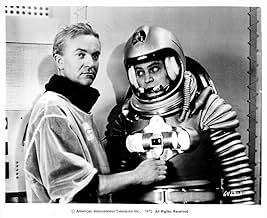
One of the aspects that makes the scene so convincing was the space suit designs created by the artistic visionaries behind the film. They look even more functional, practical and "real" than the Mercury era space flight technology of the day: Bulky, armored, pressurized tin cans with knee joints, claw-like cloves, and magnetized boot plates. The scene of the two astronauts trying to run across the derelict flight deck for the airlock to escape the explosion is a marvel of not only applied science but choreography. In my opinion the film is worth tracking down for this one sequence alone.
And now you can: The film was issued in 2005 on a marvelous Czech made PAL format DVD that shows the film in the correct 2:35:1 Techniscope widescreen format with the original, unaltered & un-messed with ending sequence intact. Any serious fan of Cold War era science fiction simply must acquire one. I will admit that some of the more talky middle "soap opera in space" segments sort of lag the pacing a bit, but the 81 minutes is over quickly and the impression one is left with is that the thinking behind the movie was miles ahead of anything that came out of the West at the same time. Along with the Russian PLANETA BUR and the East German/Polish SILENT STAR aka FIRST SPACESHIP ON VENUS, this is one of the most important & overlooked masterpieces of science fiction from the time when manned space flight was becoming a reality.
All three films are grounded in actual science with impressive visual power that still has potency. What makes IKARIE XB-1 even more impressive is that it lacks some of the glory-boy propagandizing of the Soviet Bloc's entertainment machine, which was designed to enthrall the masses with depictions of glorious Soviet cosmonauts conquering the cosmos -- something that never really quite happened. Those movies were meant to placate the Proletariat and give them a reason to make do cheer for the genuine oppression under which they lived. By contrast, IKARIE is almost a work of pure artistic expression, which is in itself remarkable considering the conditions under which it was made.
8/10
Unusually good for time period made.
Considering that this film was made in 1963, in Czechoslovakia, at a time when so much sci-fi schlok was produced in the spacefaring United States, this film is a rare, welcome sight to the eyes. Intelligently produced and designed, with good character development and good special effects, I miss seeing this film which seems to have been lost in the Great Transition To Video; I know of no distributors for it. It does have its corny moments, but this is excusable in light of the time in which it was made. The ending was unfortunately changed for U.S. viewers, which is a shame; It is the U.S. ending which gets criticized most...I imagine the European ending would have been more in keeping with its originality, and would hope that American International would re-release it in the U.S., with new dubbing (I'm one of those non-purists who can't stand sub-titles...they interfere with the enjoyment of the image. And yes, dubbing CAN be done well, when done RIGHT!). It's been nineteen years since I saw it over the airwaves. I hope it has not vanished; It would be a shame for others not to experience it.
Genre enthusiasts ought to see this one.
This is for sf-film completists. It seems to fill a gap between the late-50's style of sf movie and the forever-after effects of Star Trek and Kubrick's "2001." The only version you're likely to see is the American International release. The Encyclopedia of SF says the original film is in color, but AI's print is B&W, probably to save costs on the number of prints they may have made from a film I suspect they got for little money in the first place.
The story is about a big "community" sized spaceship making a long journey to "the green planet." Another reviewer said the ship was faster than light, but a couple of references to time-dilation effects in the dialog make it more likely that the ship was a near-lightspeed model. This has an influence on the spooky atmosphere that pervades the whole film, making the crew/community highly insular, as they realize they are cut off completely from the lives they have left behind.
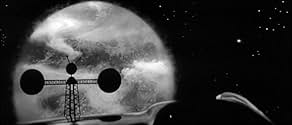
The sfx are slightly better than Dr. Who episodes of similar vintage, with a couple of really good spacesuits and an unusual design for the ship itself. There's also a very, very neat shot of the ship in orbit around its destination that is a dead ringer for a similar moment in "Alien," and quite effective (in both films), in a way that most movies about spaceships seem to forego.
Still, the story rambles and seems kind of shallow. The sets and sfx aren't bad, but don't make up for the weak script. I recommend this for true lovers of the form (as I am), because you just wouldn't want to be left wondering what might have been going on in sf films, even east European ones, in the early '60s. Here's your answer.
The story is about a big "community" sized spaceship making a long journey to "the green planet." Another reviewer said the ship was faster than light, but a couple of references to time-dilation effects in the dialog make it more likely that the ship was a near-lightspeed model. This has an influence on the spooky atmosphere that pervades the whole film, making the crew/community highly insular, as they realize they are cut off completely from the lives they have left behind.
The sfx are slightly better than Dr. Who episodes of similar vintage, with a couple of really good spacesuits and an unusual design for the ship itself. There's also a very, very neat shot of the ship in orbit around its destination that is a dead ringer for a similar moment in "Alien," and quite effective (in both films), in a way that most movies about spaceships seem to forego.
Still, the story rambles and seems kind of shallow. The sets and sfx aren't bad, but don't make up for the weak script. I recommend this for true lovers of the form (as I am), because you just wouldn't want to be left wondering what might have been going on in sf films, even east European ones, in the early '60s. Here's your answer.
The Undiscovered Country....
Somewhere between the Outer Limits and Star Trek lies this little science fiction gem from the former Czechoslovakia. This isn't I. Robot or that type of science fiction, which is Asimov wrapped up in a shiny steel and glass box. This is the actual story and not just the wrapping paper. It proudly carries on the tradition started by Forbidden Planet and This Island Earth, even though its not as exciting. It is actually more like the Magnetic Monster and the Outer Limits. This is science fiction done in crisp black and white. The screen may not be vivid, yet the special effects have an ethereally surreal quality. Mix that in with the futuristic Shostakovitch-like score and we have a compelling and eerie trip into the unknown.
The excitement and glory that comes from living and exploring space (Star Trek, Star Wars, etc.) is minimized in the movie. We get the basic day to day activities of the crew of the Ikarie, on its 28 month (15 years pass back on Earth) mission to our closest solar system, Alpha Centauri. We also get the dangers and rewards of hurling ourselves into the vast darkness.
It is the 22nd Century and we are out in the galaxy searching for life. The crew is comprised from a co-ed international pool. We never get to see Earth, yet we get a glimpse of what humans are like from the interactions of the crew (work, entertainment, nutritional intervals, exercise, reproduction and crisis). This is a future full of video screens, blasters, personal transmitters, turbo lifts, artificial gravity, Beatnik-like futuristic dancing and even Nike light up magnetic boots. This is the perfect/classical example of the sci-fi antithesis to Idiocracy. Humanity will improve with time.
The future is bright, shiny and worth waiting for. Man fixes the malaise of his species. We are never shown anything more lethal than a hand blaster, when it comes to weapons. On their mission, they encounter a perfectly preserved space relic from an Earth expedition of the 20th century. Let's just say our predecessors had very little nice things to say about us. Let's not forget that the 20th century contained two world wars, numerous genocides, the birth and use of the the atomic bomb.
One would also assume that a movie made in a Soviet influenced country would contain a certain amount of Communist and Pro-Soviet propaganda (for example, Planeta Bura). Thankfully this is all missing. About the biggest commentary comes from the critique of our 20th century counterparts. I found the only anti-capitalist message in the writing on the Earth relic. Everything inside is written in English, the ship was fully loaded with nuclear warheads and the the crew turned on each other. And even this critique is more of a jab at our collective selves then at full fledged opposition to capitalism.
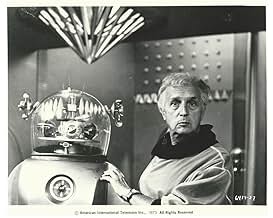
If you are looking for epic space battles for the fate of the universe, look elsewhere because the crew kills absolutely no living thing. If you want 90 minutes of Georges Méliès mixed with Jules Verne, then you have found the perfect movie. I can easily see this movie as an influence on Kubrick's 2001, Rodenberry's Star Trek, Lucas' Star Wars and even Irwin Allen's Lost in Space. We even have a robot. He's definitely not as cool nor as good as Robby the Robot nor the robot that constantly saves the Robinsons.
We named him Patrick. Patrick the Robot. RIP. (Pour out some alcohol for the robots that aren't with us anymore).
-Celluloid Rehab
The excitement and glory that comes from living and exploring space (Star Trek, Star Wars, etc.) is minimized in the movie. We get the basic day to day activities of the crew of the Ikarie, on its 28 month (15 years pass back on Earth) mission to our closest solar system, Alpha Centauri. We also get the dangers and rewards of hurling ourselves into the vast darkness.
It is the 22nd Century and we are out in the galaxy searching for life. The crew is comprised from a co-ed international pool. We never get to see Earth, yet we get a glimpse of what humans are like from the interactions of the crew (work, entertainment, nutritional intervals, exercise, reproduction and crisis). This is a future full of video screens, blasters, personal transmitters, turbo lifts, artificial gravity, Beatnik-like futuristic dancing and even Nike light up magnetic boots. This is the perfect/classical example of the sci-fi antithesis to Idiocracy. Humanity will improve with time.
The future is bright, shiny and worth waiting for. Man fixes the malaise of his species. We are never shown anything more lethal than a hand blaster, when it comes to weapons. On their mission, they encounter a perfectly preserved space relic from an Earth expedition of the 20th century. Let's just say our predecessors had very little nice things to say about us. Let's not forget that the 20th century contained two world wars, numerous genocides, the birth and use of the the atomic bomb.
One would also assume that a movie made in a Soviet influenced country would contain a certain amount of Communist and Pro-Soviet propaganda (for example, Planeta Bura). Thankfully this is all missing. About the biggest commentary comes from the critique of our 20th century counterparts. I found the only anti-capitalist message in the writing on the Earth relic. Everything inside is written in English, the ship was fully loaded with nuclear warheads and the the crew turned on each other. And even this critique is more of a jab at our collective selves then at full fledged opposition to capitalism.
If you are looking for epic space battles for the fate of the universe, look elsewhere because the crew kills absolutely no living thing. If you want 90 minutes of Georges Méliès mixed with Jules Verne, then you have found the perfect movie. I can easily see this movie as an influence on Kubrick's 2001, Rodenberry's Star Trek, Lucas' Star Wars and even Irwin Allen's Lost in Space. We even have a robot. He's definitely not as cool nor as good as Robby the Robot nor the robot that constantly saves the Robinsons.
We named him Patrick. Patrick the Robot. RIP. (Pour out some alcohol for the robots that aren't with us anymore).
-Celluloid Rehab


¿Sabías que…?
- TriviaThe music played on piano after the derelict ship explodes is "Part One: Introduction" from "King David", aka "Le Roi David," composed by Arthur Honegger.
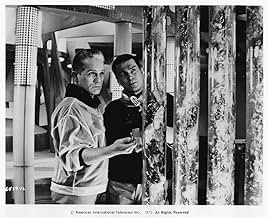
- Versiones alternativasSPOILER: For the American release, titled "Voyage to the End of the Universe," American International Pictures cut the film up, changing a number of things:
- Approximately 26 minutes of footage were removed (including a sequence in a man-made flying saucer carrying dead capitalists, nerve gas and an atomic bomb).
- The story was changed substantially, the ship's flight direction reversed (making it an alien ship traveling to Earth), and the Statue of Liberty pasted into the final shot.
- The cast and staff's names in the credits were altered significantly to look like English.
Selecciones populares
Inicia sesión para calificar y agrega a la lista de videos para obtener recomendaciones personalizadas
- How long is Voyage to the End of the Universe?Con tecnología de Alexa
Detalles
Taquilla
- Total a nivel mundial
- USD 2,130
- Tiempo de ejecución
- 1h 26min(86 min)
- Color
- Mezcla de sonido
- Relación de aspecto
- 2.35 : 1
Contribuir a esta página
Sugiere una edición o agrega el contenido que falta