La commune (Paris, 1871)
- 2000
- 5h 45min
CALIFICACIÓN DE IMDb
8.0/10
1.5 k
TU CALIFICACIÓN

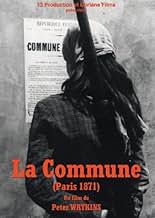
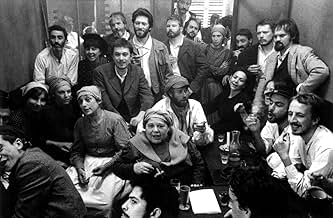
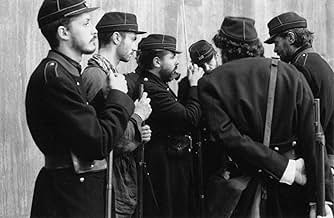
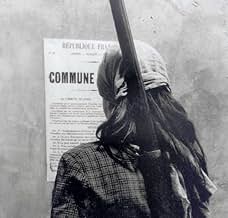
La clase obrera y la burguesía del París del siglo XIX son entrevistadas y cubiertas por la televisión, antes y durante una trágica revuelta obrera.La clase obrera y la burguesía del París del siglo XIX son entrevistadas y cubiertas por la televisión, antes y durante una trágica revuelta obrera.La clase obrera y la burguesía del París del siglo XIX son entrevistadas y cubiertas por la televisión, antes y durante una trágica revuelta obrera.
- Dirección
- Escritura
- Estrellas
- Premios
- 1 premio ganado y 1 nominación en total
Marie-Josephe Barrere
- L'union des femmes pour la défense de Paris
- (as as Marie-Jo Barrère)
Edith Dufaux-Fontaine
- L'union des femmes pour la défense de Paris
- (as Edith Dufaux)
- Dirección
- Escritura
- Todo el elenco y el equipo
- Producción, taquilla y más en IMDbPro
8.01.4K
1
2
3
4
5
6
7
8
9
10
Opiniones destacadas
"La Commune (Paris, 1871)" is a brilliant nearly 6-hour long must-see docudrama.
Peter Watkins' nearly 6-hour long docudrama, "La Commune (Paris, 1871), is a surprisingly passionate and fast-moving lesson in history. It is also a brilliant demonstration of how history is shaped, and re-shaped, by the tellers of the tale.
Using the "You Are There" approach of earlier radio and TV days, Watkins has a male and female news team from "Commune TV" wandering through the poorest district of Paris inviting people to express their grievances against the state to the camera.
While the people bitterly suffer because of the government's inept defeat at the hands of the Germans during the Franco-Prussian War, their anger inspires solidarity for them throughout Paris, and although they briefly rise up and seize power, they are brutally put down in the end.
Ironically, during the course of their uprising, a TV monitor in the background features happy-talk "Versailles TV" news anchors, who continually vilify the Communards and rationalize the government's brutal acts of suppression.
"La Commune (Paris, 1871)" is a must-see for students of history, and a must-see for students of the media.
Using the "You Are There" approach of earlier radio and TV days, Watkins has a male and female news team from "Commune TV" wandering through the poorest district of Paris inviting people to express their grievances against the state to the camera.
While the people bitterly suffer because of the government's inept defeat at the hands of the Germans during the Franco-Prussian War, their anger inspires solidarity for them throughout Paris, and although they briefly rise up and seize power, they are brutally put down in the end.
Ironically, during the course of their uprising, a TV monitor in the background features happy-talk "Versailles TV" news anchors, who continually vilify the Communards and rationalize the government's brutal acts of suppression.
"La Commune (Paris, 1871)" is a must-see for students of history, and a must-see for students of the media.
"La Commune" is a brilliant nearly 6-hour long must-see docudrama.
Peter Watkins' nearly 6-hour long docudrama, "La Commune (Paris, 1871)," is a surprisingly passionate and fast-moving lesson in history. It is also a brilliant demonstration of how history is shaped, and re-shaped, by the tellers of the tale.
Using the "You Are There" approach of earlier radio and TV days, Watkins has a male and female news team from "Commune TV" wandering through the poorest district of Paris inviting people to express their grievances against the state to the camera.
While the people bitterly suffer because of the government's inept defeat at the hands of the Germans during the Franco-Prussian War, their anger inspires solidarity for them throughout Paris, and although they briefly rise up and seize power, they are brutally put down in the end.
Ironically, during the course of their uprising, a TV monitor in the background features happy-talk "Versailles TV" news anchors, who continually vilify the Communards and rationalize the government's brutal acts of supression.
"La Commune" is a must-see for students of history, and a must-see for students of the media.
Using the "You Are There" approach of earlier radio and TV days, Watkins has a male and female news team from "Commune TV" wandering through the poorest district of Paris inviting people to express their grievances against the state to the camera.
While the people bitterly suffer because of the government's inept defeat at the hands of the Germans during the Franco-Prussian War, their anger inspires solidarity for them throughout Paris, and although they briefly rise up and seize power, they are brutally put down in the end.
Ironically, during the course of their uprising, a TV monitor in the background features happy-talk "Versailles TV" news anchors, who continually vilify the Communards and rationalize the government's brutal acts of supression.
"La Commune" is a must-see for students of history, and a must-see for students of the media.
We Is They Is We
This is a pretty exhilarating idea.
Take a period in history where its all about collective points of view. In other words, select a time where the movies chosen by groups clash. Its better if it a time before movies and in a place that believes they know something about movies.
Introduce it as a movie, with interviews first with actors and then with characters. Then, action (with characters glancing at the camera), but wait.
Soon we see that inside the movie, we will see reporting by a TeeVee news crew. This is displayed in two forms within the film.. We see the news broadcast and the Parisans watching it.
They are of course biased in favor of the royalist government. So just as the rabble revolt against the government, we have an alternative TeeVee crew enlisted, who also go around interviewing the crowd as well, all obviously amateur actors, not starving, not sick, toothless and in pain.
We are introduced to characters who introduce themselves as fictional characters. We see the two TeeVee reporters take on the character of the events we see, and get blamed for the whole thing, history writing itself. It is the only example I know of this particular type of fold, where our notion of history as retrospective watching is folded into on-screen watchers.
But at so many hours, its a long slog because there is some conflating of French history with French film history, and its just not as profound as they suppose.
Ted's Evaluation -- 2 of 3: Has some interesting elements.
Take a period in history where its all about collective points of view. In other words, select a time where the movies chosen by groups clash. Its better if it a time before movies and in a place that believes they know something about movies.
Introduce it as a movie, with interviews first with actors and then with characters. Then, action (with characters glancing at the camera), but wait.
Soon we see that inside the movie, we will see reporting by a TeeVee news crew. This is displayed in two forms within the film.. We see the news broadcast and the Parisans watching it.
They are of course biased in favor of the royalist government. So just as the rabble revolt against the government, we have an alternative TeeVee crew enlisted, who also go around interviewing the crowd as well, all obviously amateur actors, not starving, not sick, toothless and in pain.
We are introduced to characters who introduce themselves as fictional characters. We see the two TeeVee reporters take on the character of the events we see, and get blamed for the whole thing, history writing itself. It is the only example I know of this particular type of fold, where our notion of history as retrospective watching is folded into on-screen watchers.
But at so many hours, its a long slog because there is some conflating of French history with French film history, and its just not as profound as they suppose.
Ted's Evaluation -- 2 of 3: Has some interesting elements.
A Most Necessary Film
Almost 6 hours long, this epic and enlighten looked at revolt and innovative political popular innovation and inspiring uprising of the commune in 19th century Paris is long and starts slow. It is self-reflective, free and breaks the 4th wall since the first frame and increasingly throughout the film.
The first part focuses on the background and beginning of the revolt and resistance. It explains the inequalities, the education gap, the history and bourgeois, military and blue collar vantage points.
Themes of women rights and education are abundantly explored and counterpoints are somewhat given although the work is clearly socialism and rightly so.
Mainstream media, its biases and impact are explored and although historically TV reporting did not exist at that time. adds an element of modernness, contrasted with the black and white and first-time actors in characters with costumes and minimal decor. The clear and more subtle subterfuge and power of religious authority is well confronted. Same as the military might and oppression as necessity versus violent resistance and what violence entails.
The nonprofessional actors who have been instructed to research their historical characters, the history and facts and to speak their own mind are asked to come out of characters many times in the second, slightly longer part and the beauty and brillance of the film is now in full boom.
Actors and characters discuss turn of the millennium and other 20th century realities like other resistances, fights, wars, repression and innovations including technology. Television, internet, mobile phones and the rest are pacifiers or cause for more unrest? What are we fighting for today and how will it be tomorrow? What and why should we fight? How? Within with morale compass and rules? Many crucial questions are raised and many valid points advanced. All of them still relevant and real today as in 1999 or 1871.
A must-watch film for any conscious moviegoer or any worldwide school children. Enjoy, think, discuss, share.
The first part focuses on the background and beginning of the revolt and resistance. It explains the inequalities, the education gap, the history and bourgeois, military and blue collar vantage points.
Themes of women rights and education are abundantly explored and counterpoints are somewhat given although the work is clearly socialism and rightly so.
Mainstream media, its biases and impact are explored and although historically TV reporting did not exist at that time. adds an element of modernness, contrasted with the black and white and first-time actors in characters with costumes and minimal decor. The clear and more subtle subterfuge and power of religious authority is well confronted. Same as the military might and oppression as necessity versus violent resistance and what violence entails.
The nonprofessional actors who have been instructed to research their historical characters, the history and facts and to speak their own mind are asked to come out of characters many times in the second, slightly longer part and the beauty and brillance of the film is now in full boom.
Actors and characters discuss turn of the millennium and other 20th century realities like other resistances, fights, wars, repression and innovations including technology. Television, internet, mobile phones and the rest are pacifiers or cause for more unrest? What are we fighting for today and how will it be tomorrow? What and why should we fight? How? Within with morale compass and rules? Many crucial questions are raised and many valid points advanced. All of them still relevant and real today as in 1999 or 1871.
A must-watch film for any conscious moviegoer or any worldwide school children. Enjoy, think, discuss, share.
a mind game which makes you feel completely emotionally involved in it
I must admit, the first thing that caught my attention in the programme of Arsenal Movie Theatre was the length of the film - 345 min. I was intrigued and looked it up on the internet, starting with imdb, and became even more intrigued. So I saw the movie yesterday.
And I didn't regret it at all. (Although I had to struggle through German subtitles for the shorter German version of 300 min. The announced full one with English subtitles was stuck somewhere in Paris.)
It is probably one of the most unusual movies I've ever seen. It is even not really a movie, at least in the standard understanding of it (let alone the length of the thing). It is obviously a mind game, but a mind game so fine and intellectual, as well as passionate, thrilling and challenging, that it somehow makes you feel deeply involved in it emotionally, not forgetting for a single moment that it is a game and the whole idea is completely absurd.
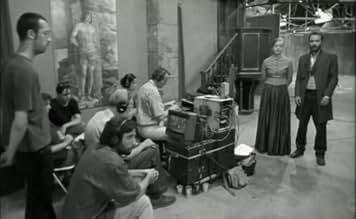
Indeed, what can be more absurd than watching "breaking news" about Paris Commune of 1871, like we were all watching tv on 9.11 or when the war in Iraq was about to begin. "Versailles TV", "Commune TV". Journalists asking "What do you feel now? What hopes do you have now for the future of The Commune?". But all staged, actors sometimes telling the camera about the roles they are playing. Or discussing whether The Commune could have had future, or Russian revolution was successful despite Kronstadt uprising.
The shocking thing is that it feels real. Even though you perfectly understand that it can't. He's using the media and our perception of the media (which makes us question to what an extent can our senses be manipulated) as a frame for all the events happening and in a way alters our perception of history and of history happening now.
I'm still digesting the movie, it raises a lot of question and makes you think a lot. But I'm happy to know that Arsenal is planning Peter Watkins's retrospective. So Berliners will have a unique chance to see his other works. Which I'm looking forward to.
And I didn't regret it at all. (Although I had to struggle through German subtitles for the shorter German version of 300 min. The announced full one with English subtitles was stuck somewhere in Paris.)
It is probably one of the most unusual movies I've ever seen. It is even not really a movie, at least in the standard understanding of it (let alone the length of the thing). It is obviously a mind game, but a mind game so fine and intellectual, as well as passionate, thrilling and challenging, that it somehow makes you feel deeply involved in it emotionally, not forgetting for a single moment that it is a game and the whole idea is completely absurd.
Indeed, what can be more absurd than watching "breaking news" about Paris Commune of 1871, like we were all watching tv on 9.11 or when the war in Iraq was about to begin. "Versailles TV", "Commune TV". Journalists asking "What do you feel now? What hopes do you have now for the future of The Commune?". But all staged, actors sometimes telling the camera about the roles they are playing. Or discussing whether The Commune could have had future, or Russian revolution was successful despite Kronstadt uprising.
The shocking thing is that it feels real. Even though you perfectly understand that it can't. He's using the media and our perception of the media (which makes us question to what an extent can our senses be manipulated) as a frame for all the events happening and in a way alters our perception of history and of history happening now.
I'm still digesting the movie, it raises a lot of question and makes you think a lot. But I'm happy to know that Arsenal is planning Peter Watkins's retrospective. So Berliners will have a unique chance to see his other works. Which I'm looking forward to.


¿Sabías que…?
- Versiones alternativasIn December 2002 Peter Watkins started the editing of an abridged theatrical version. In a prologue he expresses his views on discovering that the production company, 13 Production, has financial links with the Lagardère Group (which sells Military Weapons through Matra), then he warns the audience about how much of the sequence shots and live debates from the original full-length movie have been lost in the process of reducing the running time by more than 2 hours to 3 hrs 1/2.
- ConexionesFeatured in The Universal Clock: The Resistance of Peter Watkins (2001)
Selecciones populares
Inicia sesión para calificar y agrega a la lista de videos para obtener recomendaciones personalizadas
- How long is La Commune (Paris, 1871)?Con tecnología de Alexa
Detalles
Taquilla
- Total en EE. UU. y Canadá
- USD 5,340
- Fin de semana de estreno en EE. UU. y Canadá
- USD 2,930
- 6 jul 2003
- Total a nivel mundial
- USD 21,641
- Tiempo de ejecución
- 5h 45min(345 min)
- Color
- Mezcla de sonido
- Relación de aspecto
- 1.66 : 1
Contribuir a esta página
Sugiere una edición o agrega el contenido que falta