CALIFICACIÓN DE IMDb
6.7/10
2.2 k
TU CALIFICACIÓN

Agrega una trama en tu idiomaA visually stylish tale of two male prisoners bonded by emotion, love and murder.A visually stylish tale of two male prisoners bonded by emotion, love and murder.A visually stylish tale of two male prisoners bonded by emotion, love and murder.
- Dirección
- Escritura
- Estrellas
- Premios
- 3 nominaciones en total



Ryô Ishibashi
- Warden Tsuchiya
- (as Ryo Ishibashi)

Soji Arai
- Prisoner 'A'
- (as Sohee Park)
- Dirección
- Escritura
- Todo el elenco y el equipo
- Producción, taquilla y más en IMDbPro
6.72.1K
1
2
3
4
5
6
7
8
9
10
Opiniones destacadas
by anyone else it would be the strangest prison movie ever made; for Miike, it's... almost business as usual
According to director Takashi Miike, the one in charge of Big Bang Love, Juvenile A among dozens of other films, this is a work that should be taken in almost when "absent-minded", and might even work if one is nodding off during the running time. I found that an intriguing remark as I did nearly nod off during the film, which maybe isn't so much a discredit to the film's work as much as my attention span on a late weekday night. But then this is no ordinary prison drama with a slight Rashomon spin - this is the work of someone so in touch with his craft and artistry with his crew that... you almost don't know what's going on half the time! An irony, perhaps, yet for Miike this is how he usually runs the show, and it's not something you can take your eyes easily off from. There is, as Miike also points out, a tranquility to the picture, almost in spite of its truly abhorrent elements of human nature.
How can I form a premise to tell you about? Most of the actors didn't even know (and, apparently, were comfortable with this after a short while): two inmates, Ariyoshi and Kazuki, are both brought in to prison on separate murder charges. Ariyoshi is more shy, wide-eyed, a little on the side that makes him out to seem like a 'fresh fish' behind the prison walls, while Kazuki won't have any BS as he beats the crap out of anyone who comes near him or makes him do anything. We see these two character brought out in what seems to be very logical means by the actors, even when they're not placed in any sort of reality. By the time we see the two characters truly connecting, they're out by some pyramid or other in the desert talking about where they'd 'rather be.' This is balanced by the actors, both superb in how they look as characters and how they internalize the parts, alongside the drama that unfolds, where a murder has taken place and an investigation follows of everyone in the prison.
But who *really* did it? Miike doesn't provide any easy answers, but then the questions are hard to figure, too. This isn't some Shawshank deal, but a tale told with mood and lighting, color, surrealistic moments, exposition in a stream of consciousness flow, and a sense of the tragic that comes with no way out. As with some of Miike's other films, I didn't even mind I couldn't sometimes follow where the story was going, or what path it would lean toward in its non-linear style (the first half hour appears to be straightforward, but it really wasn't, and isn't, for much of the rest of the show).
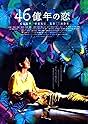
But what's most impressive is the use of metaphors and symbols in an intuitive presentation, at least in terms of the themes, whatever they may be, in the wrappings of a beautifully designed and shot and edited film. The colors come off as vibrantly as in Kurosawa, with purple and orange hues folding in, and then some quintessential horrific imagery (i.e. the dead woman curled up like some spider), the solace of the butterfly, and the harsh yellows and bright, over-head yellow lighting of the prison cells. No longer is this simply the cinema verite Miike but someone very comfortable, and Godardian in experimentation, in a studio environment.
While the subject matter isn't easy to take sometimes, and the violence is about to par with one expects from the director (not even so much showing people beaten, though there are, or people committing suicide, which there are, but the impact around it, what isn't shown), it's still a strong effort. Some will just right out hate it or be too bored to care, but for those who give in to its sorrowful corners and impressionist flights of fancy, Big Bang Love has the edge of artistic intent amplified like few others in the past several years.
How can I form a premise to tell you about? Most of the actors didn't even know (and, apparently, were comfortable with this after a short while): two inmates, Ariyoshi and Kazuki, are both brought in to prison on separate murder charges. Ariyoshi is more shy, wide-eyed, a little on the side that makes him out to seem like a 'fresh fish' behind the prison walls, while Kazuki won't have any BS as he beats the crap out of anyone who comes near him or makes him do anything. We see these two character brought out in what seems to be very logical means by the actors, even when they're not placed in any sort of reality. By the time we see the two characters truly connecting, they're out by some pyramid or other in the desert talking about where they'd 'rather be.' This is balanced by the actors, both superb in how they look as characters and how they internalize the parts, alongside the drama that unfolds, where a murder has taken place and an investigation follows of everyone in the prison.
But who *really* did it? Miike doesn't provide any easy answers, but then the questions are hard to figure, too. This isn't some Shawshank deal, but a tale told with mood and lighting, color, surrealistic moments, exposition in a stream of consciousness flow, and a sense of the tragic that comes with no way out. As with some of Miike's other films, I didn't even mind I couldn't sometimes follow where the story was going, or what path it would lean toward in its non-linear style (the first half hour appears to be straightforward, but it really wasn't, and isn't, for much of the rest of the show).
But what's most impressive is the use of metaphors and symbols in an intuitive presentation, at least in terms of the themes, whatever they may be, in the wrappings of a beautifully designed and shot and edited film. The colors come off as vibrantly as in Kurosawa, with purple and orange hues folding in, and then some quintessential horrific imagery (i.e. the dead woman curled up like some spider), the solace of the butterfly, and the harsh yellows and bright, over-head yellow lighting of the prison cells. No longer is this simply the cinema verite Miike but someone very comfortable, and Godardian in experimentation, in a studio environment.
While the subject matter isn't easy to take sometimes, and the violence is about to par with one expects from the director (not even so much showing people beaten, though there are, or people committing suicide, which there are, but the impact around it, what isn't shown), it's still a strong effort. Some will just right out hate it or be too bored to care, but for those who give in to its sorrowful corners and impressionist flights of fancy, Big Bang Love has the edge of artistic intent amplified like few others in the past several years.
!!!!!Brilliant!!!!!
This movie was shown within the gay film- week in my town and I must say, that I now have to widen my film horizon further. This film got everything: A great story, good motives, brilliant colors, great powerful actors and an awful lot of brilliant stylistic ideas. The story of Jun and Shiro two murderers, who meet in prison is not only told through words but through metaphors and pictures as well. Bit by bit and picture by picture you follow the development of their relationship and grow to understand it and them. For me it was a new experience of how stories can be told. Brutal in its realism and beautiful in its way of being told! I can do nothing more than highly recommend this movie to you.
Haunting imagery
The ethereally beautiful Ryuhei Matsuda plays Jun Ariyoshill, sent to an impossibly photogenic juvenile detention centre after he kills and subsequently horrifically mutilates a guy after a one-night stand. Although the movie contains some startling imagery (Juns heart pierced by a ray of sunlight, the warden's office within a picture frame, the seductively geometric communal cells) I found it difficult to stay with this extraordinary piece of cinema. Part of my mind was screaming emperor's new clothes! whilst my visual cortex was being lovingly massaged. You can forget about conventional plotting character development and expository dialogue for, as one review I read said "its a Miike film" -what do you expect? Well, if you expect to be; Frustrated. Confused. Misdirected. but also Awed. Startled. Exhilarated & Exhausted. This will be right up your street. And if you can't tell whether I liked it or not -that's probably because I can't either, but Im sure as hell going to find it hard to lose some of the weird, seductive images that this movies left in my brain.
A Mind-Blowing Agent For the Viewer To Perceive On His/Her Terms, However Confined To the Film's Implications
This voyeuristically expressionistic film is set in an unknown future in which Ryuhei Matsuda plays a soft, sad gay bartender imprisoned for his strange and brutal killing of a customer who attacked him, and Masanobu Ando is a Yakuza thug packed to the top with pent-up anger and violence that makes him tight as a drum till he sporadically bursts. The two arrive in a juvenile detention center on the same day and, with nothing in common, they become tangled by yearning, shared visualizations of flight to an imagined world, and a murder of another boy inside the stockade that results in one dead and the other pleading guilty to the carnage. It's a murder mystery of young incarcerated men in lust, seen through surreal composition on sets of darkness and illumination and the simplest trace of detail.
Two detectives try to expose the indictment. "Why did this trigger it?" One of them questions as to why the inmate would lead this course of self-ruin and devastation, seeing a rainbow. "Only he himself knows." In the humankind that judges people under the duplicitous laws prearranged as a result of a perversely archaic edition of religious principles, Miike bares violence in its most honest form, as an instinctive undertaking. It cannot be made clear further than the surface of palpable means of interaction. It's too mysterious and puzzling for anyone beyond of the person perpetrating the action to entirely grasp. Sexual friction and short-tempered violence propel the story to its mind-blowing outcome.
Takashi Miike puts his heart and soul into his fascinating visual actualization of the morally ambiguous story, which is heavily reminiscent of Jean Genet novels like Our Lady of the Flowers. It is avant-garde theater translated onto film, voice-over and screened words as the literal point of view of the investigators. The film is punctuated by wonderful, infectious closing music, and you realize you have just experienced film-making in a unique manner, a conspicuous trance consisting of definite colors alive in the bounds of a vast universe of an unlit void. Thick with striking images like pyramids, a classic sci-fi rocket ship, and an opening dance sequence coming unexpectedly. That's just the tip of the iceberg to all of the creative dexterity Miike affords the viewer.
One may come from this film thinking that it wasn't about the story. That's an understandable way to put it, put it is not quite correct. Really, in order to be a narrative at all, it can only be about the story, but Miike does not betray the sheer weight of the story's content and ideas. Can there have been a simpler depiction of it? The film, essentially, is about existence. It is a concept spanning 4.6 billion years! Miike, who normally makes cynical if not outright self-deprecating microcosmic yakuza and horror movies, has aggregating all of those impressions into a claustrophobic, life-refracting prism of all the world's details and creates a blemish on the face of the world of cinema that audaciously, patiently, calculatedly tackles humankind and the self-worth behind which it hides, self-worth largely created by the belief in God, which this film could be read as implicating doesn't exist. The movie's likely metaphors for evolution and faith have very telling differences in outcome, as the movie's symbolic image of evolution augments and that of religious conviction remains the way it has since the beginning. The movie is only an agent for the viewer to perceive on their terms, however confined to the film's implications. Miike is correct: This is his masterpiece.
Two detectives try to expose the indictment. "Why did this trigger it?" One of them questions as to why the inmate would lead this course of self-ruin and devastation, seeing a rainbow. "Only he himself knows." In the humankind that judges people under the duplicitous laws prearranged as a result of a perversely archaic edition of religious principles, Miike bares violence in its most honest form, as an instinctive undertaking. It cannot be made clear further than the surface of palpable means of interaction. It's too mysterious and puzzling for anyone beyond of the person perpetrating the action to entirely grasp. Sexual friction and short-tempered violence propel the story to its mind-blowing outcome.
Takashi Miike puts his heart and soul into his fascinating visual actualization of the morally ambiguous story, which is heavily reminiscent of Jean Genet novels like Our Lady of the Flowers. It is avant-garde theater translated onto film, voice-over and screened words as the literal point of view of the investigators. The film is punctuated by wonderful, infectious closing music, and you realize you have just experienced film-making in a unique manner, a conspicuous trance consisting of definite colors alive in the bounds of a vast universe of an unlit void. Thick with striking images like pyramids, a classic sci-fi rocket ship, and an opening dance sequence coming unexpectedly. That's just the tip of the iceberg to all of the creative dexterity Miike affords the viewer.
One may come from this film thinking that it wasn't about the story. That's an understandable way to put it, put it is not quite correct. Really, in order to be a narrative at all, it can only be about the story, but Miike does not betray the sheer weight of the story's content and ideas. Can there have been a simpler depiction of it? The film, essentially, is about existence. It is a concept spanning 4.6 billion years! Miike, who normally makes cynical if not outright self-deprecating microcosmic yakuza and horror movies, has aggregating all of those impressions into a claustrophobic, life-refracting prism of all the world's details and creates a blemish on the face of the world of cinema that audaciously, patiently, calculatedly tackles humankind and the self-worth behind which it hides, self-worth largely created by the belief in God, which this film could be read as implicating doesn't exist. The movie's likely metaphors for evolution and faith have very telling differences in outcome, as the movie's symbolic image of evolution augments and that of religious conviction remains the way it has since the beginning. The movie is only an agent for the viewer to perceive on their terms, however confined to the film's implications. Miike is correct: This is his masterpiece.
A literal metaphor
Beautiful and haunting art-house with a veneer of a prison movie: that is the best description of a movie that is so invested in its self referential imagery that the viewer is either swept away into it or completely alienated. The sets are often minimal, echoing some modern theater and also giving an extra emphasis to the characters as such. Golden light pervades the dreamy scenery of cramped cells, geometrically shaped insides and an odd pyramid and an equally surprising space rocket that can be seen from the roof of the prison.
At the surface the movie is a crime investigation in which two policemen try to unravel the events behind the murder of an inmate since the confession of the presumed killer does not seem to match reality. But that is an excuse for a lavishly artistic movie to structure itself around a plot that gives coherence to the surreal approach so that overall it does not veer into fantasy. Which is not to say that this is a linear movie because it most definitely is not. Flashbacks mingle with fantasy and the feeling of displaced narrative is inherent to the nihilism of the content.
Ryuhei Matsuda's performance adds much to the not quite overt sensuality of it all. Emotions are stifled, dialogues are left open ended, interpretations are left hanging in the air and ultimately unanswered. And that seems to be the heart of this movie: solving the crime does not advance a psychological answer to the problem of human interaction or lack thereof. Kazuki is something of a social outcast and Arioshi's obsession with him the only bridge to any kind of human contact. The sexual tension adds another level to the already pressing claustrophobia.
In the end, not even the re-visitation of some lines of dialogue that provide a context is able of truly answering anything. The viewer is left to make some sense of what happened and to fill in the gaps, an attempt that may very well be absolutely impossible. After all, the movie is fragmented in essence, deliberately so. A telling scene is when a shaft of sunlight pierces through Arioshi as an arrow and blood seeps out. Like the movie it is somewhat factual and yet full of meanings that need be projected unto it: a literal metaphor.
At the surface the movie is a crime investigation in which two policemen try to unravel the events behind the murder of an inmate since the confession of the presumed killer does not seem to match reality. But that is an excuse for a lavishly artistic movie to structure itself around a plot that gives coherence to the surreal approach so that overall it does not veer into fantasy. Which is not to say that this is a linear movie because it most definitely is not. Flashbacks mingle with fantasy and the feeling of displaced narrative is inherent to the nihilism of the content.
Ryuhei Matsuda's performance adds much to the not quite overt sensuality of it all. Emotions are stifled, dialogues are left open ended, interpretations are left hanging in the air and ultimately unanswered. And that seems to be the heart of this movie: solving the crime does not advance a psychological answer to the problem of human interaction or lack thereof. Kazuki is something of a social outcast and Arioshi's obsession with him the only bridge to any kind of human contact. The sexual tension adds another level to the already pressing claustrophobia.
In the end, not even the re-visitation of some lines of dialogue that provide a context is able of truly answering anything. The viewer is left to make some sense of what happened and to fill in the gaps, an attempt that may very well be absolutely impossible. After all, the movie is fragmented in essence, deliberately so. A telling scene is when a shaft of sunlight pierces through Arioshi as an arrow and blood seeps out. Like the movie it is somewhat factual and yet full of meanings that need be projected unto it: a literal metaphor.


Selecciones populares
Inicia sesión para calificar y agrega a la lista de videos para obtener recomendaciones personalizadas
Detalles
- Fecha de lanzamiento
- País de origen
- Sitios oficiales
- Idioma
- También se conoce como
- Big Bang Love, Juvenile A
- Productoras
- Ver más créditos de la compañía en IMDbPro
Taquilla
- Presupuesto
- USD 10,000,000 (estimado)
- Total a nivel mundial
- USD 1,520
- Tiempo de ejecución
- 1h 25min(85 min)
- Color
- Relación de aspecto
- 1.85 : 1
Contribuir a esta página
Sugiere una edición o agrega el contenido que falta