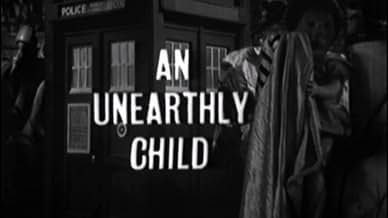
An Unearthly Child
- El episodio se transmitió el 23 nov 1963
- TV-G
- 23min
CALIFICACIÓN DE IMDb
8.1/10
2.4 k
TU CALIFICACIÓN

Agrega una trama en tu idiomaTwo schoolteachers investigate the personal life of one of their brilliant students and her mysterious grandfather.Two schoolteachers investigate the personal life of one of their brilliant students and her mysterious grandfather.Two schoolteachers investigate the personal life of one of their brilliant students and her mysterious grandfather.
- Dirección
- Escritura
- Estrellas


Leslie Bates
- Shadow
- (sin créditos)
Francesca Bertorelli
- Schoolgirl
- (sin créditos)

Reg Cranfield
- Policeman
- (sin créditos)
Carol Friday
- Schoolgirl
- (sin créditos)
Heather Lyons
- Schoolgirl
- (sin créditos)
Mavis Ranson
- Schoolgirl
- (sin créditos)
Cedric Shoeman
- Schoolboy
- (sin créditos)
Brian Thomas
- Schoolboy
- (sin créditos)
Richard Wilson
- Schoolboy
- (sin créditos)
- Dirección
- Escritura
- Todo el elenco y el equipo
- Producción, taquilla y más en IMDbPro
8.12.4K
1
2
3
4
5
6
7
8
9
10
Opiniones destacadas
A Flying Start
23rd November 1963 was not, perhaps, the most auspicious day to launch a ground-breaking television series. Much of the country was affected by a power cut, and President John F. Kennedy had been assassinated the previous day, which meant that people could talk about little else. And yet, despite these disadvantages, "Doctor Who" went on to become one of the greatest success stories in British TV history, still going strong more than half a century later.
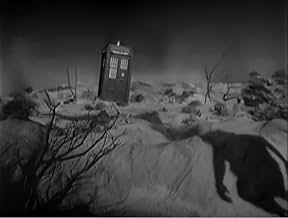
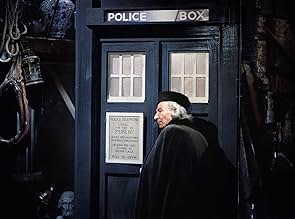
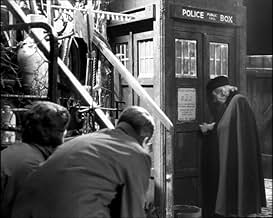
The first few seconds of "An Unearthly Child" introduce some of the series' most iconic elements. We hear that famous electronic music against that strange, psychedelic title sequence. And then we see a policeman looking round a London junkyard where he spots a police box which, unknown to him, is of course the Doctor's TARDIS. This is the serial in which it is explained that the TARDIS is, or should be, capable of disguising itself to blend in with its surroundings. Owing to a malfunction, however, it has remained a police box ever since. Evidently, despite the Time Lords' mastery of time-travel, none of the various manifestations of the Doctor has ever had time to repair the fault.
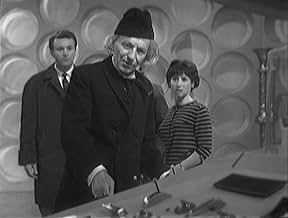
We do not, however, immediately meet the Doctor himself. Instead, the scene shifts to a London secondary school where two teachers, Barbara Wright and Ian Chesterton, are discussing one of their pupils, fifteen- year-old Susan Foreman. Susan is precocious, but seems to be curiously ignorant of many aspects of British society. Believing that Susan lives with her elderly grandfather, Barbara and Ian decide to investigate by visiting the address she has given. The grandfather turns out to be the Doctor himself, and a series of events leads to all four travelling back in time to the Stone Age, where they become embroiled in a power struggle between two rival factions of cavemen. Hence the serial's alternative title "100,000 BC". Strictly speaking, the only human inhabitants of Britain during this year would have been Neanderthals rather than the modern humans shown here, although I won't claim this as a goof as the date is not actually mentioned in the script.
(My own childhood recollections of "Doctor Who" generally date from the Pertwee/Baker era of the seventies, when most of the stories seemed to be set either in contemporary Britain or on an alien planet, but in the sixties part of the programme's educational remit was to teach children about history, so stories set during the earth's past were quite common).
One thing we learn about the Doctor in this serial is that "Who" is not his surname. The title derives from an incident when Ian and Barbara address him as "Doctor Foreman"- Susan has appropriated that surname from the owner of the junkyard- and he replies "Doctor who?" We also learn that he and Susan are members of an alien race- the expression "Time Lord" is never actually mentioned- who have mastered the science of travel through time and space.
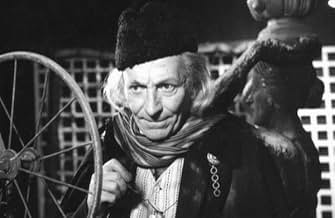
What struck me when I first saw "An Unearthly Child" was William Hartnell's characterisation of the Doctor. Having grown up with Jon Pertwee and Tom Baker, I always thought of Doctor Who as a kindly, if occasionally eccentric, uncle. There is, however, nothing avuncular about Hartnell's Doctor, although he is certainly eccentric. He is also suspicious, cranky and hostile, and surprisingly callous and amoral during the "caveman" episodes. It is the human characters Barbara and Ian who show far more compassion and morality than does the alien Doctor, although it must be said that Susan generally sides with them against him. This characterisation has always struck me as a weakness in the early part of the series, just as the generally sympathetic characterisation of most of the later Doctors has been one of its strengths, and so it is not surprising that his character was very much softened later in Hartnell's tenure.
The Doctor may be an exception, but the serial as a whole does show evidence of the BBC's traditional social liberalism, especially during the scenes where Ian and Barbara, as didactic in 100,000 BC as they were in 1963 AD, try to teach the prehistoric tribe about kindness, friendship and compassion, all virtues previously unknown to them, and even socialist democracy. ("A tyrant is not as strong as the whole tribe acting collectively").
I won't award "An Unearthly Child" a mark out of ten. Certainly the whole "Doctor Who" concept in itself is a ten- if not an eleven- in my eyes, but few of the individual serials or episodes would in themselves merit this mark. This is a case where the whole is greater than the sum of its parts. Hartnell's character in his serial is not one I can warm to, but the story itself is surprisingly dramatic and exciting, despite the low budgets for which the series was later to become notorious. It did enough to get the series off to a flying start.
The first few seconds of "An Unearthly Child" introduce some of the series' most iconic elements. We hear that famous electronic music against that strange, psychedelic title sequence. And then we see a policeman looking round a London junkyard where he spots a police box which, unknown to him, is of course the Doctor's TARDIS. This is the serial in which it is explained that the TARDIS is, or should be, capable of disguising itself to blend in with its surroundings. Owing to a malfunction, however, it has remained a police box ever since. Evidently, despite the Time Lords' mastery of time-travel, none of the various manifestations of the Doctor has ever had time to repair the fault.
We do not, however, immediately meet the Doctor himself. Instead, the scene shifts to a London secondary school where two teachers, Barbara Wright and Ian Chesterton, are discussing one of their pupils, fifteen- year-old Susan Foreman. Susan is precocious, but seems to be curiously ignorant of many aspects of British society. Believing that Susan lives with her elderly grandfather, Barbara and Ian decide to investigate by visiting the address she has given. The grandfather turns out to be the Doctor himself, and a series of events leads to all four travelling back in time to the Stone Age, where they become embroiled in a power struggle between two rival factions of cavemen. Hence the serial's alternative title "100,000 BC". Strictly speaking, the only human inhabitants of Britain during this year would have been Neanderthals rather than the modern humans shown here, although I won't claim this as a goof as the date is not actually mentioned in the script.
(My own childhood recollections of "Doctor Who" generally date from the Pertwee/Baker era of the seventies, when most of the stories seemed to be set either in contemporary Britain or on an alien planet, but in the sixties part of the programme's educational remit was to teach children about history, so stories set during the earth's past were quite common).
One thing we learn about the Doctor in this serial is that "Who" is not his surname. The title derives from an incident when Ian and Barbara address him as "Doctor Foreman"- Susan has appropriated that surname from the owner of the junkyard- and he replies "Doctor who?" We also learn that he and Susan are members of an alien race- the expression "Time Lord" is never actually mentioned- who have mastered the science of travel through time and space.
What struck me when I first saw "An Unearthly Child" was William Hartnell's characterisation of the Doctor. Having grown up with Jon Pertwee and Tom Baker, I always thought of Doctor Who as a kindly, if occasionally eccentric, uncle. There is, however, nothing avuncular about Hartnell's Doctor, although he is certainly eccentric. He is also suspicious, cranky and hostile, and surprisingly callous and amoral during the "caveman" episodes. It is the human characters Barbara and Ian who show far more compassion and morality than does the alien Doctor, although it must be said that Susan generally sides with them against him. This characterisation has always struck me as a weakness in the early part of the series, just as the generally sympathetic characterisation of most of the later Doctors has been one of its strengths, and so it is not surprising that his character was very much softened later in Hartnell's tenure.
The Doctor may be an exception, but the serial as a whole does show evidence of the BBC's traditional social liberalism, especially during the scenes where Ian and Barbara, as didactic in 100,000 BC as they were in 1963 AD, try to teach the prehistoric tribe about kindness, friendship and compassion, all virtues previously unknown to them, and even socialist democracy. ("A tyrant is not as strong as the whole tribe acting collectively").
I won't award "An Unearthly Child" a mark out of ten. Certainly the whole "Doctor Who" concept in itself is a ten- if not an eleven- in my eyes, but few of the individual serials or episodes would in themselves merit this mark. This is a case where the whole is greater than the sum of its parts. Hartnell's character in his serial is not one I can warm to, but the story itself is surprisingly dramatic and exciting, despite the low budgets for which the series was later to become notorious. It did enough to get the series off to a flying start.
A Great Start to a Long Running Series
While growing up, the only "Doctor Who" episodes which I had ever seen were from the 1970's and early 1980's. I did not get a chance to see the earliest episodes of the show until the late 1980's. When I finally had the opportunity to watch "An Unearthly Child," I was thrilled!
"An Unearthly Child" did not disappoint me. The episode started with a mystery. When the two school teachers began to investigate the matter, they had no idea of where their inquiries would lead them. The episode featured an excellent story with great characters. It also contained a lot of atmosphere. The ending of this episode was the beginning of one of television's longest-running adventures.
For fans of the later episodes of the "Doctor Who" series, "An Unearthly Child" is something of a curiosity. For a television phenomenon which has endured for more than five decades, there is the question of how it all started. I highly recommend "An Unearthly Child."
"An Unearthly Child" did not disappoint me. The episode started with a mystery. When the two school teachers began to investigate the matter, they had no idea of where their inquiries would lead them. The episode featured an excellent story with great characters. It also contained a lot of atmosphere. The ending of this episode was the beginning of one of television's longest-running adventures.
For fans of the later episodes of the "Doctor Who" series, "An Unearthly Child" is something of a curiosity. For a television phenomenon which has endured for more than five decades, there is the question of how it all started. I highly recommend "An Unearthly Child."
10spib2002
Genuine sense of mystery
Perhaps the most important 20 minutes of TV drama ever. FACT!!!! Much of early sixties 'classic' TV comes across as stilted to a modern audience but the Doctor's debut still manages to engage, largely by making the Doctor a mysterious and somewhat menacing figure.
Hartnell's performance here is strong with little sign of his later awkward memory lapses and trips. The mind-blowing concepts of time travel and trans-dimensional engineering (although not named as such) are treated with the awe and respect they deserve through the reactions of unwilling companions Ian and Barbara. Unlike later years where Tardis occupants would just seem to take it in their stride.
Do try to catch the alternate pilot version if you get a chance. The Doctor is even nastier and Susan even more space cadet!
Hartnell's performance here is strong with little sign of his later awkward memory lapses and trips. The mind-blowing concepts of time travel and trans-dimensional engineering (although not named as such) are treated with the awe and respect they deserve through the reactions of unwilling companions Ian and Barbara. Unlike later years where Tardis occupants would just seem to take it in their stride.
Do try to catch the alternate pilot version if you get a chance. The Doctor is even nastier and Susan even more space cadet!
He's a Doctor isn't he?
The Pilot episode is fascinating in its own right, if you look into the events surrounding its transmission, and subsequent alteration for the following week.
As a stand alone episode, it's loaded with mystery and intrigue, you really do question everything, who on Earth are these people, and where are they from, how do they know what they do? It's so imaginative.
Susan's artwork, the whoosh in the opening credits, the clothes, and some of the dialogue, just some of the differences keen eyed viewers will spot.
We hear the name John Smith, I wonder if in The Wheel in Space they looked back at this episode for a reference.
I think there is some real quality to this episode, Susan is a truly interesting character, she's more than just a screaming child here, her very existence is curious here, I liked this side of her character, an advanced girl out of her time.
It's fantastic, 10/10.
As a stand alone episode, it's loaded with mystery and intrigue, you really do question everything, who on Earth are these people, and where are they from, how do they know what they do? It's so imaginative.
Susan's artwork, the whoosh in the opening credits, the clothes, and some of the dialogue, just some of the differences keen eyed viewers will spot.
We hear the name John Smith, I wonder if in The Wheel in Space they looked back at this episode for a reference.
I think there is some real quality to this episode, Susan is a truly interesting character, she's more than just a screaming child here, her very existence is curious here, I liked this side of her character, an advanced girl out of her time.
It's fantastic, 10/10.
An Unearthly Child (Episodes 1-4)
"An Unearthly Child", the first episode of the story with the same title, is absolutely magical and in my opinion one of the greatest first episodes any television series has ever had. It introduces all the main characters the show would have in its first season, establishes the mysterious and alien nature of the Doctor, and clearly develops the characters and conveys Ian and Barbara's emotions wonderfully and realistically- all in the space of a self-contained 23 minute episode that has little to do with the rest of the first Doctor Who serial. The fact that this was intended, at this point, as an educational programme for children makes it even more worthy of praise because the script, acting, and direction prove that this production crew were taking the programme seriously and not talking down to the audience.
The follow-up, "The Cave of Skulls", is a really excellent episode as the Doctor and his companions travel back in time and attempt to determine where they are while we learn more about the struggle within a caveman tribe, a struggle centered around fire. The character development here, both for the tribe and for the main characters, is absolutely astonishing, in particular the writing for Ian and Barbara. Sadly "The Forest of Fear", the third episode, is very mediocre and outside some nice atmospheric moments quite boring. At this point Coburn seems to be running out of ideas, but "The Firemaker", the conclusion to the story, is quite solid and enjoyable and at times tense particularly toward the end.
"An Unearthly Child", also known as "The Tribe of Gum", is notably well-directed. Warris Hussein, particularly with the first episode, uses many stylistic devices quite brilliantly, especially considering this was shot on video on massive cameras one could barely move! Hussein really makes the episodes feel cinematic and not theatrical like many Doctor Who stories would feel throughout its initial 26 year run. Hussein deservedly went on to a solid career directing films, working with several notable actors and making one much-remembered classic, "Melody", in addition to several other films and miniseries that are fondly remembered.
"The Tribe of Gum"/"An Unearthly Child" is a surprisingly effective and solid start to Doctor Who's 26 year run (I'm sure the idea that it would run so long never crossed the producers' minds), and although the story itself is not too exciting or memorable on paper it is written quite well here.
Episode 1: 10/10, Episode 2: 8/10, Episode 3: 5/10, Episode 4: 7/10.
Average: 7.5/10
The follow-up, "The Cave of Skulls", is a really excellent episode as the Doctor and his companions travel back in time and attempt to determine where they are while we learn more about the struggle within a caveman tribe, a struggle centered around fire. The character development here, both for the tribe and for the main characters, is absolutely astonishing, in particular the writing for Ian and Barbara. Sadly "The Forest of Fear", the third episode, is very mediocre and outside some nice atmospheric moments quite boring. At this point Coburn seems to be running out of ideas, but "The Firemaker", the conclusion to the story, is quite solid and enjoyable and at times tense particularly toward the end.
"An Unearthly Child", also known as "The Tribe of Gum", is notably well-directed. Warris Hussein, particularly with the first episode, uses many stylistic devices quite brilliantly, especially considering this was shot on video on massive cameras one could barely move! Hussein really makes the episodes feel cinematic and not theatrical like many Doctor Who stories would feel throughout its initial 26 year run. Hussein deservedly went on to a solid career directing films, working with several notable actors and making one much-remembered classic, "Melody", in addition to several other films and miniseries that are fondly remembered.
"The Tribe of Gum"/"An Unearthly Child" is a surprisingly effective and solid start to Doctor Who's 26 year run (I'm sure the idea that it would run so long never crossed the producers' minds), and although the story itself is not too exciting or memorable on paper it is written quite well here.
Episode 1: 10/10, Episode 2: 8/10, Episode 3: 5/10, Episode 4: 7/10.
Average: 7.5/10


¿Sabías que…?
- TriviaWhen this episode was first aired, parts of Britain were suffering a power failure. It was also the day after US President John F. Kennedy was assassinated. Both of these factors meant the programme was only seen by a disappointing 4.4 million people. When repeated a week later before the second part, it was watched by 6 million.
- ErroresAfter entering the TARDIS the top of the set is visible above and behind Ian as he says "you can't keep us here."
- Citas
The Doctor: We are not of this race. We are not of this earth. Susan and I are wanderers in the fourth dimension of space and time, cut off from our own people by distances beyond the reach of your most advanced science.
- Versiones alternativasFour versions of this episode exist. Besides the final broadcast version there was also a trial pilot run-through that was not broadcast initially due to technical problems. The 2006 DVD release "Doctor Who: The Beginning" contains an unedited version of this pilot, with several different takes of the TARDIS sequence. A specially made re-edited version of the pilot is included for the first time in this set, using the best takes and digitally manipulating others to remove errors. Previously, an alternate edit of the pilot -- which included dialogue and prop errors -- was broadcast on the BBC and released on VHS.
- ConexionesFeatured in The Lively Arts: Whose Dr. Who (1977)
- Bandas sonorasThree Guitars Mood 2
(uncredited)
Composed by Derek Nelson and Johnny Arthey (as Arthur Raymond)
Performed by The Arthey-Nelson Group
Published by Conroy (Berry Music)
Selecciones populares
Inicia sesión para calificar y agrega a la lista de videos para obtener recomendaciones personalizadas
Detalles
- Fecha de lanzamiento
- País de origen
- Sitio oficial
- Idioma
- También se conoce como
- An Unearthly Child (Pilot)
- Locaciones de filmación
- Productora
- Ver más créditos de la compañía en IMDbPro
- Tiempo de ejecución
- 23min
- Color
- Mezcla de sonido
- Relación de aspecto
- 1.33 : 1
- 4:3
Contribuir a esta página
Sugiere una edición o agrega el contenido que falta