

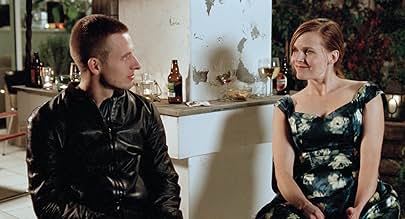
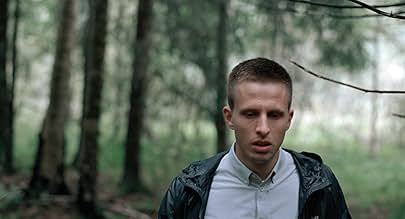
Un día en la vida de Anders, un joven adicto a las drogas en recuperación, que toma una breve pausa de su centro de tratamiento para una entrevista de trabajo y ponerse al día con viejos ami... Leer todoUn día en la vida de Anders, un joven adicto a las drogas en recuperación, que toma una breve pausa de su centro de tratamiento para una entrevista de trabajo y ponerse al día con viejos amigos en Oslo.Un día en la vida de Anders, un joven adicto a las drogas en recuperación, que toma una breve pausa de su centro de tratamiento para una entrevista de trabajo y ponerse al día con viejos amigos en Oslo.
- Dirección
- Escritura
- Estrellas
- Premios
- 19 premios ganados y 21 nominaciones en total





Aksel Thanke
- Terapeut
- (as Aksel M. Thanke)

Tone Beate Mostraum
- Tove
- (as Tone B. Mostraum)


- Dirección
- Escritura
- Todo el elenco y el equipo
- Producción, taquilla y más en IMDbPro
7.632.4K
1
2
3
4
5
6
7
8
9
10
Opiniones destacadas
Joachim Trier does it again.
After seeing Reprise some years ago I had been eagerly awaiting for Joachim Trier's next film. Loosely based on the same novel Louis Malle's Le Feu Follet is based on by Pierre Drieu La Rochelle, Oslo, August 31st retells this story for the new age. By no means this movie happens to be a remake. The movie happens to have some similar basic elements here and there, as well as different encounters for the main character played this time out by Anders Danielsen Lie who was also happened to be one of the leads in Reprise who this time around plays a wonderful role on his own .
This is a story about a 34 year old recovering drug addict who has screwed up his life due to excessive partying, doing heavy drugs and alienating his loved ones that at his age he finds himself stuck and unable to move forward in his life. As he's about to finish his rehab stint, he's allowed to go into town for a job interview and in the process he decides to use this opportunity to visit old friends and relatives which in a way ends up making matters much worse for him. With all his old friends now married with children and successful careers he feels completely useless and overwhelmed. As he's end up being given the sympathetic pep talks, or being lectured at by unsympathetic characters who are trying to protect themselves throughout the day he finds himself challenging their personal views head on while struggling to convey his frustrations that no one seems to fully understand yet take personally.
In my opinion there's not much to compare Oslo, August 31st to Le Feu Follet. Louis Malle's version (1963) which I am a huge fan of is one of those cinematic gems that story-wise packs a punch. Le Feu Follet also stands next to other classic black and white pictures like Fellini's 8 ½ as one of the best looking black and white movies ever made and I highly recommend everyone to see it.
Oslo, August 31st in itself has an entirely different approach and has a more melancholic feel throughout the film. With almost 50 year gap difference from Le Feu Follet to be told as a modern day tale this story depicts modern day tactlessness that society potentially sees these situations as almost insignificant when dealing with recovering addicts. Sure, maybe some people will try to try and understand but the world is also more likely to let a person deal with his/her own demons for they can't be bothered and even distance themselves for they have their own problems to deal with no matter how much a friend or a loved one really needs their help to get through life.
Oslo, August 31st has been called a "Devastating and Heartbreaking" Film by some, and I agree. If you're expecting to see another Reprise this might probably not be it, but it could be just as great of a film depending on the person. I will even go as far as to say this can be a total "hit and miss" for some viewers. To me this is still a beautiful film that really moved me and made me feel sad watching it. I will definitely be on the lookout for the DVD when it finally comes out for sale. Overall, make sure to watch this movie with an open mind then make your own opinion. 7 out of 10.
This is a story about a 34 year old recovering drug addict who has screwed up his life due to excessive partying, doing heavy drugs and alienating his loved ones that at his age he finds himself stuck and unable to move forward in his life. As he's about to finish his rehab stint, he's allowed to go into town for a job interview and in the process he decides to use this opportunity to visit old friends and relatives which in a way ends up making matters much worse for him. With all his old friends now married with children and successful careers he feels completely useless and overwhelmed. As he's end up being given the sympathetic pep talks, or being lectured at by unsympathetic characters who are trying to protect themselves throughout the day he finds himself challenging their personal views head on while struggling to convey his frustrations that no one seems to fully understand yet take personally.
In my opinion there's not much to compare Oslo, August 31st to Le Feu Follet. Louis Malle's version (1963) which I am a huge fan of is one of those cinematic gems that story-wise packs a punch. Le Feu Follet also stands next to other classic black and white pictures like Fellini's 8 ½ as one of the best looking black and white movies ever made and I highly recommend everyone to see it.
Oslo, August 31st in itself has an entirely different approach and has a more melancholic feel throughout the film. With almost 50 year gap difference from Le Feu Follet to be told as a modern day tale this story depicts modern day tactlessness that society potentially sees these situations as almost insignificant when dealing with recovering addicts. Sure, maybe some people will try to try and understand but the world is also more likely to let a person deal with his/her own demons for they can't be bothered and even distance themselves for they have their own problems to deal with no matter how much a friend or a loved one really needs their help to get through life.
Oslo, August 31st has been called a "Devastating and Heartbreaking" Film by some, and I agree. If you're expecting to see another Reprise this might probably not be it, but it could be just as great of a film depending on the person. I will even go as far as to say this can be a total "hit and miss" for some viewers. To me this is still a beautiful film that really moved me and made me feel sad watching it. I will definitely be on the lookout for the DVD when it finally comes out for sale. Overall, make sure to watch this movie with an open mind then make your own opinion. 7 out of 10.
Brutal, straight up realsim about getting the monkey off your back
Oslo, October 31st (2011)
A highly realistic, intimate view of a young man who has completed a drug abuse program and is trying to rejoin his life. It's a rough ride, sometimes boring, sometimes raw, but it's the real thing, and if you have an interest in this kind of common problem without watching a documentary, this is the movie.
Though set in Oslo, there is a universal quality to all of this. Yes, the leading man, Anders, has the usual problem getting jobs. But that's just the beginning. It's about friends who want to help and friends who expect him to help them be wild. It's about old girlfriends, new girlfriends, parties where you can't drink, family that wasn't adequate, and on and on.
And the temptation of real drugs, beyond drink.
It's odd to realize, but I think the bottom line is that most young people live in a culture that's on the edge, on purpose and for good reason. And there is a percentage of people who can't handle that, who need to go over the edge, and will always go over the edge. Some of those people understand it early and save themselves, others never can. And life is a series of crises.
This isn't a feel good movie about a man who succeeds (I'm not saying here if he succeeds or not—just that it's not some sunny happiness after a round with the devil). This is about what it might be like to be in the shoes of Anders, or anyone like him, and how almost impossible it is to rise up. And his friends and family are partly to blame, sad to admit.
The final few minutes of the film are poetic—elegiac might be a better word—and the opening to the film is similarly daring and edgy. It's odd and perhaps too bad the the middle—the bulk of it—is more prosaic. It's good, it's really good, but without the poetry we are sure to sink into empathy and sadness, watching what is surely so believable it is, somewhere, all too real.
A highly realistic, intimate view of a young man who has completed a drug abuse program and is trying to rejoin his life. It's a rough ride, sometimes boring, sometimes raw, but it's the real thing, and if you have an interest in this kind of common problem without watching a documentary, this is the movie.
Though set in Oslo, there is a universal quality to all of this. Yes, the leading man, Anders, has the usual problem getting jobs. But that's just the beginning. It's about friends who want to help and friends who expect him to help them be wild. It's about old girlfriends, new girlfriends, parties where you can't drink, family that wasn't adequate, and on and on.
And the temptation of real drugs, beyond drink.
It's odd to realize, but I think the bottom line is that most young people live in a culture that's on the edge, on purpose and for good reason. And there is a percentage of people who can't handle that, who need to go over the edge, and will always go over the edge. Some of those people understand it early and save themselves, others never can. And life is a series of crises.
This isn't a feel good movie about a man who succeeds (I'm not saying here if he succeeds or not—just that it's not some sunny happiness after a round with the devil). This is about what it might be like to be in the shoes of Anders, or anyone like him, and how almost impossible it is to rise up. And his friends and family are partly to blame, sad to admit.
The final few minutes of the film are poetic—elegiac might be a better word—and the opening to the film is similarly daring and edgy. It's odd and perhaps too bad the the middle—the bulk of it—is more prosaic. It's good, it's really good, but without the poetry we are sure to sink into empathy and sadness, watching what is surely so believable it is, somewhere, all too real.
Minimal, stylistic, tragic and utterly engrossing.
The sober rationality of the young Norwegian intellectual classes provides a perfectly blank canvas on which to paint the conversely complex neuroses of the anti-hero, Anders. Anders is an intelligent and gifted opinionist and writer, but his addiction has left him riddled with insecurity. The film focuses on the most pivotal moment of this young man's life as he's tragically stuck between recovery and regression: that moment is both sprinkled with glimmers of hope and drenched in melancholia. Anders' contradiction is the eternal paradox of the addict, and perhaps Trier is presenting it as an allegory of the modern human condition. Anders Danielsen Lie gives an incredible performance as the enigmatic hero and the acting throughout is consistently authentic, convincing and engrossing. The soft-focus cinematography (Jakob Ihre) works well with a particularly engaging sound design which, along with very conscious direction, editing and general production design, makes for technically masterful cinema with an aesthetic that is both selectively minimal and enjoyably rich. Oslo is a tragedy. Its simple, melancholic tone and metropolitan landscapes make the film undeniably reminiscent of the French New Wave - think Hiroshima Mon Amour in present day Oslo. The film is minimal and stylized, presenting social realism in an artistic form without losing any of its dramatic potency to surrealism. Utterly convincing and captivating: an instant indie classic.
Drug addiction is tough *sigh*
The opening and closing minutes of Oslo, August 31rst are peerless filmmaking, a simultaneously nostalgic and disturbing slideshow of images from the titular city, which appears as some kind of larger supernatural entity with a will of its own. The film that they bracket is pretty decent too. It's a quiet slice of cinema verite about Anders, a recovering drug addict.
This isn't your standard AA-approved narrative of redemption, and that's what makes it good. Anders discovers that the world outside is frosty, ambivalent towards him, and most of all banal and meaningless. Of course, the difficulty is portraying banality without being banal yourself, and Trier doesn't entirely succeed here. But it does provide, on top of the more philosophical statement, a great representation of the difficulty of getting back into society after leaving it. Oslo, August 31rst is smart enough to see the social barriers that make the standard addiction narrative so deceitful.
Other than the immediately striking opening, there's nothing overtly impressive about this film. It has its flaws, such as the ending, which seems contrived compared to everything that's come before. But it's a quietly solid picture that certainly deserves a little of your time.
This isn't your standard AA-approved narrative of redemption, and that's what makes it good. Anders discovers that the world outside is frosty, ambivalent towards him, and most of all banal and meaningless. Of course, the difficulty is portraying banality without being banal yourself, and Trier doesn't entirely succeed here. But it does provide, on top of the more philosophical statement, a great representation of the difficulty of getting back into society after leaving it. Oslo, August 31rst is smart enough to see the social barriers that make the standard addiction narrative so deceitful.
Other than the immediately striking opening, there's nothing overtly impressive about this film. It has its flaws, such as the ending, which seems contrived compared to everything that's come before. But it's a quietly solid picture that certainly deserves a little of your time.
24 hours
'Oslo, August 31' (2011), the second film by Norwegian director Joachim Trier, is inspired by a French novel written in 1931, which was also brought to screen by Louis Malle during the Nouvelle Vague period of his career. Trier, a great admirer of this cinematic current, transplanted the story to the Norwegian capital, which is the favorite setting of his films. In fact, the film opens with an almost documentary journey through the city, with urban sequences associated with the thoughts of its permanent or temporary inhabitants. The city is the background for the lives and problems of those who live in it or pass through it, but it does not play an active role. One of the characters expresses this indifferent relationship with a phrase that can be a motto of the film: 'Society does not save those who want to self-destruct'.
The narrative structure of the film reminded me of the American TV series '24' which was very popular 15-20 years ago. Its hero, played by Kiefer Sutherland, saves the city, America or the world within 24 hours. The hero of Joachim Trier's film, Anders (Anders Danielsen Lie), tries to save himself in the entire interval between two sunrises, and the mission proves to be no less difficult. Anders is nearing the end of a detox cure that has lasted several years. The result of the treatment is fragile. Physically, drug and alcohol addiction seems to have gone away. Psychologically, however, the motivation that makes most people continue to live beyond crises has disappeared - professional ambition, emotions in relationships with women or friends. In addition, the world has moved forward, age is beginning to show signs, friends have established families, years of absence from the CV raise questions when he is trying to get a job. The 24 hours that Anders spent in Oslo, during which he tries to renew contacts with the world from which he was absent, confronts him with the indifference of the surrounding society, all the more so as it is dressed in the velvet gloves of Scandinavian politeness and civility.
'Oslo, August 31' is not a 'feel good' film but rather a 'feel bad' one - melancholic and quite depressing. It was very difficult for me to identify in any way with the hero of the film, maybe because addiction to substances, feelings like uselessness and boredom, and the morals and codes of the world of northern Europe are foreign to me. I appreciated the way 'Oslo, August 31st' is filmed and the acting, especially Anders Danielsen Lie, although I also have a doubt about that. The role in this film is so similar to the one he played in 'Reprise', Joachim Trier's debut film, that I should see another film or more in which Danielsen Lie plays something different to be convinced by the quality and depth of his talent. Joachim Trier is without a doubt a talented director, very connected to what has happened or is happening in world cinema but also very attached to the city of Oslo where the stories in all his films that I have seen so far take place. These movies fall into the category of movies that I appreciate but not of those that I love.
The narrative structure of the film reminded me of the American TV series '24' which was very popular 15-20 years ago. Its hero, played by Kiefer Sutherland, saves the city, America or the world within 24 hours. The hero of Joachim Trier's film, Anders (Anders Danielsen Lie), tries to save himself in the entire interval between two sunrises, and the mission proves to be no less difficult. Anders is nearing the end of a detox cure that has lasted several years. The result of the treatment is fragile. Physically, drug and alcohol addiction seems to have gone away. Psychologically, however, the motivation that makes most people continue to live beyond crises has disappeared - professional ambition, emotions in relationships with women or friends. In addition, the world has moved forward, age is beginning to show signs, friends have established families, years of absence from the CV raise questions when he is trying to get a job. The 24 hours that Anders spent in Oslo, during which he tries to renew contacts with the world from which he was absent, confronts him with the indifference of the surrounding society, all the more so as it is dressed in the velvet gloves of Scandinavian politeness and civility.
'Oslo, August 31' is not a 'feel good' film but rather a 'feel bad' one - melancholic and quite depressing. It was very difficult for me to identify in any way with the hero of the film, maybe because addiction to substances, feelings like uselessness and boredom, and the morals and codes of the world of northern Europe are foreign to me. I appreciated the way 'Oslo, August 31st' is filmed and the acting, especially Anders Danielsen Lie, although I also have a doubt about that. The role in this film is so similar to the one he played in 'Reprise', Joachim Trier's debut film, that I should see another film or more in which Danielsen Lie plays something different to be convinced by the quality and depth of his talent. Joachim Trier is without a doubt a talented director, very connected to what has happened or is happening in world cinema but also very attached to the city of Oslo where the stories in all his films that I have seen so far take place. These movies fall into the category of movies that I appreciate but not of those that I love.


¿Sabías que…?
- TriviaRenate Reinsve's feature film debut. She had two lines. She would later reunite with director Joachim Trier, as the lead in La peor persona del mundo (2021).
- ConexionesFollowed by La peor persona del mundo (2021)
- Bandas sonorasPatch To Lucy
Written by E. Skodvin/O. Totland
Performed by Deaf Center
© 2005 Type Records
Selecciones populares
Inicia sesión para calificar y agrega a la lista de videos para obtener recomendaciones personalizadas
- How long is Oslo, August 31st?Con tecnología de Alexa
Detalles
- Fecha de lanzamiento
- Países de origen
- Sitio oficial
- Idiomas
- También se conoce como
- Oslo, August 31st
- Locaciones de filmación
- Henrik Ibsens Gate 36, Oslo, Noruega(restaurant where Anders meets his sister's girlfriend)
- Productoras
- Ver más créditos de la compañía en IMDbPro
Taquilla
- Total en EE. UU. y Canadá
- USD 101,475
- Fin de semana de estreno en EE. UU. y Canadá
- USD 9,564
- 27 may 2012
- Total a nivel mundial
- USD 1,481,665
- Tiempo de ejecución
- 1h 35min(95 min)
- Color
- Mezcla de sonido
- Relación de aspecto
- 1.85 : 1
Contribuir a esta página
Sugiere una edición o agrega el contenido que falta