Crónica del ascenso al poder del dictador italiano Benito Mussolini en una historia de un país que se rindió a la dictadura.Crónica del ascenso al poder del dictador italiano Benito Mussolini en una historia de un país que se rindió a la dictadura.Crónica del ascenso al poder del dictador italiano Benito Mussolini en una historia de un país que se rindió a la dictadura.
- Premios
- 3 premios ganados en total
Explorar episodios
8.23.8K
1
2
3
4
5
6
7
8
9
10
Opiniones destacadas
A specific film about the birth of fascism.
The film presents the beginnings of Benito Musollini's political career. But to a greater extent it is a study of the creation of a dictatorship. And this is a universal and timeless phenomenon.
What is unusual is the form, which may put off some viewers. The main character often speaks directly to the audience, presents his thoughts and comments on the events taking place, sometimes these allusions are current, e.g. In episode four when he says the slogan MIGA (you will understand when you see it). It is a really great scene.
The film is also quite baroque, at times surreal.
The acting makes a great impression. Luca Marinelli (Musollini) behaves on screen like his prototype. If you know the history and have seen Mussolini's grotesque speeches, you can imagine that this required great skills. Other roles, although episodic, are also worth attention. For example, Benedetta Cimatti is great as the suppressed wife of the Duce.
Due to the specific form of the film, some viewers may be put off by it.
But it's a very good movie.
What is unusual is the form, which may put off some viewers. The main character often speaks directly to the audience, presents his thoughts and comments on the events taking place, sometimes these allusions are current, e.g. In episode four when he says the slogan MIGA (you will understand when you see it). It is a really great scene.
The film is also quite baroque, at times surreal.
The acting makes a great impression. Luca Marinelli (Musollini) behaves on screen like his prototype. If you know the history and have seen Mussolini's grotesque speeches, you can imagine that this required great skills. Other roles, although episodic, are also worth attention. For example, Benedetta Cimatti is great as the suppressed wife of the Duce.
Due to the specific form of the film, some viewers may be put off by it.
But it's a very good movie.
The scary part is the historical accurateness
While the cinematography is out for everyone to appreciate, I feel a need to stress a couple of key points international audiences might miss.
First and foremost: the series is based on the first of four books about the life of Mussolini, and while they are routinely described as "novels", they are in fact impressively researched from a historical point. Pretty much every dialogue, speech, document and event are openly sourced and beyond question.
While the staging frequently and blatantly is not realistic in order to make the show more spectacular, pretty much everything happened as you see it - including a D'Annunzio's Japanese samurai secretary and other apparently absurd elements.
My second point is about the acting and language. While it will fly above the heads of anyone not _very_ experienced with Italian, the work behind regional accents, lapses into dialects and the very speech patterns of 100 years ago is exceptional indeed. It is a shame this will mostly go unnoticed, as it actually conveys a fair bit of refinement to an already stellar ensemble performance.
Lastly, the (not present in the books) stabs at current politics are far more varied than expected. Like, everyone can understand a sudden fourth-wall-breaking "Make Italy Great Again!", but you'll probably miss the reference to the catastrophic Berlusconi era (delivered via subtle voice and body acting, or even just a brief costume change), or to the sorry state of the last few recent Italian legislatures.
In short: come for the show, stay for the history lesson... and see it with an Italian resident if you can to enjoy it at its fullest.
First and foremost: the series is based on the first of four books about the life of Mussolini, and while they are routinely described as "novels", they are in fact impressively researched from a historical point. Pretty much every dialogue, speech, document and event are openly sourced and beyond question.
While the staging frequently and blatantly is not realistic in order to make the show more spectacular, pretty much everything happened as you see it - including a D'Annunzio's Japanese samurai secretary and other apparently absurd elements.
My second point is about the acting and language. While it will fly above the heads of anyone not _very_ experienced with Italian, the work behind regional accents, lapses into dialects and the very speech patterns of 100 years ago is exceptional indeed. It is a shame this will mostly go unnoticed, as it actually conveys a fair bit of refinement to an already stellar ensemble performance.
Lastly, the (not present in the books) stabs at current politics are far more varied than expected. Like, everyone can understand a sudden fourth-wall-breaking "Make Italy Great Again!", but you'll probably miss the reference to the catastrophic Berlusconi era (delivered via subtle voice and body acting, or even just a brief costume change), or to the sorry state of the last few recent Italian legislatures.
In short: come for the show, stay for the history lesson... and see it with an Italian resident if you can to enjoy it at its fullest.
The Buildup to Tragedy and Disaster
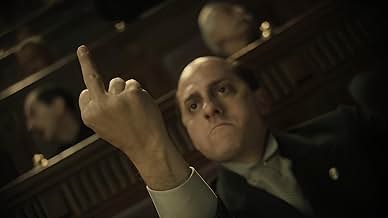
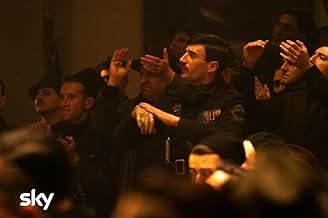
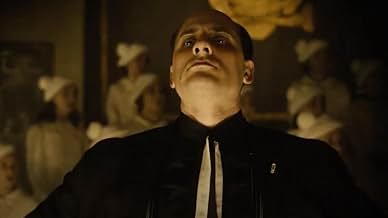
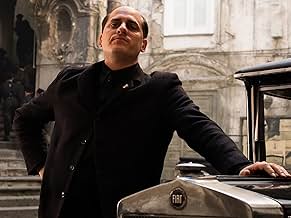
Based on the 2018 novel of the same name by Italian author Antonio Scurati, "Mussolini: Son of the Century" (M. Il figlio del secolo) is equal parts high stakes drama and historical sweep and pageantry, chronicling the early years of Italian Fascist dictator Benito Mussolini from his stint as newspaperman and combative revolutionary to the hallowed seats of the Italian parliament. Along the way the road is paved with bombast, fiery speeches, mercurial temperaments and personalities, sex (a lot of the "behind" kind), political machinations, violence and murder. Lead actor Luca Marinelli carries this rambunctious 8-Part miniseries ably as the balding and fleshy upnosed, arms akimbo, domineering and comically strutting Mussolini as he stomps his way from tenement to the halls of power. The solid supporting cast and realist script with an intellectual bent add quality and depth to this tale of chaos and disorder.
Oddly for all it's in your face noise and unyielding relentlessness the series is slow highlighting its lack of that artistic touch that graces cinematic greatness. The EDM soundtrack is a woefully distracting and misguided intrusion to this Jazz Age depiction. It's history. And what do you do when you're tackling serious history?
While no classic, "Mussolini: Son of the Century" is one of the notable television releases of recent times and a good watch for fans of history and quality TV in general. A panoramic glimpse at one of the darkest eras of human history and a potent lesson on the price of megalomania where at one moment one is speaking in front of adoring thousands from a balcony; the next one's corpse is hanging at the middle of a street above a seething crowd hellbent on revenge, so intent that when one's cadaver hits the ground the furious hellions kick one's face so bad that one's visage deforms sideways as if eternally wanting to kiss the ground it once ruled on. Take it easy.
Oddly for all it's in your face noise and unyielding relentlessness the series is slow highlighting its lack of that artistic touch that graces cinematic greatness. The EDM soundtrack is a woefully distracting and misguided intrusion to this Jazz Age depiction. It's history. And what do you do when you're tackling serious history?
While no classic, "Mussolini: Son of the Century" is one of the notable television releases of recent times and a good watch for fans of history and quality TV in general. A panoramic glimpse at one of the darkest eras of human history and a potent lesson on the price of megalomania where at one moment one is speaking in front of adoring thousands from a balcony; the next one's corpse is hanging at the middle of a street above a seething crowd hellbent on revenge, so intent that when one's cadaver hits the ground the furious hellions kick one's face so bad that one's visage deforms sideways as if eternally wanting to kiss the ground it once ruled on. Take it easy.
Good series but...
The english subtitles are a disaster. They look like automated translations not reviewed by someone who understand italian. For example "Margarita" (the name of a woman) is translated as "margarita pizza". Or "No, no" is translated "ninth", because in italian "nono" means "ninth".
Sometimes these bugs don't help comprehension. They mix up pronouns: "They kick it out" instead of "They kick him out". They don't take into account the formal you that in italian is she. For some complex sentences there is no analysis done by a human : "his husband".
An amateur job done by incompetents.
Such a magnificent work deserves better.
Sometimes these bugs don't help comprehension. They mix up pronouns: "They kick it out" instead of "They kick him out". They don't take into account the formal you that in italian is she. For some complex sentences there is no analysis done by a human : "his husband".
An amateur job done by incompetents.
Such a magnificent work deserves better.
Great cinema, great interpretation
Compelling plot, striking photography, excellent acting by Marinelli. Above all, a solid portrayal of a particular historical period.
Much more to be appreciated if you speak Italian, because Marinelli's performance is truly a masterpiece, both from a linguistic and human point of view. M is a winning example of how history should be represented in cinema: hard and raw, without unnecessary words or unnecessary events based on fiction.
I really recommend its viewing. However, do not expect a simple and straightforward viewing; the story is purely described, there is no shortage of harsh scenes and I felt like some stories missed some details.
What is interesting is that the meaning of some of the pictures goes beyond the simple political figure to the man, with his fears and weaknesses. Things that, of the figure of Mussolini, never really came out of that period.
Excellent cinematic work.
Much more to be appreciated if you speak Italian, because Marinelli's performance is truly a masterpiece, both from a linguistic and human point of view. M is a winning example of how history should be represented in cinema: hard and raw, without unnecessary words or unnecessary events based on fiction.
I really recommend its viewing. However, do not expect a simple and straightforward viewing; the story is purely described, there is no shortage of harsh scenes and I felt like some stories missed some details.
What is interesting is that the meaning of some of the pictures goes beyond the simple political figure to the man, with his fears and weaknesses. Things that, of the figure of Mussolini, never really came out of that period.
Excellent cinematic work.
¿Sabías que…?
- TriviaWhen Joe Wright got on board as director, at first he meant to have the actors say their lines in English. Then he changed his mind and chose to shoot the series in Italian, for a higher immediacy.
Selecciones populares
Inicia sesión para calificar y agrega a la lista de videos para obtener recomendaciones personalizadas
- How many seasons does Mussolini: Son of the Century have?Con tecnología de Alexa
Detalles
- Fecha de lanzamiento
- Países de origen
- Sitio oficial
- Idioma
- También se conoce como
- Mussolini: Son of the Century
- Locaciones de filmación
- Productoras
- Ver más créditos de la compañía en IMDbPro
- Tiempo de ejecución
- 52min
- Color
Contribuir a esta página
Sugiere una edición o agrega el contenido que falta