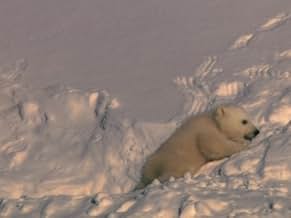
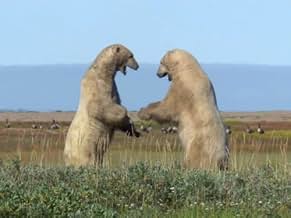
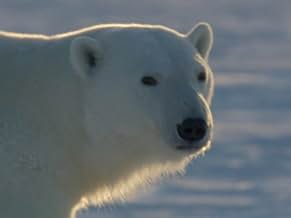
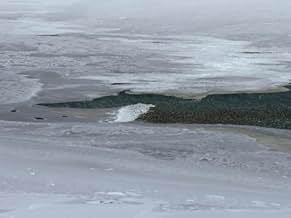
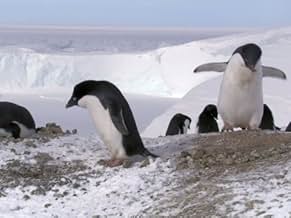
Se centra en la vida y el medio ambiente tanto en el Ártico como en el Antártico.Se centra en la vida y el medio ambiente tanto en el Ártico como en el Antártico.Se centra en la vida y el medio ambiente tanto en el Ártico como en el Antártico.
- Ganó 4 premios Primetime Emmy
- 13 premios ganados y 9 nominaciones en total
Explorar episodios
9.039K
1
2
3
4
5
6
7
8
9
10
Resumen
Reviewers say 'Frozen Planet' is acclaimed for its breathtaking cinematography and David Attenborough's engaging narration. The series excels in detailing animal behavior and adaptation, offering both educational and emotional value. Behind-the-scenes segments enhance appreciation for the production team's efforts in extreme environments. However, some note repetitive content and a slight focus on human impact, though these are minor compared to the series' overall quality.
Opiniones destacadas
As Good as it Gets!
As a rule, I don't enjoy programs or documentaries that are filled with superlatives and hyperbole, and usually rate them lower. Having said that, this series is filled with superlatives and hyperbole, and every one of them is justified. For example, when he speaks of the Taiga, a forest that goes all the way around the world and contains 1/3 of all the world's trees, it is done majestically. When we are told that all the spotted eider ducks in the world are contained in that one spot at that one moment in the Bering Sea, it adds to the wonder of it all.
I learned so much during this series. Then I watched it again. Both my wife and I sat in wonder as we went through the series on Netflix.
My only question is about the "seven" episodes. There are only six on our streaming server. If the seventh appears, we will snap it up quickly.
The narration was engaging and professional, the music was majestic, and the painstaking camera work was incredible. I shook my head in wonder many times how they had attained such amazing footage.
This series was one of the best TV experiences I have ever had.
I learned so much during this series. Then I watched it again. Both my wife and I sat in wonder as we went through the series on Netflix.
My only question is about the "seven" episodes. There are only six on our streaming server. If the seventh appears, we will snap it up quickly.
The narration was engaging and professional, the music was majestic, and the painstaking camera work was incredible. I shook my head in wonder many times how they had attained such amazing footage.
This series was one of the best TV experiences I have ever had.
Do You Want To Build a Snowman?
Though I don't particularly enjoy animal documentaries, the second run of the BBC's "Frozen Planet" was on the Guardians list of top TV of last year, so I needed to give it a try. Despite the fact it's not a narrative-based show I still decided to watch the initial run from 2011 first. The effort involved is admirable, but as a documentary I found it to be a little repetitive.
The poles at either side of our planet are among the most inhospitable areas to exist. There are, however, various ecosystems that do survive there, with the changing seasons providing them with enough respite to either feed, breed or migrate as required. Polar Bears, Seals, Penguins and Orcas are amongst those species' films by the documentary, that uses underwater filming and time lapse photography to get unbelievably close to the animals.
This is probably the BBC at it's finest. An altruistic environmental documentary, beautifully shot in high definition and with a David Attenborough voiceover that can only be described as Iconic. The amount of personal sacrifice that goes into making a series like this is truly inspiring, with the "Freeze Frame" sections at the end of each episode giving us an insight into the conditions endured, and perils risked in order to get the footage. The footage is worth it though and even without the educational aspect just looking at what they captured would be enough. The final episode of the series is a change of pace, and focuses on human interaction in the polar regions, with both native people who live and hunt there, exploration bases and mining operations.
This might be a drawback caused by watching all the episodes in just a few days, rather than spacing them out one a week, as it would have originally been released, but there is quite a bit of repetition in the series. Some of this is endemic, Animals essentially eat, procreate, and die so if it's not doing one of these things, it's doing the other. More than that though, some specific bits of the series, I'm thinking specifically of the Orca's iceberg destruction technique and various bits of the penguin walks are shown more than once.
It doesn't derail the series which, like all of them, is a unique and fascinating insight into these ecosystems.
The poles at either side of our planet are among the most inhospitable areas to exist. There are, however, various ecosystems that do survive there, with the changing seasons providing them with enough respite to either feed, breed or migrate as required. Polar Bears, Seals, Penguins and Orcas are amongst those species' films by the documentary, that uses underwater filming and time lapse photography to get unbelievably close to the animals.
This is probably the BBC at it's finest. An altruistic environmental documentary, beautifully shot in high definition and with a David Attenborough voiceover that can only be described as Iconic. The amount of personal sacrifice that goes into making a series like this is truly inspiring, with the "Freeze Frame" sections at the end of each episode giving us an insight into the conditions endured, and perils risked in order to get the footage. The footage is worth it though and even without the educational aspect just looking at what they captured would be enough. The final episode of the series is a change of pace, and focuses on human interaction in the polar regions, with both native people who live and hunt there, exploration bases and mining operations.
This might be a drawback caused by watching all the episodes in just a few days, rather than spacing them out one a week, as it would have originally been released, but there is quite a bit of repetition in the series. Some of this is endemic, Animals essentially eat, procreate, and die so if it's not doing one of these things, it's doing the other. More than that though, some specific bits of the series, I'm thinking specifically of the Orca's iceberg destruction technique and various bits of the penguin walks are shown more than once.
It doesn't derail the series which, like all of them, is a unique and fascinating insight into these ecosystems.
Genius
True genius. It makes standing in the poles, what' really seems like an exhilarating experience feel it's being done by yourself. With polar bears and penguins in the joy of spring, the summertime with less blues, autumn filled with the excitement of the mating season, the hard land that is winter, and then in the conclusion, you have people living there and you can see them. This is a classic series with brilliant moments all through it. It won 4 Emmys because it deserved them more than anything else in 2009. Madagascar- one of Attenborough's best works, the amazing documentary Ocean Giants and the classic Human Planet. Frozen Planet beat all them because some of the amazing stuff, as well as educational (not something I look for in Docos) and exciting (this one is exciting, animal-action-packed series) but also never filmed before. Nobody had filmed at Antarctic volcanoes or the Russian arctic before. Migrating eider ducks was new and never done before. That is the magic behind a classic series. Do yourself a favour if you haven't already. Watch all 7 parts. Won't waste your time. You could do an episode a day and be finished with it in a week. Come on. It won't wreck your life or anything. C'mon.
Amazing production!
I was fortunate enough to get the opportunity to work on the promotional campaign as an editor at Discovery Channel in 2011-2012, and is still one of my favorite projects to date. The only challenge I faced was trying to choose which visuals to use in the 60/30 second commercials, because they were all breath taking.
From start to finish, the production value, imagery and breathtaking landscapes are captured with perfection in this documentary series. I thoroughly enjoyed watching this series when I had to (work), and then watched it again when I wanted to (at home)!
Over all, well done!
Wonderful, beautiful, informative, captivating
This is a wonderful documentary covering the Arctic and Antarctica sections of our planet. You see these two regions through 4 seasons, through the eyes of it's inhabitants (mammals, birds, fish and humans). It captures the beauty, harsh weather and life in all of its glory and challenges. We get to see a thorough glimpse in life of all key animals. The 4 season covers, love, birth, growth, survival, death. We also get to see the life of human beings who live around Arctic circle. It is a tough and simple life.
The show is very informative and very entertaining. Highly recommended. If you love nature or want to know more about this planet, check this out. I am now sifting through IMDb to find more such shows.
¿Sabías que…?
- Trivia44 cinematographers to shoot the whole documentary.
- ConexionesEdited into Universum: Eisige Welten - Das Reich der Kälte im Bann des Klimas (2017)
Selecciones populares
Inicia sesión para calificar y agrega a la lista de videos para obtener recomendaciones personalizadas
- How many seasons does Frozen Planet have?Con tecnología de Alexa
Detalles
- Fecha de lanzamiento
- Países de origen
- Sitio oficial
- Idiomas
- También se conoce como
- Frozen Planet
- Locaciones de filmación
- Productoras
- Ver más créditos de la compañía en IMDbPro
- Tiempo de ejecución
- 1h(60 min)
- Color
- Mezcla de sonido
- Relación de aspecto
- 16:9 HD
Contribuir a esta página
Sugiere una edición o agrega el contenido que falta