CALIFICACIÓN DE IMDb
7.4/10
63 k
TU CALIFICACIÓN
Anna, una joven novicia en la Polonia de los años 60, está a punto de tomar los hábitos cuando descubre un oscuro secreto familiar que se remonta a los años de la ocupación alemana.Anna, una joven novicia en la Polonia de los años 60, está a punto de tomar los hábitos cuando descubre un oscuro secreto familiar que se remonta a los años de la ocupación alemana.Anna, una joven novicia en la Polonia de los años 60, está a punto de tomar los hábitos cuando descubre un oscuro secreto familiar que se remonta a los años de la ocupación alemana.
- Dirección
- Escritura
- Estrellas
- Ganó 1 premio Óscar
- 70 premios ganados y 92 nominaciones en total
Natalia Lange
- Bronia
- (as Natalia Lagiewczyk)
Jan Wojciech Poradowski
- Father Andrew
- (as Jan Wociech Poradowski)
- Dirección
- Escritura
- Todo el elenco y el equipo
- Producción, taquilla y más en IMDbPro
7.462.6K
1
2
3
4
5
6
7
8
9
10
Opiniones destacadas
The Not so Usual. Life.
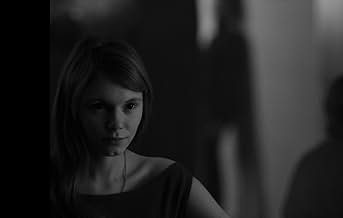
Greetings again from the darkness. Writer/director Pawel Pawlikowski films in his homeland of Poland and presents a familiar topic from a most unusual perspective. This film has been very well received on the festival circuit and it's easy to see why: it's beautifully photographed, very well acted, includes terrific music and presents an emotional story for intelligent viewers.
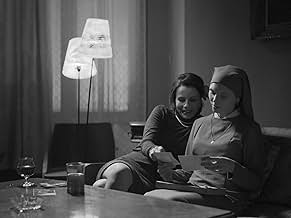
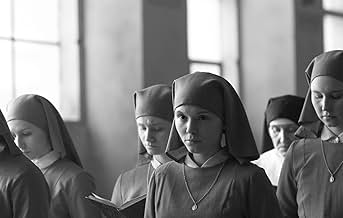
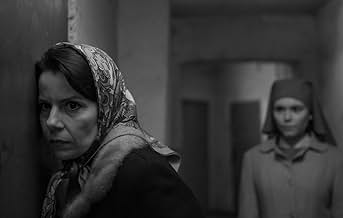
We first meet Anna as a novitiate nun on the verge of taking her vows. Her Mother Superior has one requirement. Anna must visit her lone surviving relative. Her Aunt Wanda is everything Anna is not: worldly, cynical, direct. In the first few minutes of their visit, Wanda (Agata Kulesza) informs Anna (Agata Trzebuchowska) that she was born Jewish with the name Ida, and she was sent to a Catholic orphanage when her parents were killed.
After this bombshell, the two set out on a journey to discover the truth and trace their roots. It's a journey of discovery not just for Ida, but also for Wanda, who carries her own burden. Questioning one's faith and one's true identity is nothing new, but this makes for quite an unusual buddy road trip. Wanda is rarely without a drink in hand and Ida has had no previous exposure to the real world.
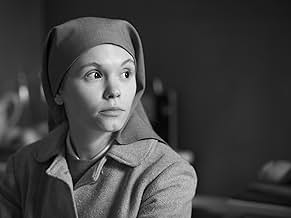
This is the debut of Agata Trzebuchowska and her porcelain look and big eyes convey a quality with which we find ourselves comfortable with, while Ms. Kulesza evokes empathy from the viewer despite her harsh edge and beaten down outlook on life and people. Hers is a standout performance.
Two exceptional pieces of music are used to perfection: Coltraine's "Naima" and Mozart's "Jupiter" symphony. The storytelling and look of the film might be austere (stunning black and white photography) but this music hits us hard in two separate scenes.
We first meet Anna as a novitiate nun on the verge of taking her vows. Her Mother Superior has one requirement. Anna must visit her lone surviving relative. Her Aunt Wanda is everything Anna is not: worldly, cynical, direct. In the first few minutes of their visit, Wanda (Agata Kulesza) informs Anna (Agata Trzebuchowska) that she was born Jewish with the name Ida, and she was sent to a Catholic orphanage when her parents were killed.
After this bombshell, the two set out on a journey to discover the truth and trace their roots. It's a journey of discovery not just for Ida, but also for Wanda, who carries her own burden. Questioning one's faith and one's true identity is nothing new, but this makes for quite an unusual buddy road trip. Wanda is rarely without a drink in hand and Ida has had no previous exposure to the real world.
This is the debut of Agata Trzebuchowska and her porcelain look and big eyes convey a quality with which we find ourselves comfortable with, while Ms. Kulesza evokes empathy from the viewer despite her harsh edge and beaten down outlook on life and people. Hers is a standout performance.
Two exceptional pieces of music are used to perfection: Coltraine's "Naima" and Mozart's "Jupiter" symphony. The storytelling and look of the film might be austere (stunning black and white photography) but this music hits us hard in two separate scenes.
As moving as sad
In the 60's Poland, a few days before pronouncing her vows of poverty, chastity and obedience to end her probation period and officially become a nun, Anna, an orphaned young woman, learns by chance the existence of her aunt, Wanda. The Mother Superior propose to Anna to meet Wanda. In this respect, she offers her to take all the necessary time. This encounter will turn her life upside down, via a journey of self-discovery and a road trip through rural Poland, in search of lost time. Lost forever...
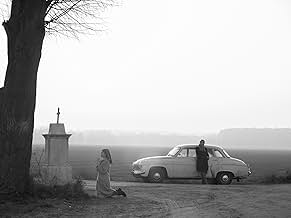
Shot in gorgeous black and white, this film is a disconcerting beauty while remaining simple and pure, with a neat photography, elegant and appropriate framings highlighting the emptiness and the sadness of certain existences, and a careful treatment of natural light. Then, the two main actresses, Agata Kulesza and Agata Trzebuchowska, are prodigious and complement each other wonderfully. Finally, the script is excellently and soberly written, and, even if the film is hard and deals with an unpleasant subject, the staging is simple and anything but egghead. As a synthesis, the film is a masterpiece.
Nun the wiser.
Although 'Ida (2013)' achieves a cold, isolating effect, it actually struggles quite a bit when it comes to thematic or emotional resonance. Its story, which ought to be wrought with emotion, doesn't really hit home. Perhaps that's because we feel at a distance from our core players despite always being in close proximity to them. Of course, there is something to be said for the flick's delicate exposition and otherwise subtle storytelling. It mostly works to an enigmatic effect. However, it's sometimes too subtle. Much of the lead's inner machinations are left up to interpretation, as she moves through the narrative with a blank face and only the simplest of dialogue. That's not to say that the film is particularly uninteresting. In fact, it's often rather intriguing. The issue is that it isn't all that engaging. Despite its great cinematography and understated camera-work, it isn't moving in any real way. It isn't so much boring as it is slow, though. I wish it was more captivating than it is, as it's a well-crafted movie with an under-explored setting, but it's worth a watch if you know what you're getting into. 6/10
Straightforward, beautifully shot and very rewarding
Ida is the small and simple story of a complex and terrible past that gets unearthed when a nun discovers she is Jewish. Before taking her vows, she is sent out to meet her aunt, a bitter woman who drinks too much from the life and miserable aftermath of a Nazi occupied Poland. They journey in search of Ida's murdered parents and their resting place and what unfolds is simple, raw storytelling and plotting that is never overly grim, overly dramatic or hits a false note. Beautifully shot in black and white and with a short 80 minute running time that doesn't allow a moment of fat in this narrative, Ida is a rewarding experience.
rare work
simplicity, great photographs, splendid script. at first sigh, an old fashion movie. in fact, wise manner to use the legacy of impressive tradition and a great director who use, in same measure, with same precision, tension, poetry of images, atmosphere of period, cultural roots. it is a reflection occasion about origins, truth, faith and choices. a profound Polish story who reflects the identity search of an entire continent. it is , certainly, a rare gem. the cause is not only beauty of photography or admirable acting but a special flavor who remains after its end as a delicate feeling. a young woman and the courage to become here self. that is all. in skin of seductive music.
¿Sabías que…?
- TriviaPawel Pawlikowski had such difficulty finding an actress to play the titular character that he asked his friends to take secret photographs if they saw anyone who was in the right ballpark of the character. One of his friends, director Malgorzata Szumowska, saw Agata Trzebuchowska in a Warsaw café, took the picture and persuaded her to audition. She agreed to meet with Pawlikowski because she was a fan of his film My Summer of Love (2004).
- ErroresWhen Ida is in a church, the priest seems to be getting ready to say Mass and we see a versus populum altar, which didn't become the norm until years later after Vatican II. The movie takes place in 1961 and the priest would have been saying Mass on the high altar.
- ConexionesFeatured in 72nd Golden Globe Awards (2015)
- Bandas sonorasSerduszko puka w rytmie cha-cha
Music by Romuald Zylinski
Lyrics by Janusz Odrowaz-Wisniewski
Performed by Maria Koterbska
Selecciones populares
Inicia sesión para calificar y agrega a la lista de videos para obtener recomendaciones personalizadas
- How long is Ida?Con tecnología de Alexa
Detalles
Taquilla
- Presupuesto
- USD 1,000,000 (estimado)
- Total en EE. UU. y Canadá
- USD 3,827,060
- Fin de semana de estreno en EE. UU. y Canadá
- USD 55,438
- 4 may 2014
- Total a nivel mundial
- USD 11,156,836
- Tiempo de ejecución
- 1h 22min(82 min)
- Color
- Mezcla de sonido
- Relación de aspecto
- 1.37 : 1
Contribuir a esta página
Sugiere una edición o agrega el contenido que falta